Introduction to Cultural Studies

When I did my AMI training I created Albums of presentations, and exclusively used these albums for many years. I use them still, but no longer exclusively; over the course of almost 20 years I have accumulated a collection of alternative albums containing alternative lists of presentations and alternative ways of giving those presentations. I believe that there are many flaws and omissions in the AMI Albums and feel it is important to utilise all resources in order to improve my class, so I’ve been giving non-AMI sanctioned presentations for many years now. In this section I’ll detail some of the options that are available and why I chose some but not others, in order to illustrate the important point that there is a whole world of information, knowledge and experience out there, and some of it is quite educational.
As part of a rich exploration of the different cultures of the world, children are introduced to the knowledge, ideas, beliefs, customs, and social behaviour of each continent. Using materials such as globes, puzzle maps, science experiment kits, and cultural artefacts, children learn about diverse cultures, developing their curiosity, global awareness, and appreciation for diversity. The cultural materials are often categorised into the following units of study:
1.Biology:
-Botany
-Zoology
-Earth Sciences:
◦Geology
◦Meteorology
2.Geography
3.History
4.Science
5.Arts:
-Art
-Music and Movement
Biology
In a Montessori environment, children explore three of the seven branches of biology:
1. Botany2. Zoology3. Earth Sciences.
Botany
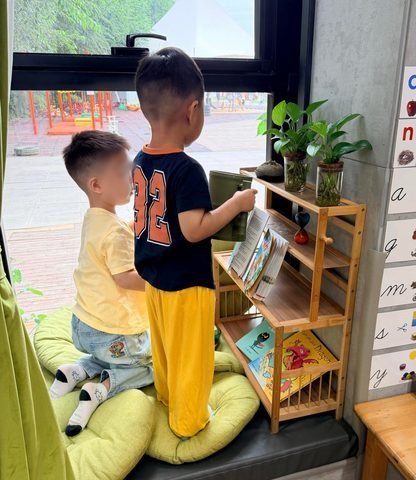
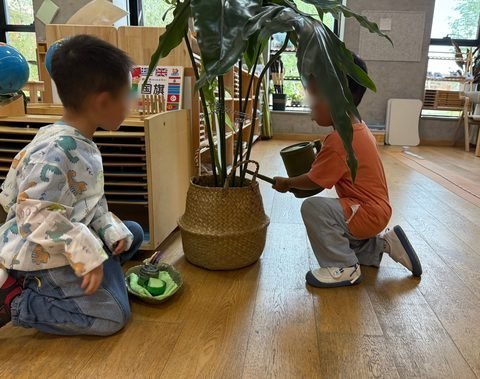
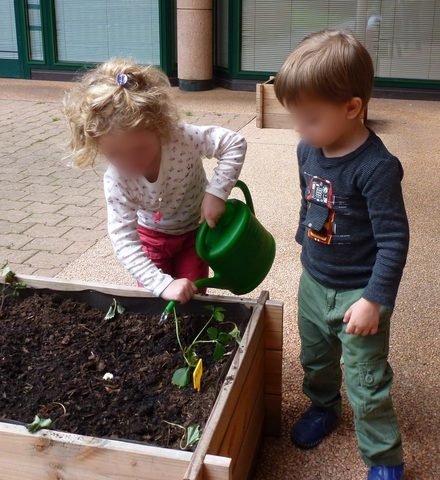
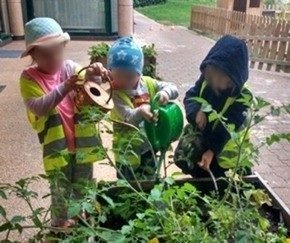
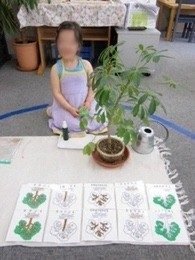
This area of the curriculum provides an introduction to plant anatomy and plant life, helping children to identify leaf shapes and learn about life-cycles. Materials include The Botany Cabinet, Botany Puzzles, Botany Cards (cards depicting plants, and their classifications), Parts of the Plant and Plant Life-Cycle materials, as well as Care of Plants and Gardening. A simple concrete introduction to plants and their care is having the children water the plants, often with the guidance of an older child.
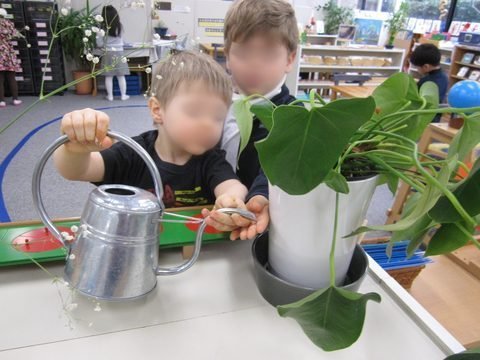

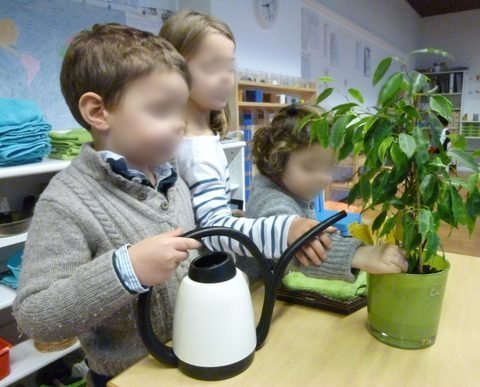
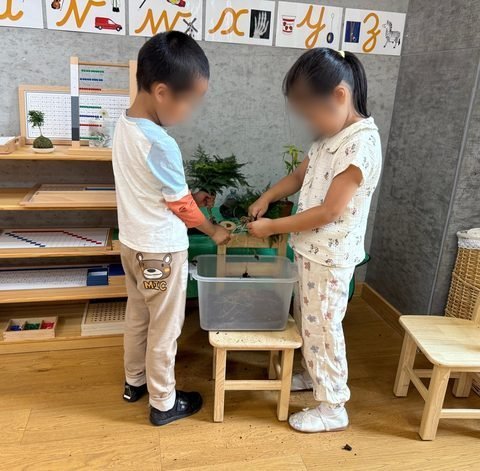
Planting new plants or transplanting ones that have outgrown their pot is also a wonderfully tactile exercise for individual children or small groups.


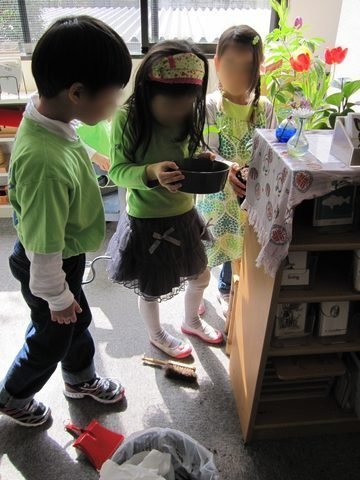
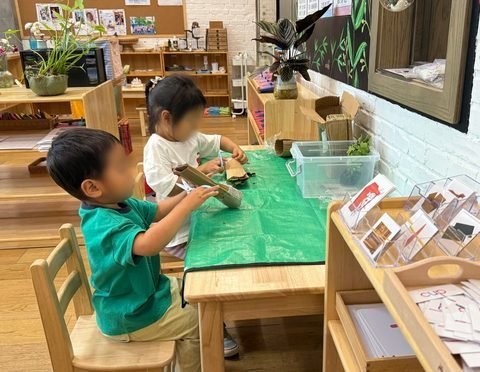
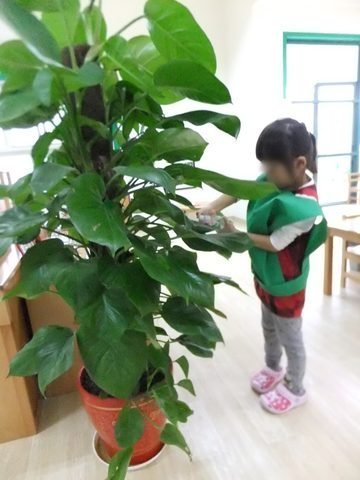
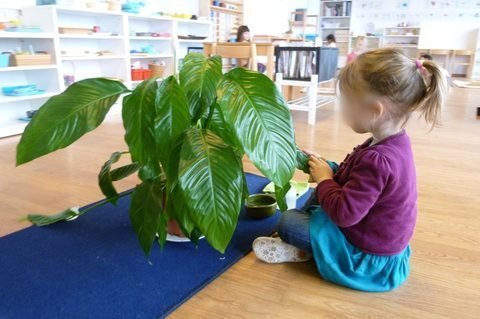
Children are also shown how to care for plants by cleaning or pruning their leaves, which serves as a practical way to begin caring for their environment while also serving as an introduction to plant structure.


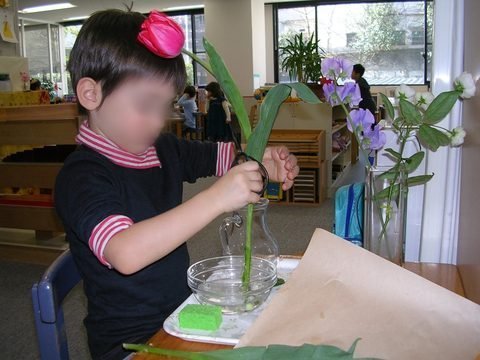
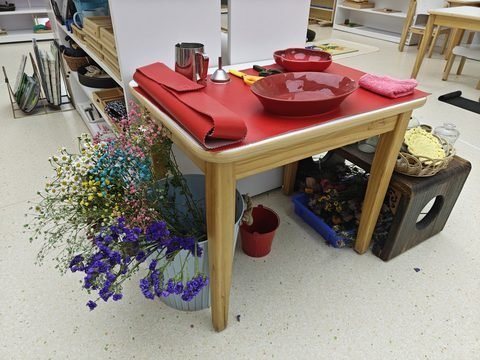
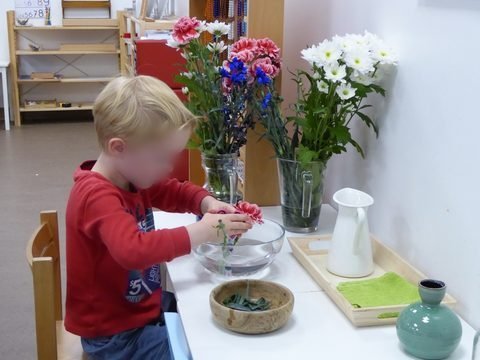
Another way to encourage care of the environment is by having a ‘flower angel,’ where each week a different family buys flowers for the class, which their child prepares and places throughout the room.



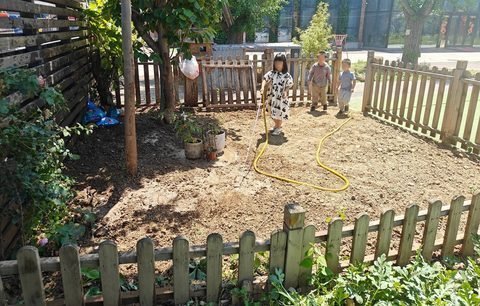
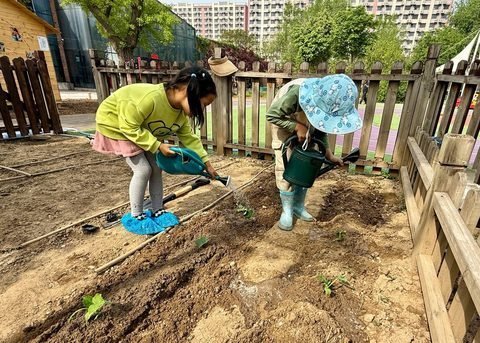
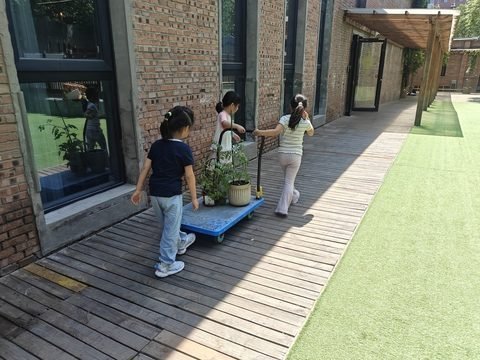
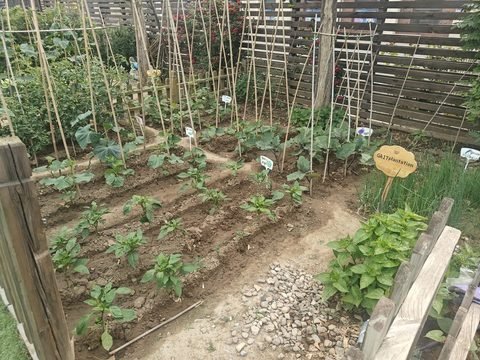
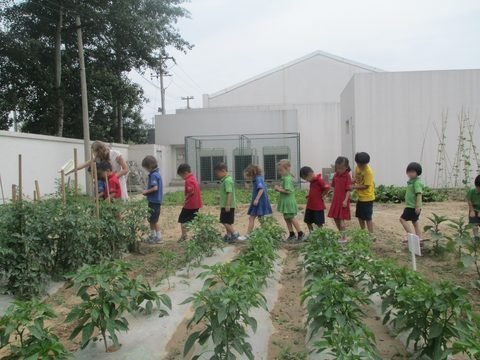
Some schools I’ve worked at had access to a garden (or planter boxes), so we were able to take Montessori outside.



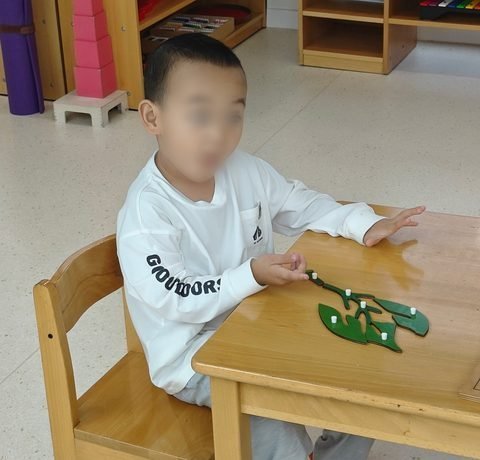
The Botany Puzzles serve as an introduction to the study of parts of a plant / flower / tree / etc., making the connection between concrete and abstract.

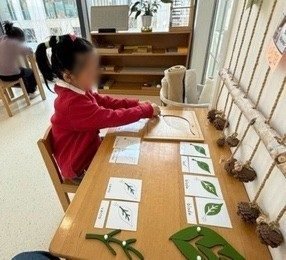
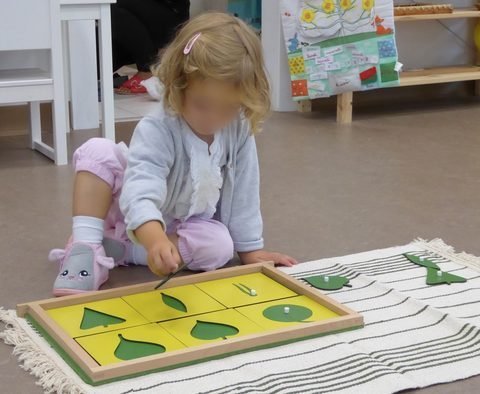
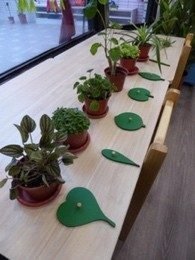
The Botany Cabinet is used to introduce children to the variety of leaf shapes and how we categorise them; matching the shapes of leaves from the Botany Cabinet with real leaves also links the abstract and the concrete.



Sample Botany Albums (contents)
College of Modern Montessori
1.1 Nature walk
1.2 The tree nature walk
1.3 Blindfold trail
1.4 Silence game
2.1 Tree puzzle
2.2 Tree nomenclature: matching
2.3 Tree nomenclature: three-period lesson
2.4 Tree nomenclature: for a child who can read
2.5 Extensions for the tree nomenclature
2.6 Tree shape classification cards: matching
2.7 Tree shape classification cards: three-period lesson
2.8 Tree shape classification cards: for the reading child
3.1 The leaf nature walk
3.2 Leaf puzzle
3.3 Leaf nomenclature: matching
3.4 Leaf nomenclature: three-period lesson
3.5 Leaf nomenclature: for a child who can read
3.6 The leaf cabinet
3.7 Leaf project
3.8 Various uses of leaves in the Montessori environment
4.1 The flower nature walk
3.2 Flower puzzle
3.3 Flower nomenclature: matching
3.4 Flower nomenclature: three-period lesson
3.5 Flower nomenclature: for a child who can read
3.6 The flower cabinet
5.1 Seeds
5.2 Seed dispersal
6.1 Loosely grouped plant classification cards: matching
6.2 Loosely grouped plant classification cards: three-period lesson
6.3 Specifically grouped plant classification cards: matching
6.4 Specifically grouped plant classification cards: three-period lesson
6.5 Specifically grouped plant classification cards: for a child who can read
6.6 Importance of the sun for plants
6.7 Growing plants
Montessori Teachers Collective
Prep. the Outdoor Environment
Prep. the Indoor Environment
Nature Table
Importance of the Sun
Card Story Lessons
Classified Cards
Parts of the Tree
Botany Cabinet
Definitions of the Parts of the Tree
Parts of the Leaf, Flower, Root
Kinds of Roots
Leaf Margins and Venation and their Definitions
Gathering Seeds
Montessori World Educational Institute
Botany and Zoology
Botany und Zoology Overview
Botany - lntroduction
The Plant
Parts of the Plant
The Leaf
Types of Leaf
Margins
Types of Veins
Shapes of Leaves
Borders of Leaves
The Parts of the Flower
Shapes of Corollas
Fruit
Seeds
Parts of the Seed
Seed Dispersal
Animal Riddles
The Canadian Montessori Teacher Education Institute
The nature table
Living, once living and non-living
The three puzzles: tree / leaf / flower
Nomenclature cards: simple / classified (parts of...)
Growing plants
Collecting leaves
Botany cabinet / cards
Pressing flowers
Experiments to show the importance … of the sun / of the air / of the water
Paper making
Life cycle and development …of a seed / a fruit
Stories about plants
Exploring the vegetal kingdom
Zoology
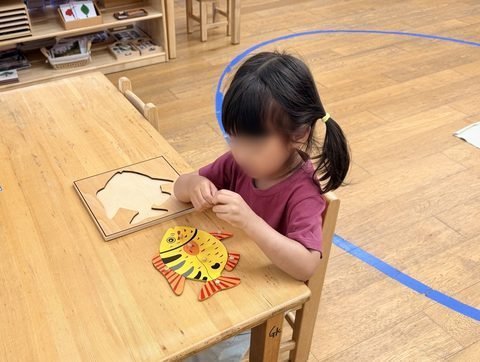
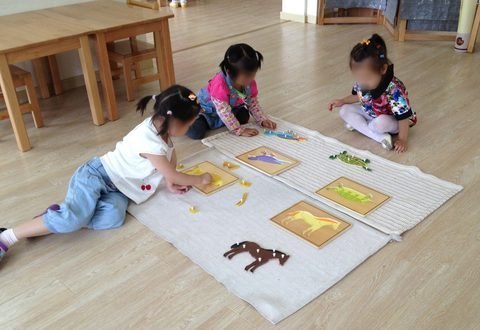
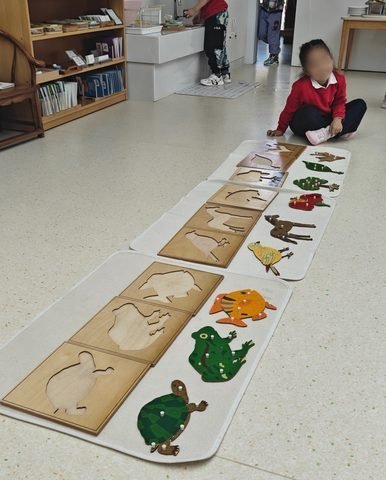
Using materials including Puzzle Cards, Models, Classification Cards and study of assorted Life-Cycles, children are introduced to different animals, their anatomy, habits, and classification into one of five kingdoms: Fish, Amphibians, Reptiles, Birds and Mammals. Children first make the Zoology puzzles inside the frame and later increase the challenge by making a puzzle outside the frame, eventually making all of the puzzles outside the frame at the same time.




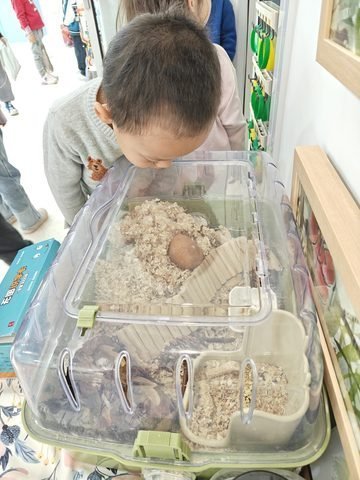
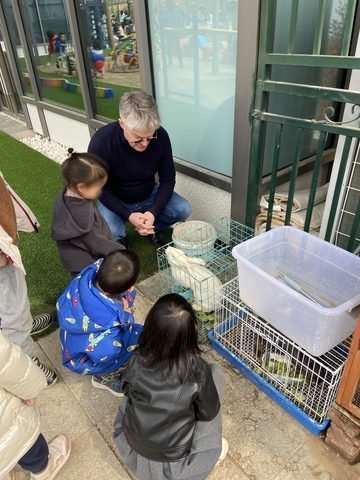
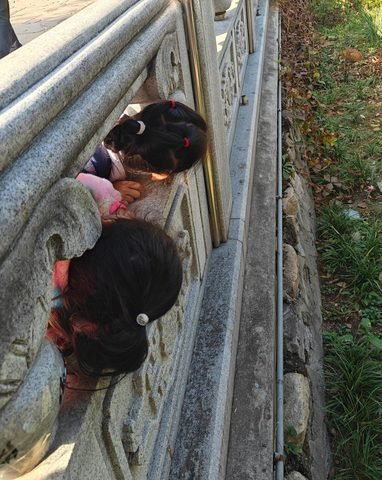
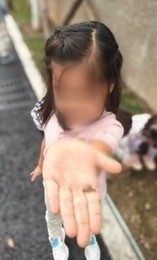
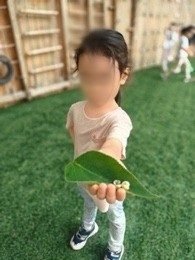
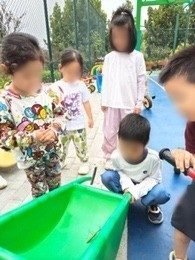
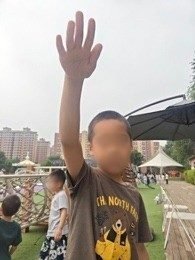
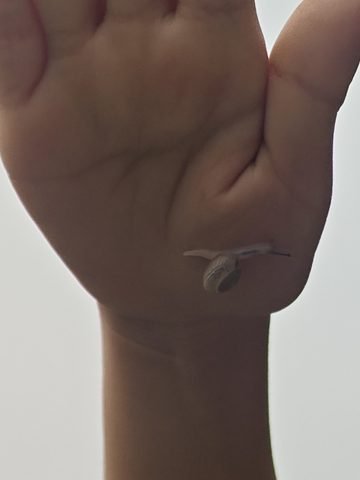
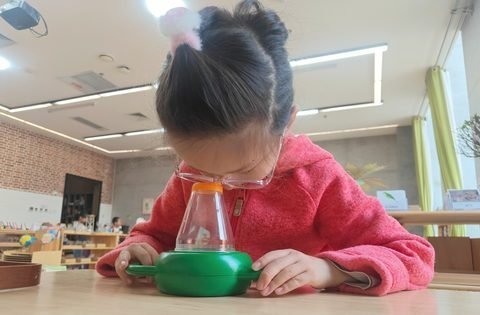
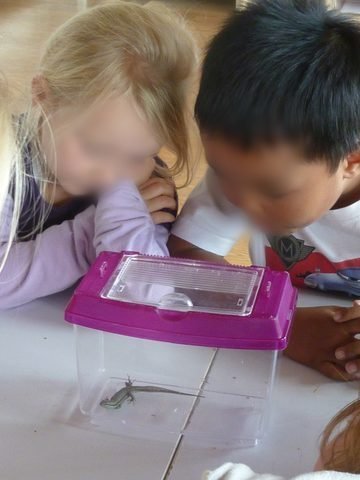
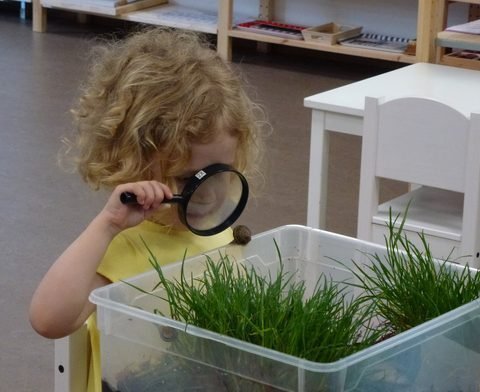
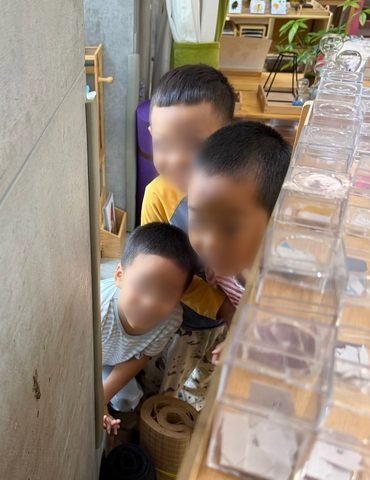
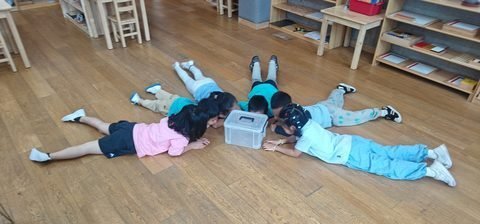
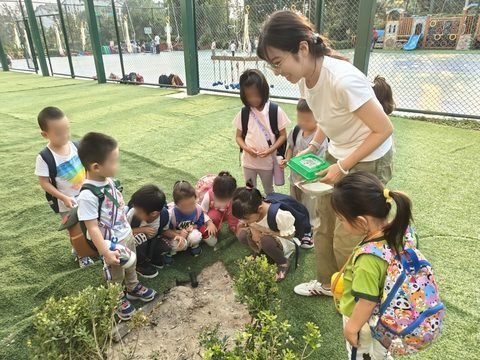
Many classes have a pet such as a fish, turtle, rabbit, etc, which the children care for, and I’ve introduced slugs and insects including silkworms and praying mantises into the class. There’s life all around us of course, and the children are both alert to it and curious about it: bugs, lizards, birds, worms … it’s all fascinating to them, and there’s few things they enjoy more than studying them up close.







Sample Zoology Albums (contents)
College of Modern Montessori
1.1 Field trip
1.2 Nature table
2.1 Model animals
2.2 Large pictures of animals in their natural habitat
3.1 The bird - group discussion
3.2 Bird puzzle
3.3 Bird nomenclature: matching
3.4 Bird nomenclature: three-period lesson
3.5 Bird nomenclature: for a child who can read
3.6 Bird project
3.7 Various uses of birds in the Montessori environment
4.1 Loosely grouped animal classification cards - matching
3.2 Loosely grouped animal classification cards: three-period lesson
3.3 Loosely grouped animal classification cards; for a child who can read
3.4 Specifically grouped animal classification cards: matching
3.5 Specifically grouped animal classification cards: three-period lesson
3.6 Specifically grouped animal classification cards: for a child who can read
Montessori Teachers Collective
Preparing the Outdoor Environment
Preparing the Indoor Environment
Nature Table
Classified Nomenclature Cards
Card Story Lessons
Animals of the World
Vertebrate and Invertebrate
Classes of Animals Folder
Animal Sorting Game
The Parts of the Animal and their Definitions
Mystery Animal Cards
Living Things Reproduce
Montessori World Educational Institute
Botany and Zoology
Botany und Zoology Overview
Introduction to Zoology
Nature Study of Animals 1
Parts of Animals
Nature Study of Animals 2
Phyla of the Kingdom Animalia
The Canadian Montessori Teacher Education Institute
Pictures of animals with a backbone
The animal kingdom … fish / bird / reptile / amphibian / mammal
Insects
Life cycle and development … of a bird / a frog / a butterfly
Different songs of birds
The human body … bones / organs
Earth Science
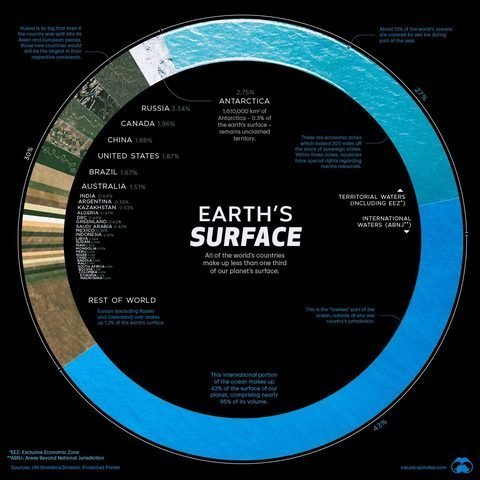
Also known as Physical Geography, this is the study of the Earth's air, water and solid matter. Children are introduced to two of its aspects, Geology and Meteorology, using materials such as Land and Water Forms, the Land and Water Globe, Land, Air and Water cards, and Weather Charts.
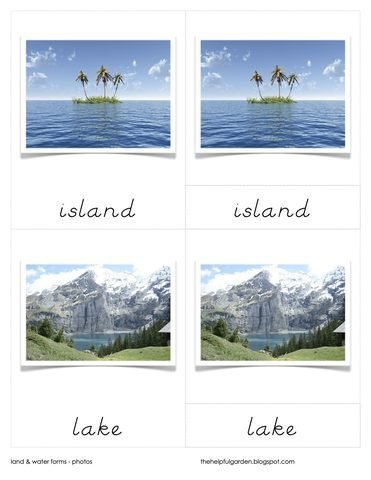
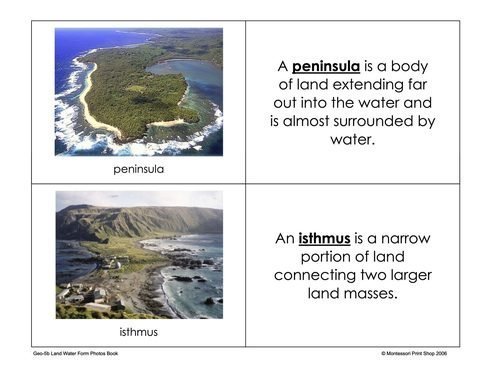
Land and Water Forms
These are five sets of opposite forms:
Lake / Island
Gulf / Peninsula
Strait / Isthmus
Bay / Cape
Lake System / Archipelago
The children choose a set and then pour water into the moulds, and the guide provides the definitions:
“An island is a body of land surrounded by water. A lake is a body of water surrounded by land.”
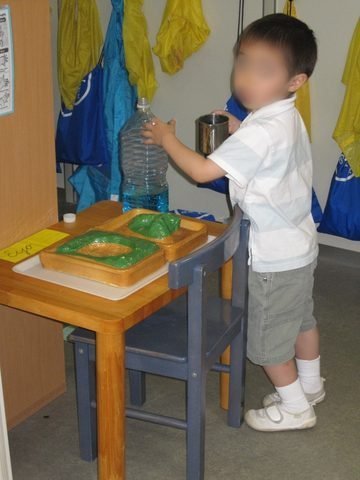

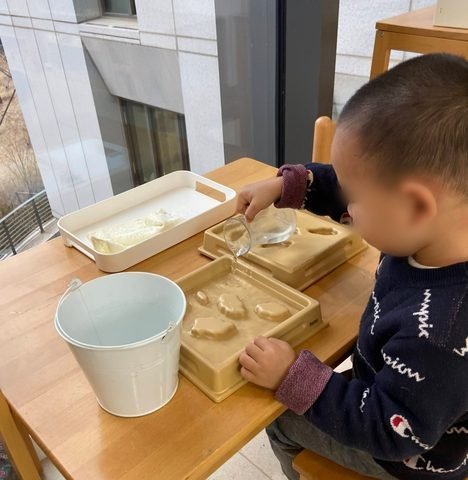
After this concrete introduction, the children are then presented with a range of abstract cards, gradually increasing in complexity and detail.


Land, Air and Water
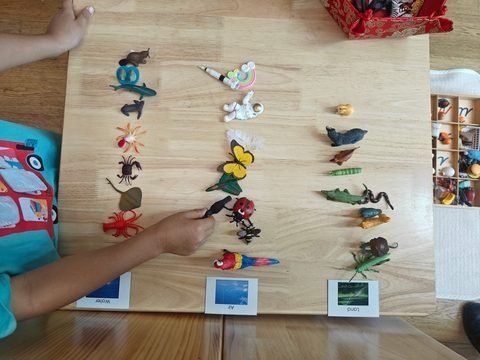
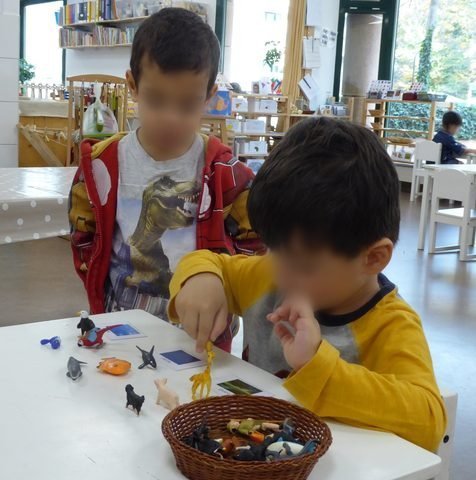
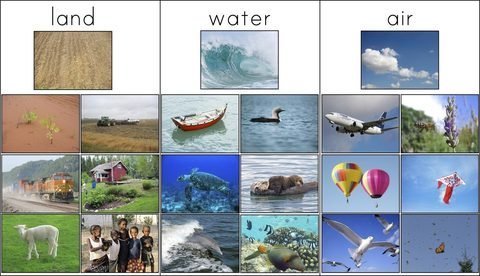
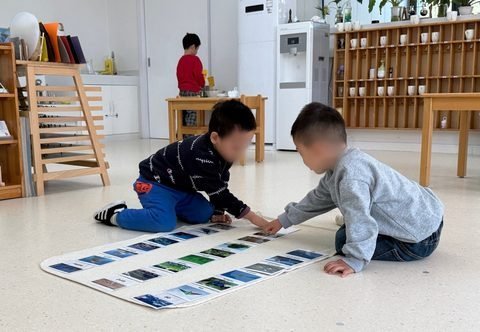
The children learn to divide objects into the categories of land, air or water, first using objects (concrete) and later using pictures (abstract).
Meteorology
Children record the weather each day, a practical introduction to this topic.
Concrete to abstract: the children are next presented with three-part cards of different types of weather, clouds, etc.
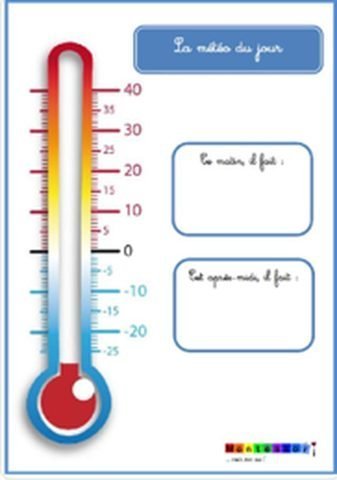
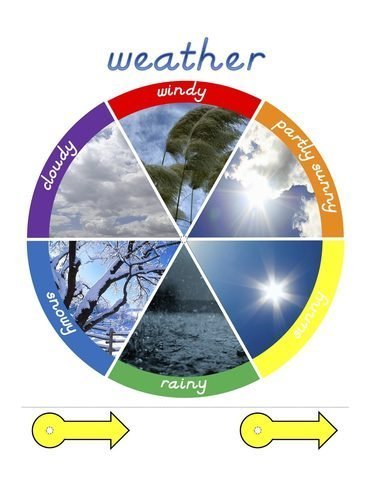


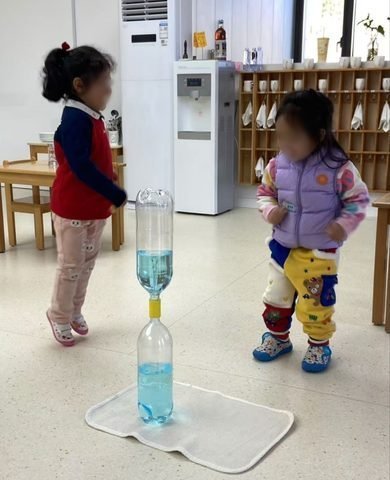
To follow the interest of a meteorologically-minded child, there are innumerable weather-related ideas available online.


Typhoon
The second most fun aspect of meteorology (#1 is snow, of course).



Human Geography / Political Geography

Human Geography focuses on aspects of the environment that are man-made (as distinct from Physical Geography, which deals with features of the environment that were created by nature) and focuses on human activity - how people interact with their environment and with each other. The topic introduces concepts that illustrate cultural diversity and help children learn about different continents, countries and cultures using materials such as Geography Folders, Flags and Puzzle Maps of the Planisphere and the continents: North America, South America, Europe, Asia, Africa, Oceania and Antarctica.
Children are introduced to the materials in this order:
- Sandpaper Globe - water is smooth and land is rough (sandpaper)
- Continents Globe: Oceans are blue and Continents are coloured
- Puzzle Map of the Continents
- Puzzle Map of the child’s own continent
- Puzzle Map of the child’s own country (when available)
- Puzzle Maps of the remaining continents

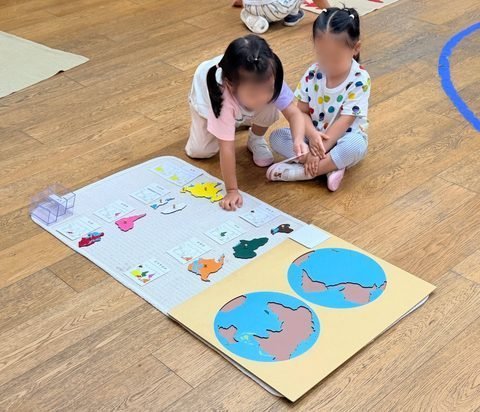
They first complete the puzzles inside the frame and then, to increase the challenge, outside the frame.


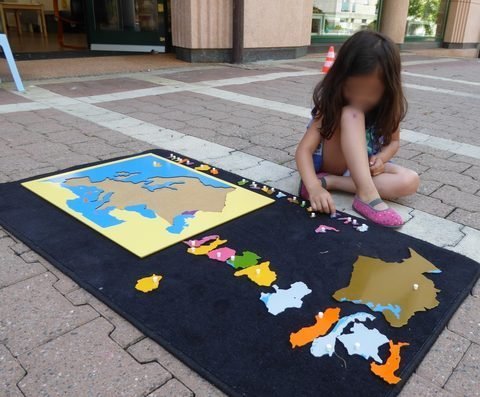
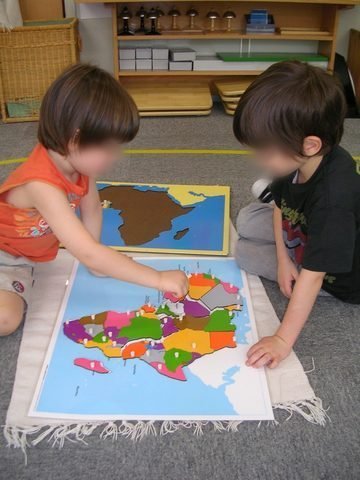
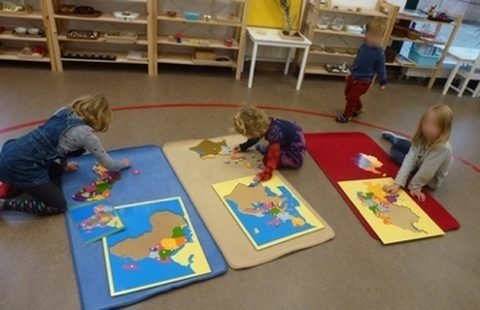
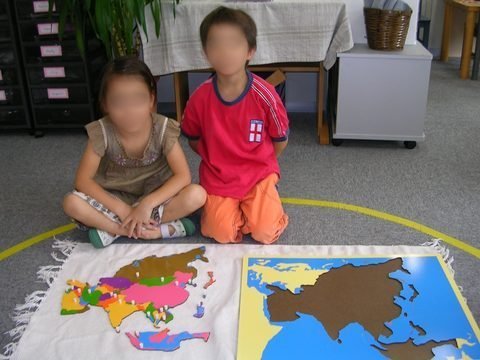
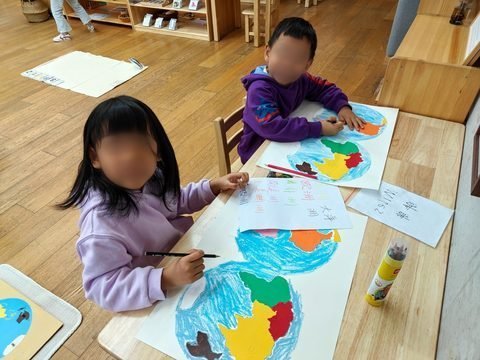
Later they will create their own maps by tracing the outline of the continents on thick paper, punch holes using pushpins, then glue them onto thick paper.


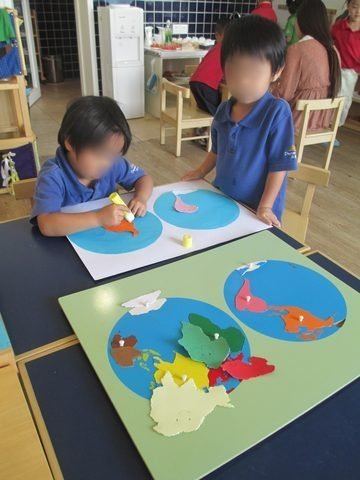

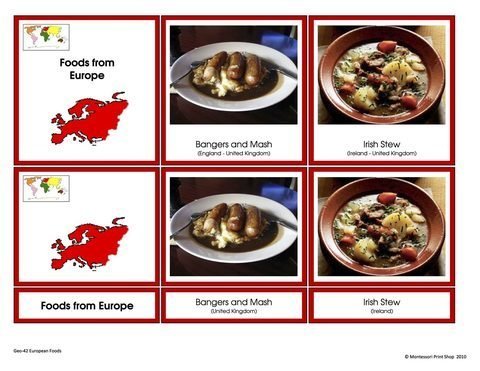
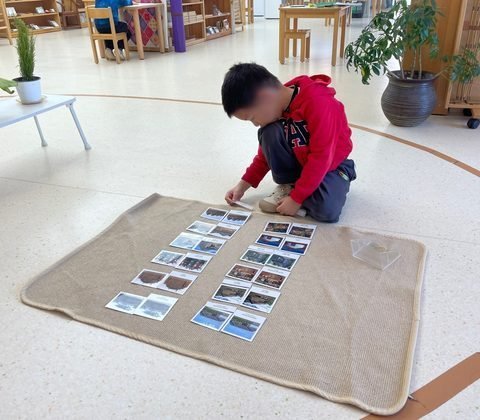
After this tactile introduction, the next materials are from seven continent and country kits, containing three-part cards of the plants, animals, culture (houses, food, landmarks/places, musical instruments) of each continent.



Flags
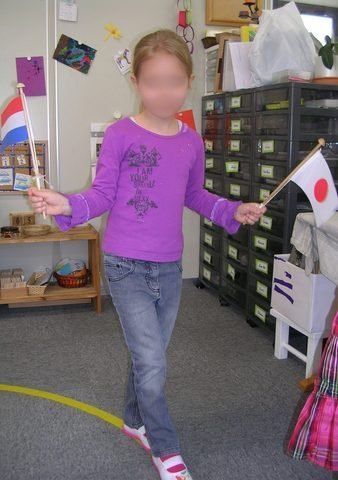
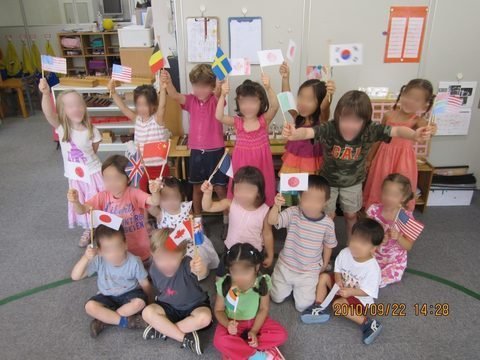
Children are also introduced to the flags of different countries, beginning with their own country and continent or, if they wish, the country where their school is located. Once the child can identify a flag, they can colour and make their own.



Sample Geography Albums (contents)
College of Modern Montessori
1.1Sensitising the Fingers
1.2Sandpaper Globe
1.3Land, Air and Water Bottles
1.4Land, Air and Water Pictures
1.5Continents Globe
1.6Treasure Box
1.7Continents Folder
2.1Land and Water forms
2.2Bridging Exercise
2.3Classified cards: matching
2.4Classified cards: 3PL
2.5Extensions for classified cards
3.1Bridging exercise
3.2Matching to control chart
3.3Planisphere 3PL
3.4Extensions
3.4Directions of the Compass
3.5The Equator and the Tropics
4.1Matching map to control chart
4.2Puzzle Maps 3PL
5.1Flags 3PL
5.2Flags Nomenclature: Matching
5.3Flags Nomenclature 3PL
5.4Flags Nomenclature: for a reader
5.5Extensions For Nomenclature
6.1Experiment
6.2Nomenclature Matching
6.3Nomenclature 3PL
6.4Nomenclature for a reader
6.5Extensions for nomenclature
7.1Volcano experiment
7.2Volcano nomenclature matching
7.3Volcano Nomenclature 3PL
7.4Nomenclature for a reader
7.5Extensions For Volcano Nomenclature
8.1Rock Study
8.2Rock study: 3PL
8.3Rock classified cards: matching
8.4Rock classified cards: 3PL
8.5Rock classified cards: for a reader
8.6Extensions For Rock Classified Cards
8.7Minerals
8.8Minerals: 3PL
8.9Minerals classified cards: matching
8.10Minerals classified cards: 3PL
8.11Minerals classified cards: for a reader
8.12Extensions For Minerals Classified Cards
9.1Mapping
9.2Extensions For Mapping
10.1Weather study
10.2Climates and environments
10.3Cloud classified cards: matching
10.4Cloud classified cards: 3PL
10.5Cloud classified cards: for a reader
10.6Extensions For Cloud Classified Cards
11.1Importance of the sun
11.2Chart of the universe
11.3Chart of the universe 2
12.1Needs of man
Montessori Teachers Collective
Sandpaper Globe
Continent Globe
Puzzle Map of the Hemispheres
Animals of the World
Puzzle Map of the Continent
Puzzle Map of Country
Introduction of the Three Elements
Land and Water Forms
Land and Water Form Cards
Land and Water Definitions - Group
Land and Water Definitions - Individual
Flags
Classified Reading of Flags
Flag Maps
Montessori World Educational Institute
First Knowledge of the Earth
Continent Folders
Puzzle Maps
Land and Water Forms
Flags of the World
Our Solar System
Phases of the Moon
The Canadian Montessori Teacher Education Institute
Pictures of families and children from different continents
Children of the world and their national costumes
National traditions, greetings and songs
Different cultural baskets (objects/pictures) - food - shelters - tools - cultural objects - music tapes
Celebration of life
The different globes: Sandpaper / Coloured
The passage from the sphere to the hemispheres
Puzzle maps: World / Continent / Country / Animals
Atlas
Folders of pictures for each continent
Flags
National anthems
The three elements: objects/pictures of: Gas / Water / Land
Landforms: objects / pictures of:
- Island and Lake
- Peninsula and Gulf
- Cape and Bay
- Isthmus and Strait
- Archipelago and Chain Of Lakes
Weather and clouds: recording
Mineral kingdom - sedimentary rocks:igneous rocks / metamorphic rocks
Solar system: Astronomy / constellations of stars
KHT Montessori
Introduction - General
Introduction - Concrete - Objects
Introduction - Abstract - Pictures
Introduction - Mapping
Activity - Primitive Map Drawing
Activity - Mapping a Shelf
Activity - Mapping a Room (School)
Activity - Mapping a Room (Home)
Activity - Mapping a Street
Introduction
Activity - Where is North?
Activity - Making a Compass
Activity - Finding North, South, East, West
Activity - Making a Treasure Map
Introduction
Activity - Object Tray
Activity - Picture Basket/Folder
Activity - Transportation
Activity - Animals
Introduction
Introduction - The Shape of the Earth (Globe)
Activity - Terrestrial Globe (land & water)
Activity - Terrestrial Cards (land & water)
Activity - Continent Globe
Introduction - Montessori Wooden Maps
Activity - The World Map
Activity - Posters of the World
Activity - Continents - 3 Part Cards
Introduction
Activity - Landforms
Activity - 3 Part Cards
Activity - Booklets
Activity - Wall Chart
Introduction
Activity - Trace
Activity - Colour
Activity - Label
Activity - Punch Out
Introduction - Specific Continent Map
Activity - Object Tray
Activity - Picture Basket/Folder
Activity - Music
Activity - Art
Activity - Animals/Plants
Introduction - Specific Country Map
Activity - Object Tray
Activity - Picture Basket/Folder
Activity - Music
Activity - Art
Activity - Animals/Plants
Introduction - United States Map
Activity - Object Tray
Activity - Picture Basket/Folder
Activity - Music
Activity - Art
Activity - Animals/Plants
Introduction - Specific State Map
Activity - Object Tray
Activity - Picture Basket/Folder
Activity - Music
Activity - Art
Activity - Animals/Plants
Introduction
Activity - Object Tray
Activity - Picture Basket/Folder
Activity - Miniature Habitat Environment
History
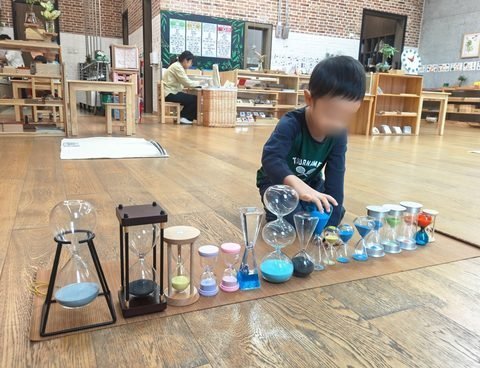
History in a Montessori classroom is the study of the passage of time and how we measure it: in seconds, minutes, hours, weeks, months, seasons and years, using materials that include Timelines, Events Charts and The Clock. I try to accumulate a large collection of sand-timers, as they’re one of the oldest and most practical ways to measure time.




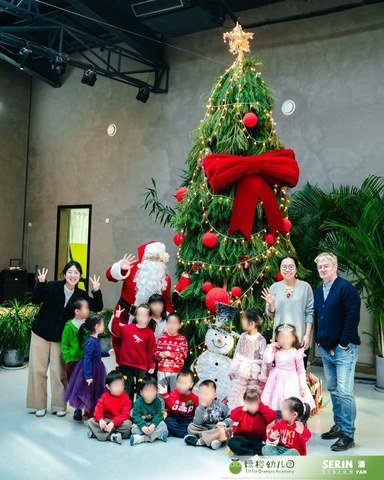
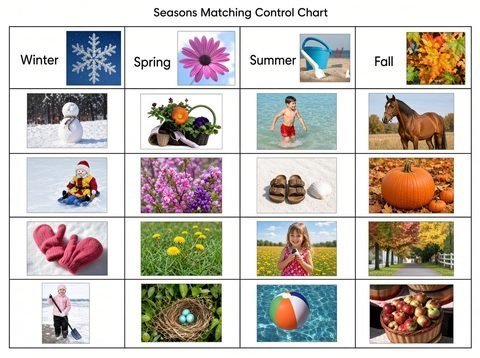
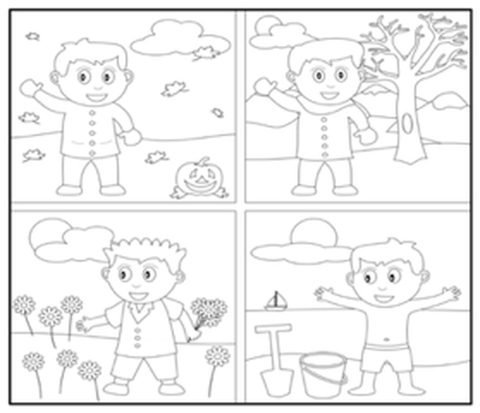
The 12 months of the year are punctuated by many events which mark the passing of time: the first day of school in August, Autumn and Halloween, Winter and Christmas, Spring and Chinese New Year, St. Patrick’s Day, etc.




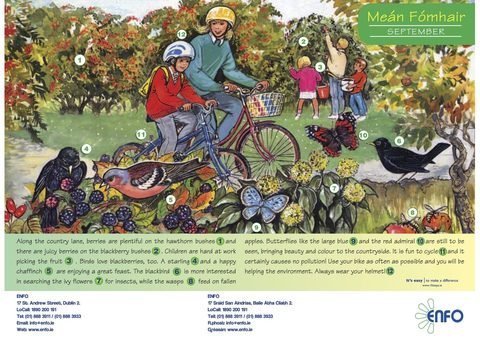
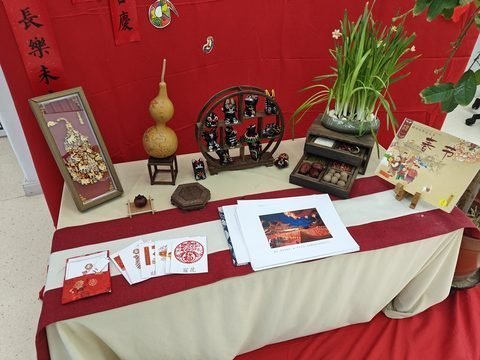
In China the 24 Solar Terms are a wonderful way to reflect upon the passing of time.


Arts and Crafts
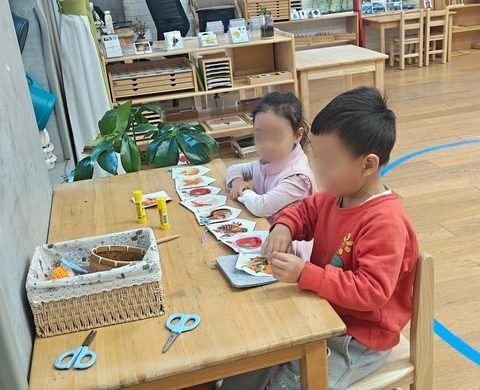
There are a great deal of seasonal materials available in a wide array of topics related to the seasons.

The Clock
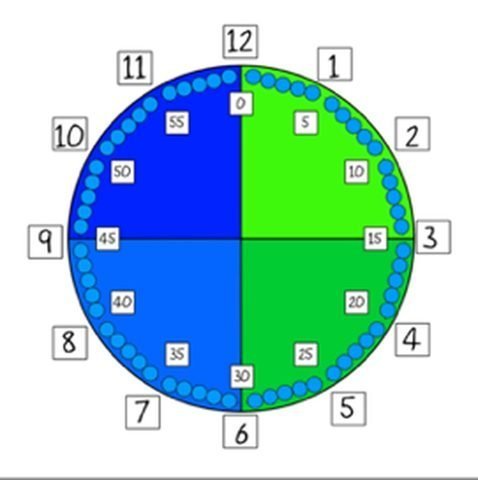
Also introduced to small groups of 3 or 4 children, in the following order of presentations:
- Placing the numbers
- The Short Hand = hours
- Skip counting by 5’s
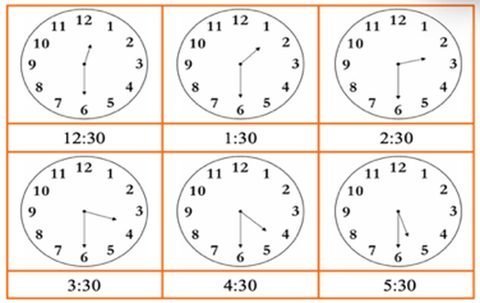
- Half-hours, then quarter-hours
- The Long Hand = minutes


This presentation can only be given to a child who is older than 4 ½, as #3 makes clear.
Three-Part Cards for the hours, half-hours, quarter-past and quarter-to, which can also be used as a writing exercise.



Older children are introduced to more abstract concepts such as the past, present and future.


Sample History Albums (contents)
College of Modern Montessori
Materials In The Classroom To Stimulate The Child’s Sense Of Time
The Birthday Celebration / Walk
The Personal Timeline
The Introductory Timeline
Experiments That Can Be Done With The Story Of The Universe
The Prehistoric Timeline
Names of the Prehistoric Eras
Montessori Teachers Collective
Daily Calendar
Seasons
Linear Timelines
Summary/Weather Calendar
Events Chart
Sequence Cards
Birthday Celebration
Timeline of A Child's Life
History Stories
The Clock
Montessori World Educational Institute
Exercises for the Intuition of time, Introduction
Measuring Time
Introduction of the Calendar
Months of the Year
The Canadian Montessori Teacher Education Institute
Timeline of a day in the life of a child
Measuring the time
- clock
- sundial
- sand
- water
Passage of the time
- events chart: present and past
- calendars
- child's birthday walk
- timeline of a day in the life of a child
Length of the time with golden beads
Different timelines
- week
- month
- season
Prehistoric time line (objects / pictures)
Story of the Universe
Fossils
Science
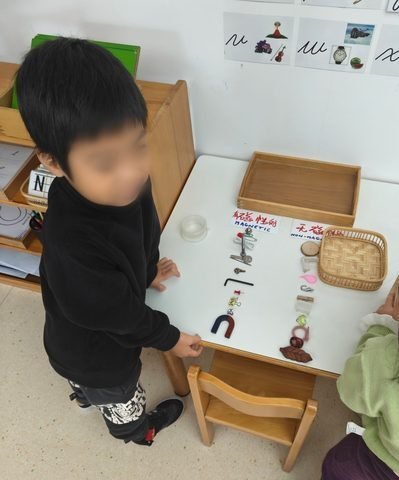
Physical Science introduces concepts such as energy, motion and magnetism, and is designed to spark curiosity, encourage hands-on exploration, and foster an understanding of scientific principles and the basics of categorisation and opposites, for example sink or float, magnetic or non-magnetic, tracking the transit of Venus, and experiments such as Surface Tension.


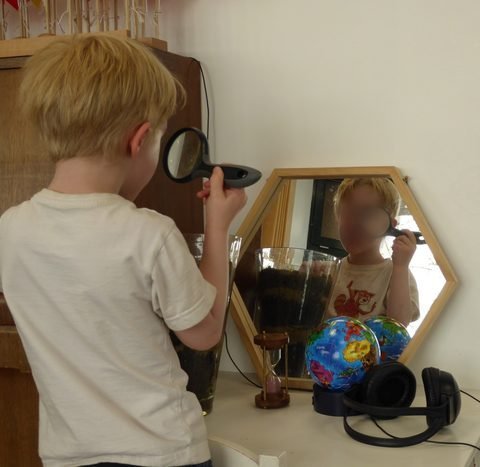
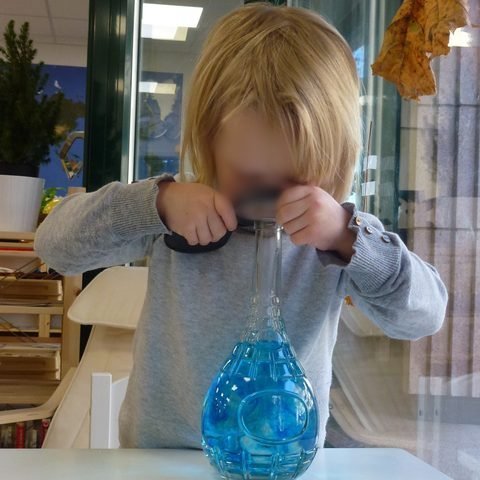

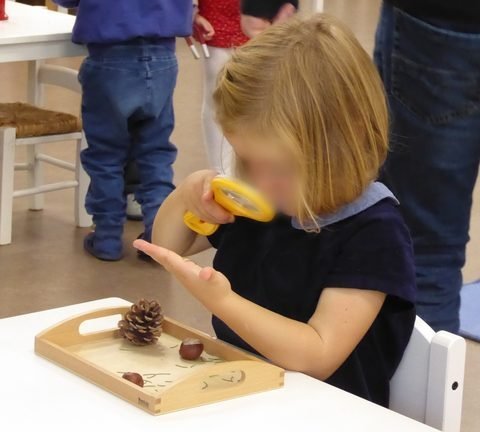

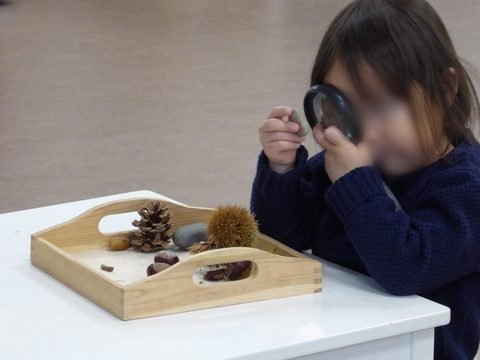
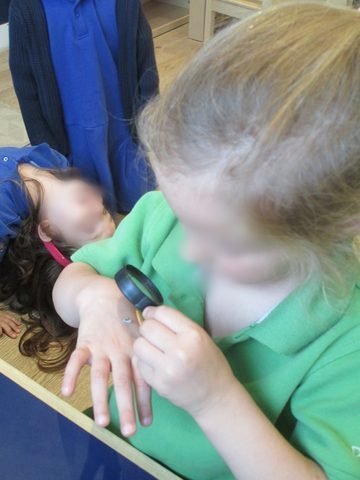


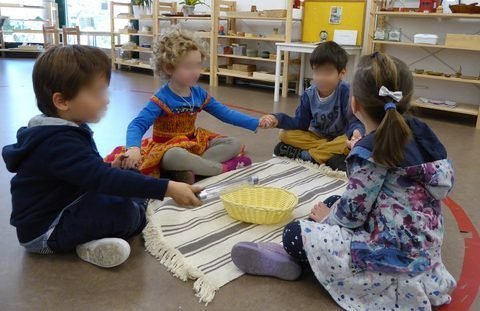


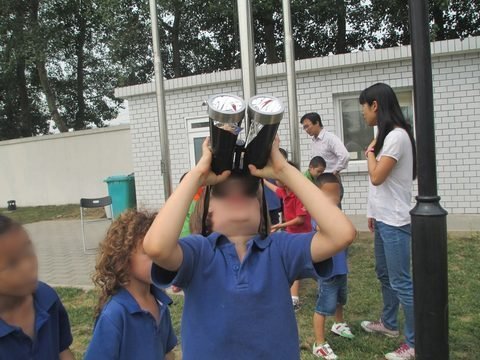
When I worked in Beijing, an Elementary teacher was demonstrating the properties of dry ice to his class and was kind enough to allow us to come for a demonstration. He was also kind enough to invite us to join his class to observe the transit of Venus.
Another day a very curious little boy named Tony asked, “Why is it sometimes day and sometimes night?” The class didn’t have a Globe of the Continents, so we took a sphere and a flashlight into a closet, and as another boy held the flashlight, Tony rotated the sphere and I explained that when one side of the sphere is bright the other is dark. The following week -after we’d bought the Globe of the Continents- I showed him where China was located on the globe and he rotated it, so it faced away from the sunshine streaming through the window, and I explained in this way why it’s sometimes day and sometimes night.


A Pair of Experiments
Experiment to Demonstrate Capillary Action
1. Prepare flowers or a cabbage leaf:
If needed, trim the stems at an angle under water to help them absorb the coloured water.
2. Prepare the coloured water:
Fill the glasses or vases with water and add a few drops of different food colouring to each.
3. Place the flowers in the coloured water:
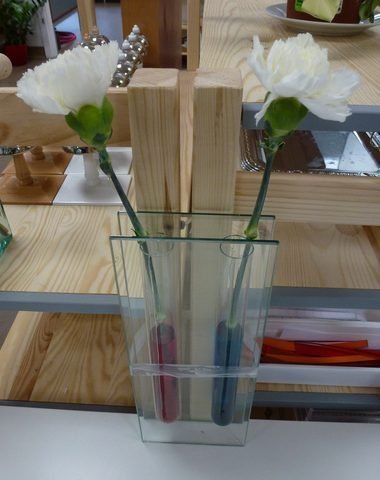
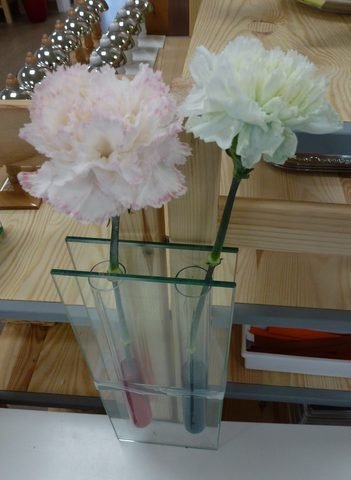
Put one flower into each glass or vase, making sure the cut end of the stem is submerged.
4. Observe the colour change:
Over time, you will see the flower petals start to change colour as the coloured water
travels up the stem through capillary action.
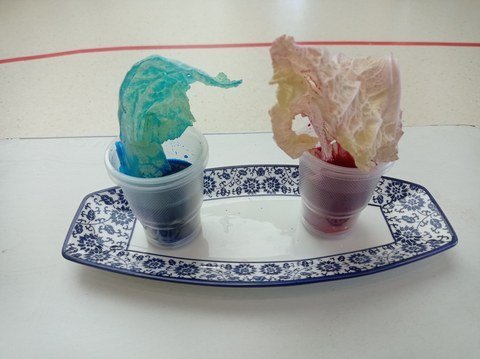
Capillary action
This is the process where liquids move up narrow spaces without the need for external forces like gravity.
How it works in flowers
Water molecules are attracted to each other (cohesion) and to the walls of the xylem (the tubes in the stem) (adhesion).
This attraction, combined with evaporation from the leaves (transpiration), pulls water up through the stem.
As the water travels up the stem, it carries the dissolved food colouring with it, resulting in the flower petals changing colour.
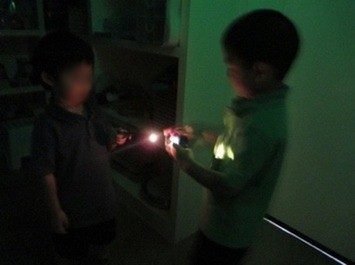
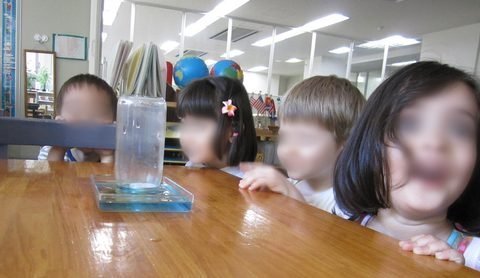
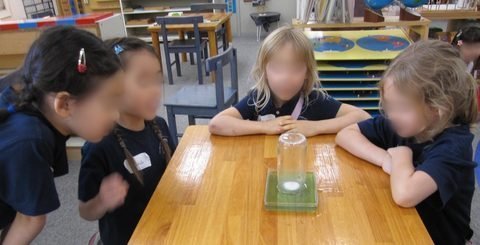
Candle in Limited Air Experiment
A lit candle is placed in a shallow dish of water, and a glass or jar is inverted over it. As the candle burns, it consumes the oxygen inside the inverted container.
When the oxygen supply is significantly reduced, the candle flame extinguishes because combustion requires oxygen.
As the oxygen is consumed and the candle extinguishes, the air inside the container cools, leading to a decrease in air pressure within the container.
The higher atmospheric pressure outside the container then pushes the water from the dish up into the inverted glass or jar to equalise the pressure difference.


Sample Science Albums (contents)
Montessori Teachers Collective
Science Shelf Layout
The Human Body
Use of a Magnifying Glass
Use of a Magnet
Feeling Box
Surprise Bag
Sink and Float
Living and Non-Living Things
Raising Water Level with Washers
Mixing Colours
Copper Cleaning
Plant Stems
Wheels and Belts
Weather
Evaporation
Condensation
Physical Science Curriculum for 3-6 year olds in a Montessori Classroom, by Meg Fedorowicz
I. Introduction
- Why Include Physics in an Early Childhood Program
- Piaget and Vygotsky
- Goals
- Notes on presentations
II. Forms of Matter
- Solid/Liquid/Gas
- Activities with Solids
- Activities with Liquid - Water
- Activities with Gas - Air
III. Forms of Energy A. Light
- Heat
- Sound
- Chemical
- Magnetism
- Electricity
- Simple Machines (Mechanical)
IV. The Four Fundamental Forces:
- Gravitation
- The Weak Nuclear Force
- Electromagnetism
- The Strong Nuclear Force
V. Bibliography
Artistic Expression
This area of the curriculum encourages creative expression and an appreciation for the arts, and contains two sections: Art, and Music and Movement.
Art
Materials include folding or cutting paper, drawing, painting, crafting and moulding clay.
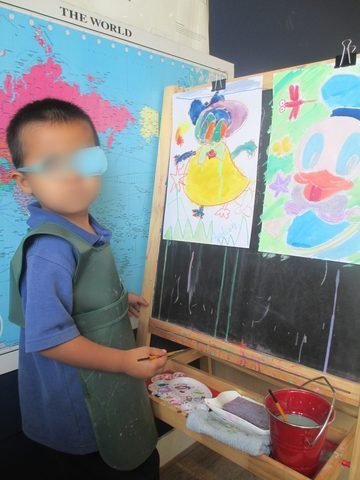
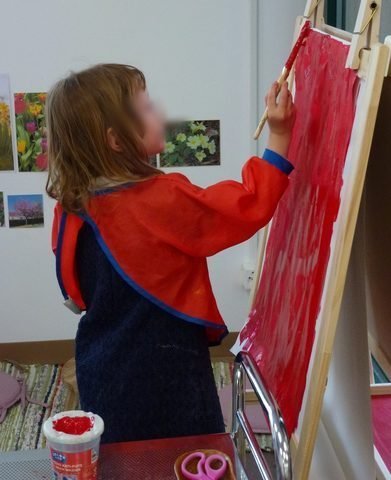
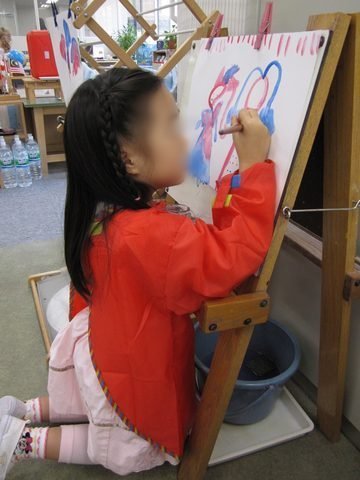


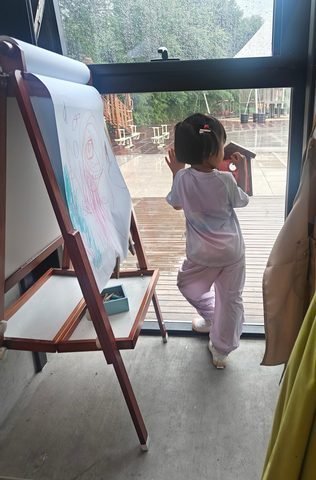
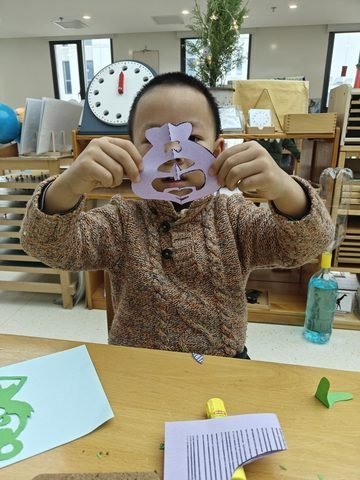
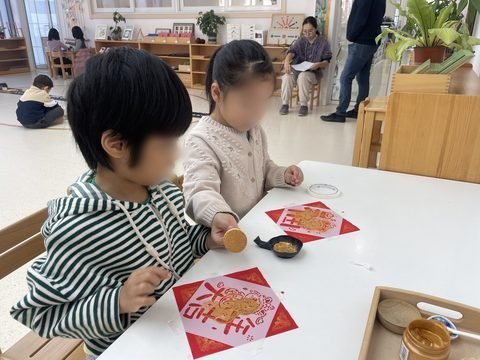
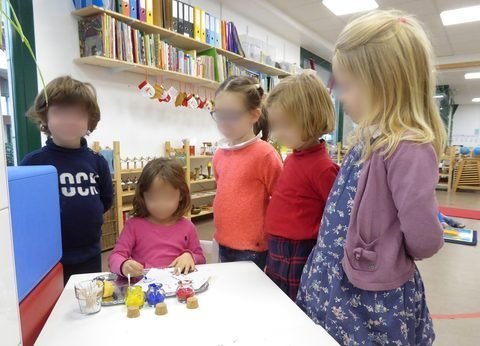

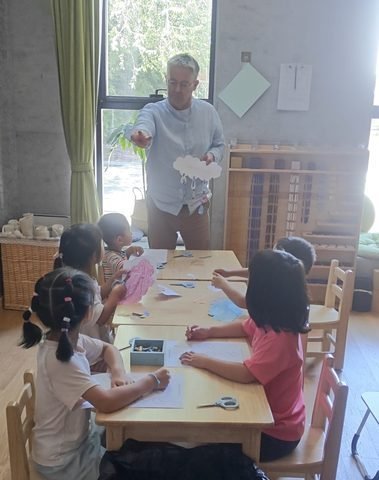
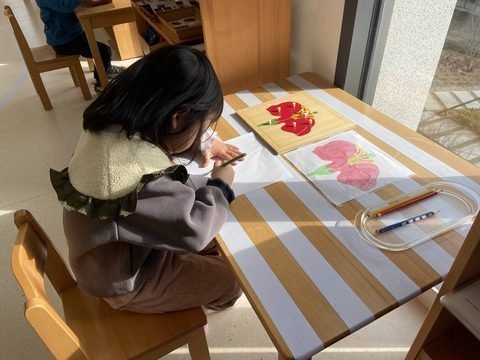
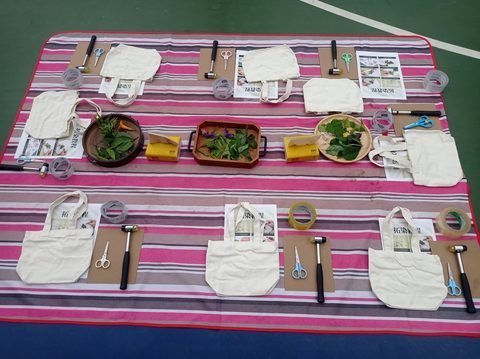
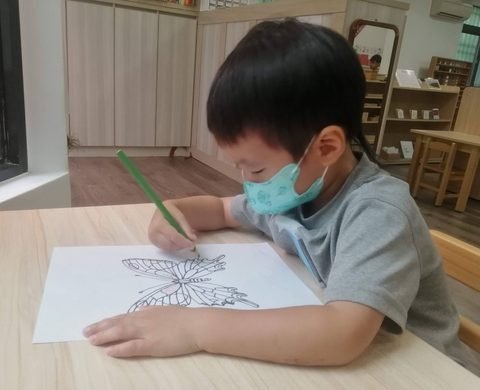
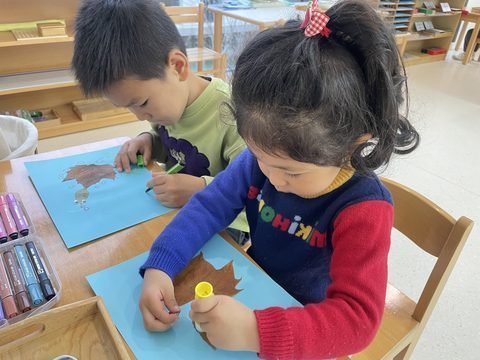
Art is everywhere, so it’s easy to integrate it into every part of the curriculum, including botany and zoology:


Sample Arts and Crafts Albums (contents)
The Canadian Montessori Teacher Education Institute
Tools
Progressive painting ability program
Work and life of famous painters and sculptors
Timeline of painting and sculpture through the ages
Visit to a museum
Montessori Educators International
Handwork Activities Involving Paper
Pin-pricking
Cutting
Bead Stringing
Weaving
Needlework
Sewing Cards
Sewing on Plastic Needlepoint Material
Sewing on Burlap or Other Loosely Woven Fabric
Button Sewing
Paper Making
Surface Decoration
Other Handwork Activities
Art Activities
Painting with Tempera
Drawing
Using water colour paint
Art Appreciation
Art History
Suggested Topics for Art Time Lines
Tessellation
Preparation of Cards Containing Pictures, Definitions and Labels
Booklet Preparation
Book Preparation for Books with Spines
Preparation of Containers for Pictures or Drawings
Music and Movement
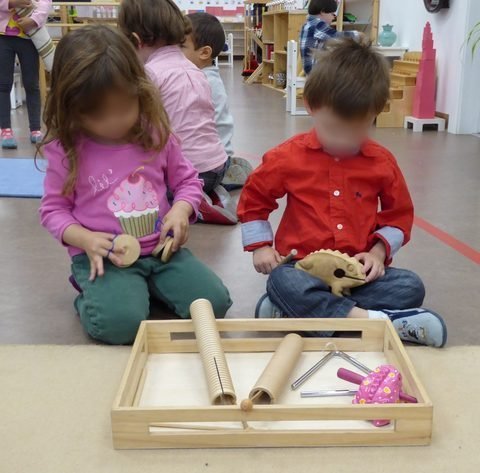
Children are innately musical, and love singing and chanting and moving and dancing, and there are many ways to stoke this interest, including providing a selection of instruments for them to play, listening to music using headphones, having a trained musician play instruments or give a music class, singing and dancing together at circle time, or having an outing to a classical music concert or having musicians perform in the class.
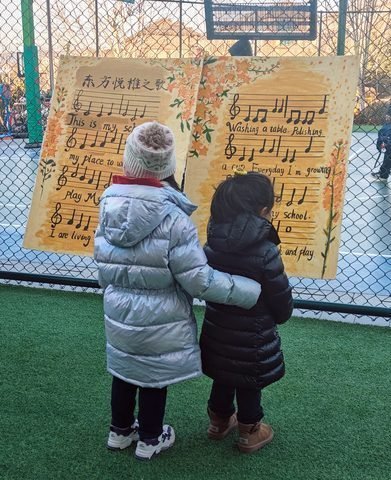

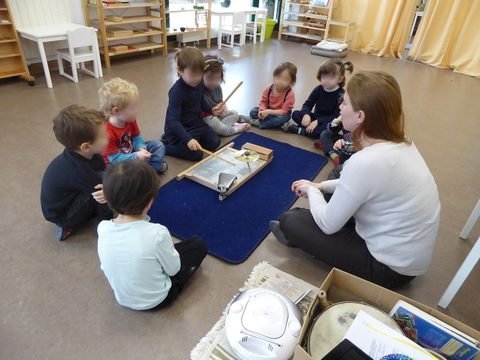
Music - Playing Instruments
Activities such as singing, dancing, playing musical instruments, and rhythm games develop auditory skills, rhythm, and coordination, using materials such as an assortment of musical instruments such as bells, drums, etc. and three-part cards of famous composers, fostering skills including physical coordination, auditory discrimination, and a love for music.


Music - Headphones
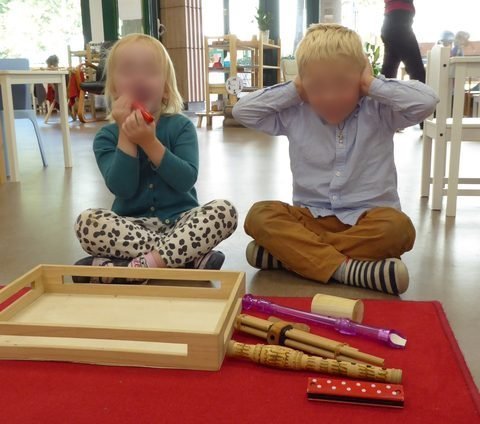
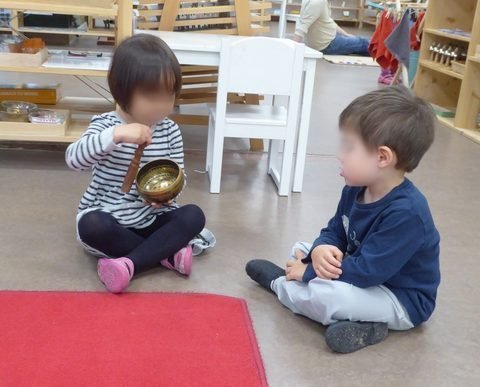
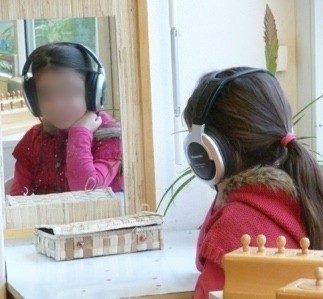
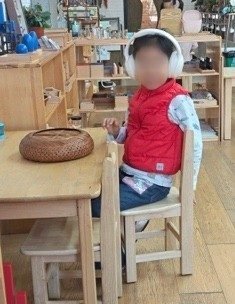
They’re not part of the AMI Sensorial curriculum, but children love putting on headphones and listening to music or audiobooks, and I’ve found it to be a passive but effortless but nevertheless effective way to reinforce any song I want them to learn, for example when I’m rehearsing for the end of term or end of year performance, or if Christmas or any other significant holiday is approaching.




Music - Class
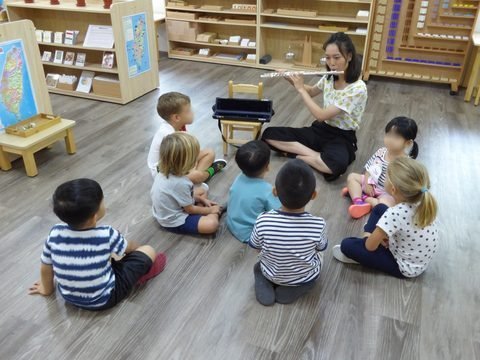
I’ve been fortunate to work alongside musicians and to have parents who are willing to come and give lessons to the children.

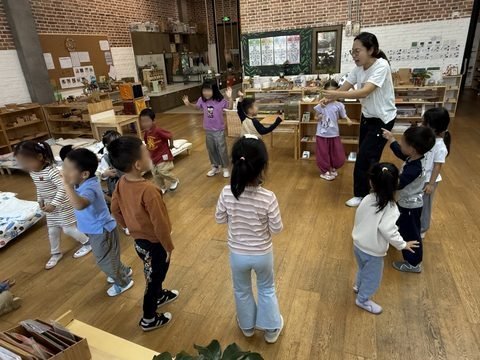
Music @ Circle Time
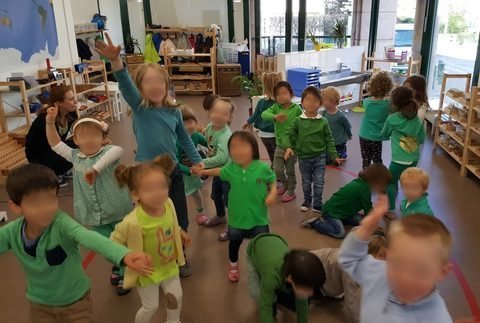
There are few things that excite a group of children more than having the opportunity to sing and dance together.


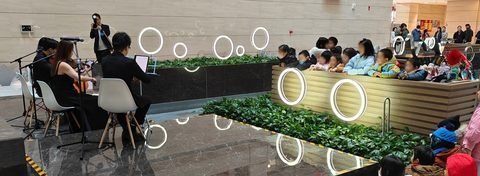
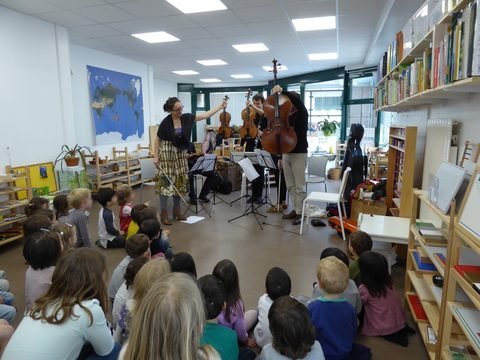
Classical Music
In Beijing there was a series of free lunchtime concerts in a local mall, so we took the children to listen one afternoon, and in Geneva the owner of the school invited some of her friends to come perform for the children.
Sample Music and Movement Albums (contents)
College of Modern Montessori
Music in The Preschool: Overview
Working With Different Age Groups
The Basic Elements in Music
Music During Circle-Time
Points to Consider When Using Musical Instruments
The Orchestra
The Montessori Bells
- Introduction
- Matching
- High And Low Exercises
- Grading
- Naming
Notation Classified Cards: Matching
Notation Classified Cards: Three-Period Lesson
Notation Classified Cards: for the Reading Child
The Canadian Montessori Teacher Education Institute
Instruments
Percussions
Winds
Strings
Life and work of famous musicians
Timeline of music through the ages
Movement
Stretching
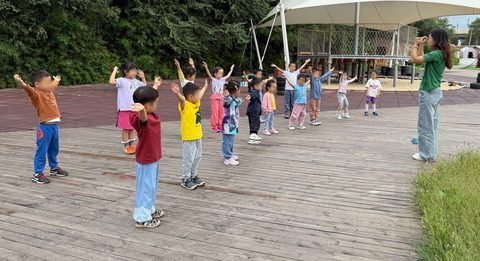
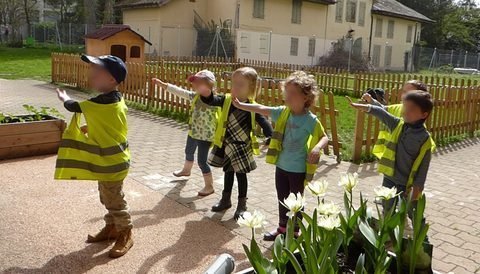
Like Circle Time, but even better as it’s often done outdoors so the children can sing and chant and dance and stamp to their heart’s desire.


Yoga
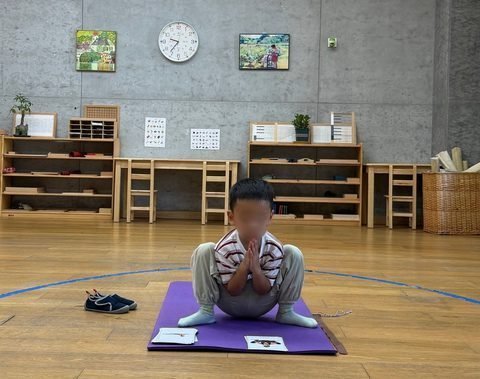
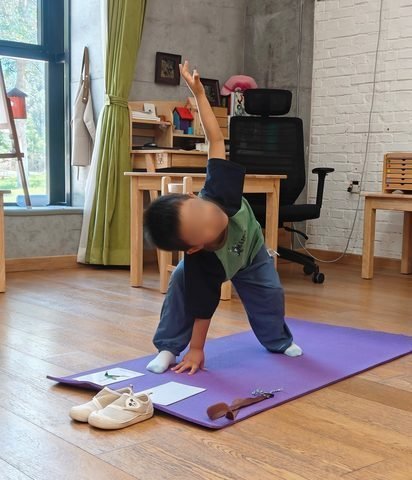
There are many Yoga books and cards with poses aimed at young children, which are ideal for use with children, and greatly help the children control their breathing and refine their movements, independent of adult assistance.