‘Freely chosen, personally directed, intrinsically motivated behaviour that actively engages the child.’
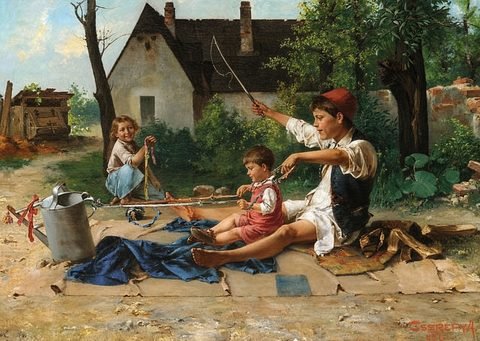
Play is a universal and fundamental aspect of human development and an indispensable cornerstone for a healthy and fulfilling life; it constitutes a complex and dynamic process of exploration and learning, contributing to cognitive development, social competence and emotional well-being and as such it plays a critical role in childhood.
Play
While all free play is play, not all play is free: the core distinction lies in the locus of control, who is directing the activity and determining its rules and goals. It is a broad, umbrella term and it encompasses a huge spectrum of behaviours, from a child quietly constructing LEGO by following the instruction booklet, to a group of kids playing an organized game of soccer with a coach, to a toddler engaging in a structured craft activity led by a teacher. In these examples, the activity is playful and enjoyable, but the framework, the rules, and the objective are largely set by an external source (a manual, a coach, a teacher). These are all examples of Guided Play, which is distinct from Free Play.
“I’ve always had a fancy that Learning might be made a play and recreation to children.” - John Locke. (1693)
Free Play
“Free play is play in which the players themselves decide what and how to play and are free to modify the goals and rules as they go along. Pickup baseball is free play; a Little League game is not. Free play is how children learn to structure their own behaviour.” - Peter Gray, Free to Learn, 2013.
Free play is also called unstructured play or self-directed play and is a specific and vital type of play, its defining characteristic being that is that it is fully child-led and child-directed: the children themselves decide what to play, how to play it, when to change the rules and when to stop. There’s no external goal, no adult-imposed outcome and no right or wrong way to do it.
Free play can include many different activities. It's the blank canvas time in a child's day.
- A toddler taking all the pots out of the cupboard and banging on them with a spoon.
- A group of kids in the backyard who spontaneously decide to build a "fort" out of sticks and old blankets, making up the rules as they go.
- A child lying on the grass looking at the clouds and making up stories about their shapes.
- A preschooler emptying a bin of LEGOs and deciding to sort them by colour, then abandoning that to build a tower, then knocking it over.
The adult sets the stage with a secret learning goal. They might put numbers on the blocks and say, "I wonder if we can build a tower with 5 blocks?" The child feels like they are playing freely, but the adult has guided them toward a math concept.
The child is 100% in charge. If they have a bin of blocks, they might stack them, line them up, throw them, or pretend they are cookies. The adult simply supervises for safety.
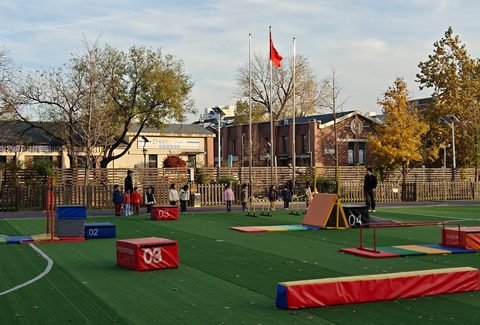
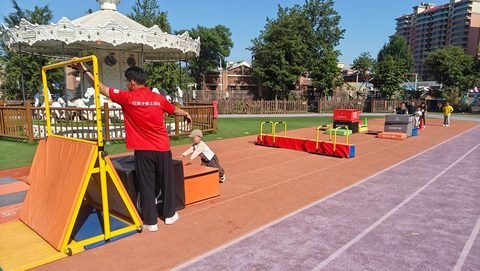
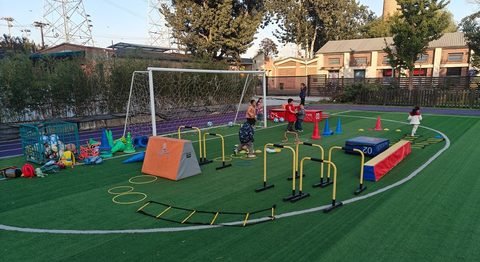
This is an example of how children transition from Guided Play to Free Play: once a week my class had a parkour lesson where the instructor prepared the obstacle course and the children literally followed the path that was laid out for them: adult instructions, adult rules, an adult game.
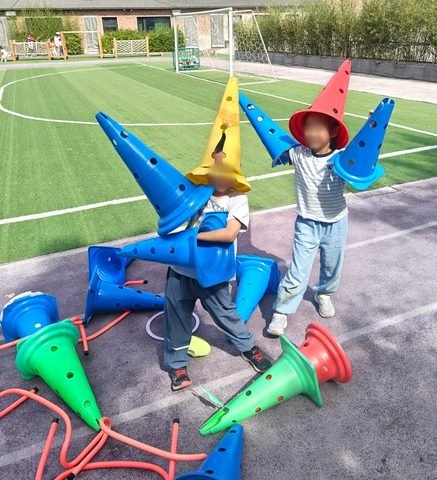
A few days later, the children used the Loose Parts that were available on the playground and created their own course, which was more interesting, challenging, creative and inclusive, and which -unlike the adult-designed course- could be completed without the help of an adult.
“Deep meaning lies often in childish play.” - Johann von Schiller. (1805)

Types of Free Play
Free play is essential because it allows children to practice making choices, solving their own problems, negotiating with peers, and discovering their own interests in a low-stakes environment. It is the foundation upon which other types of play naturally happen, for example Object Play, Pretend Play, and Physical Play.
| Type of Play | What is it? | Key Developmental Benefits | Examples |
|---|---|---|---|
| Object Play | Exploring and manipulating objects to learn their properties. The focus is on the toy or item itself. | Cognitive and Motor Skills Problem-solving, hand-eye coordination, understanding cause and effect. | Stacking blocks, fitting shapes into a sorter, rolling a car back and forth. |
| Pretend Play | Using imagination to create scenarios, roles, and symbols. The object or situation is a stand-in for something else. | Social and Language Skills Narrative thinking, empathy, self-regulation, and cooperation. | Having a tea party, playing doctor, using a stick as a sword. |
| Physical Play | Gross and fine motor movement for the sake of the movement itself. It can be structured (sports) or unstructured (rough-and-tumble). | Physical and Emotional Health Strength, coordination, spatial awareness, and stress relief. | Running, jumping, climbing, dancing, wrestling. |
| Guided Play | A hybrid model. The child is in charge of their exploration (child-led), but an adult has set up the environment or materials with a specific learning goal in mind. | Academic and Executive Function Introducing specific concepts (math, literacy) while maintaining the motivation and discovery of free play. | A teacher sets up a grocery store in the classroom to teach counting and money skills while the children play shoppers. |
"The main characteristic of play - child or adult - is not its content, but its mode. Play is an approach to action, not a form of activity." - Jerome Bruner. (1989)
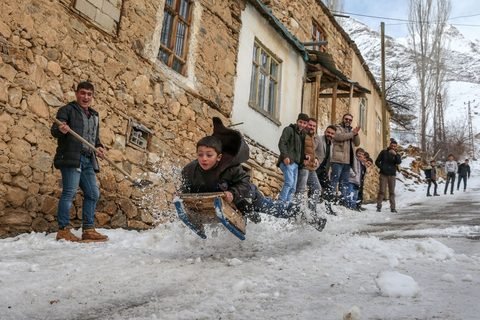
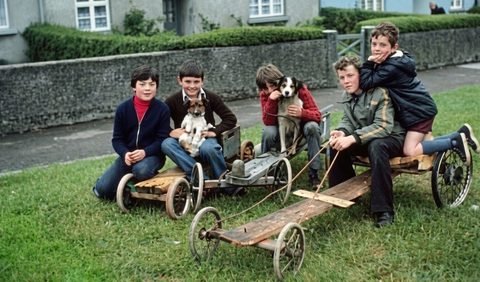

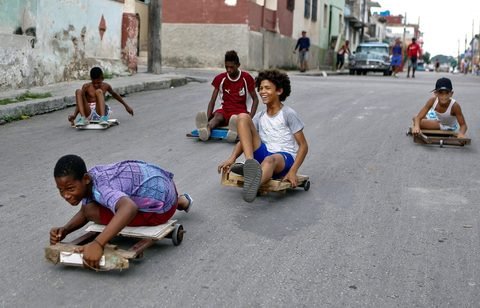
An Alternative Characterisation
Object Play The Scientist phase.
When a child bangs a spoon on a pot or stacks blocks, they are testing the laws of physics and learning about the properties of the world around them.
Pretend (Symbolic) Play The Actor phase.
By pretending a banana is a phone or assuming the role of a doctor, children practice social hierarchies, emotional control, and the idea that one thing can stand for another-a precursor to reading and math.
Physical Play The Athlete phase.
Beyond just exercise, physical play (especially rough-and-tumble) teaches children about boundaries, "fair play," and how to manage their own strength and adrenaline.
Guided Play The Collaborator phase.
Unlike free play, guided play has a learning goal in mind. An adult might provide specific materials or ask open-ended questions e.g., "I wonder what happens if we put the heavy block on top?" to nudge the child toward a discovery without taking over the fun.
There isn't a best type of play; rather, a healthy developmental diet requires a mix of all four. While physical play builds the body, pretend and object play build the mind, and guided play helps those discoveries stick.
“We don’t stop playing because we grow old; we grow old because we stop playing.” - George Bernard Shaw. (1911)

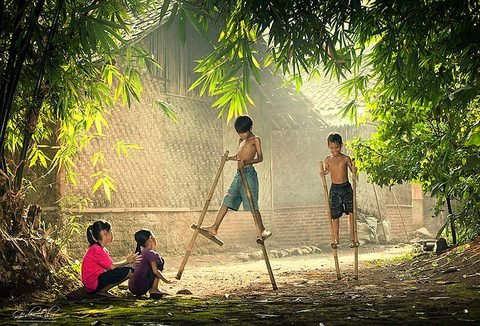
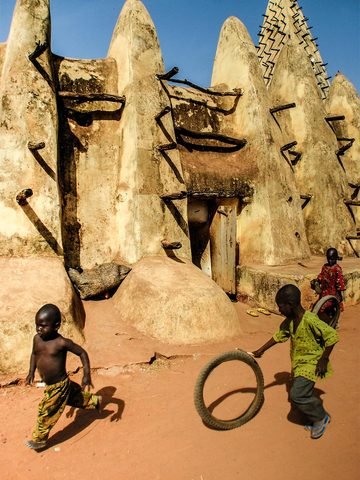

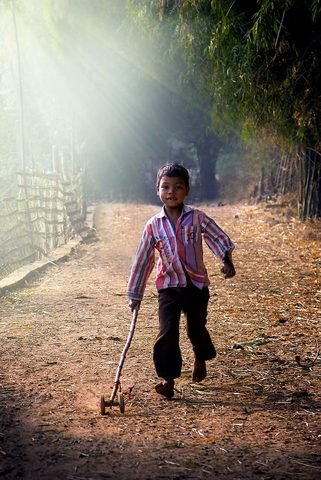
“A child loves his play, not because it’s easy, but because it’s hard.” - Benjamin Spock. (1974)
Froebel and Play
Play cannot be pinned down into a neat, measurable definition. Different philosophies of early childhood education see play through different lenses and make decisions about whether play is important - or if it is - how it is important. The following features are drawn from and reconnect with Friedrich Froebel’s approach to early childhood play locating this amongst an evolving literature, some of which does not chime with his explorations of childhood play, and much of which does.
- Free flow play actively uses direct, first -hand experiences, which draw on the child’s powerful inner drive to struggle, manipulate materials, explore, discover and practise over and over again.
- Play exerts no external pressure on children to conform to externally imposed rules, goals, tasks or a definite direction. In this it differs from games. But the externally set rules in games enable children to experiment with breaking, making and keeping rules in the safety of their free-flowing play.
- Play is an active process without an end product. When the play fades, so does its tangibility. It can never again be replayed in exactly the same way. It is of the moment and vanishes when the play episode ends. This aids flexibility of thought and the adaptability central to the intellectual life of the child.
- Play is intrinsically motivated. It does not rely on external rewards. It is self-propelling. Children cannot be made to play. The circumstances and relationships need to be right for the child’s play to begin to flow.
- Play is about possible, alternative, imagined worlds which involve ‘supposing’ and ‘as if’ situations. These lift participants from the literal and real to a more abstract and higher level of functioning. This involves being imaginative, creative, original and innovative. The symbolic life of the child uses life experiences in increasingly abstract ways.
- Play is sustained, and when in full flow, helps children to function in advance of what they can actually do in their real lives. They can drive a car, perform a heart operation, be a shop keeper.
- Play can be initiated by a child or an adult, but if by an adult he/she must pay particular attention that the adult’s play agenda is not the most important or only one. Free flowing play is more like a conversation with each listening to and tuning into the other.
- Play can be solitary and gives children agency and a sense of control over their lives. It supports children in developing awareness and strength in their own ideas, feelings and relationships. It gives personal space for contemplation and well-being because it gives strength to deal with life’s events.
- Play might be in partnerships between children or between adult and child. Or it might be in a group with or without an adult participating. Adults need to be sensitive to children’s play ideas, feelings and relationships and not invade, overwhelm or extinguish the children’s possibilities for free-flowing play. Freedom with guidance is a delicate balance.
- Play is about wallowing in ideas, feelings and relationships and the prowess of the physical body. It helps the process of becoming aware of self in relation to others and the universe. It brings unity and interconnectedness.
- During their free-flowing play children use the technical prowess, mastery and competence they have developed to date. They are confident and in control. Play shows adults what children already know and have already learnt more than it introduces new learning.
- Play is an integrating mechanism which brings together everything the child has been learning, knows and understands. It is rooted in real experience that it processes and explores. It is self-healing in most situations and brings an intellectual life that is self-aware, connected to others, community and the world beyond. Early childhood play becomes a powerful resource for life both in the present and the future.
About this article - First gathered by Tina Bruce from Froebel’s writings and the literature in 1991 - Time to Play in Early Childhood Education - and reviewed in the light of newer literature at regular intervals.
‘Play is the highest level of child development. It is the spontaneous expression of thought and feeling - an expression which his inner life requires.
This is the meaning of the word ‘play.’ ’It promotes enjoyment, satisfaction, serenity and constitutes the source of all that can benefit the child…
At this stage play is never trivial; it is serious and deeply significant.’ - Frederic Froebel. (1826)

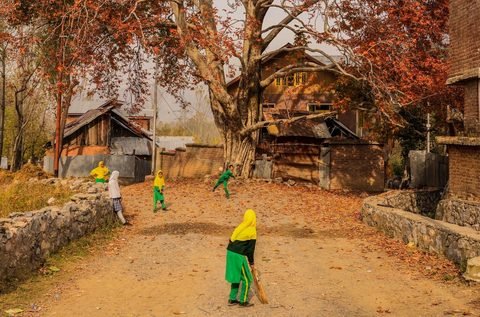
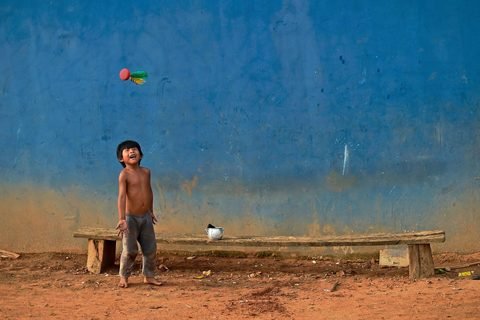
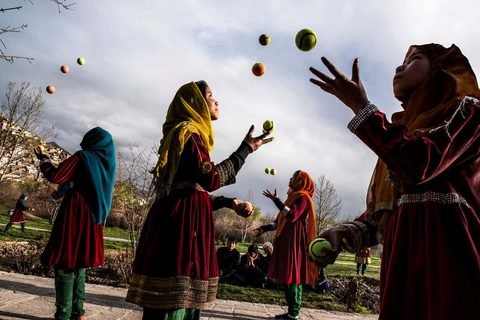
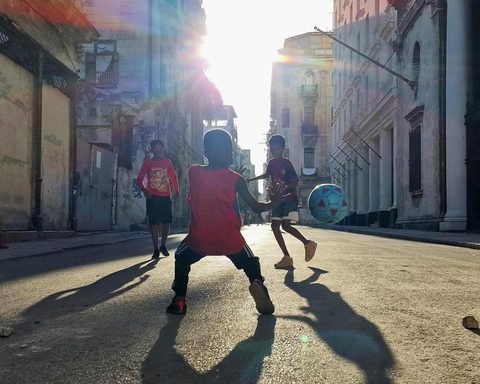
Creative people are curious, flexible, persistent, and independent with a tremendous spirit of adventure and a love of play.” - Henri Matisse. (1946)
The following two articles are from the National Association for the Education of Young Children, based in Washington, DC, who have many informative articles
on a range of topics, including play.
Five Essentials to Meaningful Play by Marcia L. Nell and Walter F. Drew
When you think back on your childhood, what happy play memories come to mind? Adults today tend to think back on their childhood play memories with nostalgia and often call them the “good old days.” Memories of joyful and meaningful play experiences help bind families together emotionally, even long after children are grown. Are our children experiencing the same kind of joy, meaning, and family bonding in their play? Here are five elements essential to meaningful play that create those rich memories we treasure.
1. Children make their own decisions.
When children choose how to play for themselves, they experience freedom in making those choices. They also begin to see connections between choice and the consequences or results of that choice. The type of toys or materials parents offer can help their children make more meaningful decisions. Open-ended materials can be used in many ways so children can decide for themselves how to use them. For example, a child can imagine a block to be a fire truck or any number of things. A toy fire truck, on the other hand, is usually used as a fire truck. Foam pieces, little wooden sticks, ribbon scraps, and other reusable resources are all open-ended materials that inspire creative thinking and delight when children use them to make something no one has ever made before.
2. Children are intrinsically motivated.
The impulse to play comes from a natural desire to understand the world. This play impulse is as strong as your child’s desire for food or sleep. It is this intrinsic motivation that allows a child to regulate her own feelings and desires in order to keep playing. Because children eventually find it more important to be part of play with their friends than to satisfy their own wants and needs at that moment, children learn self-control. And self-control has been shown to lead to success in later years, especially in today’s information age, where distractions are part of daily life.
3. Children become immersed in the moment.
In true play, children are so fully engaged that they lose awareness of their surroundings, time, and space. In this risk-free atmosphere where reality is suspended, children have the security and safety they need to experiment, try new ideas, and investigate the laws of nature. Although they are immersed in their play, children still can recognize reality versus fantasy, something parents often wonder about.
4. Play is spontaneous, not scripted.
Often, play is totally unplanned. Other times, play is planned but a child impulsively makes a change. One child changes his mind, or perhaps a toy does not cooperate. This sense of the unknown provides children with opportunities to develop flexibility in their thinking and decision making, which is a vital life skill.
5. Play is enjoyable.
Play always has an emotional response attached to it. Without this emotional connection, the experience is simply an activity; it is not play. Enjoyment is the direct result of engaging in play. It is fun! These five essential elements of play outline why play provides your child with a rich experience. And isn’t that what we want for our children, to develop play memories that will become the “good old days”?
“Do not keep children to their studies by compulsion but by play.” - Plato. (310BC)
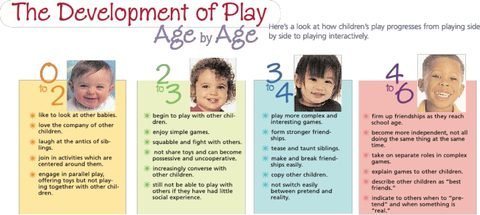
10 Things Every Parent Should Know About Play by Laurel Bongiorno.
1. Children learn through their play.
Don’t underestimate the value of play. Children learn and develop:
Cognitive skills like math and problem solving in a pretend grocery store
Physical abilities like balancing blocks and running on the playground
New vocabulary like the words they need to play with toy dinosaurs
Social skills like playing together in a pretend car wash
Literacy skills like creating a menu for a pretend restaurant
2. Play is healthy.
Play helps children grow strong and healthy. It also counteracts obesity issues facing many children today.
3. Play reduces stress.
Play helps your children grow emotionally. It is joyful and provides an outlet for anxiety and stress.
4. Play is more than meets the eye.
Play is simple and complex. There are many types of play: symbolic, sociodramatic, functional, and games with rules--to name just a few. Researchers study play’s many aspects: how children learn through play, how outdoor play impacts children’s health, the effects of screen time on play, to the need for recess in the school day.
5. Make time for play.
As parents, you are the biggest supporters of your children’s learning. You can make sure they have as much time to play as possible during the day to promote cognitive, language, physical, social, and emotional development.
6. Play and learning go hand-in-hand.
They are not separate activities. They are intertwined. Think about them as a science lecture with a lab. Play is the child’s lab.
7. Play outside.
Remember your own outdoor experiences of building forts, playing on the beach, sledding in the winter, or playing with other children in the neighbourhood. Make sure your children create outdoor memories too.
8. There’s a lot to learn about play.
There’s a lot written on children and play. Here are some NAEYC articles and books about play. David Elkind’s The Power of Play is also a great resource.
9. Trust your own playful instincts.
Remember as a child how play just came naturally? Give your children time for play and see all that they are capable of when given the opportunity.
10. Play is a child’s context for learning.
Children practice and reinforce their learning in multiple areas during play. It gives them a place and a time for learning that cannot be achieved through completing a worksheet. For example, in playing restaurant, children write and draw menus, set prices, take orders, and make out checks. Play provides rich learning opportunities and leads to children’s success and self-esteem.
“The creation of something new is not accomplished by the intellect but by the play instinct.” - Carl Jung. (1922)
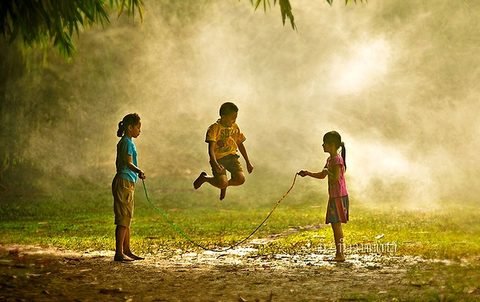

The following brief justification for the advantages of play is excerpted from the Encyclopaedia on Early Childhood Development
Why Should Play be Part of Children’s Life?
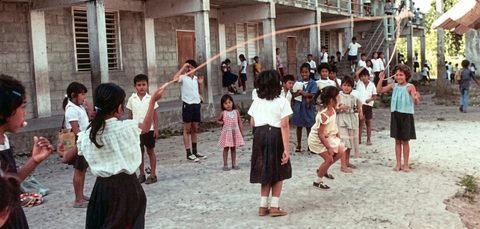
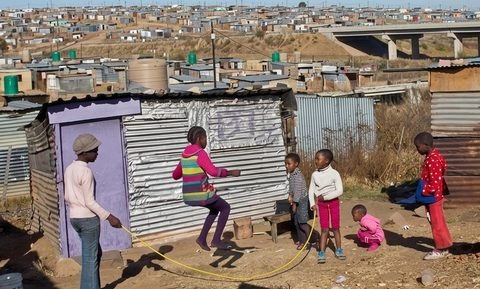
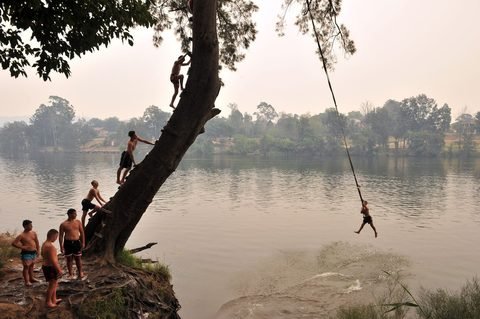
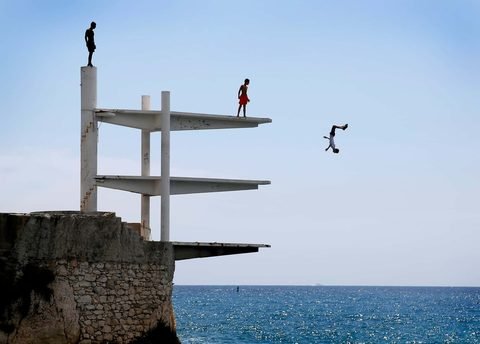
- Play is a universal phenomenon and a right of childhood. It is a spontaneous, rewarding and fun with several benefits:
- Education: helps children learn and build skills that lay the foundation for learning to read, write and do math.
- Social skills: provides opportunities to socialize with peers of the same age, and to learn to understand others, to communicate and to negotiate.
- Cognition: encourages children to learn, imagine, categorize and problem solve.
- Therapeutic benefits: Gives children the opportunity to express troubling aspects of their daily life, including stresses, trauma, family conflicts and other dilemmas.
- Our children live in a time of busy schedules and high expectations for achievement; we should take care to give them the time and space to discover the joy and benefits of free play.
- Playful learning or guided play actively engages children in pleasurable and seemingly spontaneous activities that encourage academic exploration and learning. Here, teachers using guided play have a set of learning goals in mind.
“Combinatory play seems to be the essential feature in productive thought.” - Albert Einstein. (1924)


Play v’s Work
"Work consists of whatever a body is obliged to do, and play consists of whatever a body is not obliged to do.” - Mark Twain. (1876)
“All work and no play makes Jack a dull boy.” - James Howell. (1659)
Words are important, and our choice of words effects how our message is received and accepted by others. I’ve observed in many disparate cultures and different countries how the use of the word ‘work’ (to describe what their child does in class every day) is baffling for many parents. Maria Montessori was rigid in her belief in the power of ‘work’ and so -inevitably- Montessorians are also rigid in their parroting of her theory: Montessori And Play by Laura Flores Shaw is about as orthodox Montessori perspective on play as you can get, as you might guess when “The author gratefully acknowledges the contributions of Kay Baker, Jacqueline Cossentino, Annette Haines, and Mauricio Flores to this article.”
Maria Montessori had quite a bit to say on the topic of work, including this:
"Among the revelations the child has brought us, there is one of fundamental importance, the phenomenon of normalisation through work. Thousands and thousands of experiences among children of every race enable us to state that this phenomenon is the most certain datum verified in psychology or education. It is certain that the child's attitude towards work represents a vital instinct; for without work his personality cannot organise itself and deviates from the normal lines of its construction. Man builds himself through working. Nothing can take the place of work, neither physical well-being nor affection, and, on the other hand, deviations cannot be corrected by either punishment for example. Man builds himself through working, working with his hands, but using his hands as the instruments of his ego, the organ of his individual mind and will, which shapes its own existence face to face with its environment. The child's instinct confirms the fact that work is an inherent tendency in human nature; it is the characteristic instinct of the human race." - Maria Montessori. (1936)
An instinct is something over which animals have no control, but there are people who choose not to work - ergo, work cannot be “the characteristic instinct of the human race.” So, which word most closely describes what children actually do in a Montessori environment: work or play? Let’s define the terms:
Work Engage in physical or mental activity in order to achieve a result; do work.
Synonyms Labour, effort, industry, exertion, toil, endeavour, drudgery.
Antonyms Child's play, ease, leisure.
So, the Cambridge Dictionary believe that work is in fact the complete opposite of child’s play.
Play Engage in activity for enjoyment and recreation rather than a serious or practical purpose.
Synonyms: Engage in games, amuse, entertain or divert oneself, have fun, make merry, enjoy oneself, gambol, romp, revel, frisk, frolic, sport, cavort, caper, skylark, antic, disport.
Antonyms: Labour, toil, strive, struggle, slave.
I can’t see how this could possibly be clearer: children do not labour, toil, strive, struggle or slave (in my class at least), they gambol, they cavort and caper and they have fun, a great deal of fun. It might seem like a question of semantics but as I wrote before, words matter, so we need to use them carefully: it’s not work!
That’s my opinion, but perhaps play/work is something of a false dichotomy:
“Play isn't the only alternative to "work." I've never been comfortable using the word work to describe the process by which children make sense of ideas - which is to say, adopting a metaphor derived from what adults do in factories and offices to earn money. To express this concern, however, isn't tantamount to saying that students should spend all day in school playing. Work and play don't exhaust the available options. There's also learning, whose primary purpose is neither play-like enjoyment (although it can be deeply satisfying) nor work-like completion of products (although it can involve intense effort and concentration). It's not necessary to work in order to experience challenge or excellence, and it's not necessary to play in order to experience pleasure. But there's still a need for pure play. And that need isn't being met.” - Alfie Kohn. (2011)



“In play a child always behaves beyond his average age, above his daily behaviour. In play it is as though he were a head taller than himself.”- Lev Vygotsky (1932)