The Foundation of Independence
The Practical Life Curriculum
Observing The Needs Of The Child

Maria Montessori’s development of the Practical Life curriculum was rooted in her observations of children and her belief that learning should be grounded in real-world experiences. Her work began in the early 20th century when she opened the first Casa dei Bambini (Children's House) in San Lorenzo -a working-class neighborhood in Rome- in 1907, a setting which allowed her to study how young children interacted with their environment. As she observed the children, she noticed that they were naturally drawn to activities that mirrored adult tasks such as sweeping, pouring water, or buttoning clothes, and that these actions not only engaged the children but also supported their cognitive and physical development.
"Experience shows that it is useless and harmful to give the children Sensorial and Cultural apparatus before they are ready to benefit from it. Before introducing this kind of material, one must wait until the children have acquired the power to concentrate on something, and usually . . . this occurs with the exercises of Practical Life. When the child begins to show interest in one of these, the teacher must not interrupt, because this interest corresponds with natural laws and opens up a whole cycle of new activities. . . . The teacher, now, must be most careful. Not to interfere means not to interfere in any way. This is the moment at which the teacher most often goes wrong. The child, who up to that moment has been very difficult, finally concentrates on a piece of work."Maria Montessori, The Absorbent Mind, pp. 277-81. (1949)
Rather than dismissing such behaviors as mere imitation, Montessori recognized them as essential steps in a child’s growth toward independence and self-regulation, and she theorised that by engaging in meaningful, purposeful work, children could develop internal order, coordination and confidence. Montessori emphasised that these exercises were not merely preparatory for academic learning but were fundamental to a child’s overall growth, fostering independence and self-discipline. From these observations, she developed a series of materials and exercises aimed at refining motor skills while developing coordination of movement, her approach emphasising repetition, sequential learning, and the use of real-life tools adapted for small hands, ensuring that each activity provided both challenge and fulfillment.
‘If teaching is to be effective with young children, it must assist them to advance on the way to independence. It must initiate them into those kinds of activities, which they can perform themselves. We must help them to learn how to walk without assistance, to run, to go up and down the stairs, to pick up fallen objects, to dress and undress, to wash themselves, to express their needs, and to attempt to satisfy their desires through their own efforts. All this is part of an education for independence."Maria Montessori, ‘The Discovery of the Child’, p. 56. (1967)
As she expanded her work beyond Italy, Montessori traveled extensively, observing children across different cultures and adapting her methods to suit diverse environments and the curriculum underwent continuous refinement as her educational philosophy matured. She collaborated with educators and psychologists to further develop the materials, working closely with colleagues such as Helen Parkhurst and Adelia Pyle -who helped introduce Montessori education in the United States- and later with figures like Margaret Homfray, Phoebe Child and Margaret Stephenson, who contributed to refining teacher training programs. These collaborations ensured that the Practical Life curriculum remained dynamic and responsive to new insights in child development, but certain characteristics and principles remained foundational.


Characteristics Of The Practical Life Materials
Real and functional
The materials are not toys but serve a purpose and are real working tools made of wood, metal, or glass, natural to the child’s environment and culturally appropriate.
Child-sized
All of the materials are objects which the child can manipulate and control, enabling independent use.
Whole and complete
All of the parts must be present and functional.
Aesthetically pleasing
In order to capture the interest of the child.
Varied
There must be a wide range of exercises available, providing the child with a multiplicity of choice.
Accessible
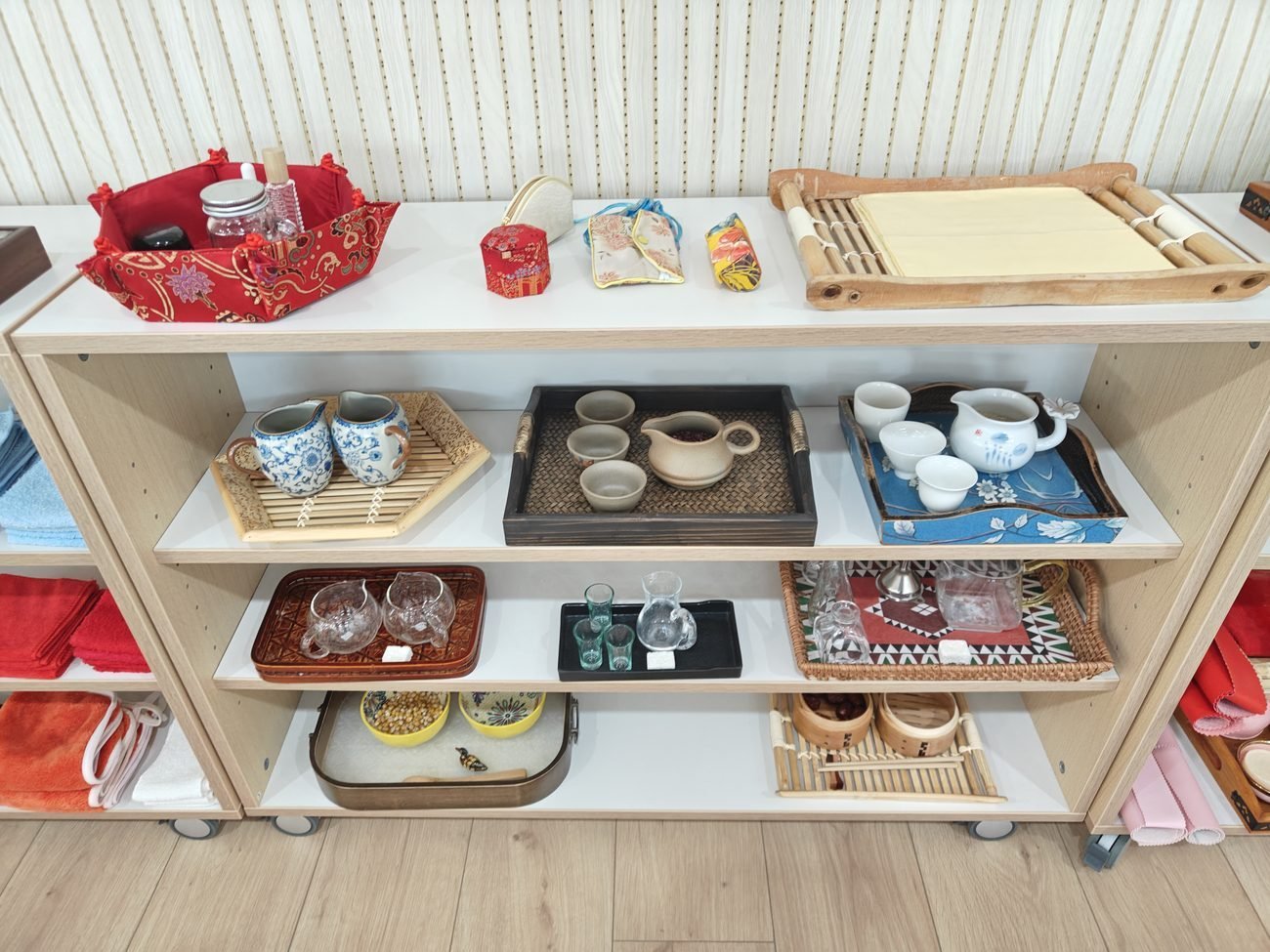
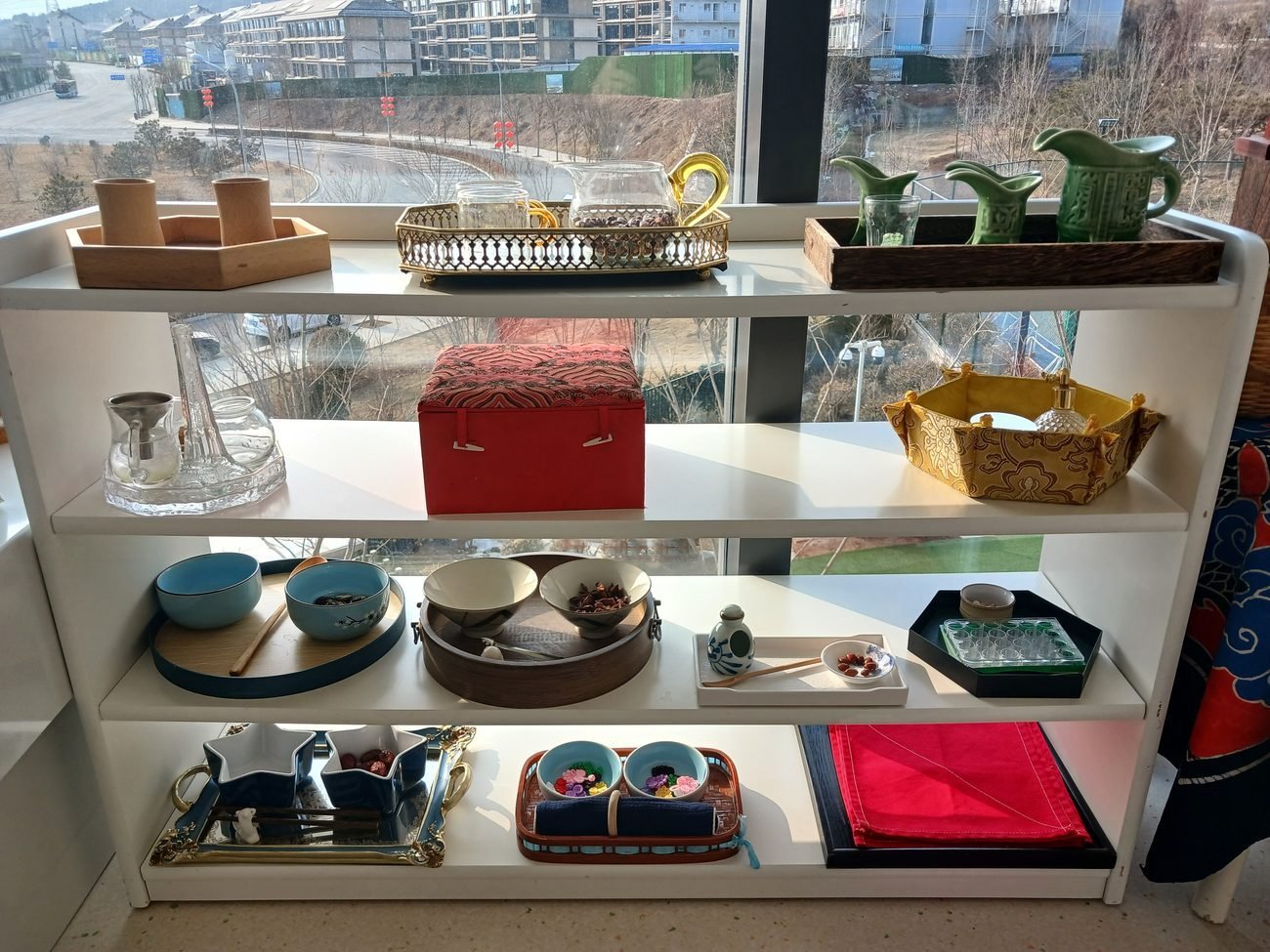
When the child needs an exercise, they must be able to work upon it, so the materials are arranged on child-sized shelves.
Principles Of The Practical Life Curriculum
Isolation of Difficulty
Each activity focuses on one primary skill e.g., pouring focuses only on the pouring motion, and fastening focuses only on that specific type of fastener, etc.
Control of Error
Materials are designed so the child can perceive their own mistakes and correct them without adult supervision or intervention e.g. a spill reveals incorrect pouring, or an unevenly buttoned vest is visually obvious.
Logical Sequence
The materials are laid out in a logical progression from simple to complex, building skills incrementally, and the exercises are presented in steps, with a defined beginning, middle, and end. This is known as the Cycle of Activity where each exercise utilises the same three-stage cycle:
- Take the material to a table,
- Engage with it,
- Return it to the shelf.
Allow for Repetition
The materials invite and encourage repetition, which is a key to both mastery and satisfaction.
Buying Materials
Because the environment must reflect the local culture, the materials will vary from country to country, which makes Practical Life the most challenging area for new teachers to set up, because they don’t have a list of prescribed materials to follow. For the same reason, it’s my favourite area to prepare because it’s challenging but also interesting to go shopping and try and figure out how something might be adapted and made suitable for the needs of the children.
‘There is no limit to the equipment of the “Children’s Houses” because the children themselves do everything. They sweep the rooms, dust and wash the furniture, polish the brasses, lay and clear away the table, wash up, sweep and roll up the rugs, wash a few little clothes, and cook eggs.’Maria Montessori, Dr. Montessori’s Own Handbook, pg. 44. (1914)
Aims Of The Practical Life Curriculum
The Practical Life curriculum is designed to support a child’s holistic development by fostering essential life skills through purposeful, hands-on activities that have both direct and indirect aims. The direct aim of each exercise is to complete that particular exercise; for example, the direct aim when pouring beans is to pour the beans without spilling them, and the direct aim when using the Buckle Frame is to open and close each of the buckles. However, each task also has a variety of indirect aims which extend beyond the completion of a task, and include development of the following qualities:
Independence
The children engage in meaningful tasks that mirror real-life experiences, and by mastering activities such as pouring water, buttoning clothes, or setting a table, they gain confidence in their abilities and develop their independence. This emphasis on autonomy aligns with Montessori’s belief that children learn best when they are actively involved in their environment rather than passively receiving instruction.
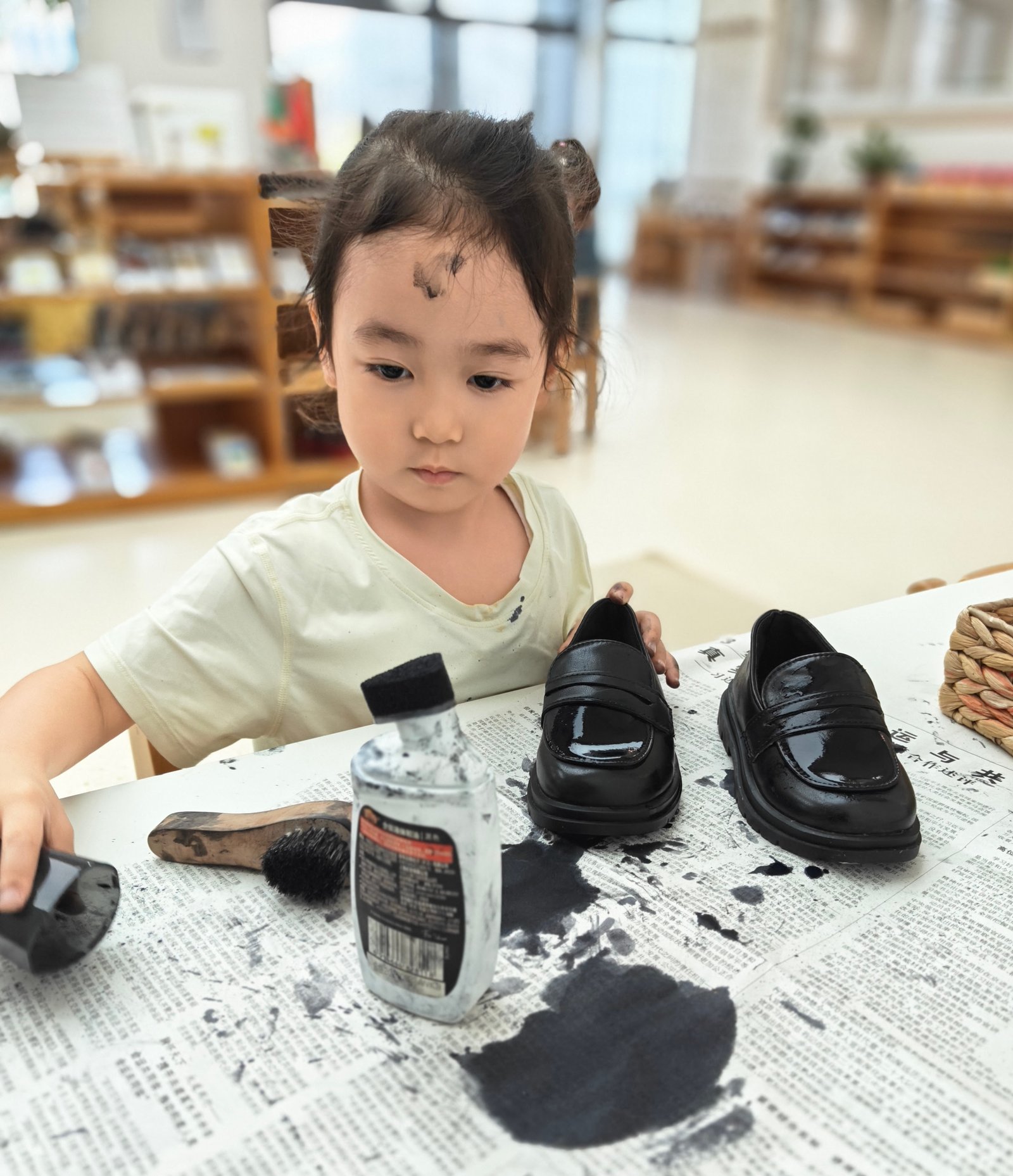
“The children of three years of age in the "Children's Houses" learn and carry out such work as sweeping, dusting, making things tidy, setting the table for meals, waiting at table, washing the dishes, etc ., and at the same time they learn to attend to their own personal needs, to wash themselves, to take showers, to comb their hair, to take a bath, to dress and undress themselves, to hang up their clothes in the wardrobe, or to put them in drawers, to polish their shoes. These exercises are part of the method of education, and do not depend on the social position of the pupils; even in the "Children's Houses" attended by rich children who are given every kind of assistance at home, and who are accustomed to being surrounded by a crowd of servants, take part in the exercises of practical life. This has a truly educational, not utilitarian purpose. The reaction of the children may be described as a "burst of independence" of all unnecessary assistance that suppresses their activity and prevents them from demonstrating their own capacities. It is just – these "independent" children of ours who learn to write at the age of four and a half years, who learn to read spontaneously, and who amaze everyone by their progress in arithmetic.”Maria Montessori, From Childhood to Adolescence, p. 66. (1948)
Coordination of Movement
Young children naturally seek opportunities to control their bodies, and the structured sequence of movements and repetitive, intentional actions required in activities such as carrying a tray without spilling, sweeping a floor or walking on the line help to refine both gross and fine motor control and contribute to the development of muscle memory, balance, and precision.
‘The children love to do these things [practical life activities] for themselves and they learn to be careful and precise in their movements. This is both education of movement, because there is a refinement of muscular co-ordination when the work is carefully done, and education through movement, because these activities involve judgement and will, self-discipline, and an appreciation of orderliness’.Maria Montessori, ‘Maria Montessori Speaks to Parents’, p. 49. (2017)
Concentration
Each exercise is designed with a clear sequence of steps, and the use of real tools and tangible outcomes creates an intrinsic motivation to complete tasks successfully, encouraging children to engage deeply in their work. Through repetition, the exercises reinforce perseverance and attention to detail, helping the child to develop longer attention spans.
A Sense of Order
Each activity has a specific place on the shelf and is presented in a sequential manner with a clear beginning, middle and end, and this external order helps the child to develop logical thinking, internal discipline and emotional regulation.
Social Development
Children learn social graces, empathy, patience, and responsibility through daily living and collaborative tasks. Activities like setting a table for peers, offering food, practicing Grace and Courtesy and learning to wait one's turn foster awareness of others, cooperation, and respect for the community.
Groups Of Practical Life Exercises
Elsewhere I have written about the different ways the exercises of Practical Life can be grouped, and the following grouping has a clarity and logic that I like:
Group 1 - Preliminary Exercises
Isolated movements that later combine into more complex work.
Group 2 - Elementary Movements
Fine-motor control that builds coordination and concentration.
Group 3 - Care of the Self
Dressing, washing, and grooming that builds confidence and independence.
Group 4 - Care of the Environment
Stewardship of the classroom, garden, and living things.
Group 5 - Grace and Courtesy
Lessons in respect, empathy, and belonging in a community.
Group 6 - Control of Movement
Mastery of the body to refine equilibrium and will.
Group 1 - Preliminary Exercises
Purpose

Preliminary Exercises are the constituent parts of every exercise, with these movements later used as the component parts of more elaborate, complex presentations, helping to build and refine gross and fine motor skills, establishing ground rules for using the environment, and designed to familiarize the child with classroom procedures. As such, these will be some of the first exercises the child will receive after they join a Montessori class.
Sample Preliminary Exercises
- Rolling and unrolling a mat
- Opening and closing blinds, curtains, etc.
- Carrying
- Folding: cloths, napkins, tea towels, etc.
- Squeezing a sponge
- Turning the pages of a book
- How to use: knife, fork, pegs, etc
- Opening and closing: drawers, cabinets, doors, etc
- How to fill and empty a: schoolbag, work-folder, work-drawer, etc.
- Carrying and putting down: scissors, chair, book, tray, jug, etc
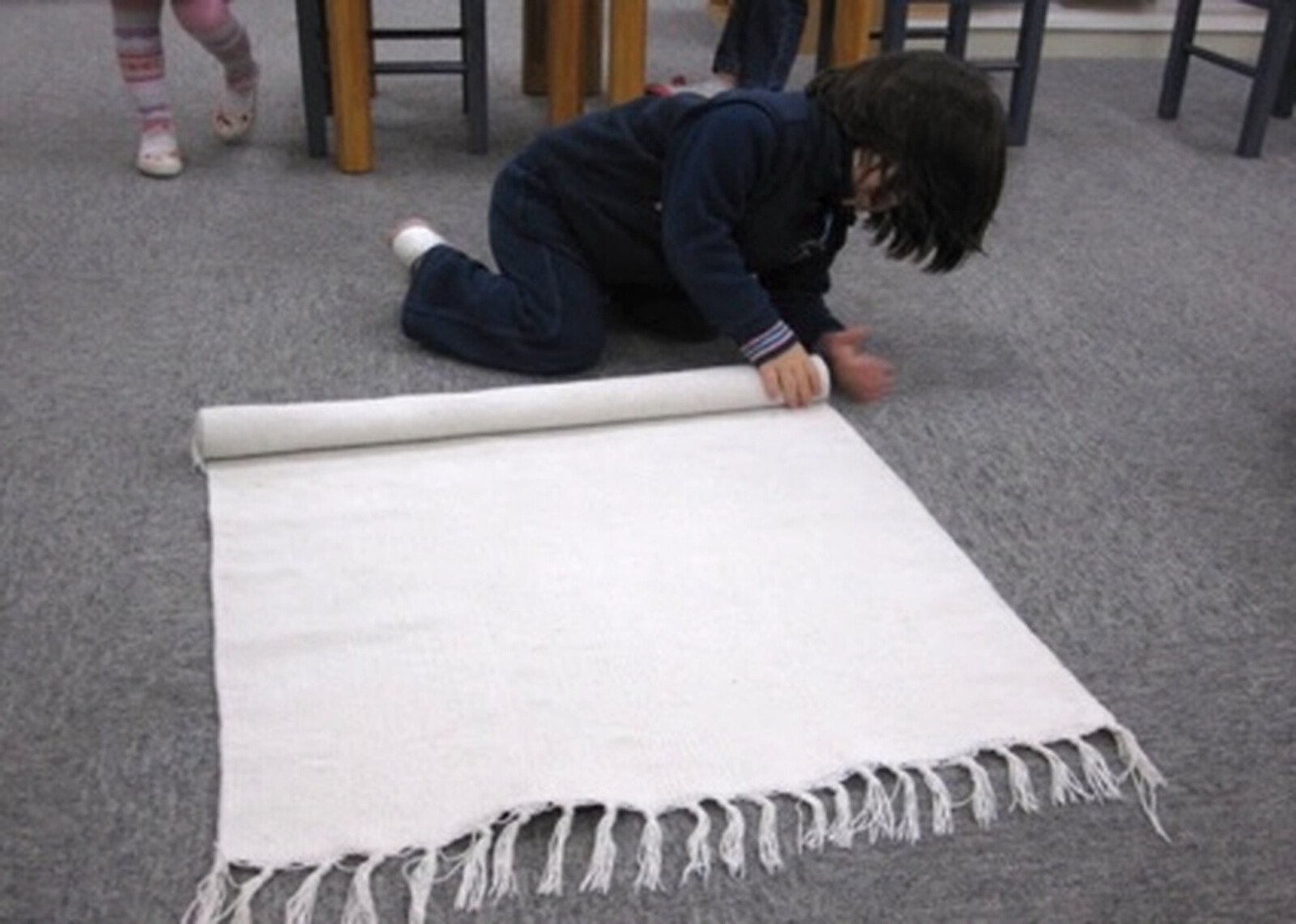

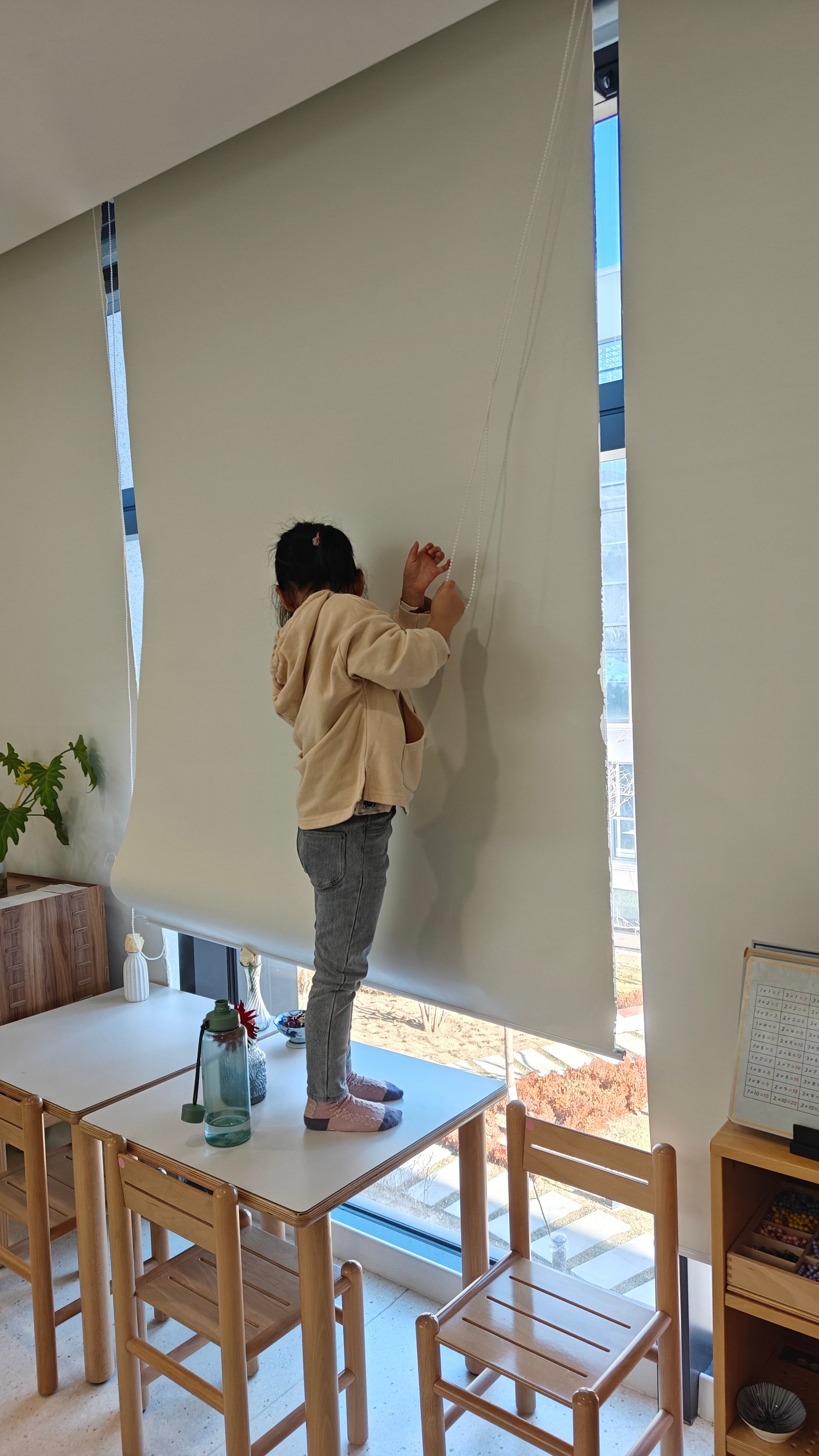

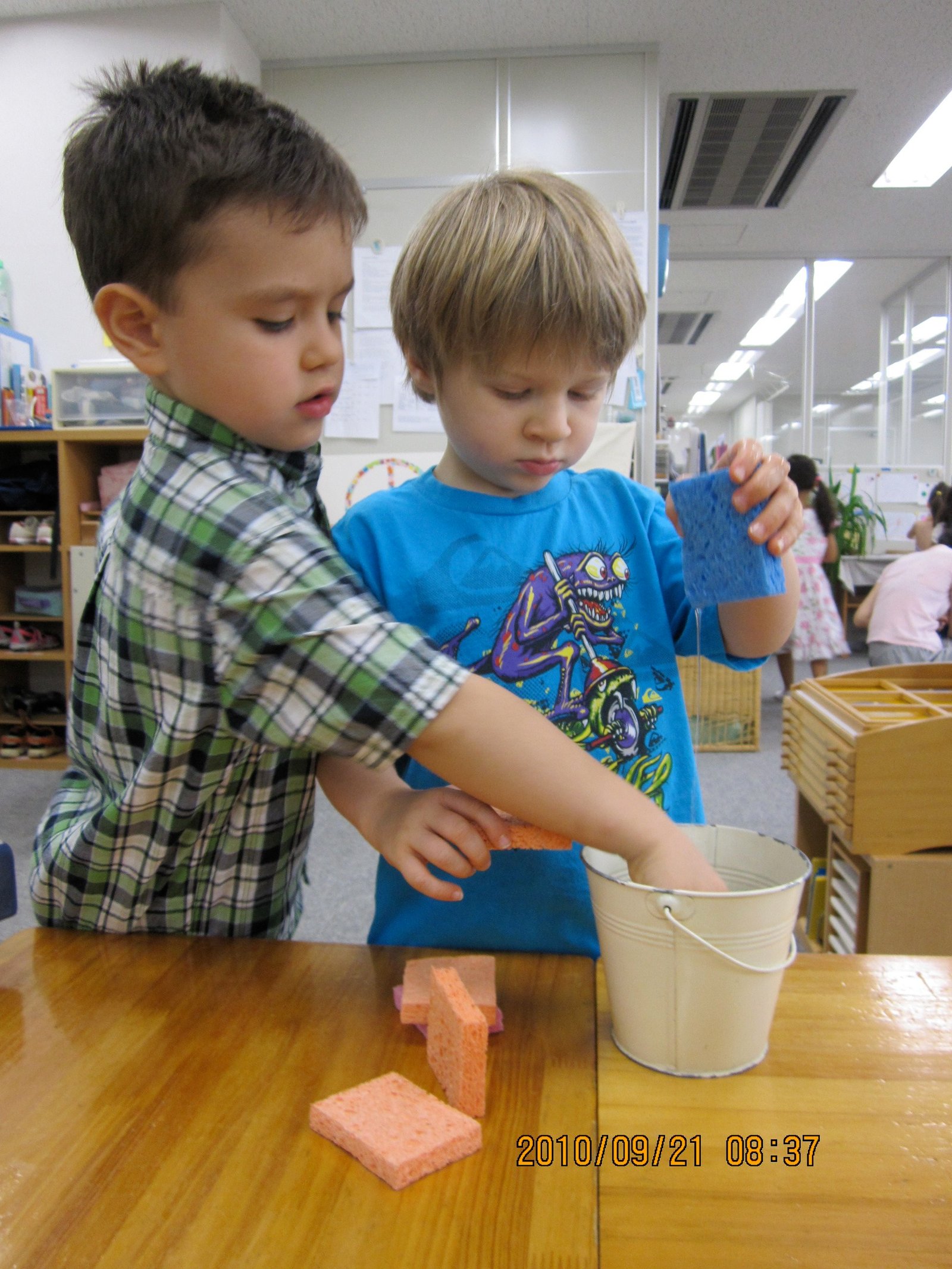
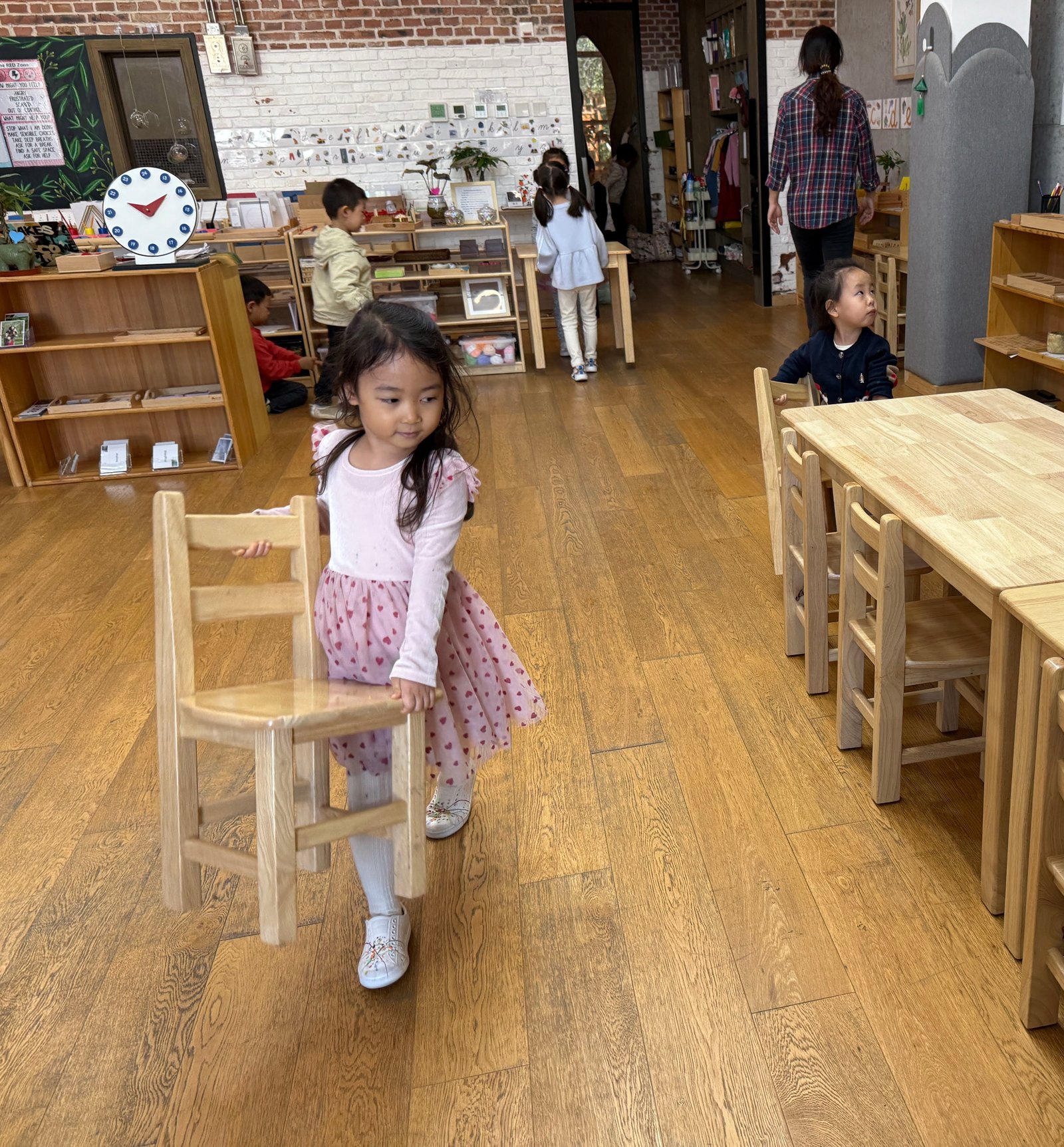

Materials
- Brushes (standing and hand), dustpan
- Mats - large and small (for floor and table)
- Apron
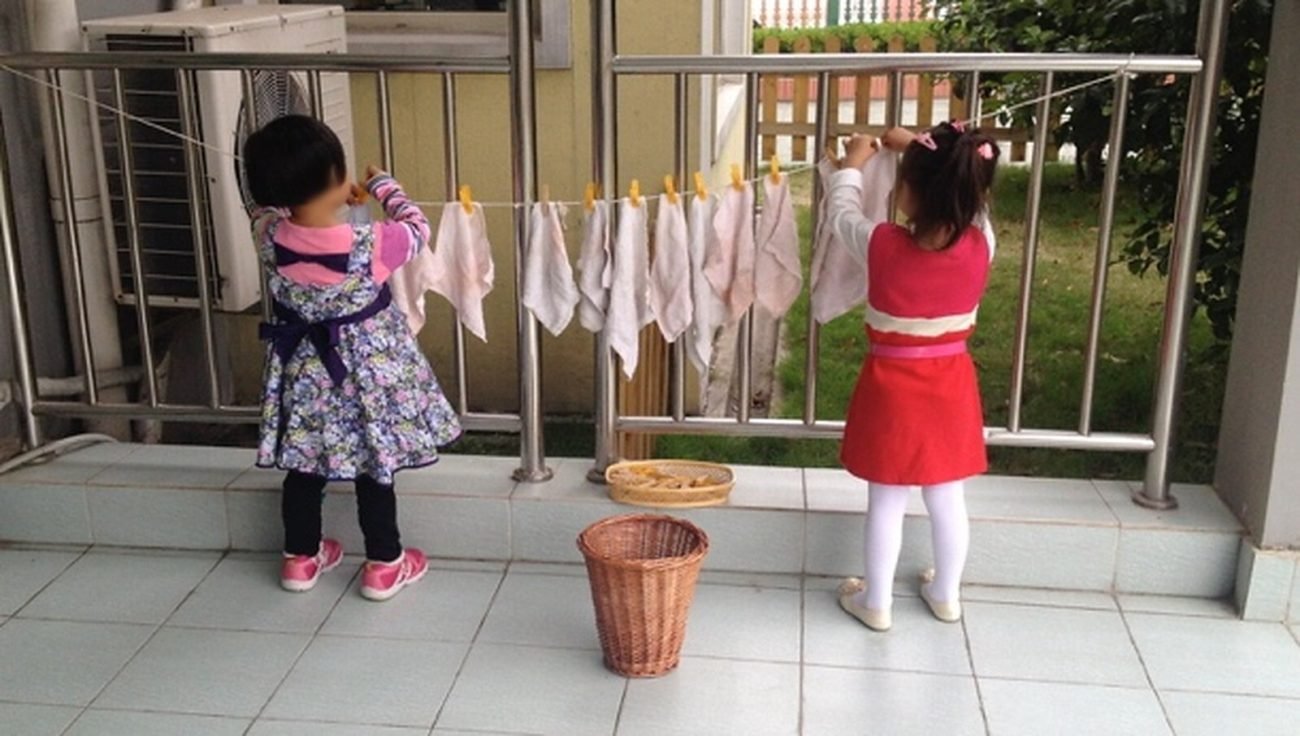
- Pegs and clothesline
- Clothes, napkins, tea towels, etc.
- Sponges
- A selection of books of different sizes
Group 2 - Elementary Movements
Purpose

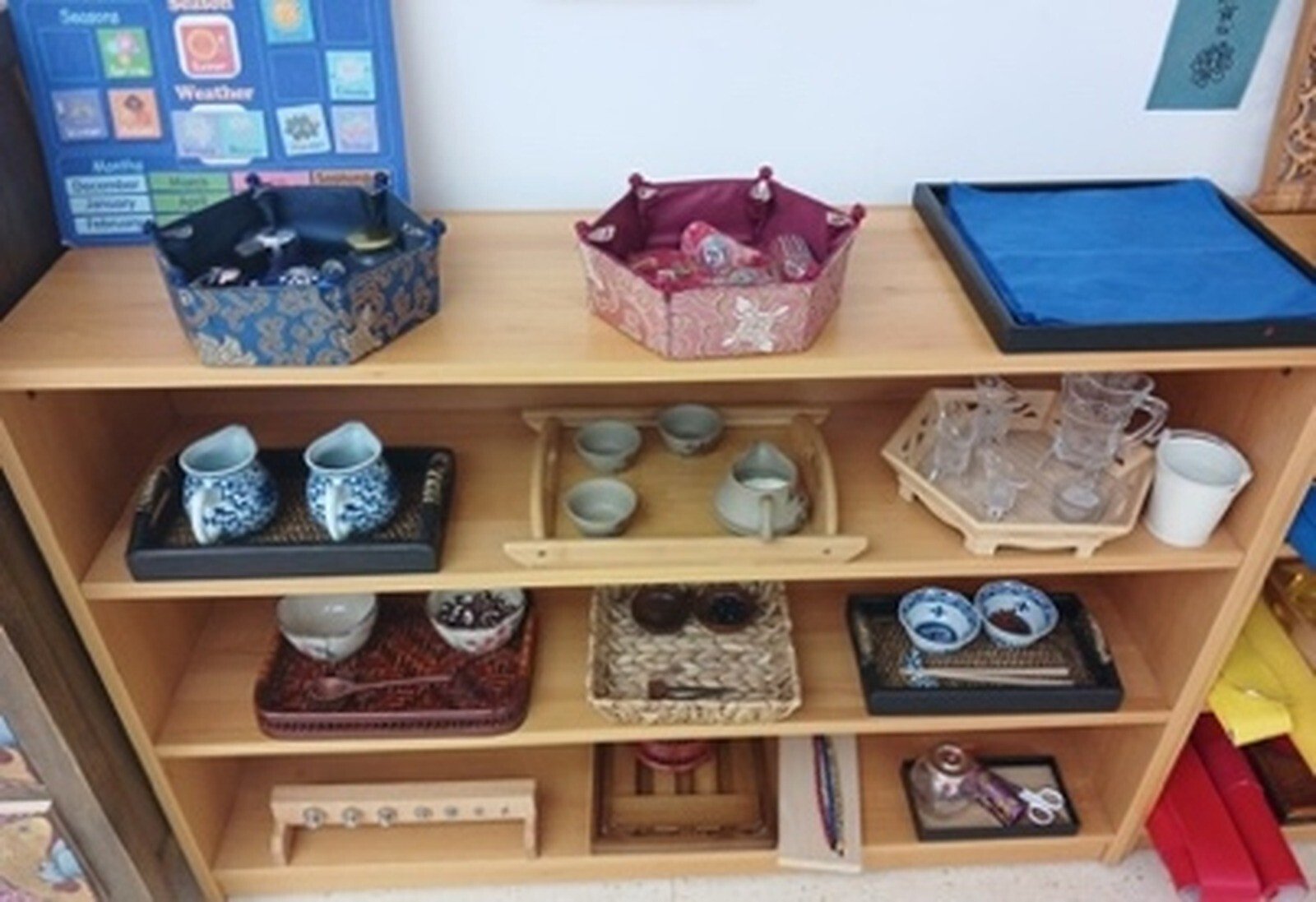
Transferring exercises, such as using tongs to move cotton balls from one bowl to another or spooning beans between containers, develop hand-eye coordination and dexterity. Pouring beans, grains, liquids etc. using jugs of varying sizes allow children to practice controlled movements and require precise hand-eye coordination and concentration, improving balance and precision. More elaborate exercises include food preparation.
Sample Elementary Movements
- Transferring using jugs, cups, bowls, spoons, tongs, tweezers, chopsticks, basters, eyedroppers, etc.
- Opening and closing: safety pins, boxes, bottles, etc
- Use of tools: locks and keys, nuts and bolts, hammer, screwdriver, stapler, etc.
- Sorting by: colour, shape, size, etc.
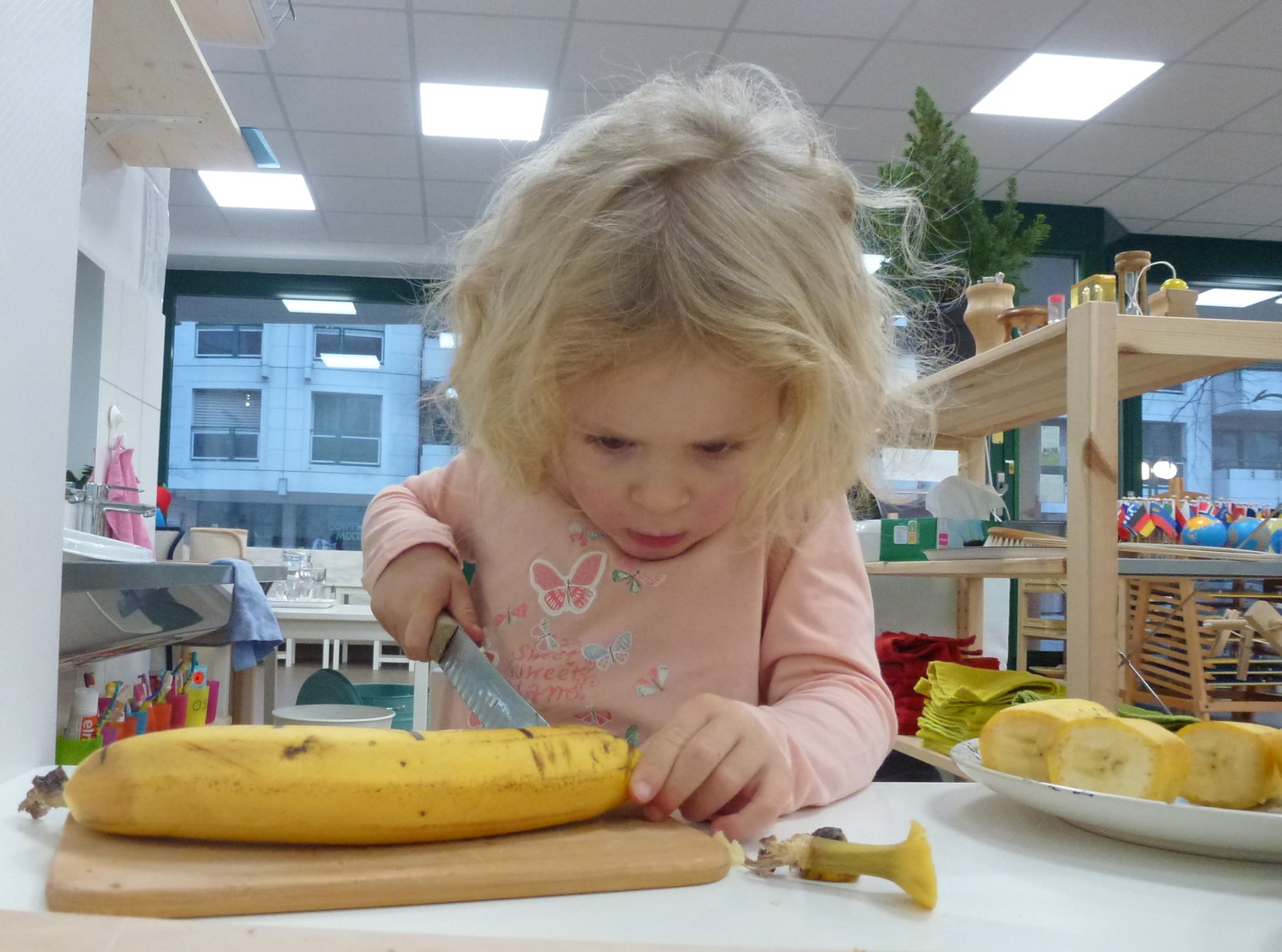
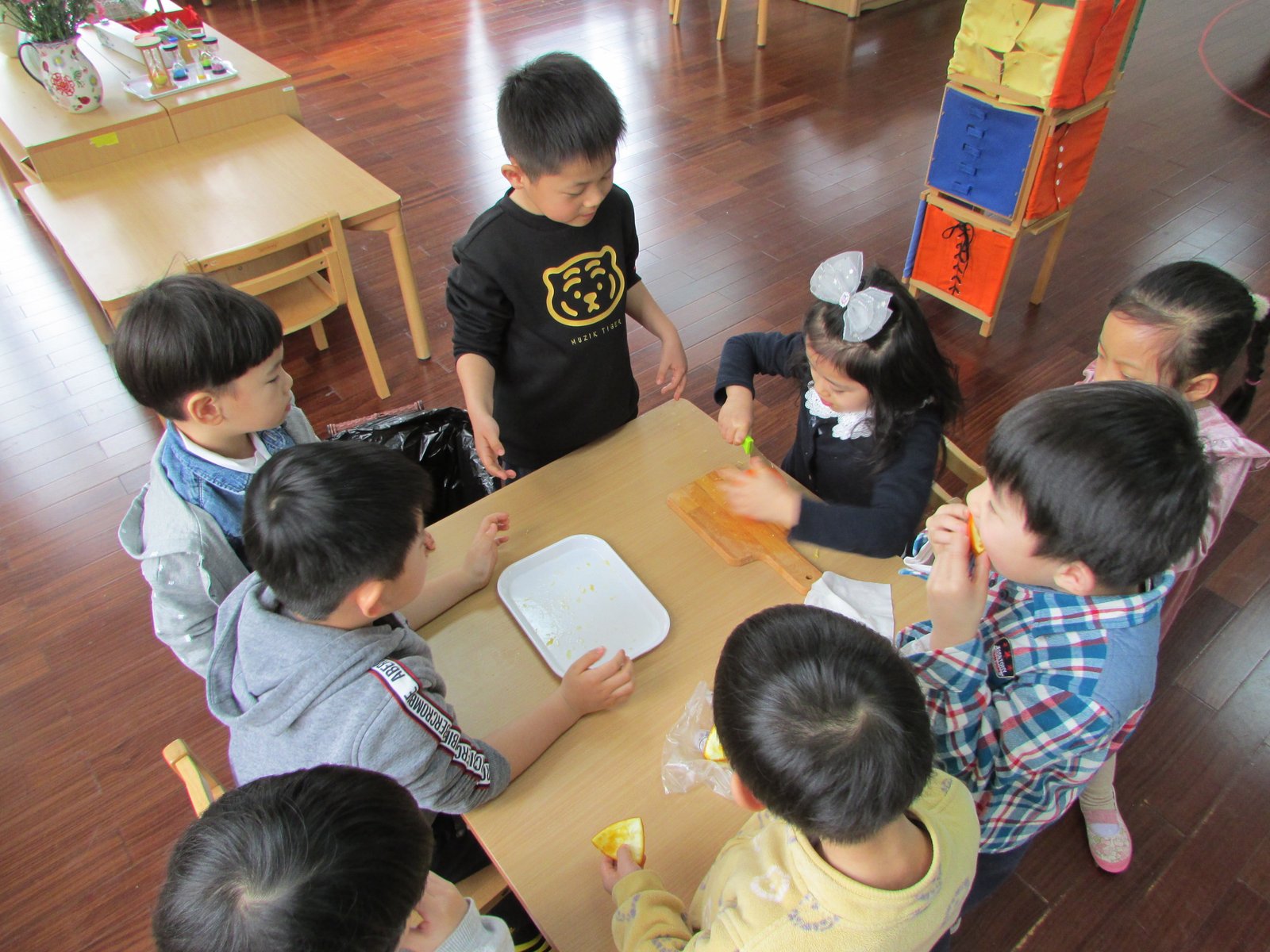
- Food preparation: peeling, slicing, cutting, rolling, scooping, sifting, squeezing, grinding, etc. using bananas, pickles, oranges, cucumbers, apples, carrots
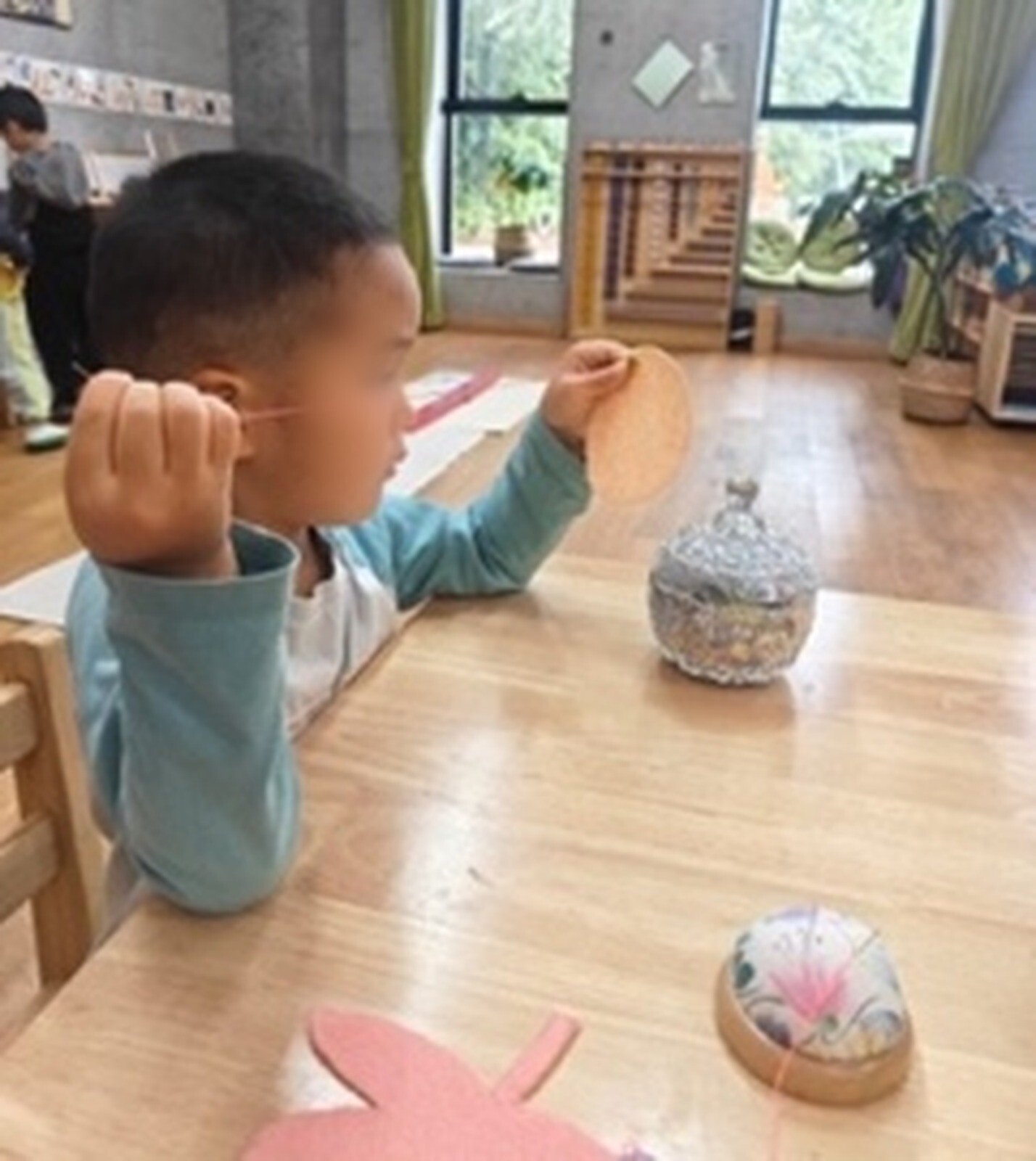
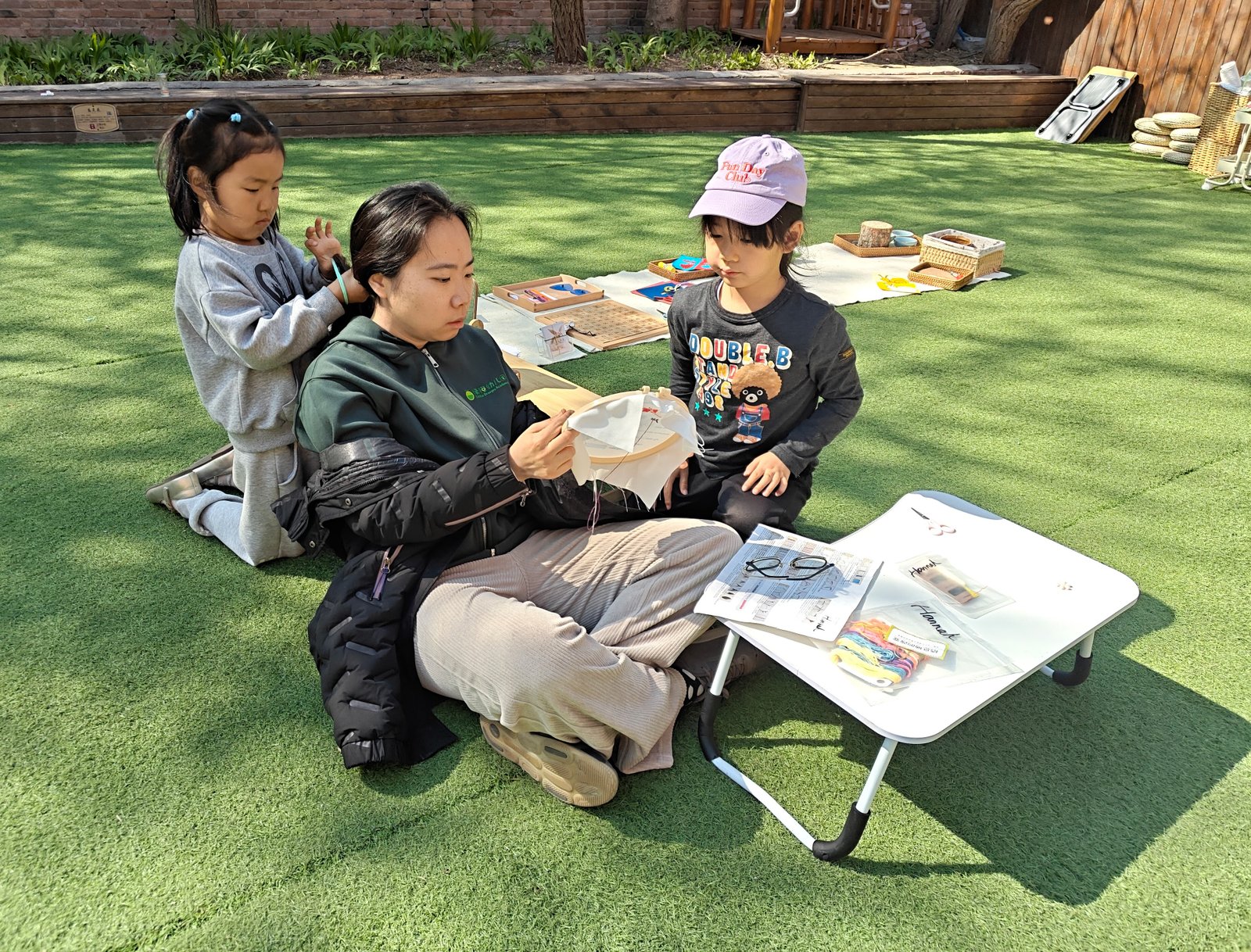
- Sewing: lacing cards, threading a needle, sewing buttons, sewing shape; sewing seam; weaving; embroidery/cross‐stitch
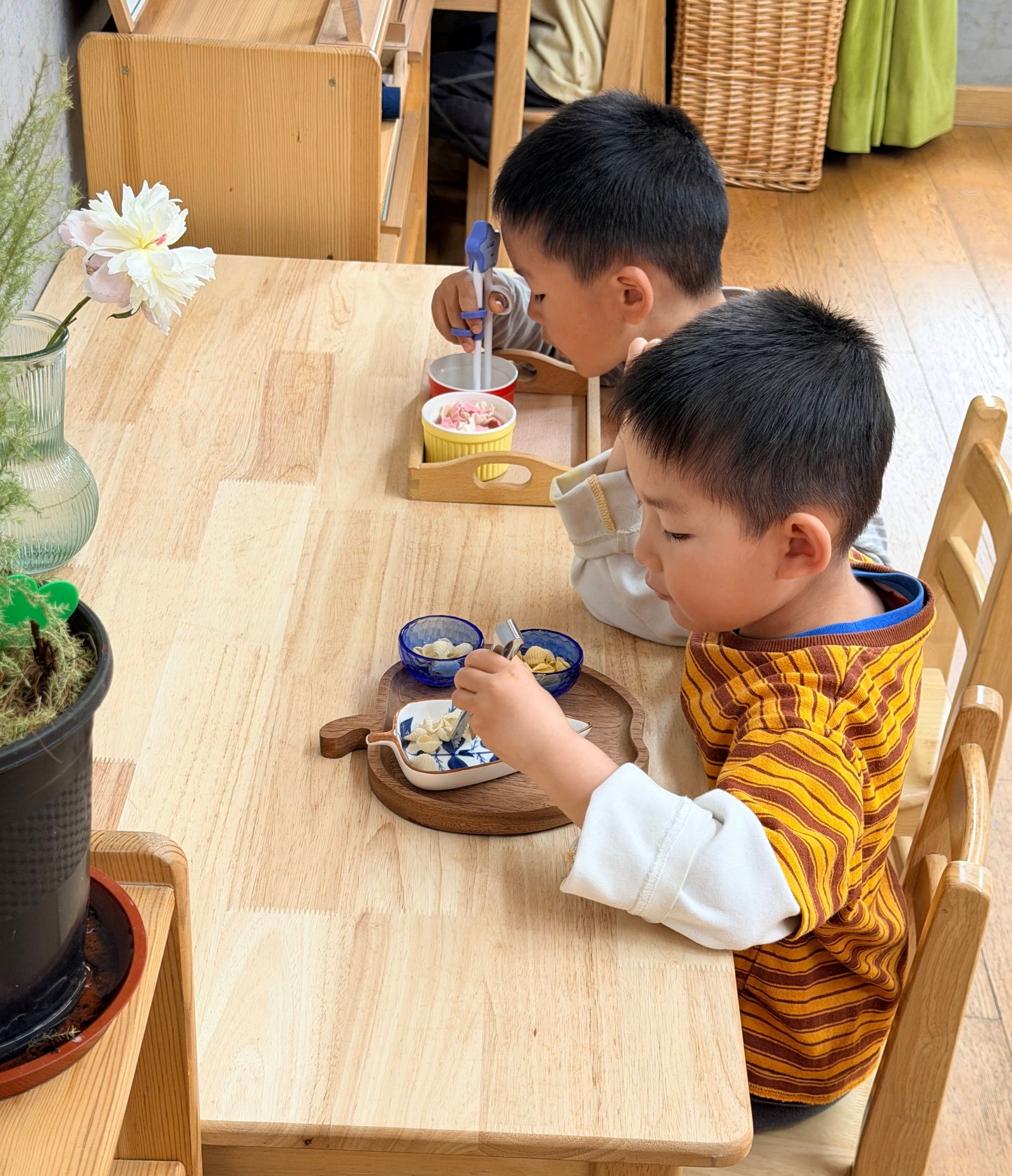
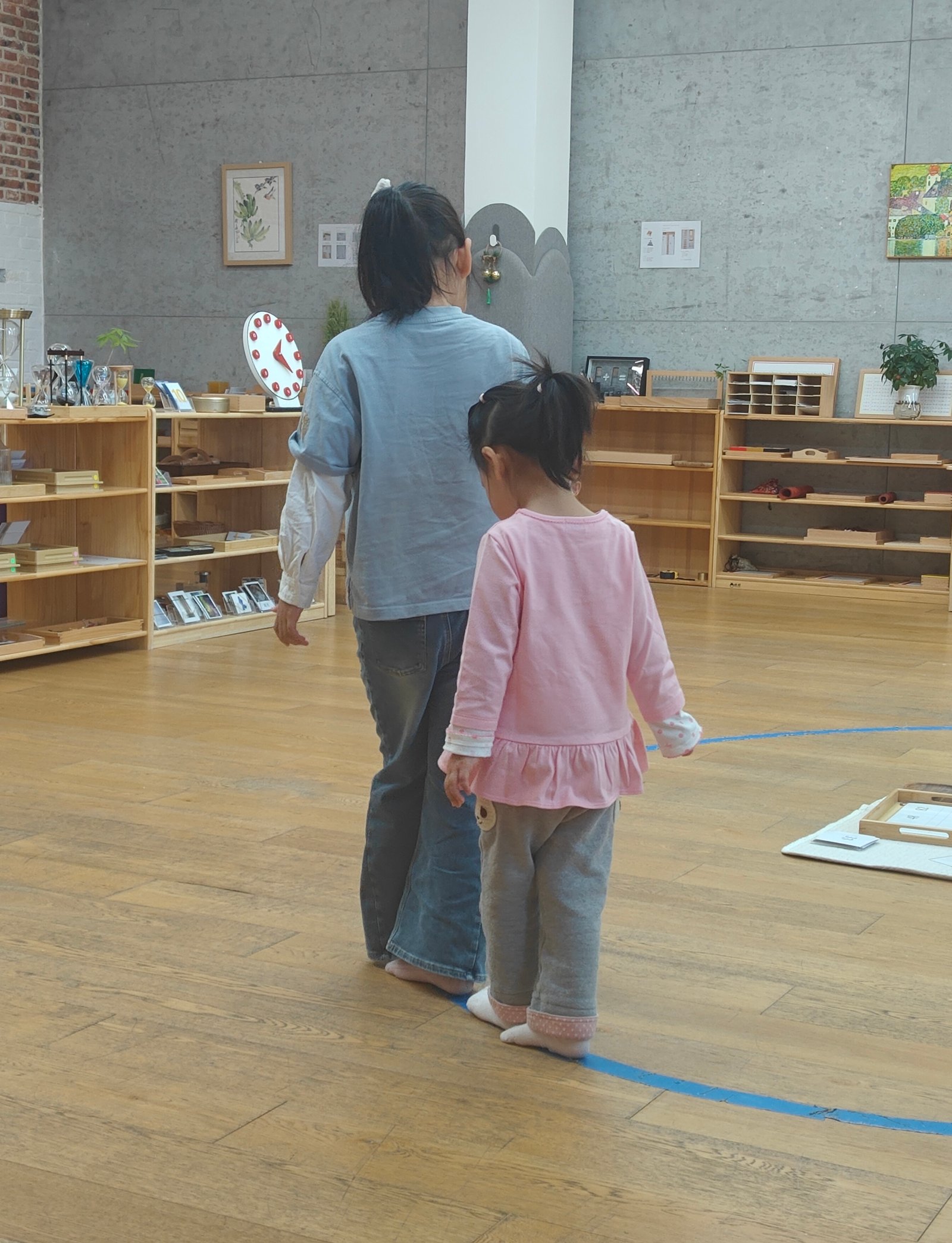
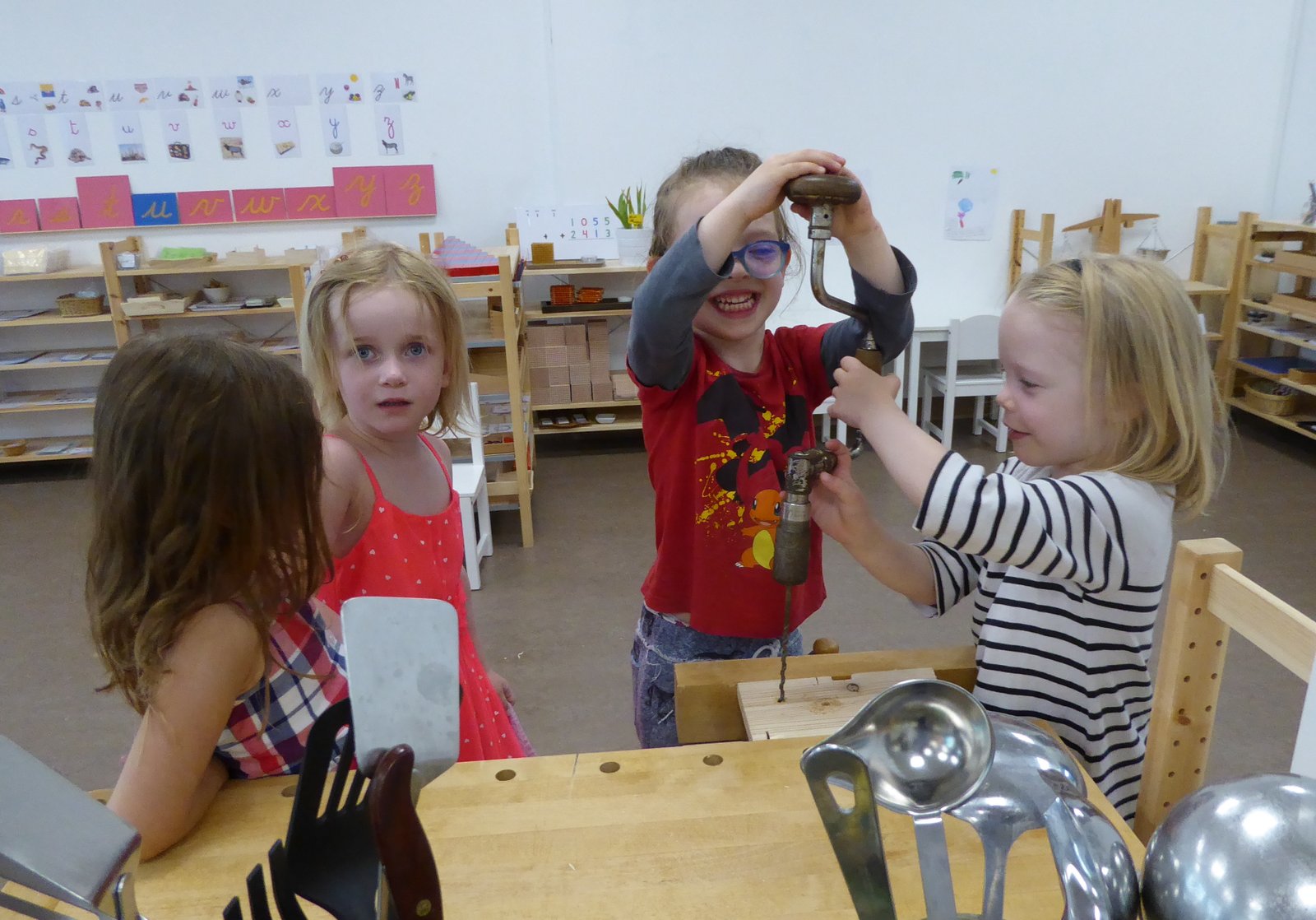
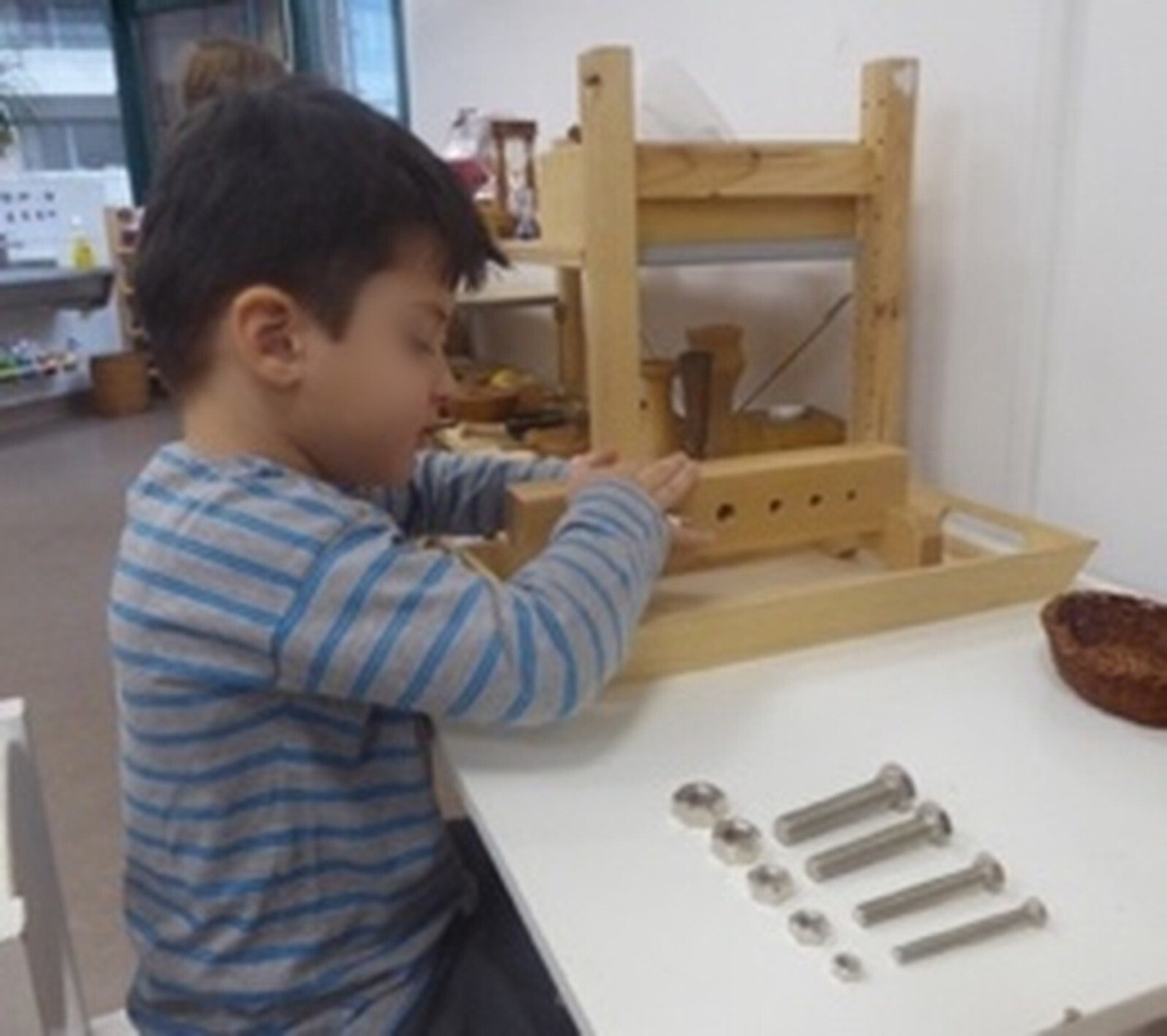
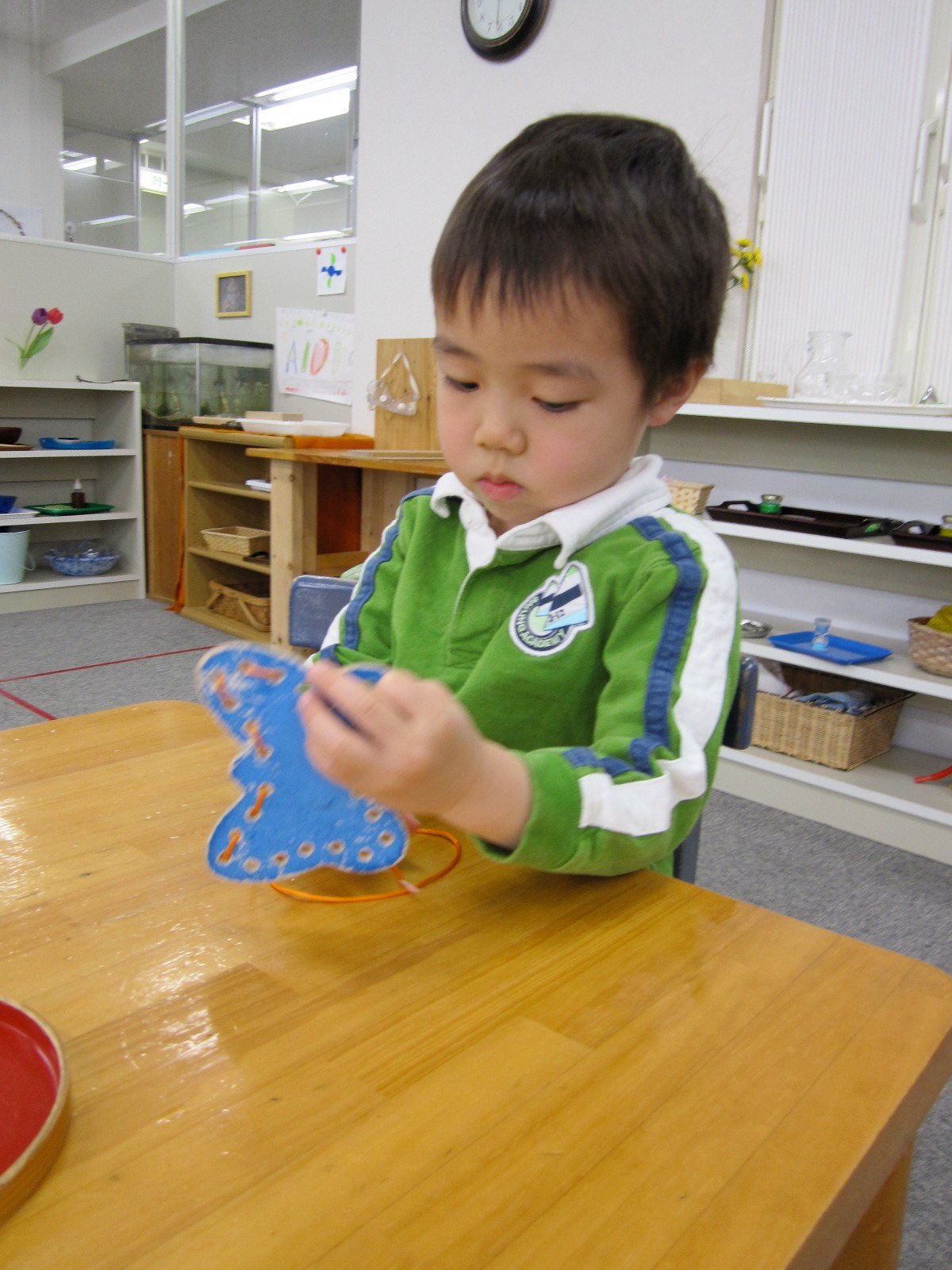

Threading and sewing
“I realised that the necessary movement of the hand for sewing had been prepared without sewing, and that before teaching it is first necessary to find the way to teach. This is particularly true when it is a question of gaining facility in movements. These could be carried out almost automatically through repeated exercises even apart from the work for which they were directly intended. In this way one could set himself to a task and be already capable of carrying it out without ever having directly put his hand to it, and he could complete it almost perfectly at the first attempt.”Maria Montessori. The Discovery of the Child, p. 196. (1948)
These photos show the sequence of presentations, from threading large beads to (roughly two years later) embroidery.

Snack Preparation
In many schools the snack is prepared by an adult, which seems a pity as it’s an ideal exercise of practical life, providing the children with motive and opportunity to chop, peel, mop, wipe, wash and dry. I prepare a shelf with an assortment of knifes, peelers, chopping boards, etc, along with baskets containing fruit or veg (brought from the fridge before the children arrive) as well as bottles, cans, jars, etc containing dry options like seeds, nuts, crackers, etc. Oranges are not the only fruit, but they are popular.



Materials
- Jugs, cups, bowls, spoons, tongs, tweezers, chopsticks, basters, eyedroppers,
- Safety pins, boxes, bottles, etc
- Locks and keys, nuts and bolts, hammer, screwdriver, stapler,
- Peelers, knives, chopping boards, apple corer,
- Lacing cards, needles, buttons, scissors, cloth.
Group 3 - Care Of The Self
Purpose

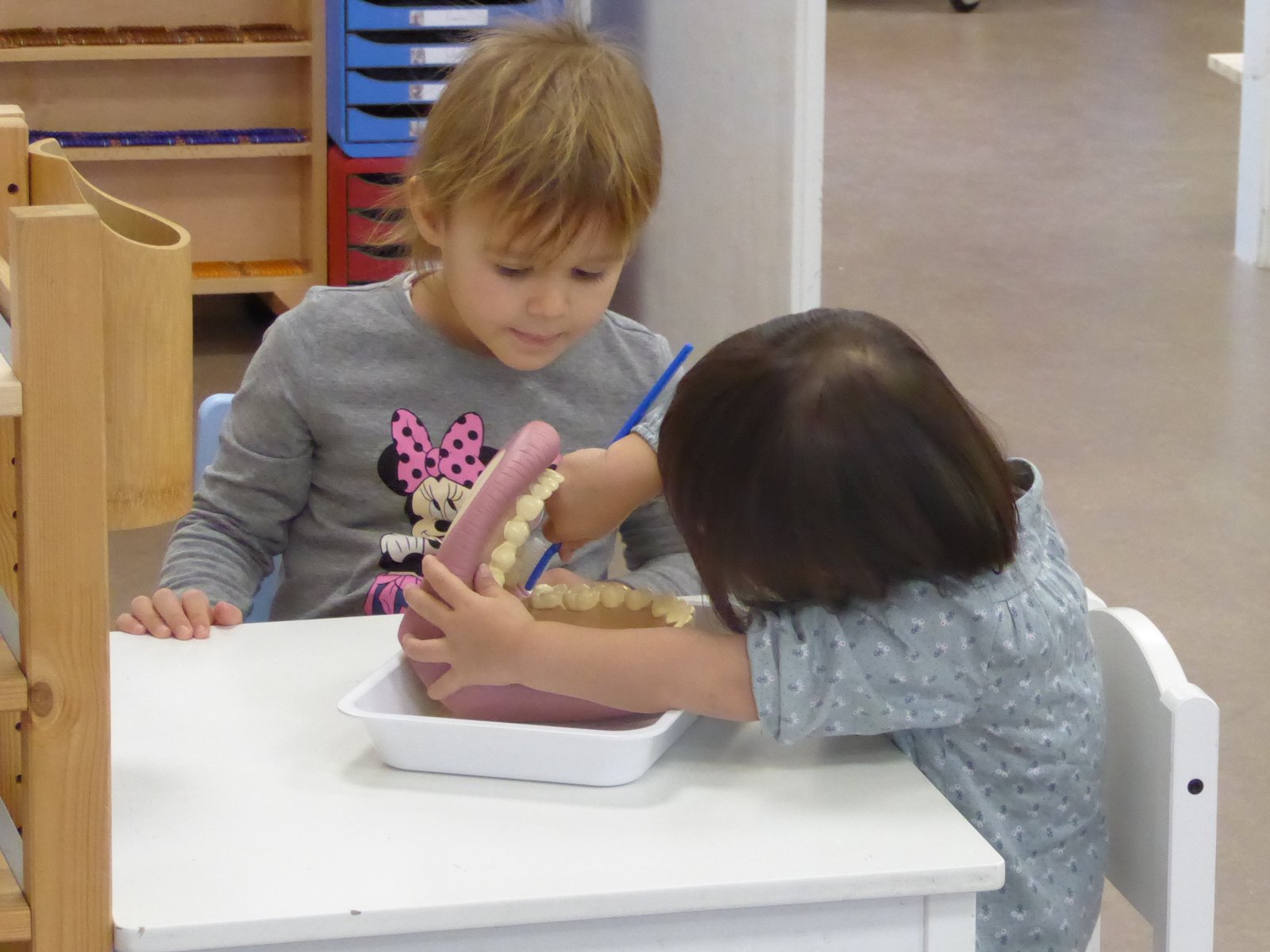
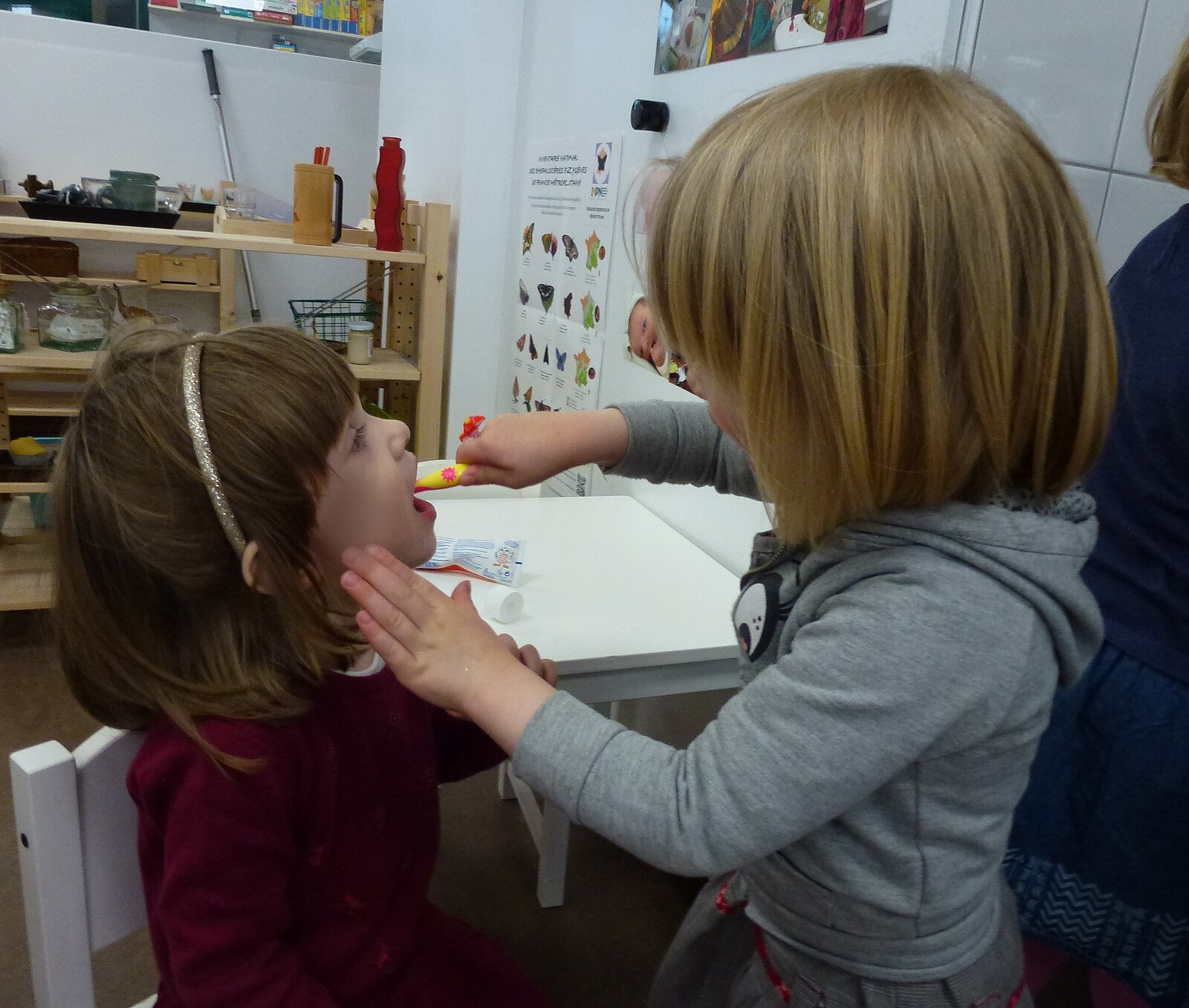
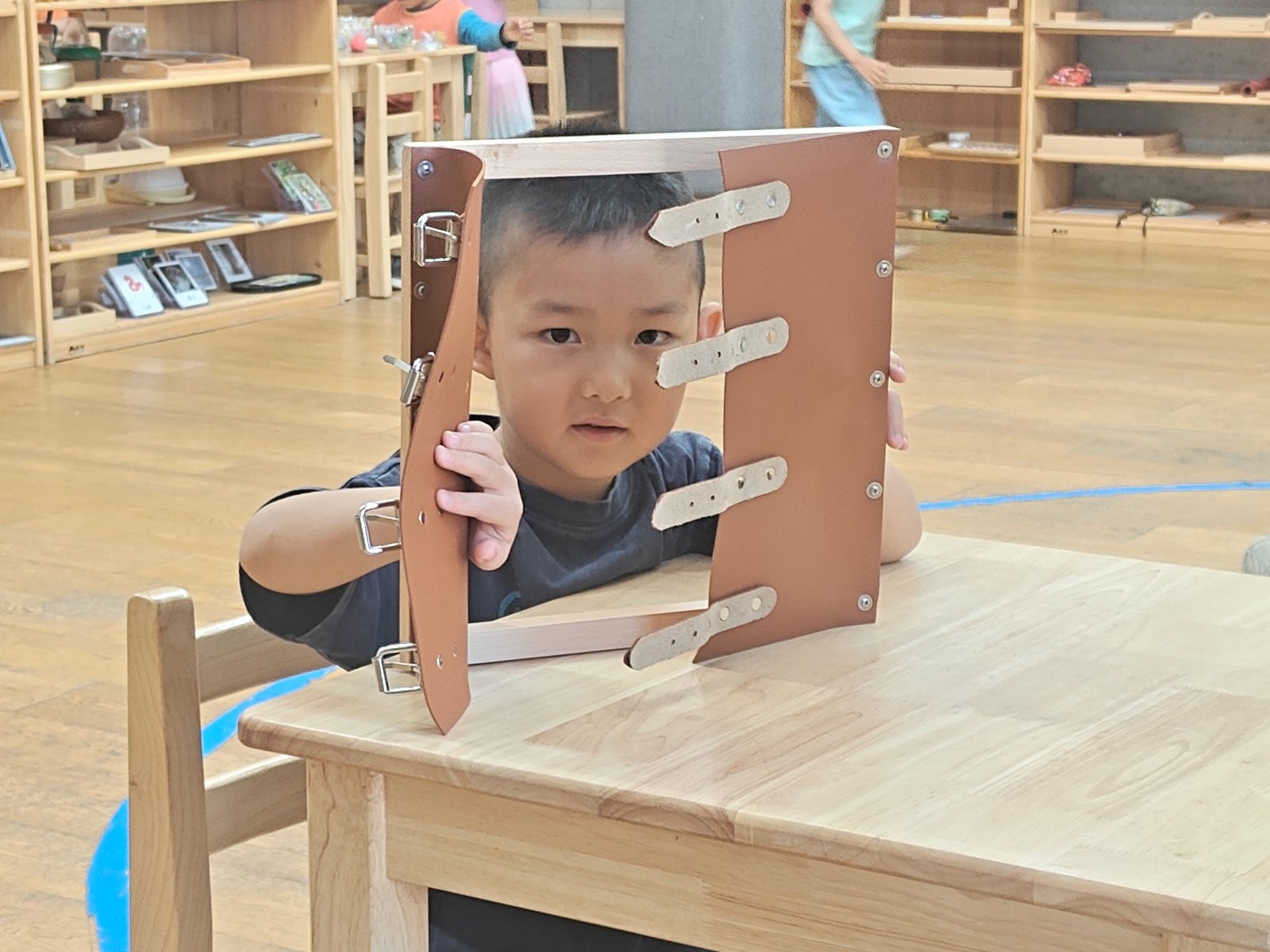
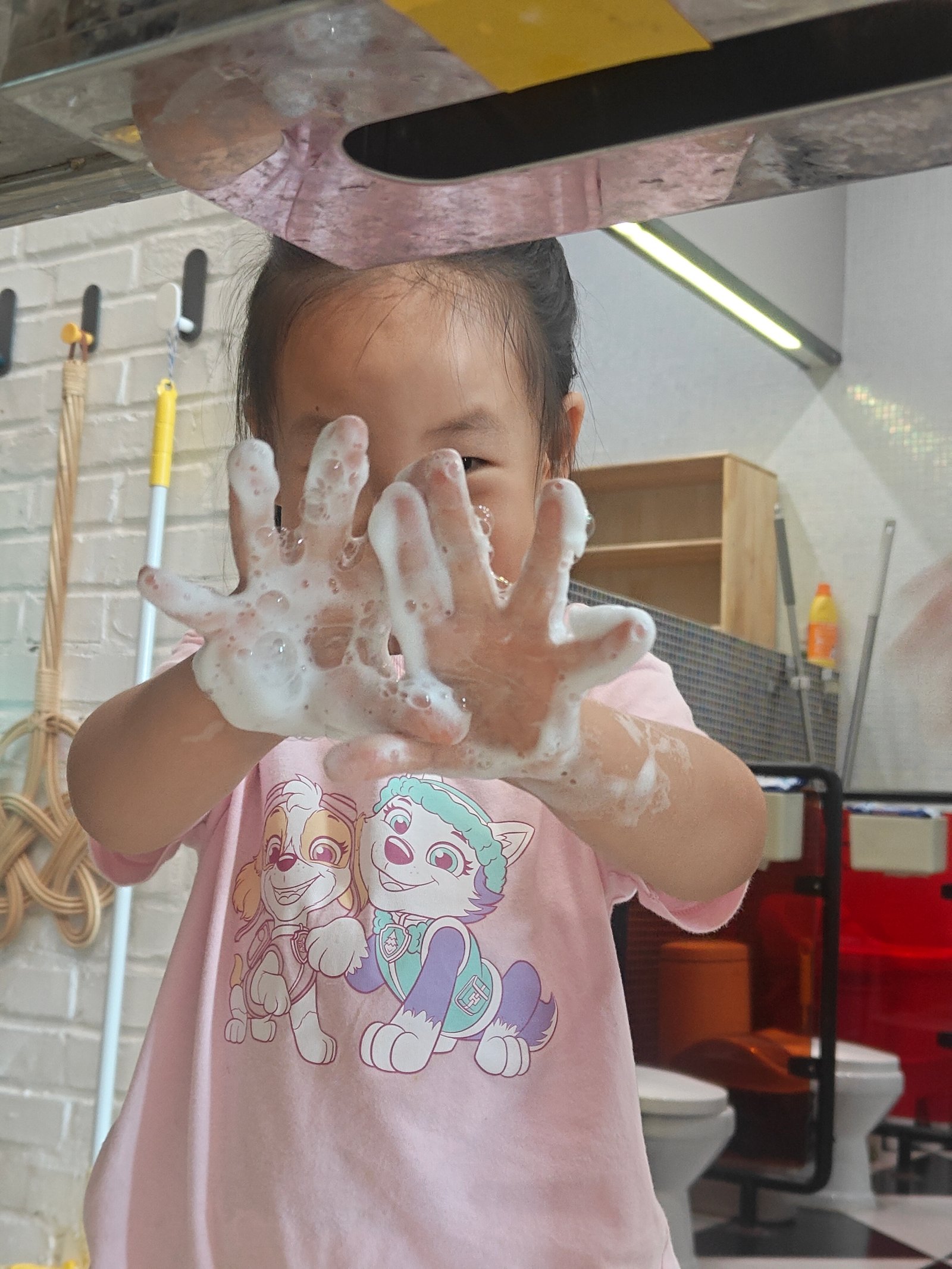
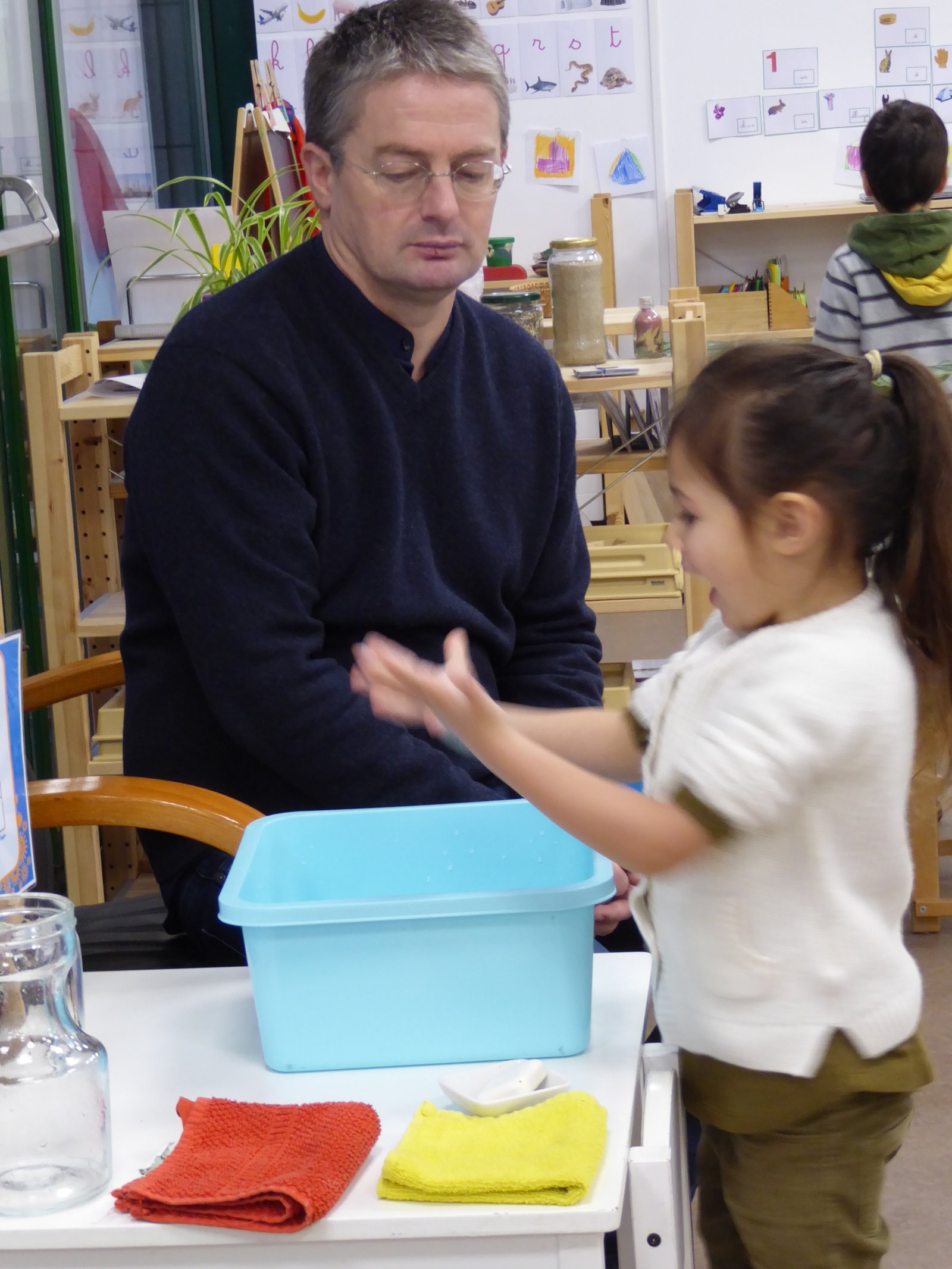
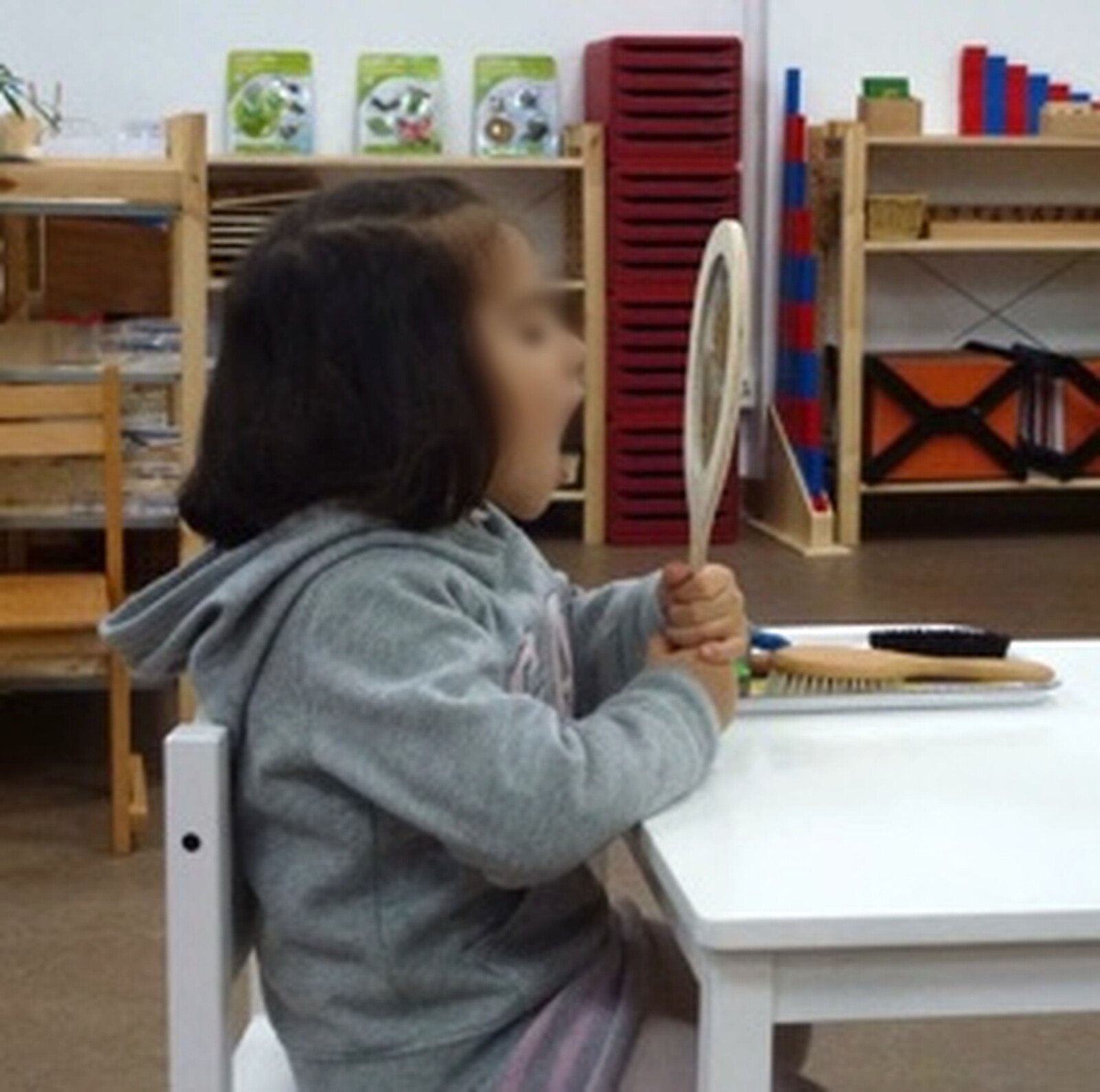
These exercises focus on personal hygiene, dressing skills, and bodily awareness, creating opportunities for the child to practice daily routines such as washing hands, brushing teeth, combing hair, and tying shoes. Dress Frames provide an opportunity for the child to practice dressing skills independently, while refining fine motor skills and gaining confidence in self-care. They are designed to help children develop self-sufficiency and pride in personal grooming, instilling a sense of responsibility for one's body and appearance, thereby becoming accountable and taking the first steps towards normalization.
“Any child who is self-sufficient, who can tie his shoes, dress or undress himself, reflects in his joy and sense of achievement the image of human dignity, which is derived from a sense of independence.”Maria Montessori, The Child in the Family, p. 28. (1923)


Sample Care of the Self Exercises
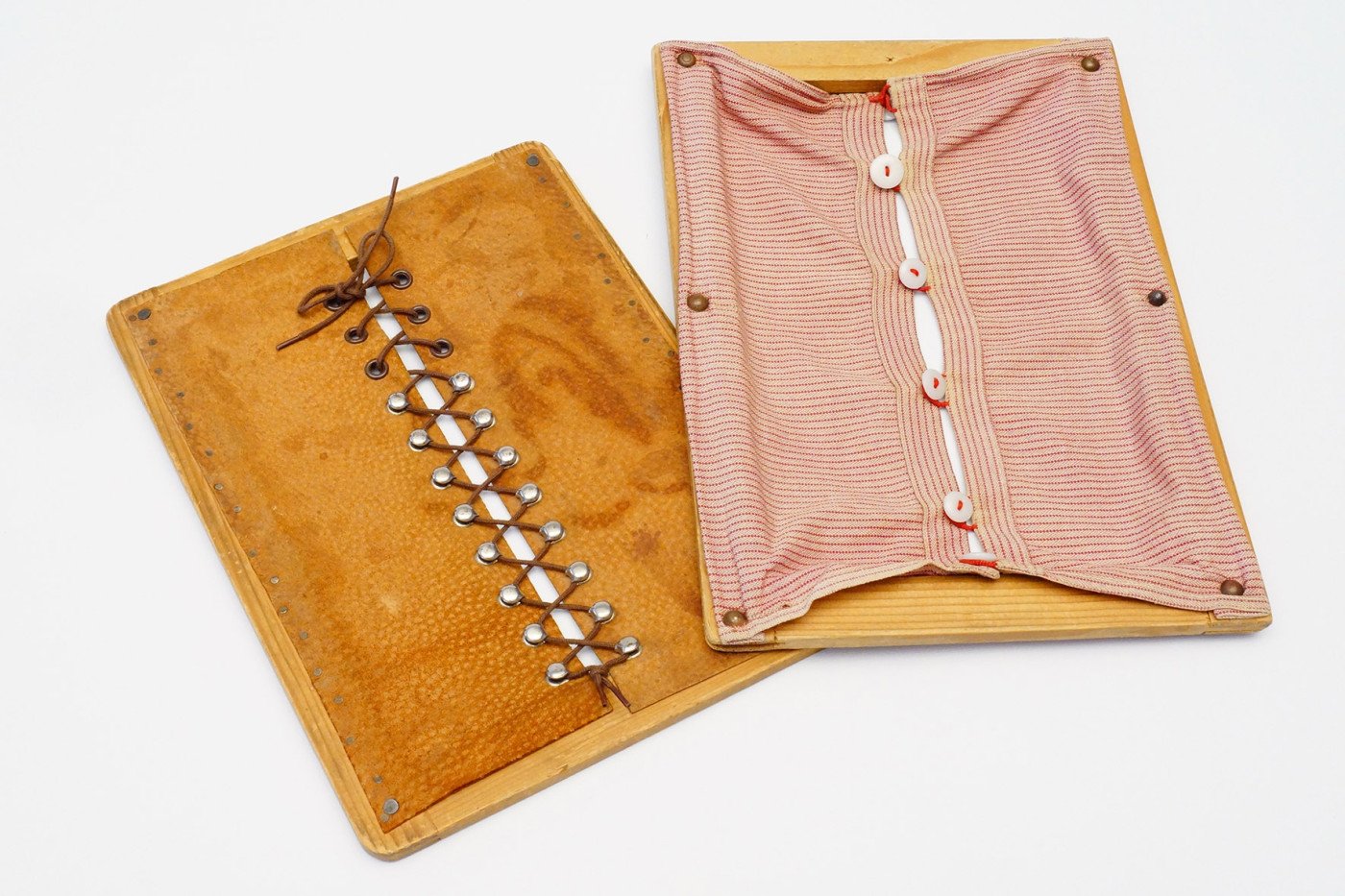
- Dress Frames - Velcro, zip, buttons, snaps, laces
- Washing the face, hands
- Blowing the nose
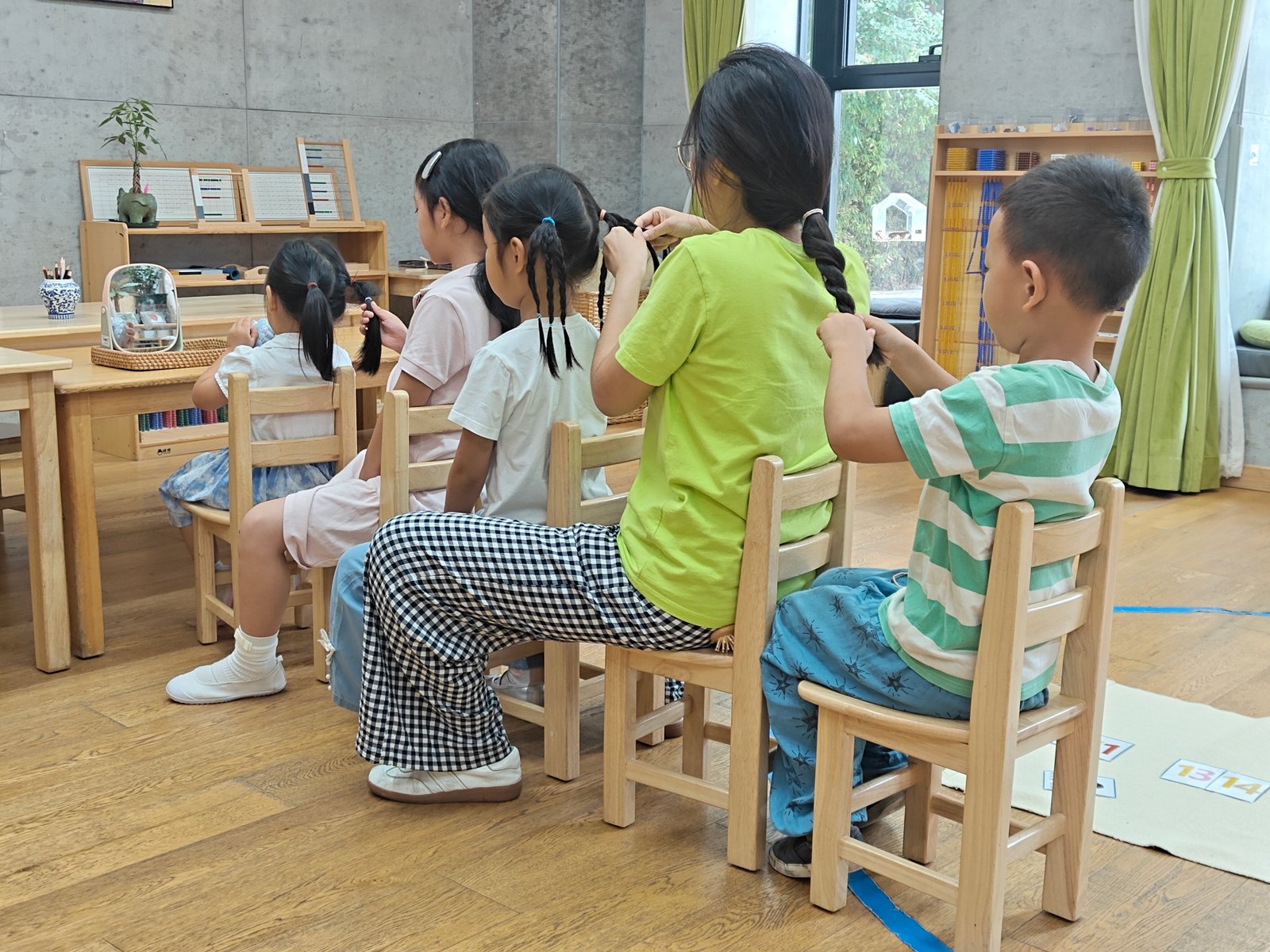
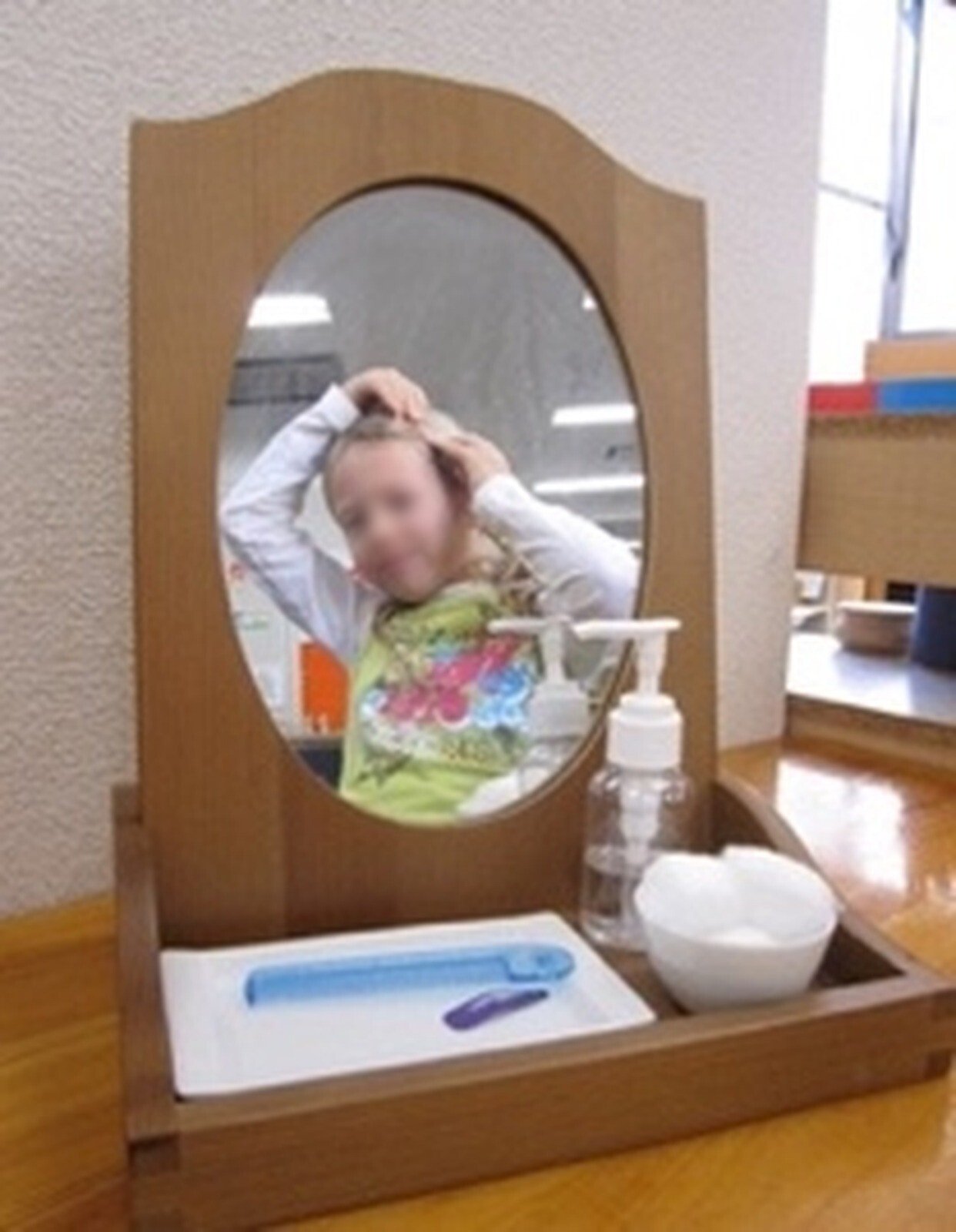
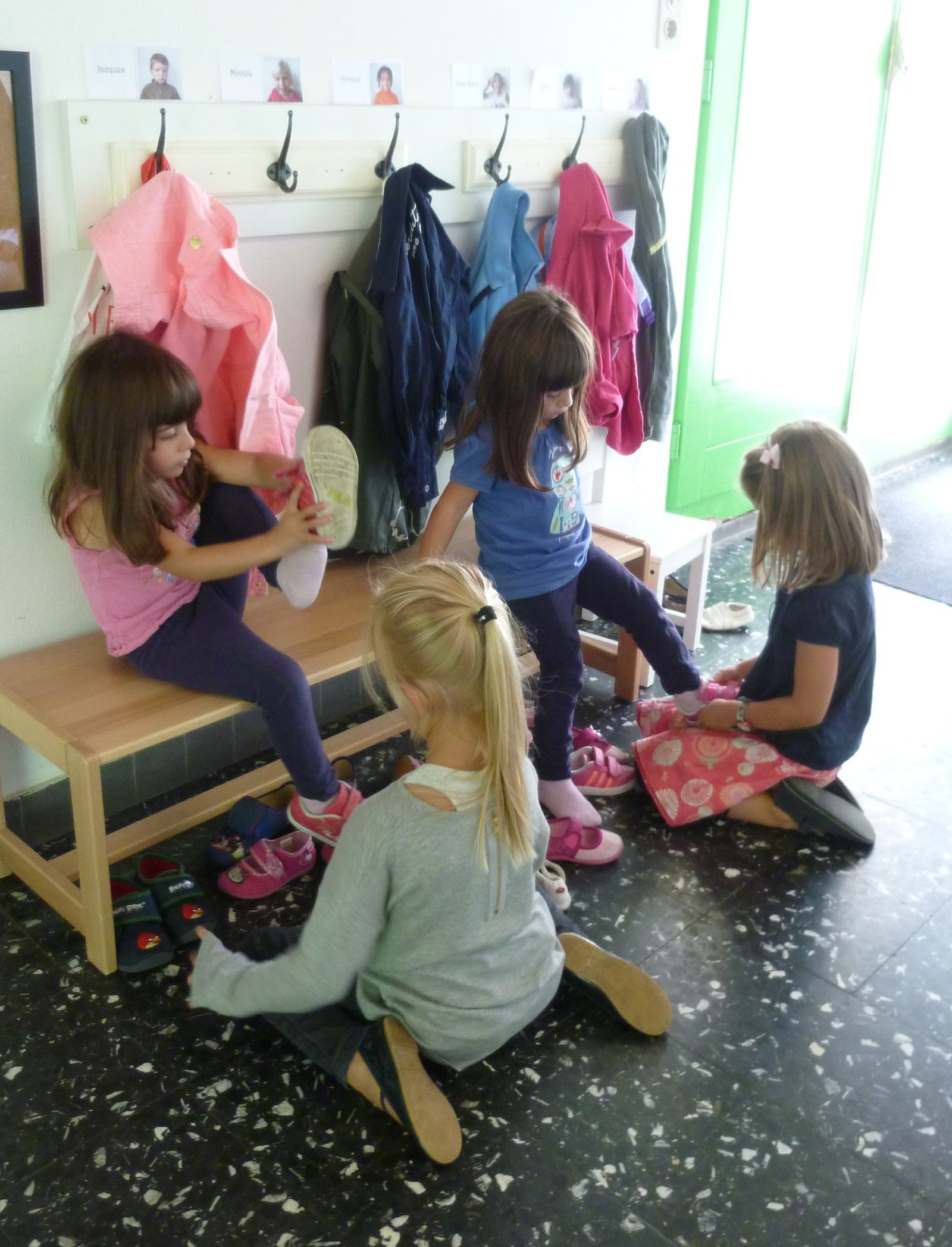
- Combing or brushing hair, use of hair-clips or ties, etc.
- Brushing teeth
- Hanging a … coat, jacket, hat, scarf, etc.
- Putting on and off … t-shirt, pants, dress, jacket, belt, gloves, hat, scarf, etc.
- Putting on and off … shoes, sandals, flip flops, wellies,
- Rolling up sleeves
- Dress Frames
“Among the school material small children enjoy most are the frames with two pieces of cloth – some have buttons and buttonholes, other ribbons, hooks and eyes, and shoe buttons – and it is delightful to watch the toddlers doing up buttons and tying bows with tremendous concentration.”Maria Montessori, Maria Montessori Speaks to Parents, p. 49. (2017)
Materials
- Mirrors: wall and table mounted
- Selection of brushes and combs
- Toothbrushing kits,
- Nail clippers, files, etc.
- Soap, nail brush,
- Towel,
- Dressing Frames
- Shoe polish

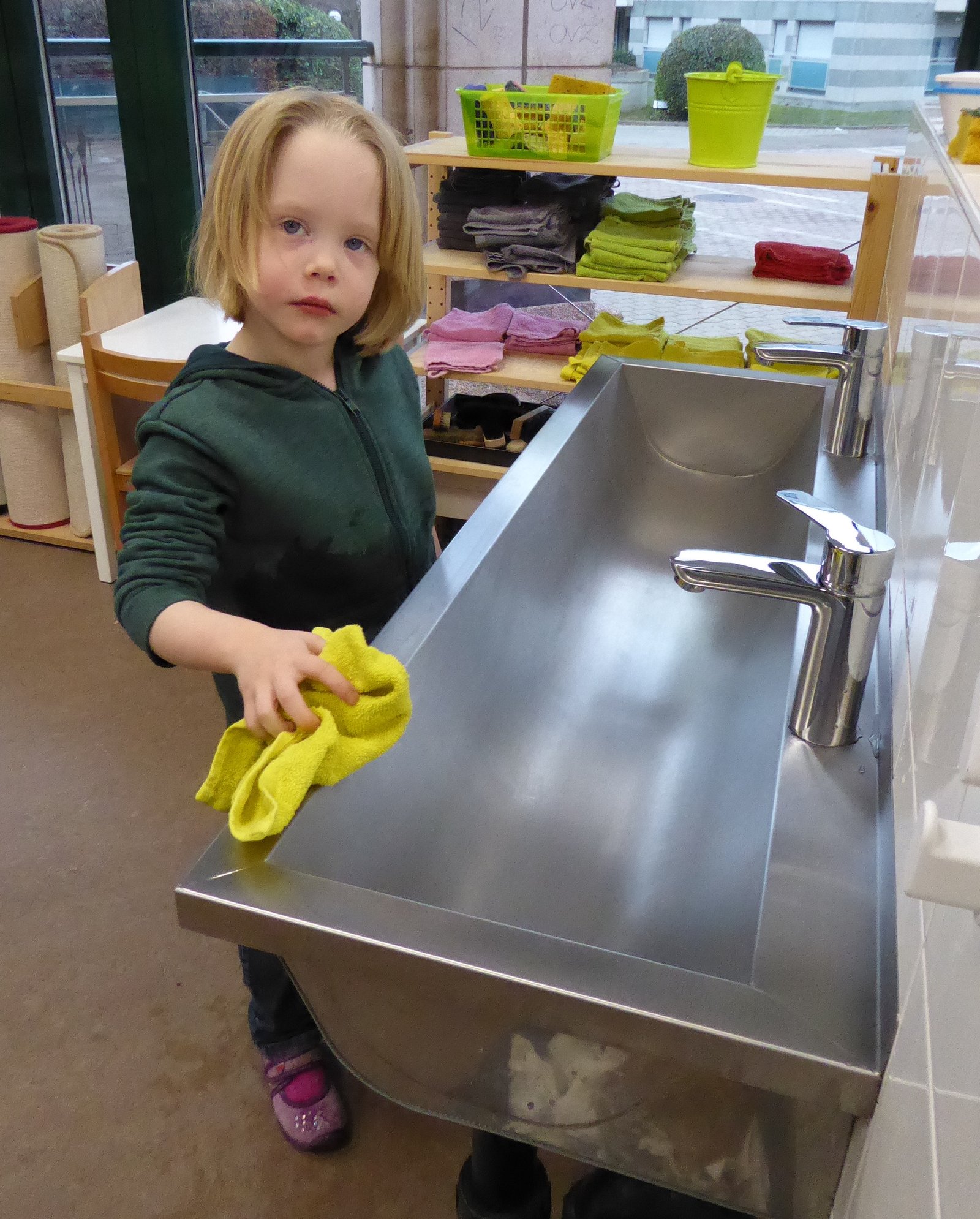
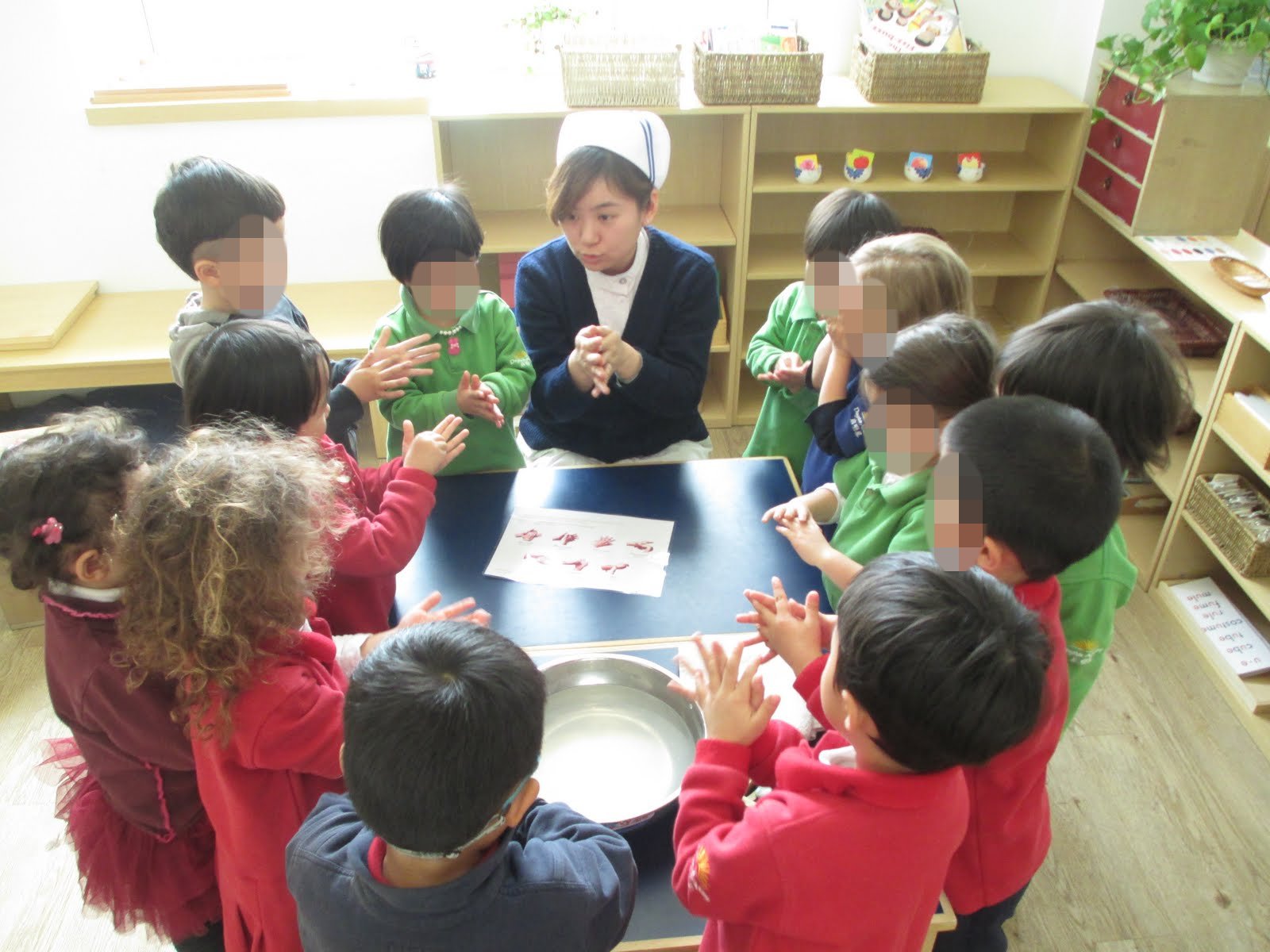
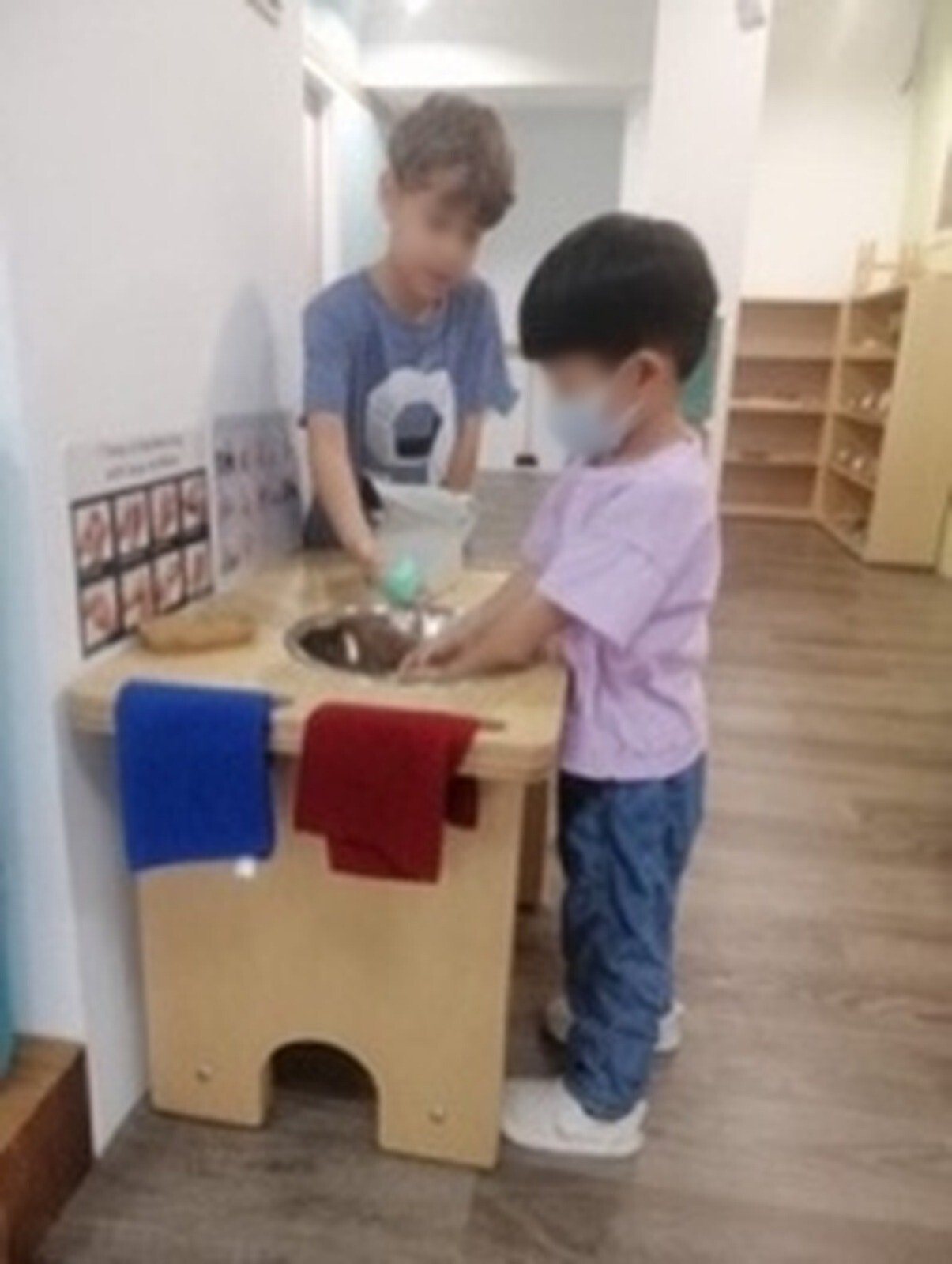
Washing Hands

Group 4 - Care Of The Environment
Purpose

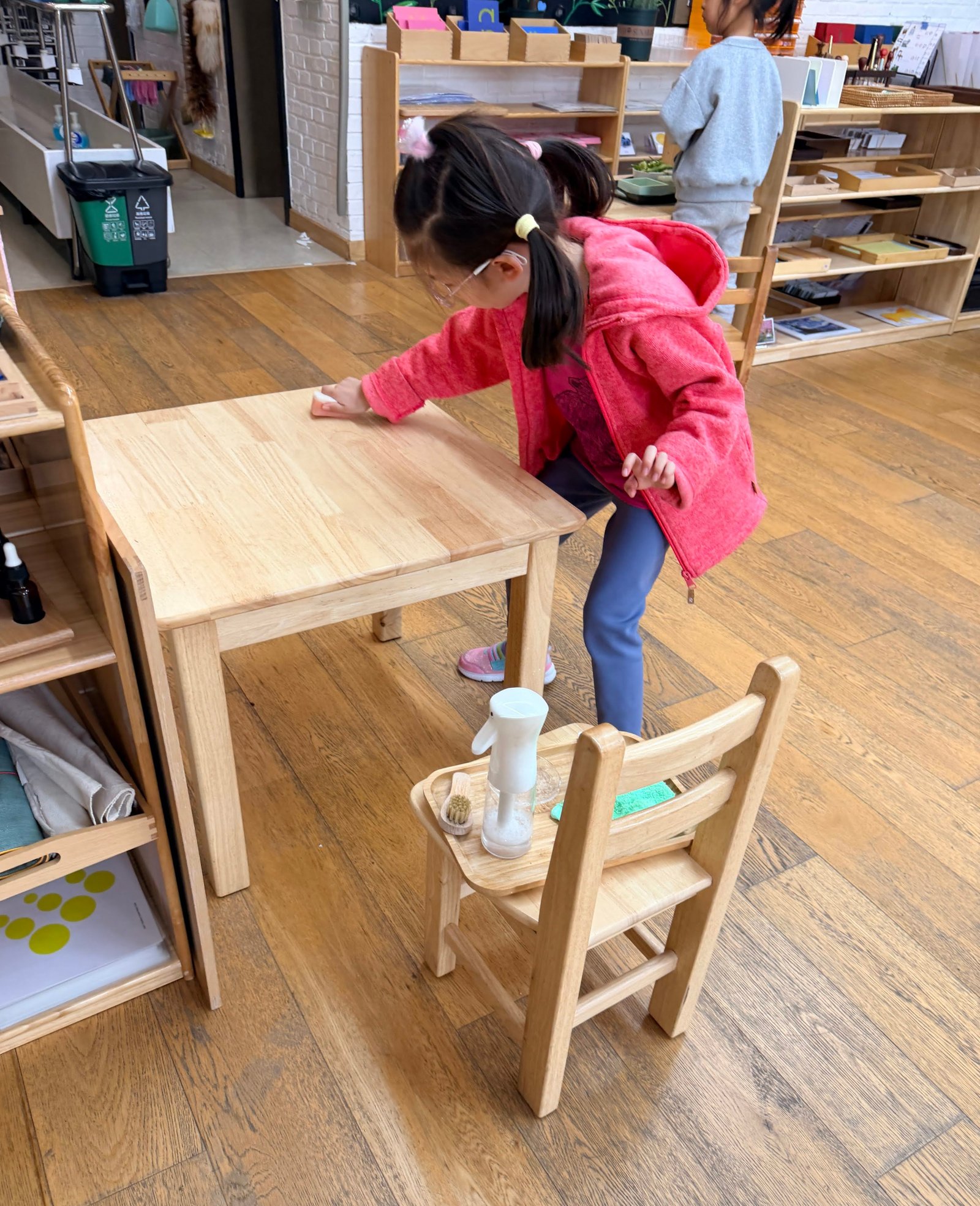
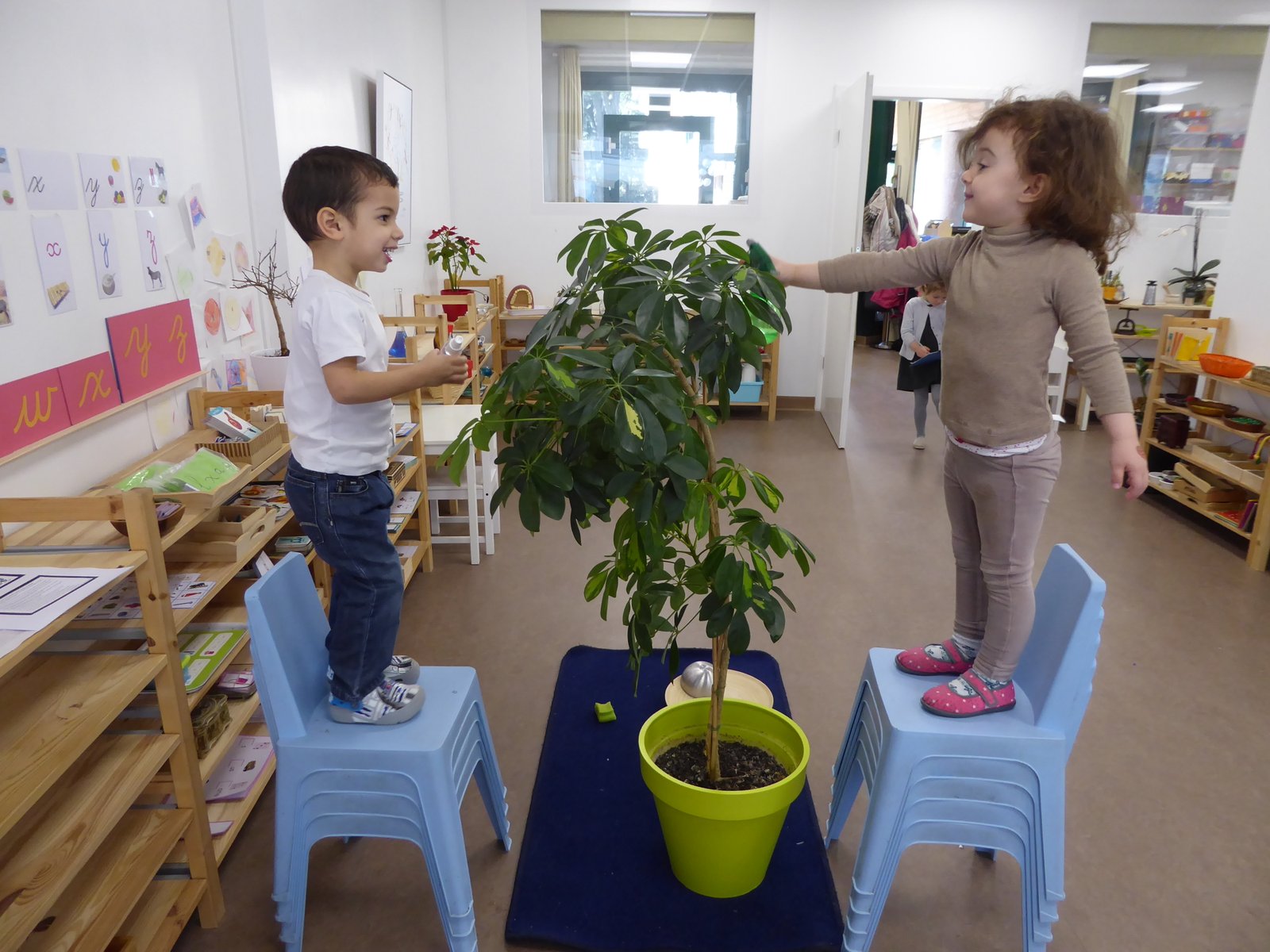
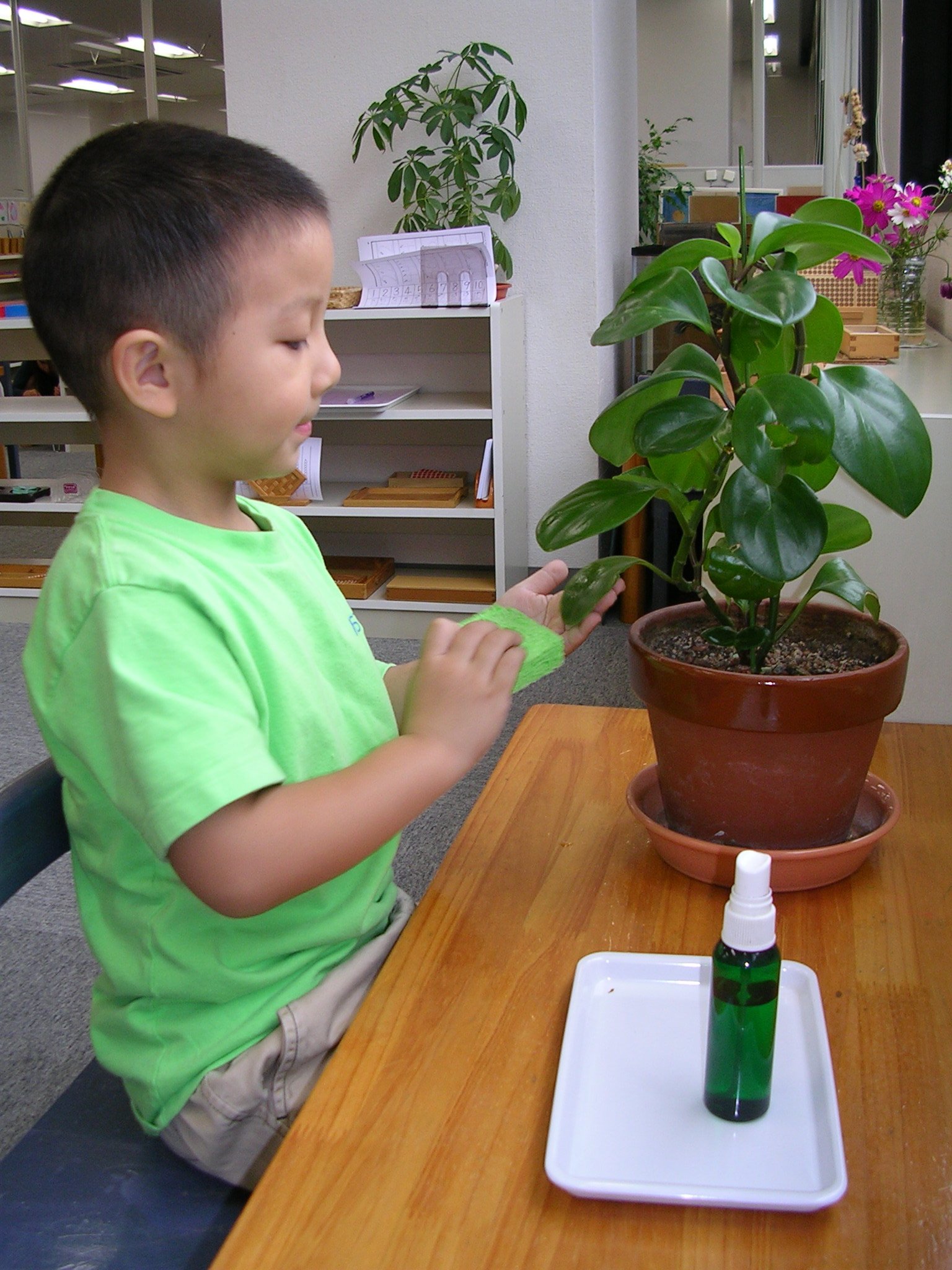
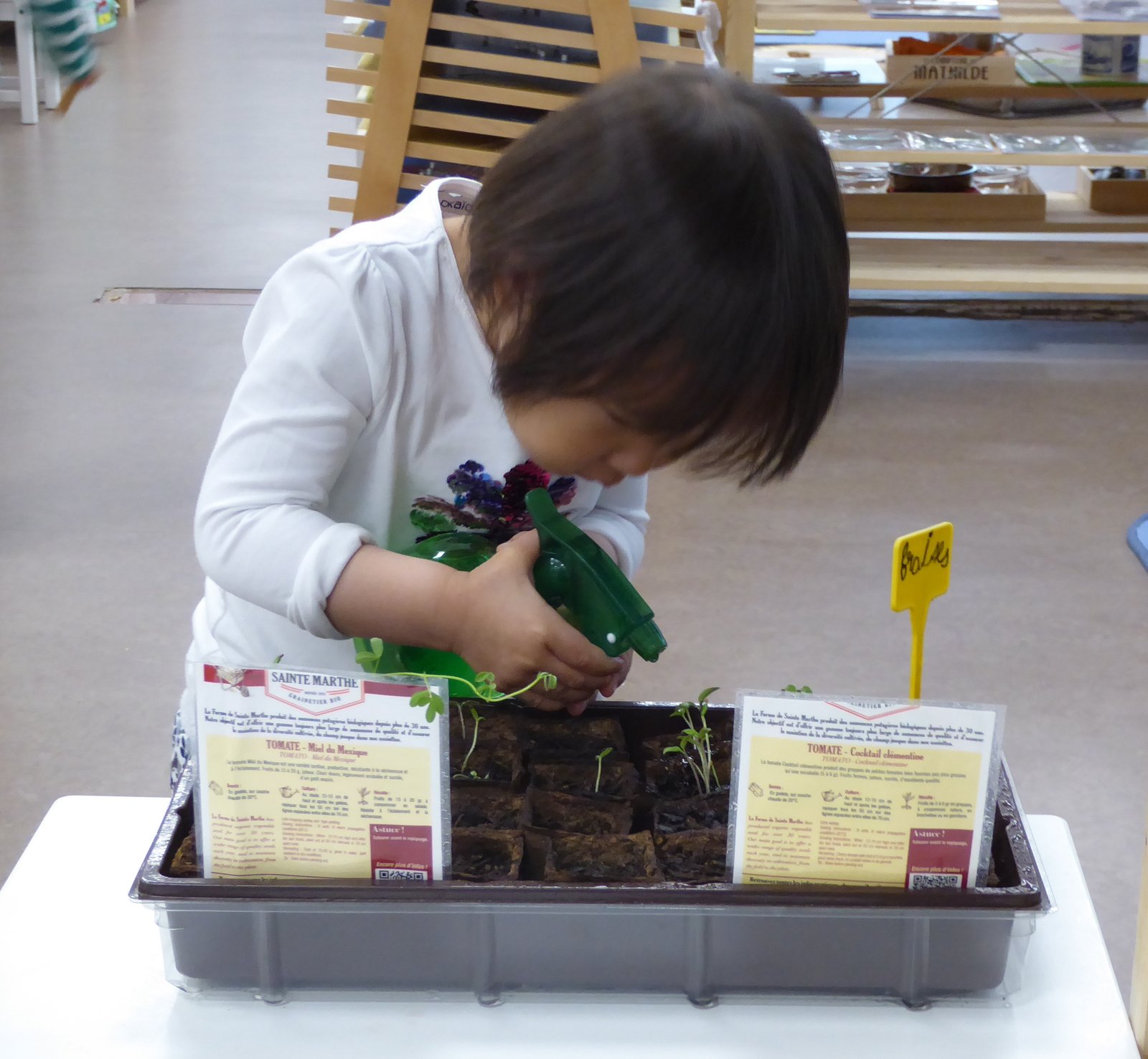
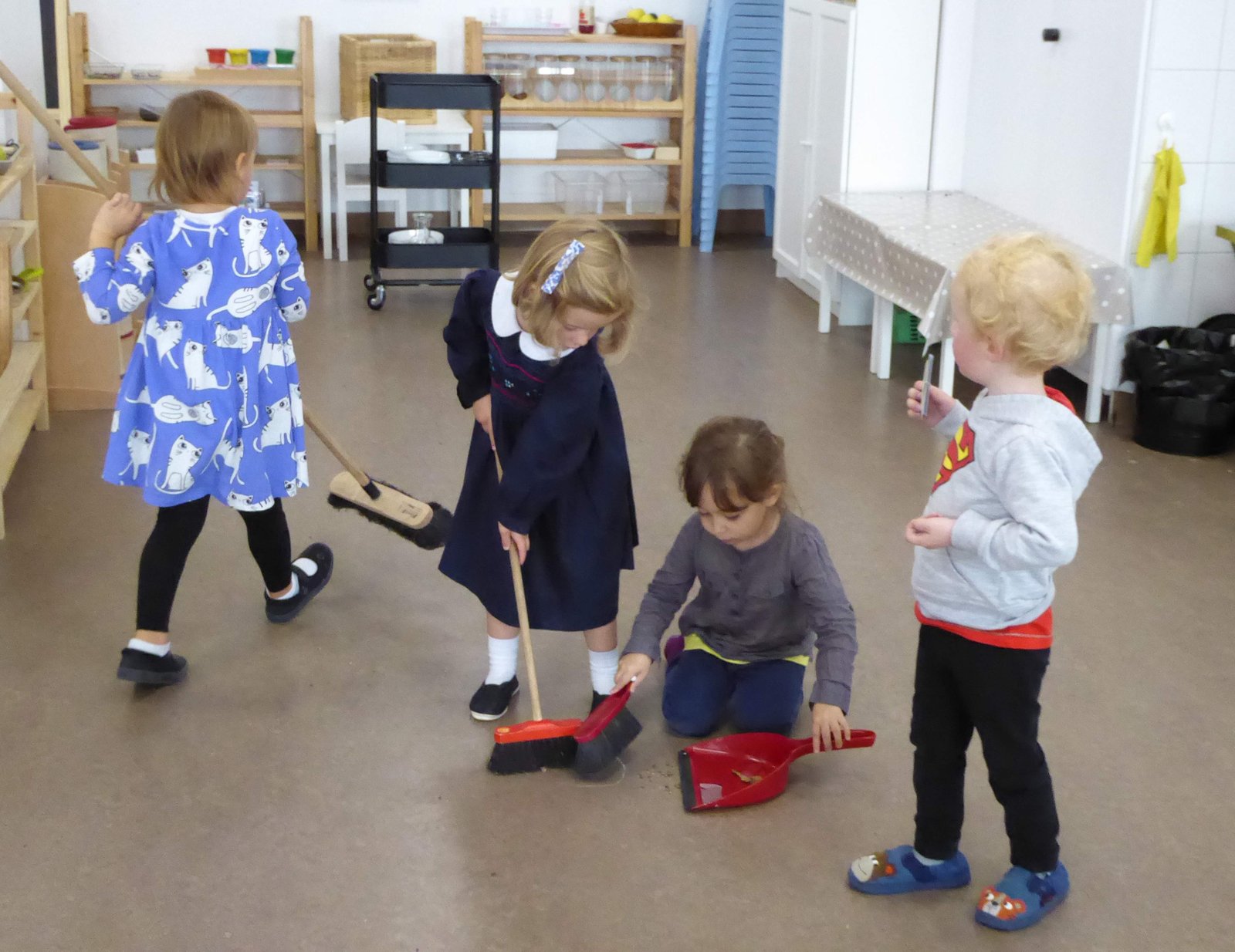
The exercises in this area extend the child's sense of responsibility from themselves to their surroundings, encouraging children to take an active role in maintaining their environment. Tasks such as sweeping, dusting, watering plants, and polishing surface s teach responsibility and respect for shared spaces. Children learn to carry trays, arrange flowers, and clean spills using appropriate tools, developing coordination and attention to detail. By engaging in these activities, children understand their role within a community and appreciate the importance of contributing to a well-ordered environment. Children naturally love these activities as they allow them to take ownership of their classroom and see the tangible results of their work. This area is divided into Indoor and Outdoor activities.
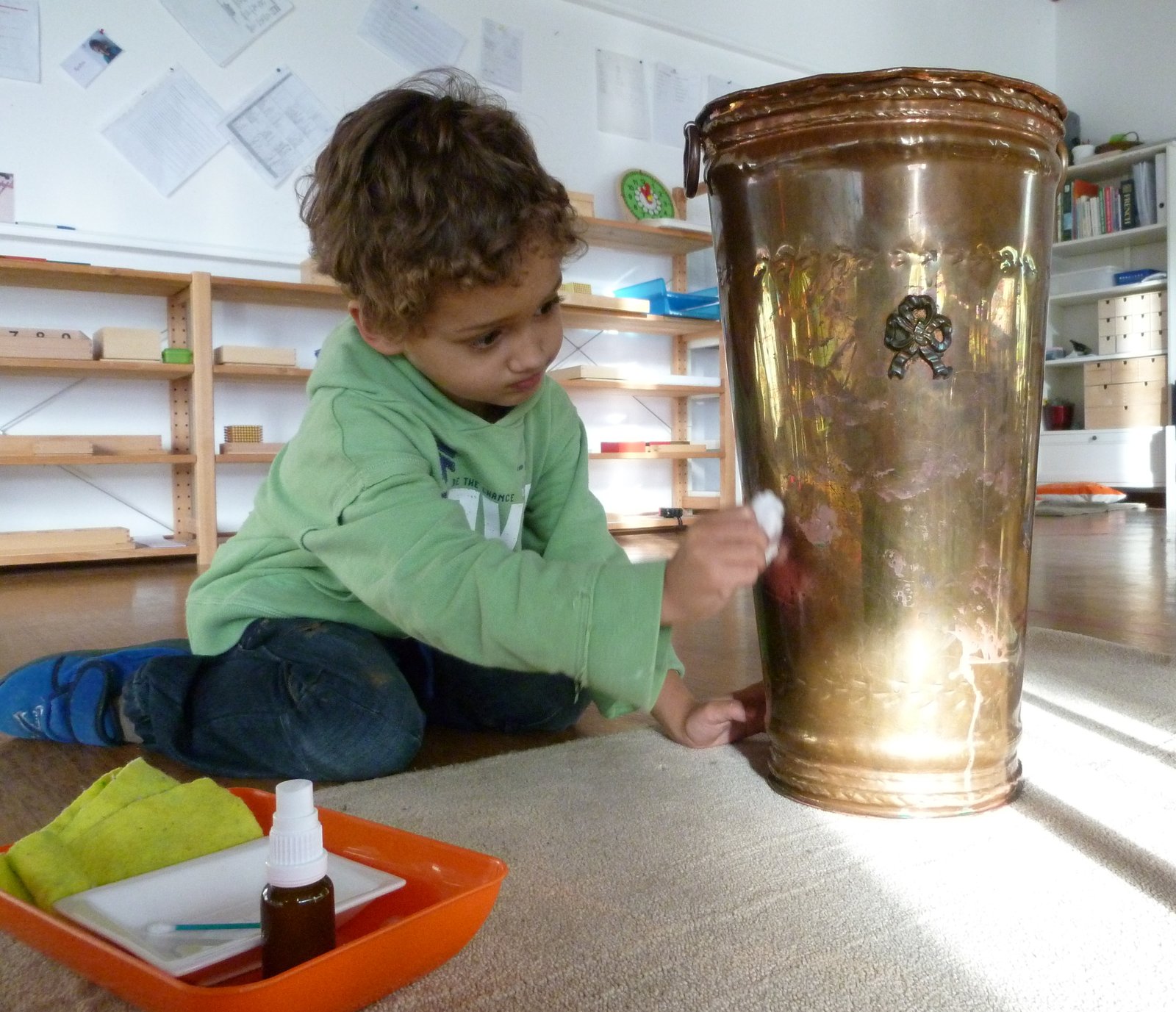
“Nothing is more astonishing that to see one of our children engaged in a so-called ‘exercise of practical life;’ completely absorbed, for example, in polishing a brass vessel and carefully following his instructions till it shines brilliantly; then without pause beginning all over again and repeating every detail till he has polished the already shiny pot several times over.”Maria Montessori, The Absorbent Mind, p. 180. (1995)



Sample Care of the Indoor Environment Exercises
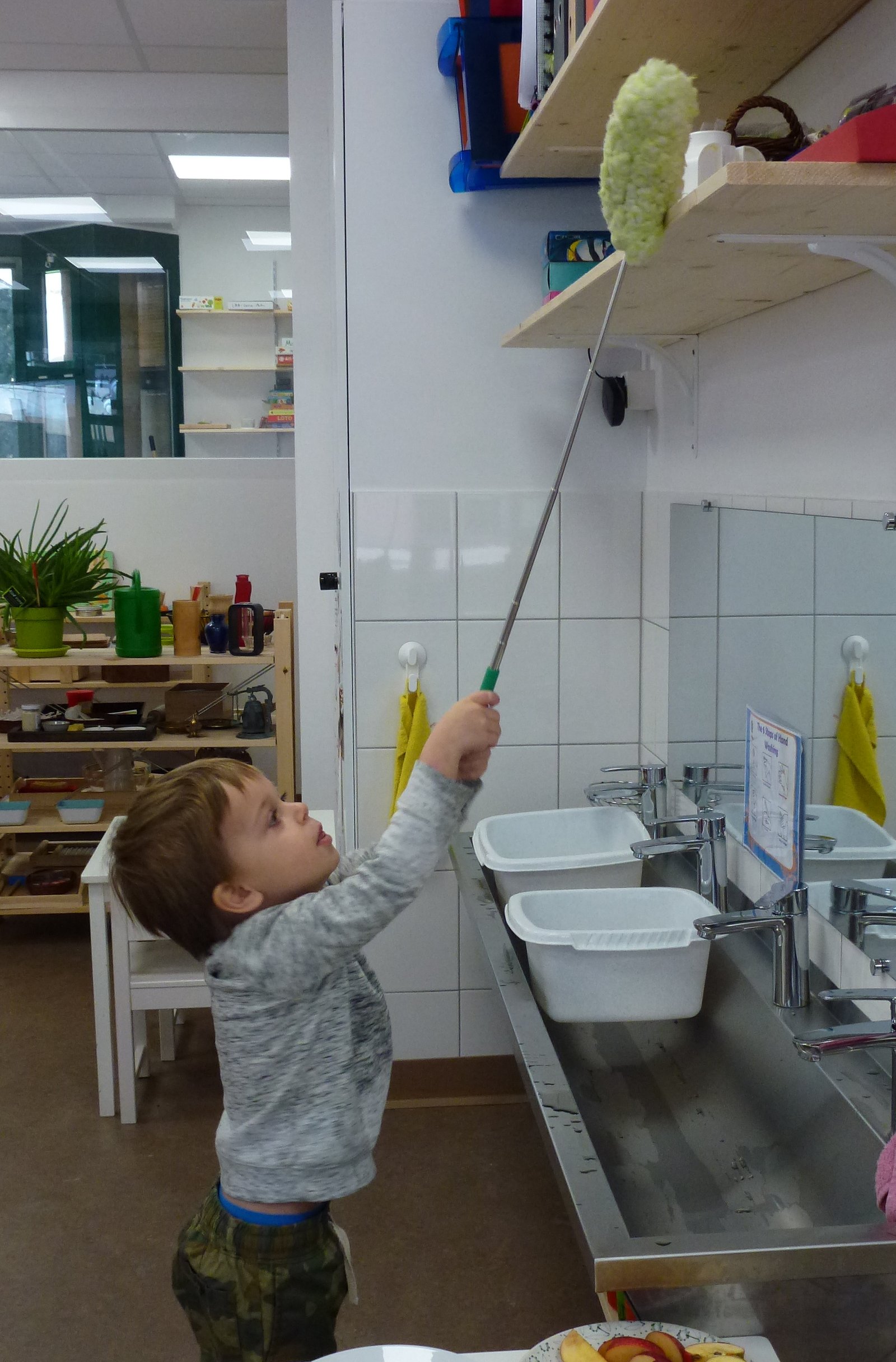
- Sweeping, mopping, dusting.
- Setting a table.
- Washing a chalkboard, table, chair, easel, floor, etc.
- Washing used dishes, cooking utensils, etc.
- Polishing wood, metal, glass, mirror, etc.
- Sorting recycling
- Use of water fountain or dispenser
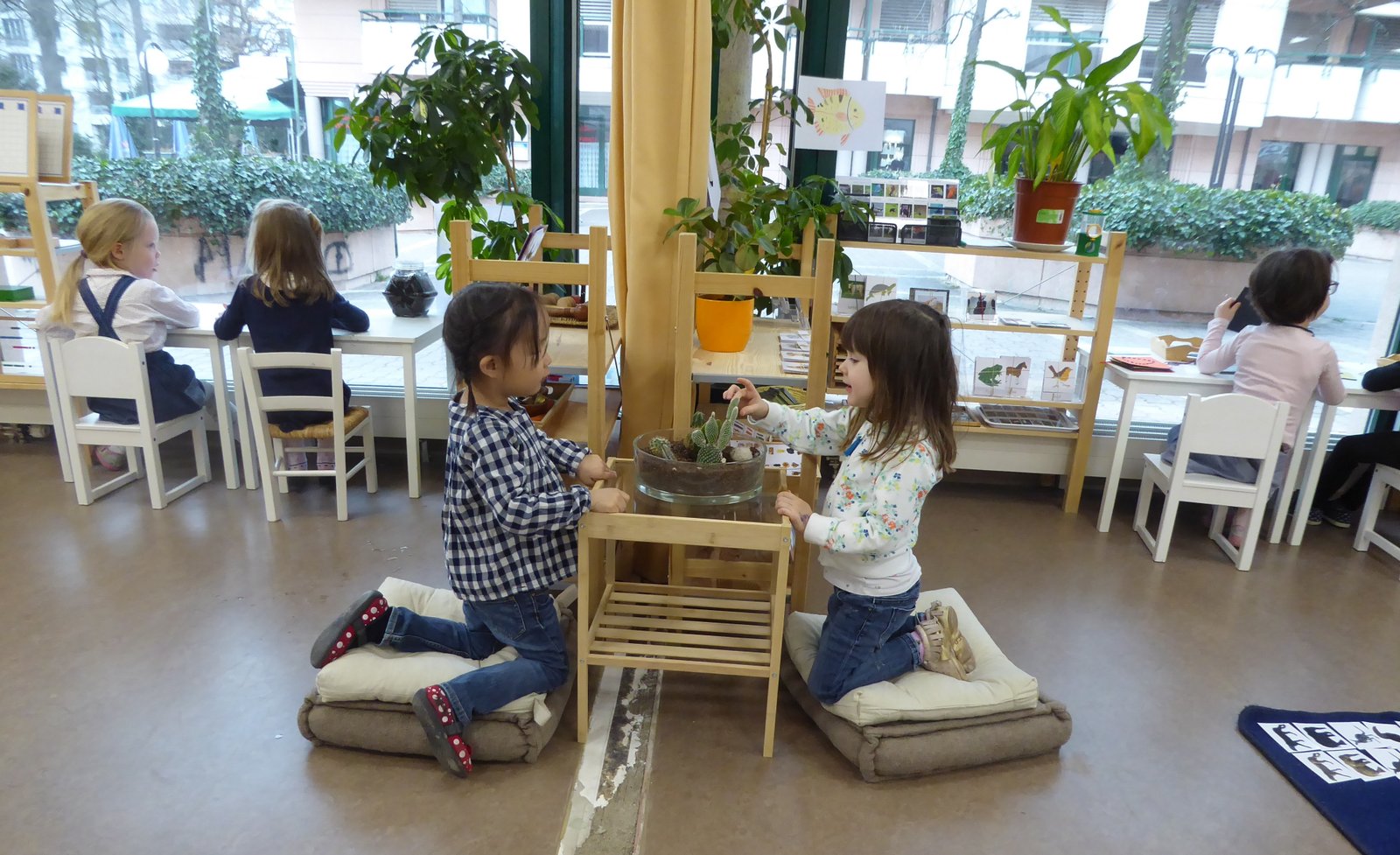
- Care of Plants: pruning, removing dead leaves, cleaning leaves, etc.
- Flower arranging or pressing, etc.
- Care of Animals: fish, rabbit, gerbil, hamster, turtle, etc.
Materials
- Sponges, soap, spray bottles,
- Small dusting cloths, dusters - (lambswool and small brush for shelf/tray corners)
- Lined cloths; unlined cloths; baby clothes/socks
- Basin, pitcher, soap, scrub brush, drying cloth, drying rack,
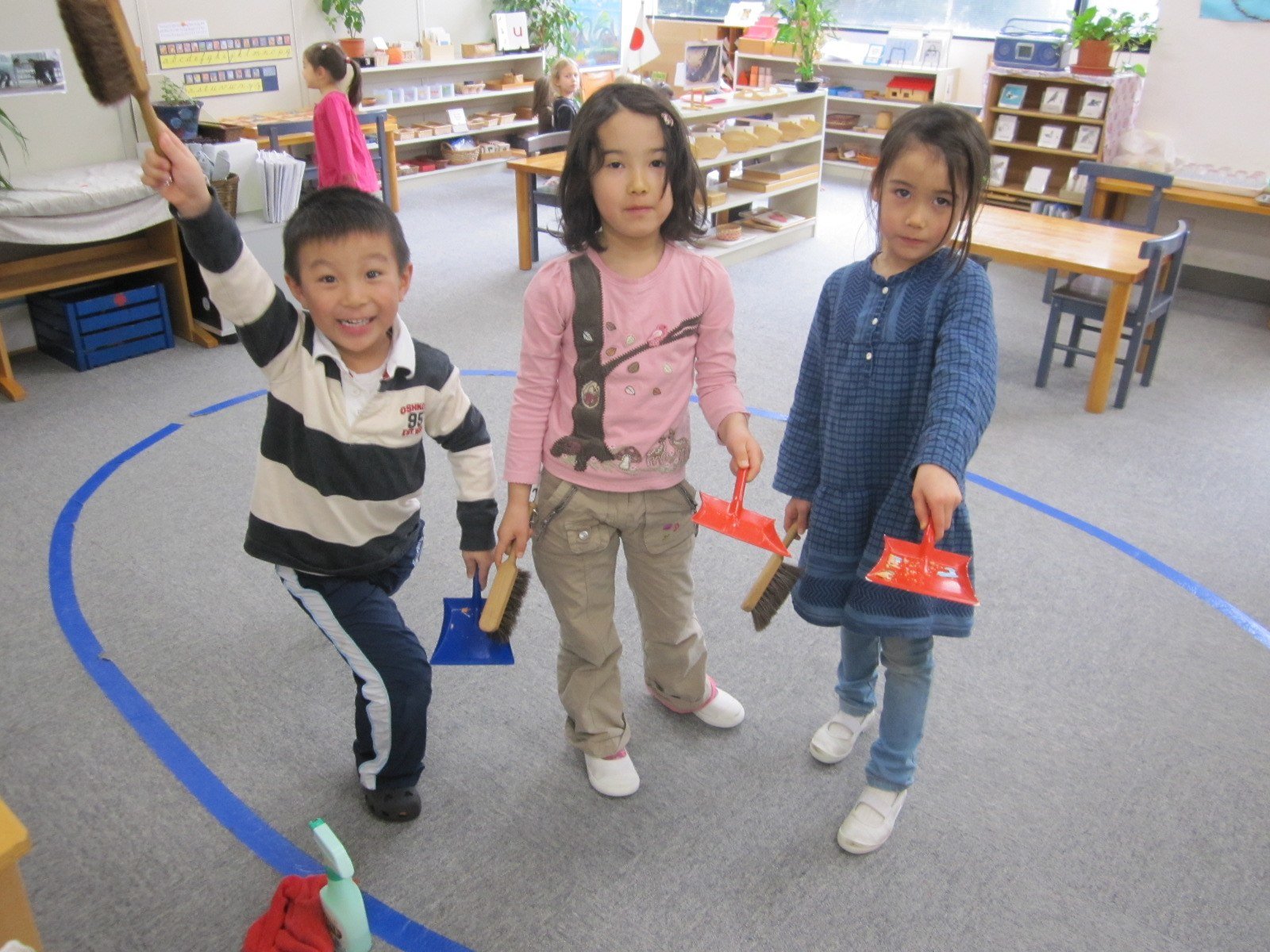
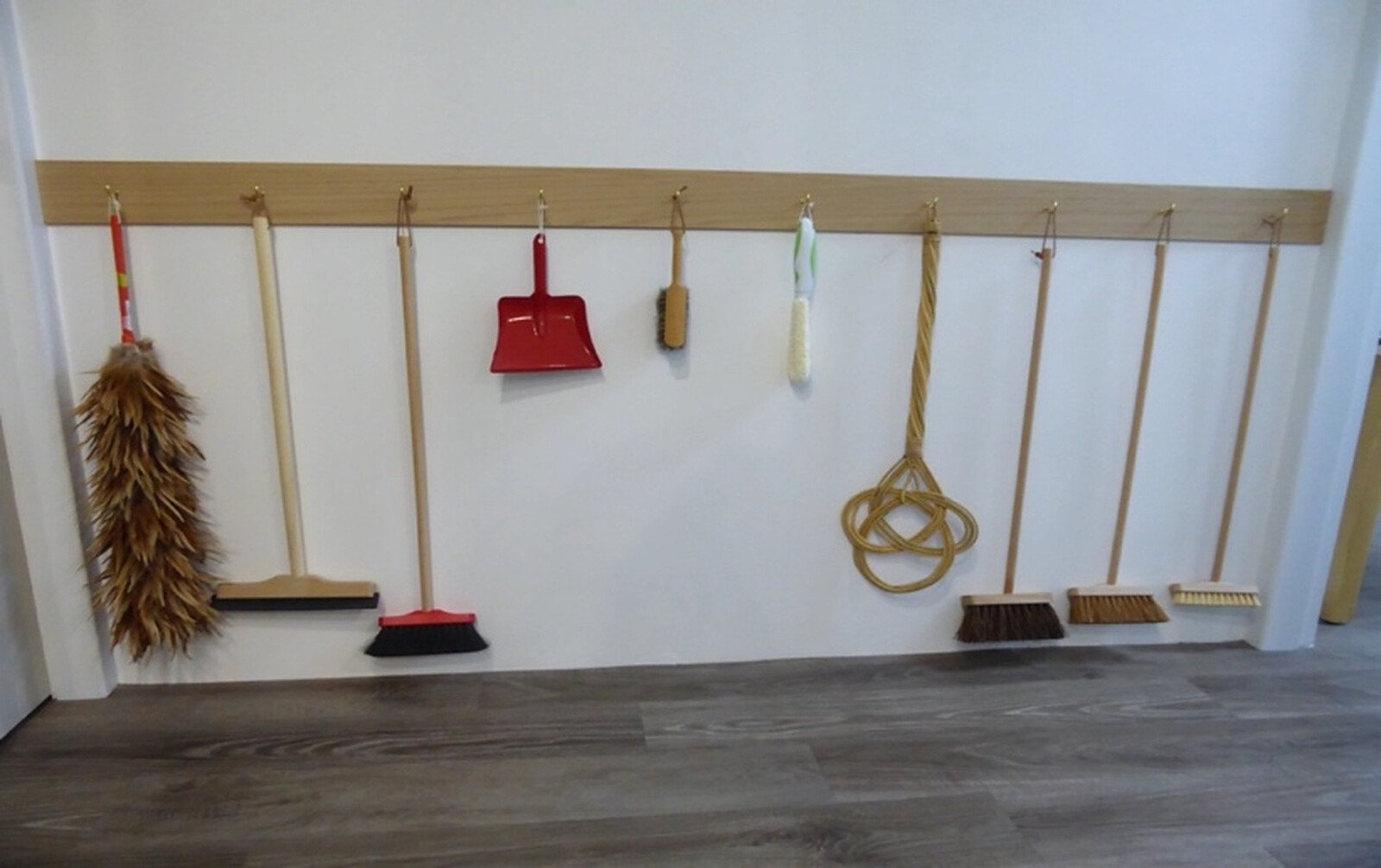
- Brooms and brushes, dustpans, mat-beater, mops, buckets,
- Polishing cloths, sponges, cotton wool, various kinds of polish (beeswax or natural polish), wooden, brass, silver and glass objects,
- Plants, flowers, watering can, vases, pruning shears or scissors, bucket
"If a child does not set a table for a group of people who are really going to eat, if he does not have real brushes for cleaning, and real carpets to sweep whenever they are used, if he does not himself have to wash and dry dishes and glasses he will never attain any real ability. And if he does not live a social life based on proper education, he will never attain that graceful naturalness which is so attractive in our children."Maria Montessori, ‘The Discovery of the Child’, p. 94. (1967)
Setting up these exercises is an opportunity to demonstrate some ingenuity, with every space a blank canvas, waiting to be filled.

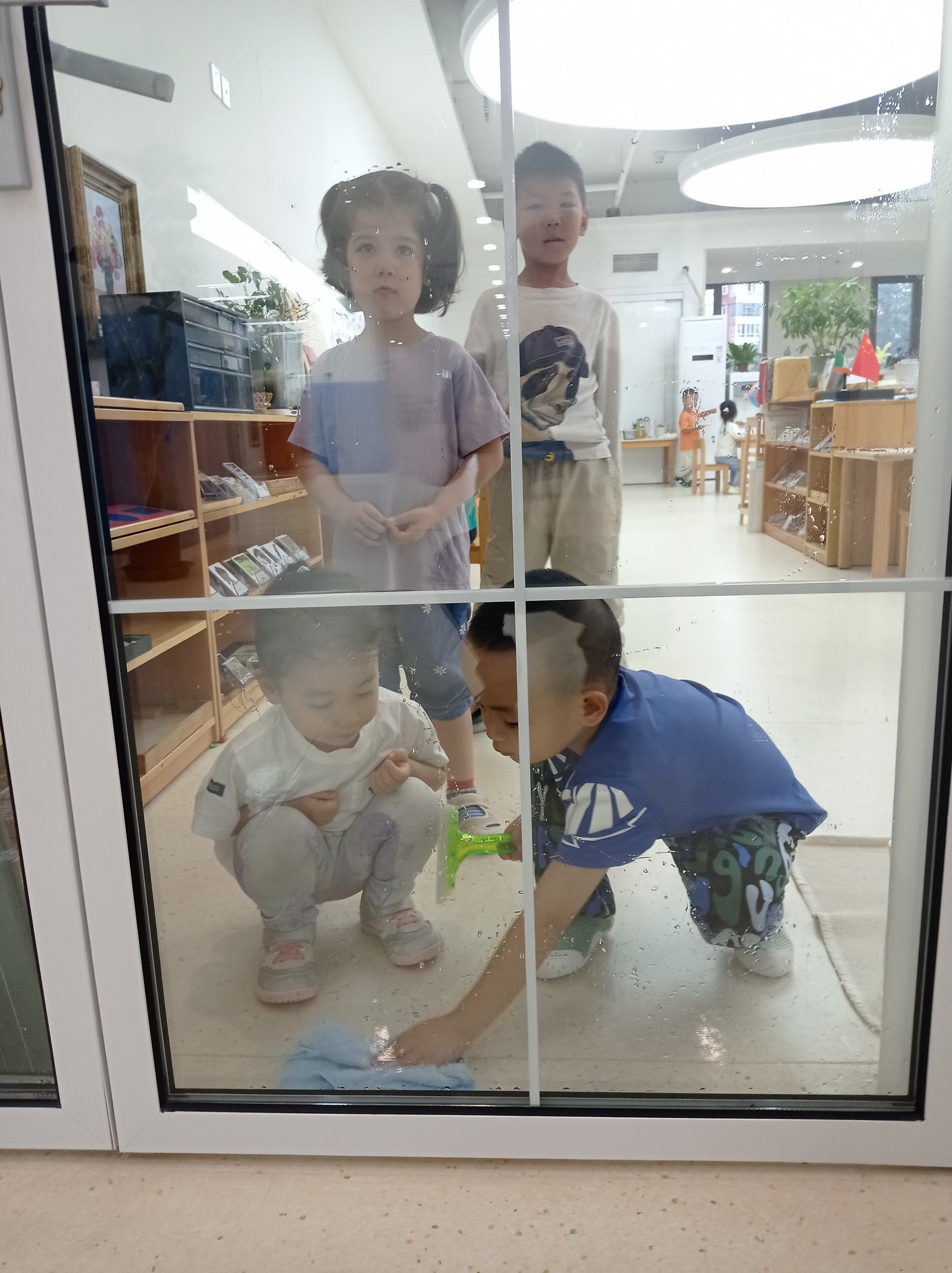
Washing or polishing glass: mirrors, doors, or windows
This activity is universally popular, so the more surfaces that are available to clean or polish, the better.


Sample Care of the Outdoor Environment Exercises
- Raking leaves
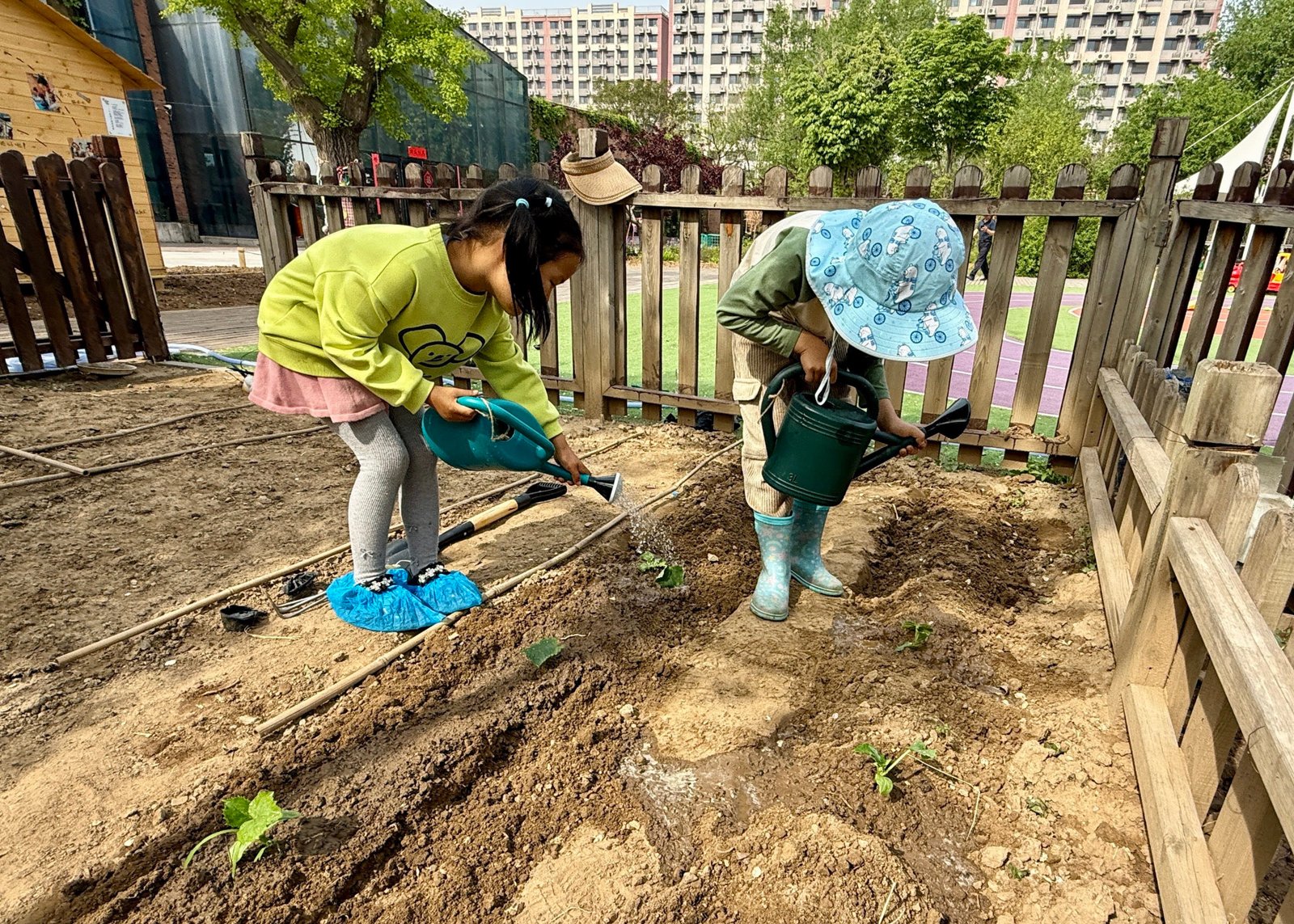
- Watering plants, flowers, lawn, etc
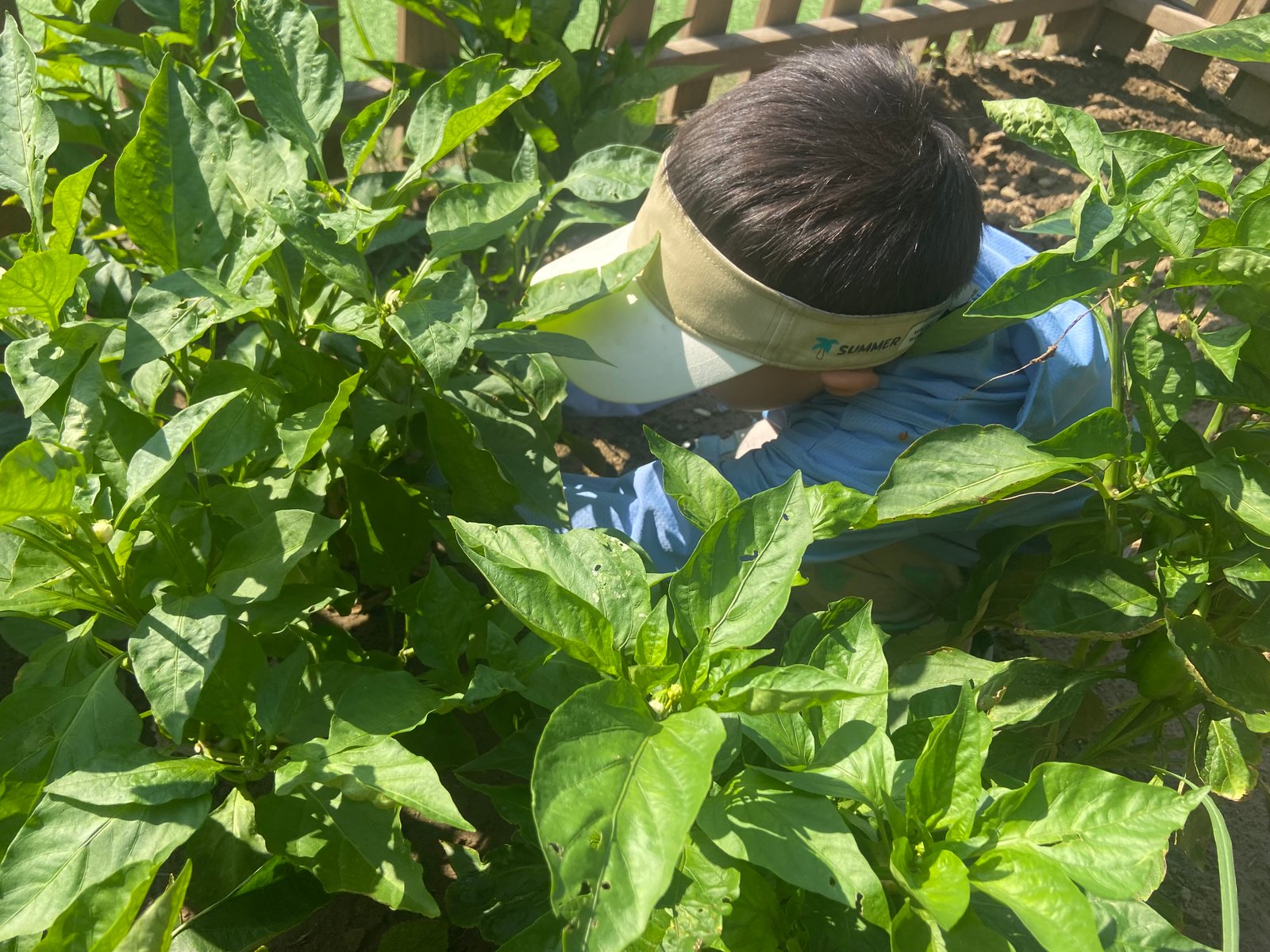
- Planting or transplanting seeds, bulbs, etc.
- Weeding
- Picking fruit and vegetables
- Feeding and caring for animals
- Collecting eggs
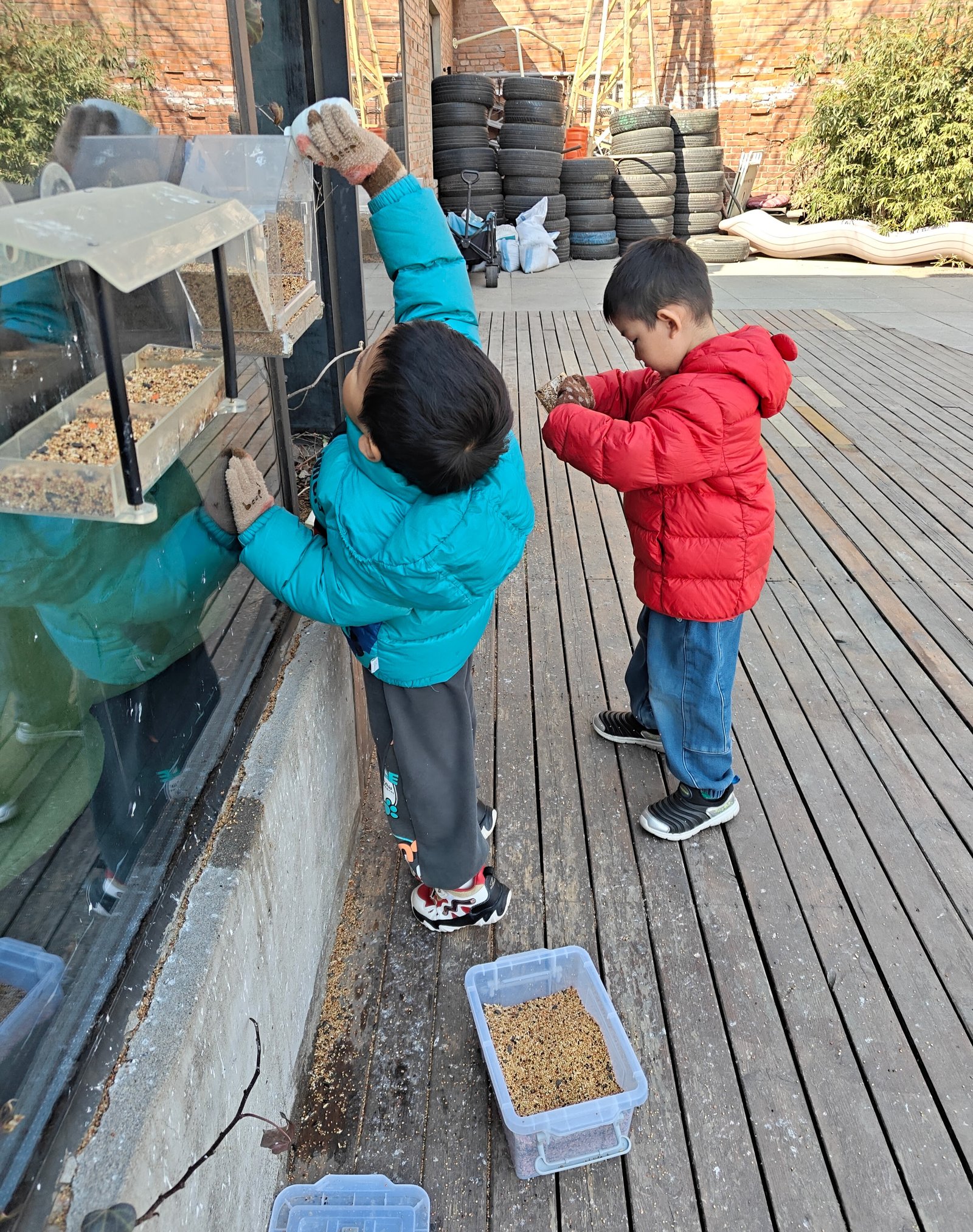
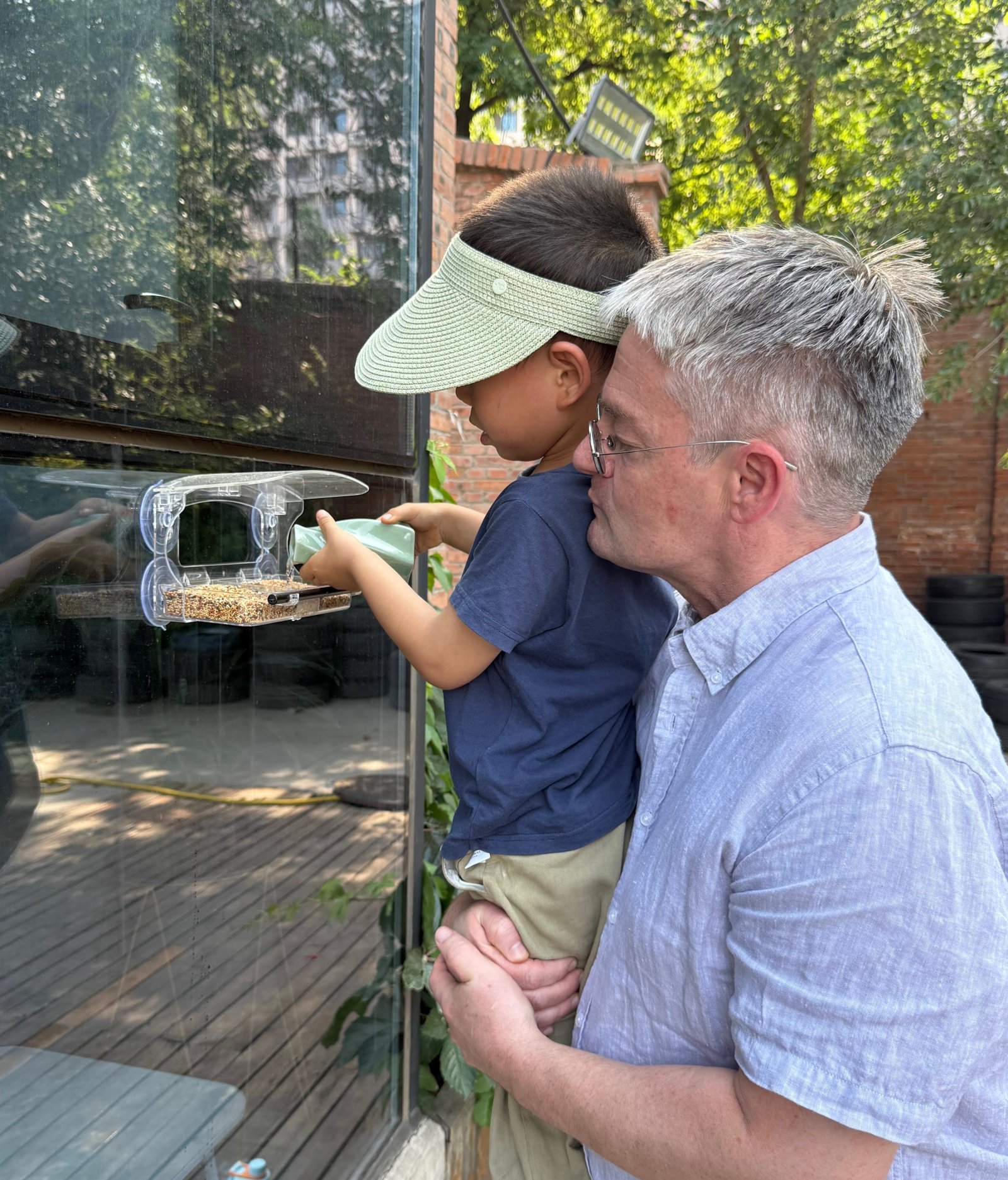
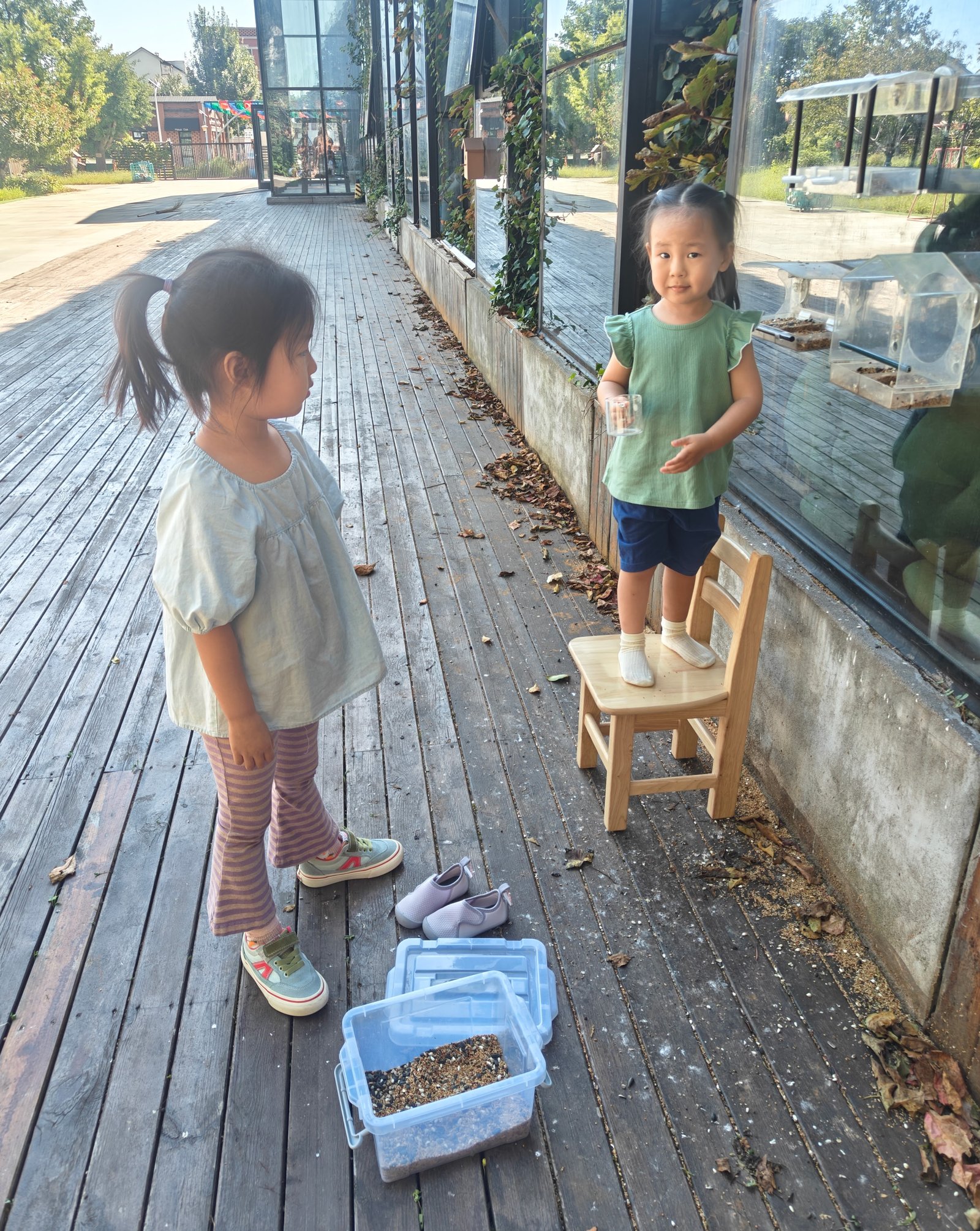
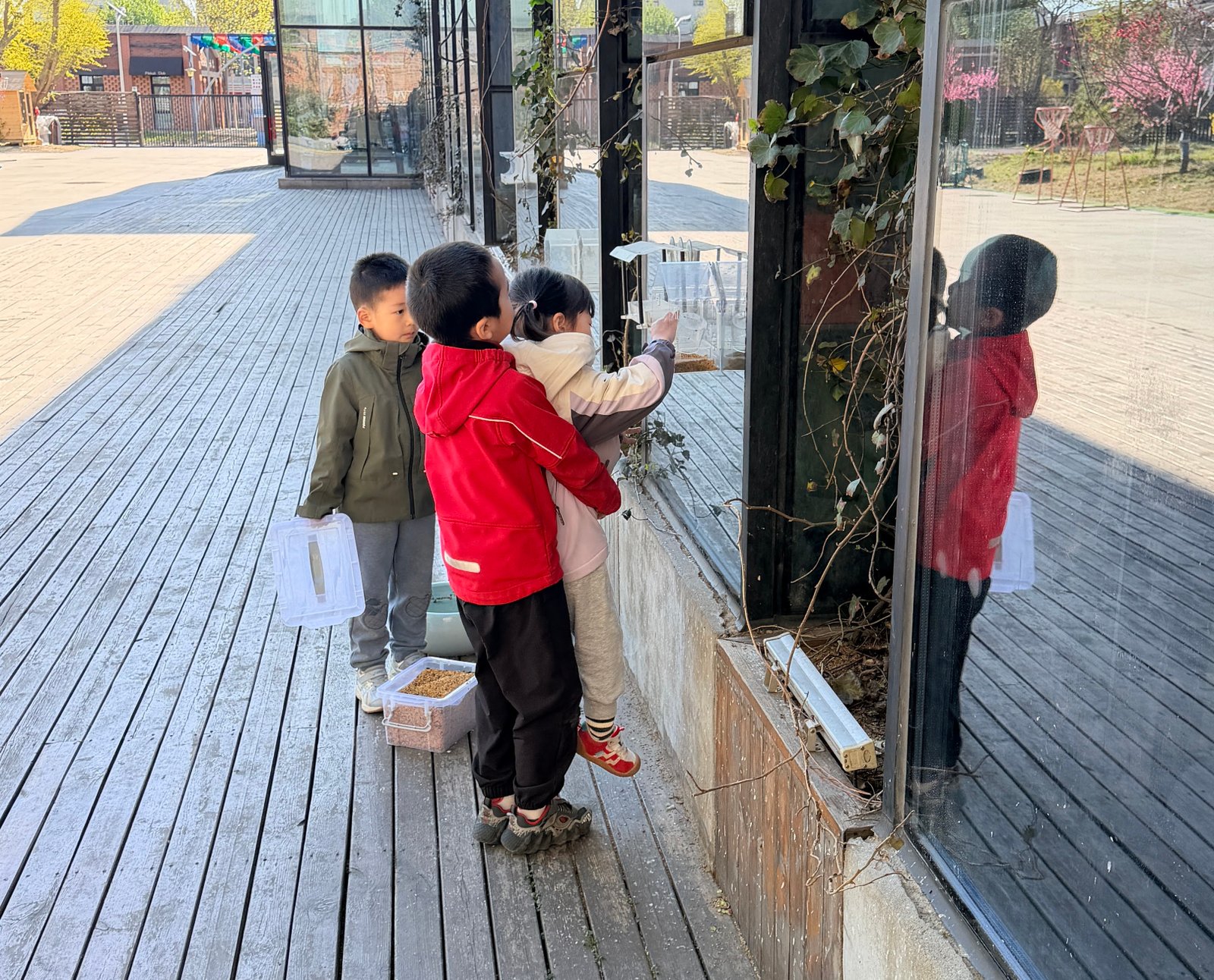
- Bird bath or bird-feeder upkeep
- Picking up litter
- Washing outdoor surfaces
- Maintenance of tools or garden equipment, etc.

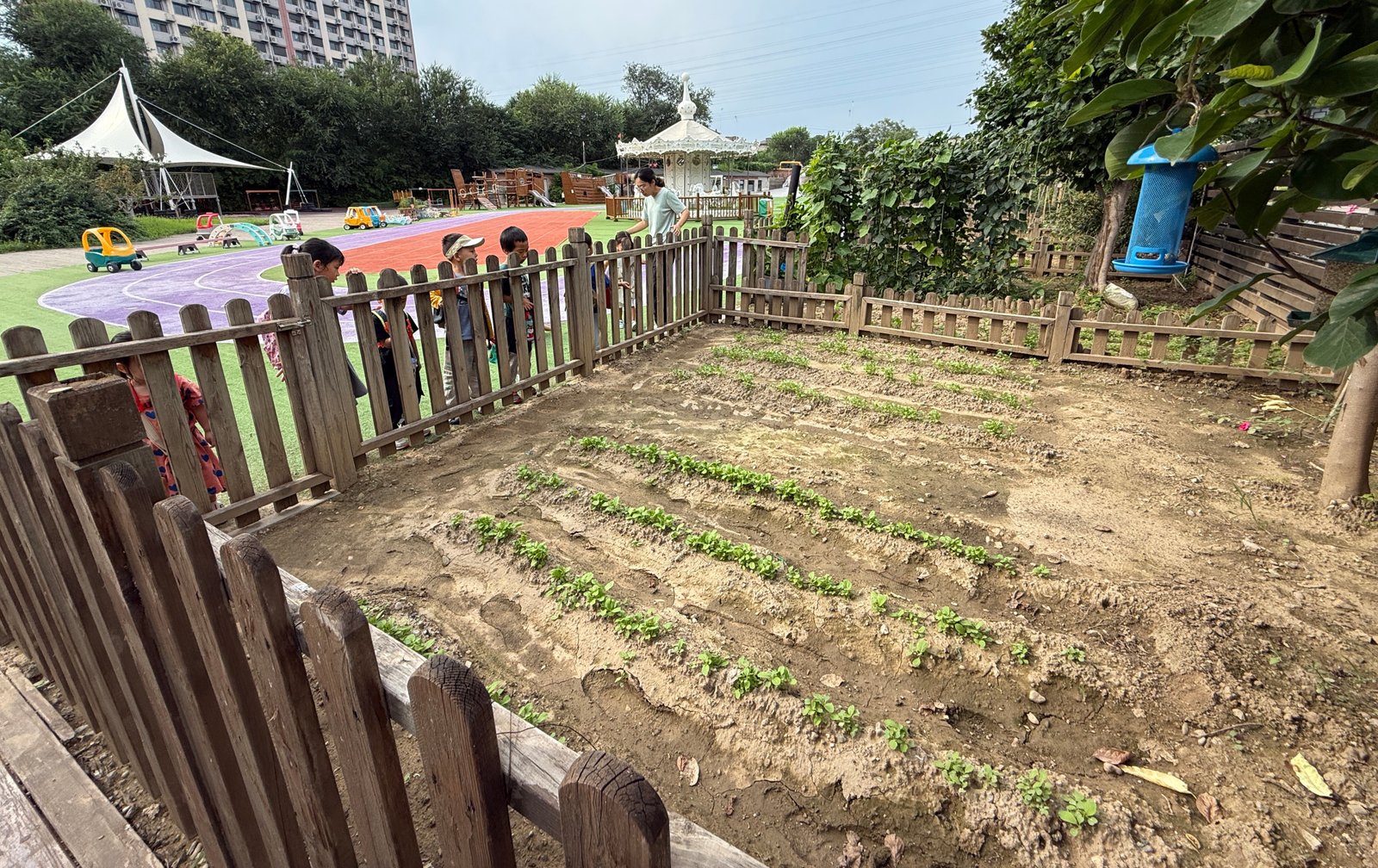

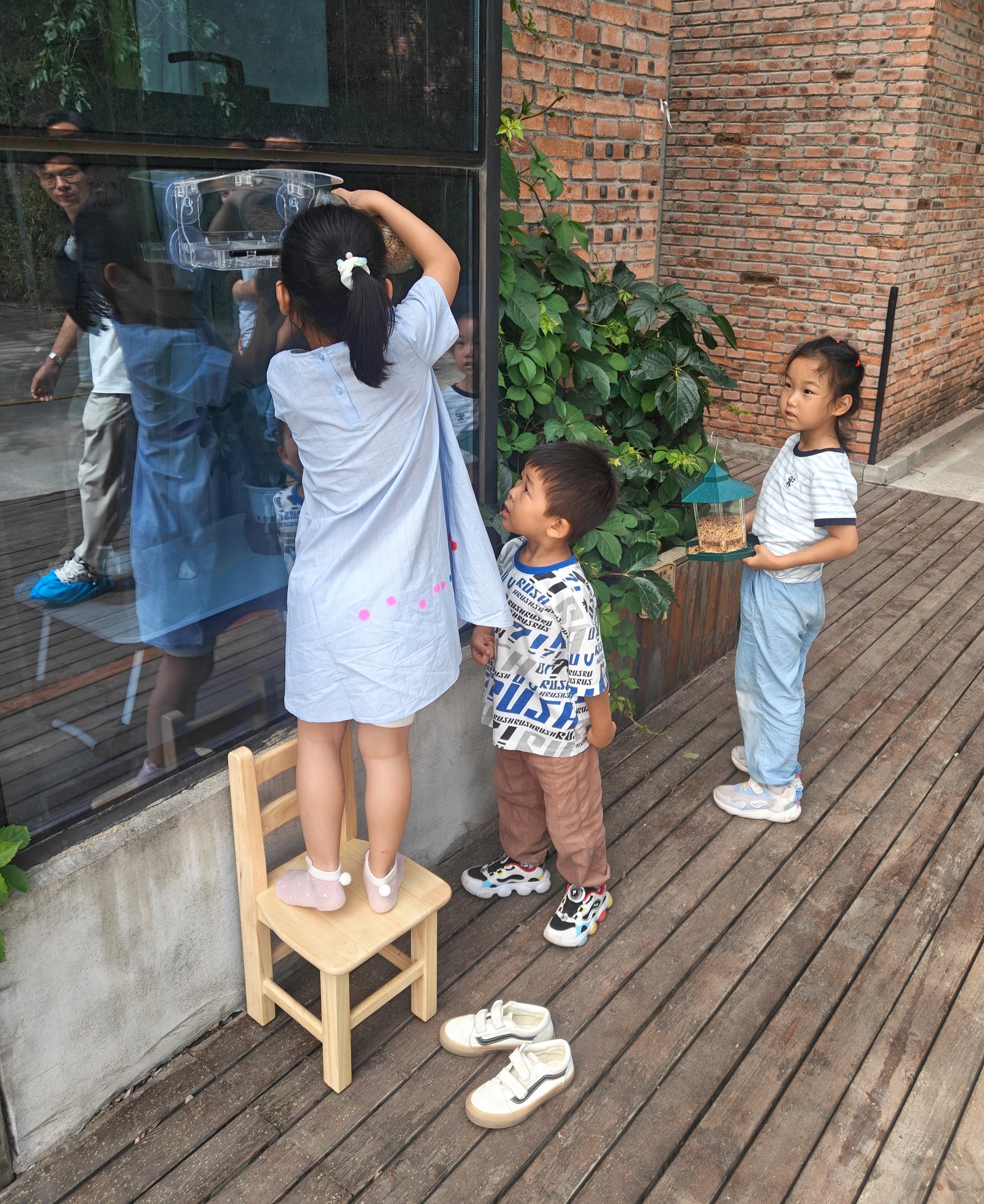
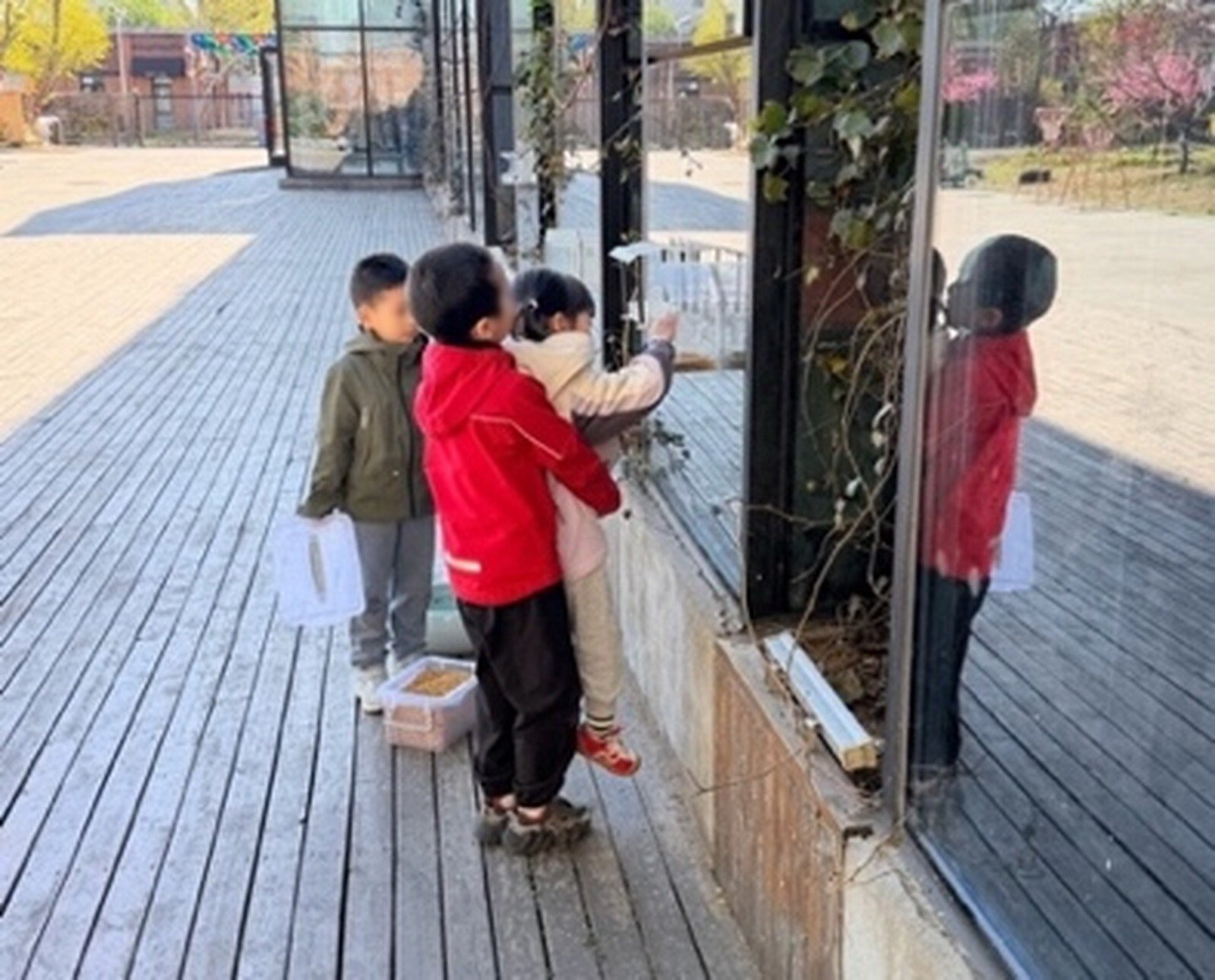
Feeding birds is a practical and fun way for children to learn about responsibility: come rain or shine (or snow), the birds still have to be fed.

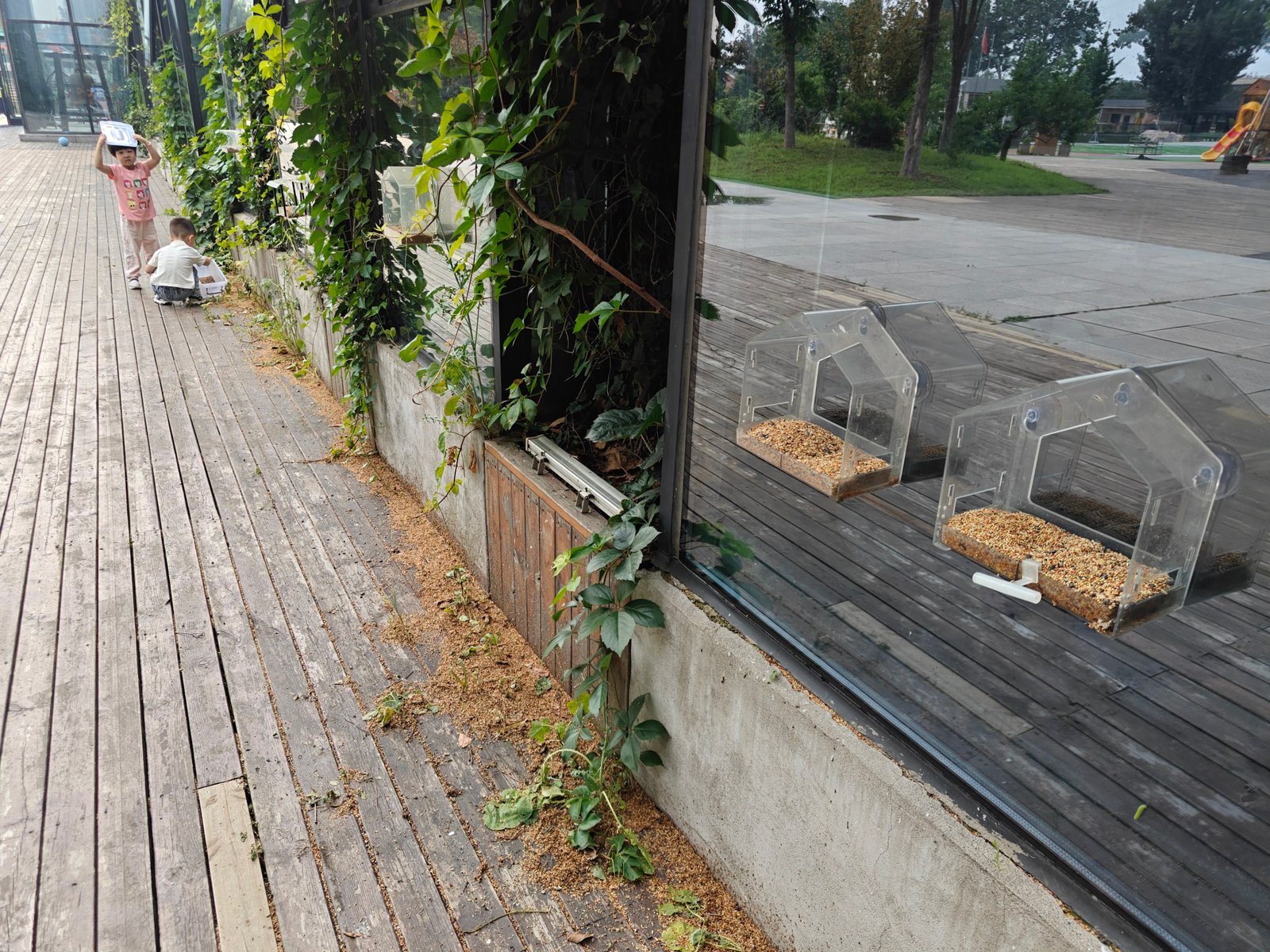


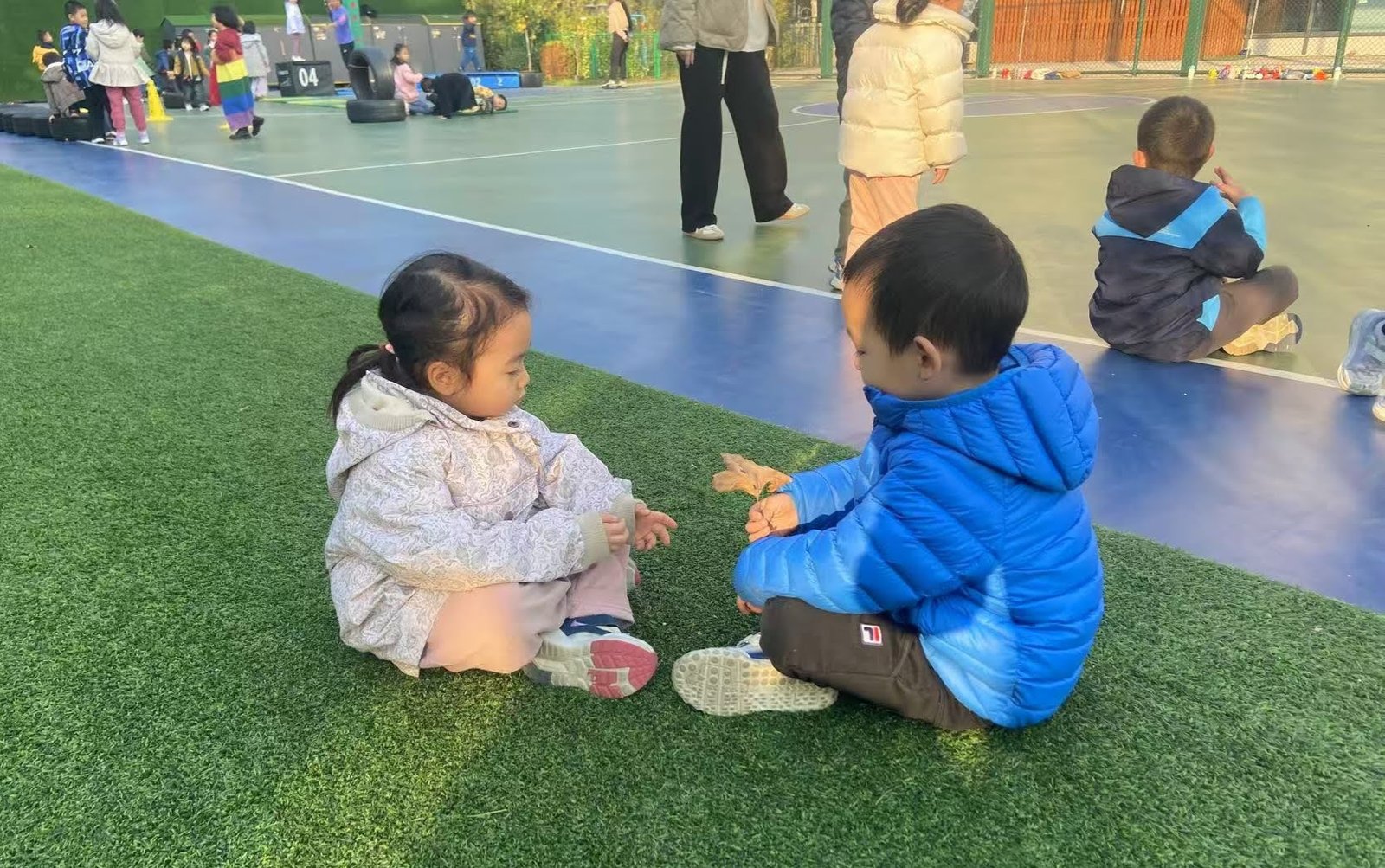
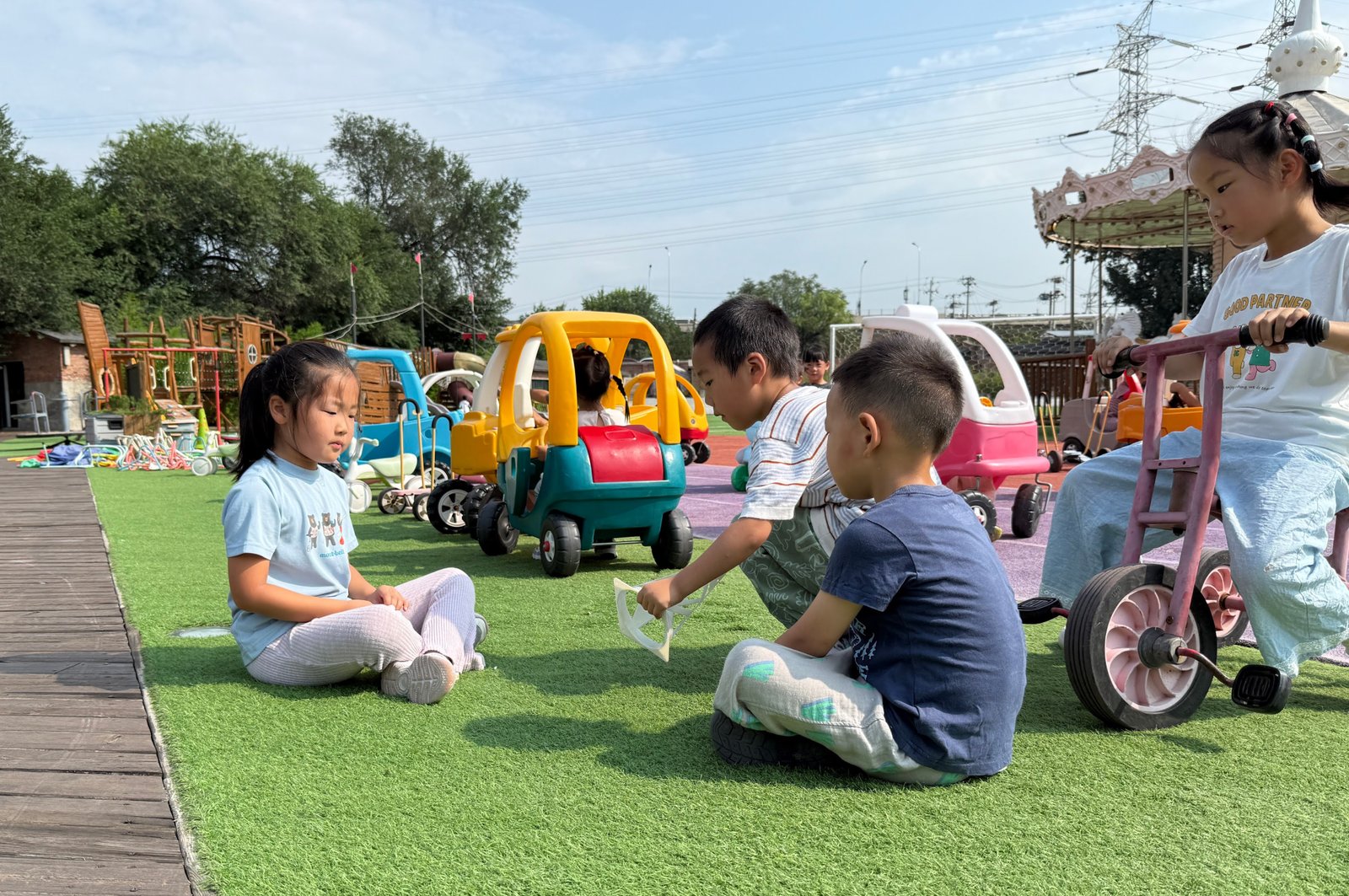
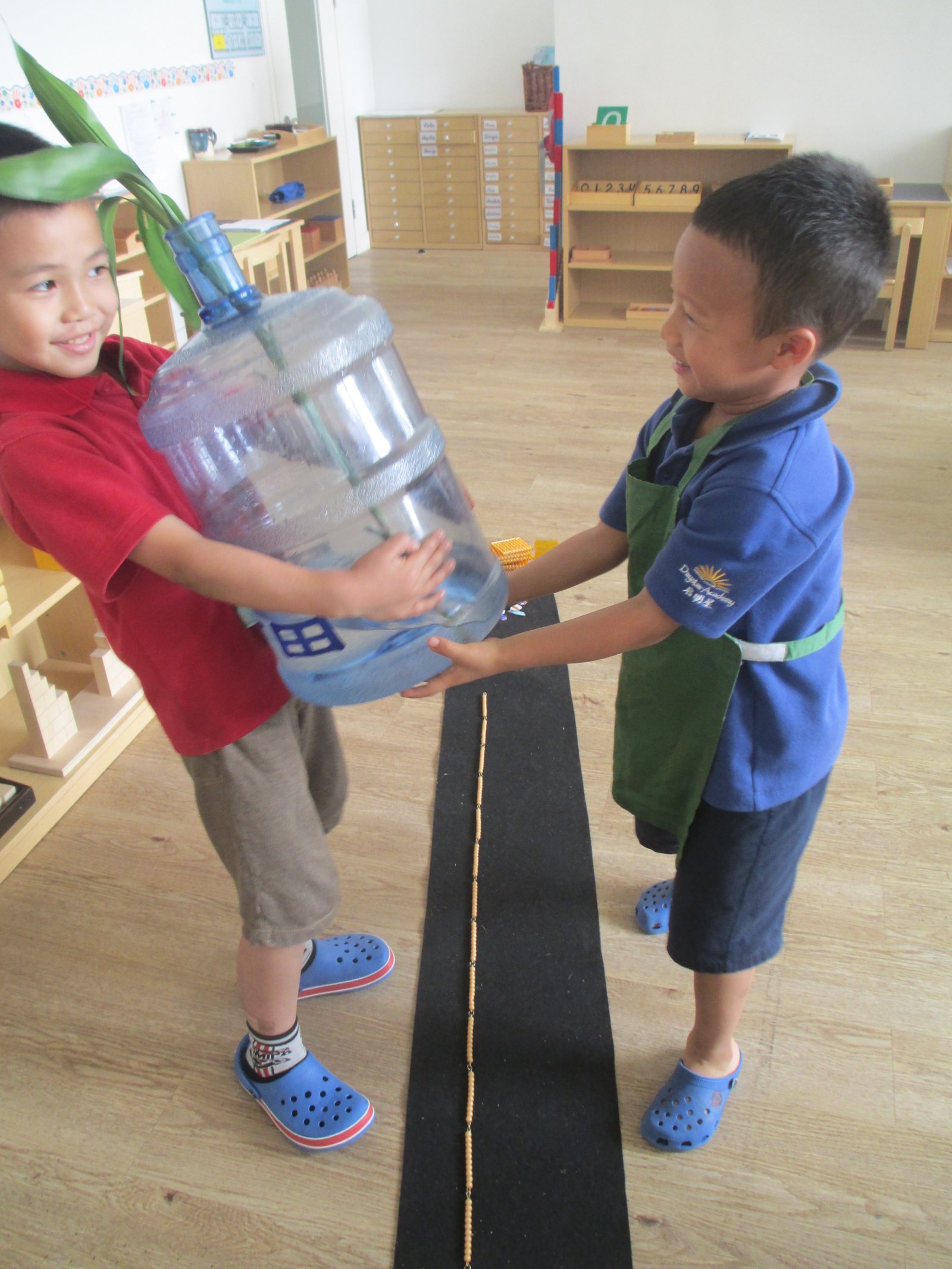
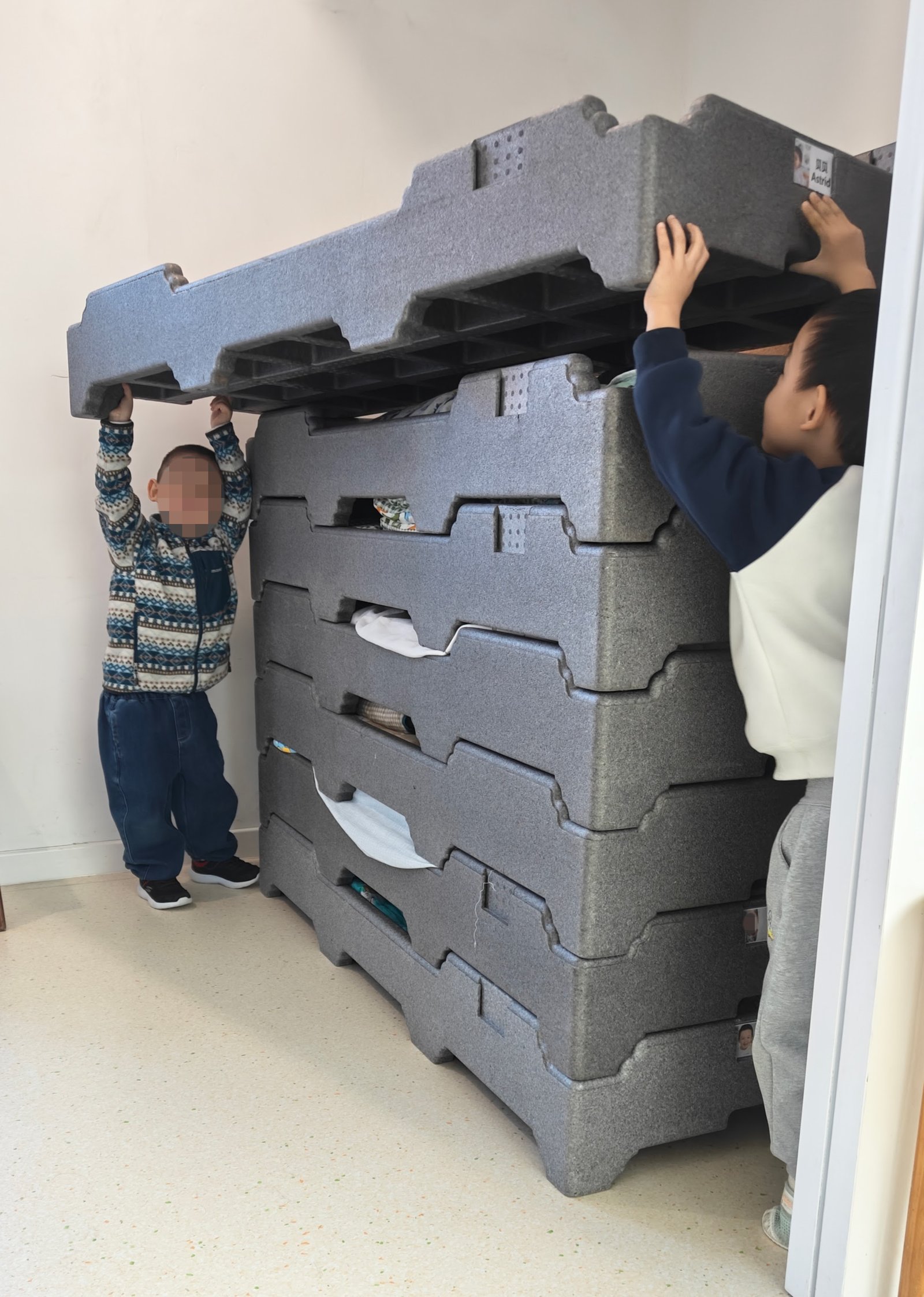
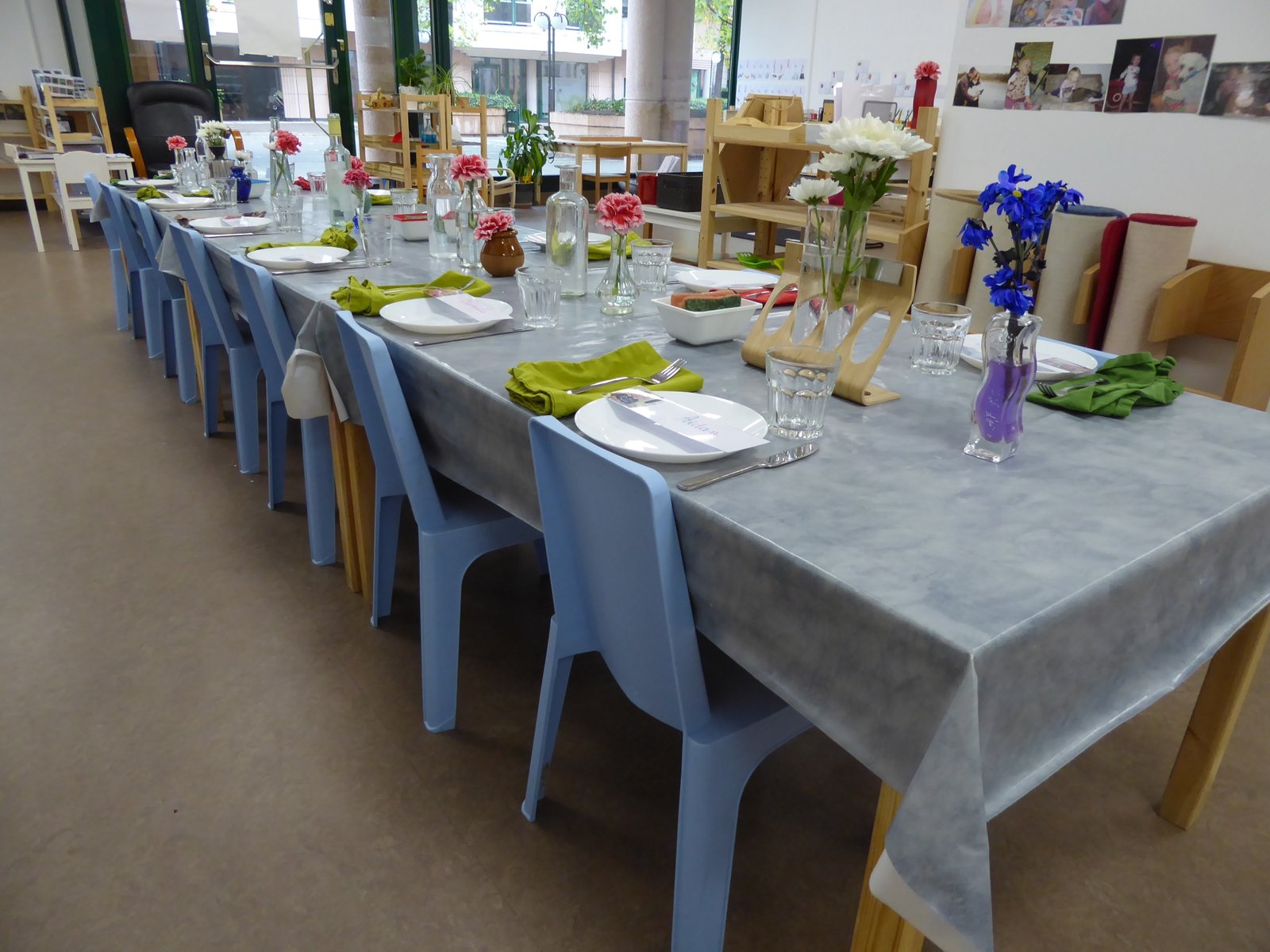
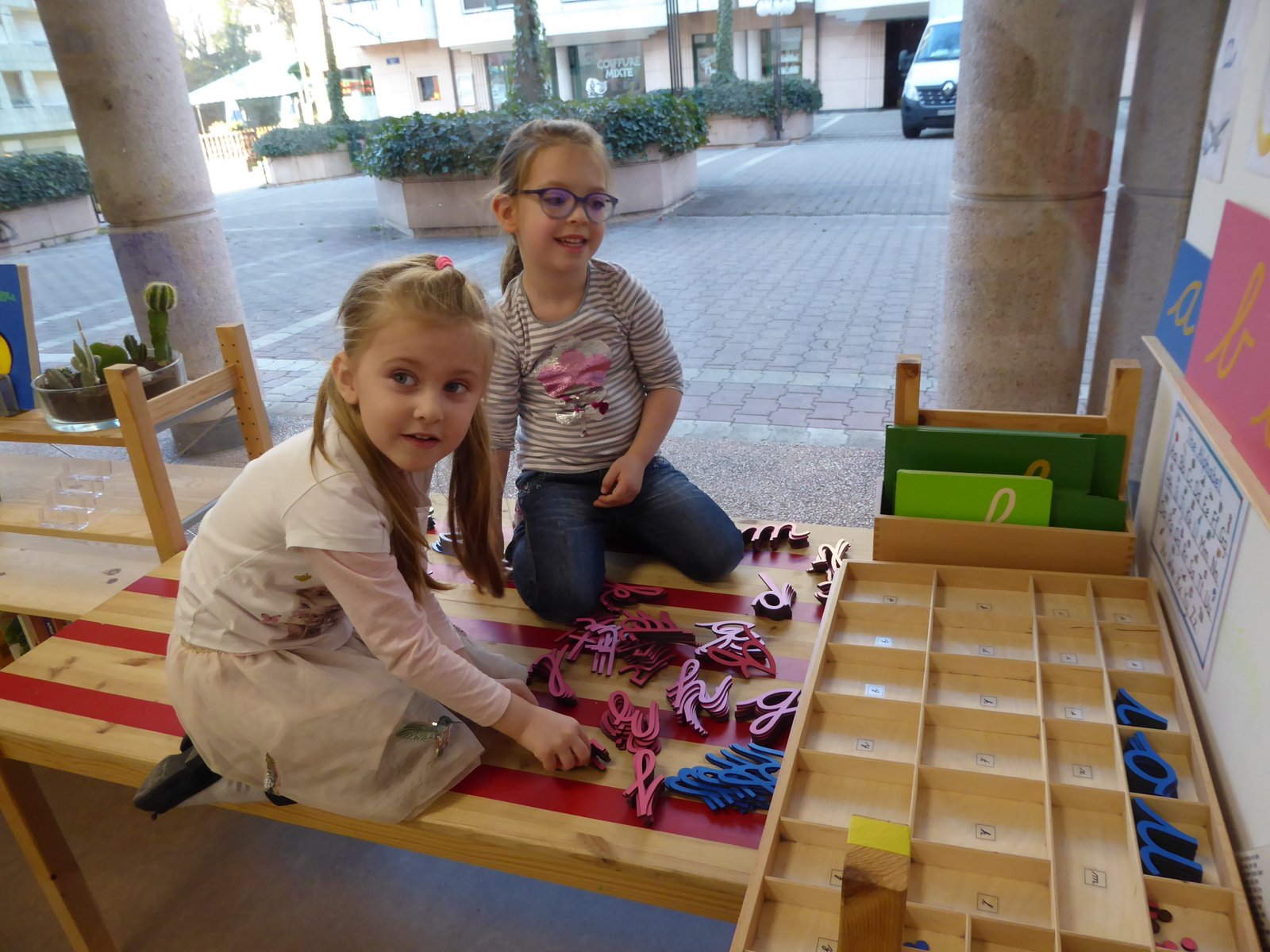
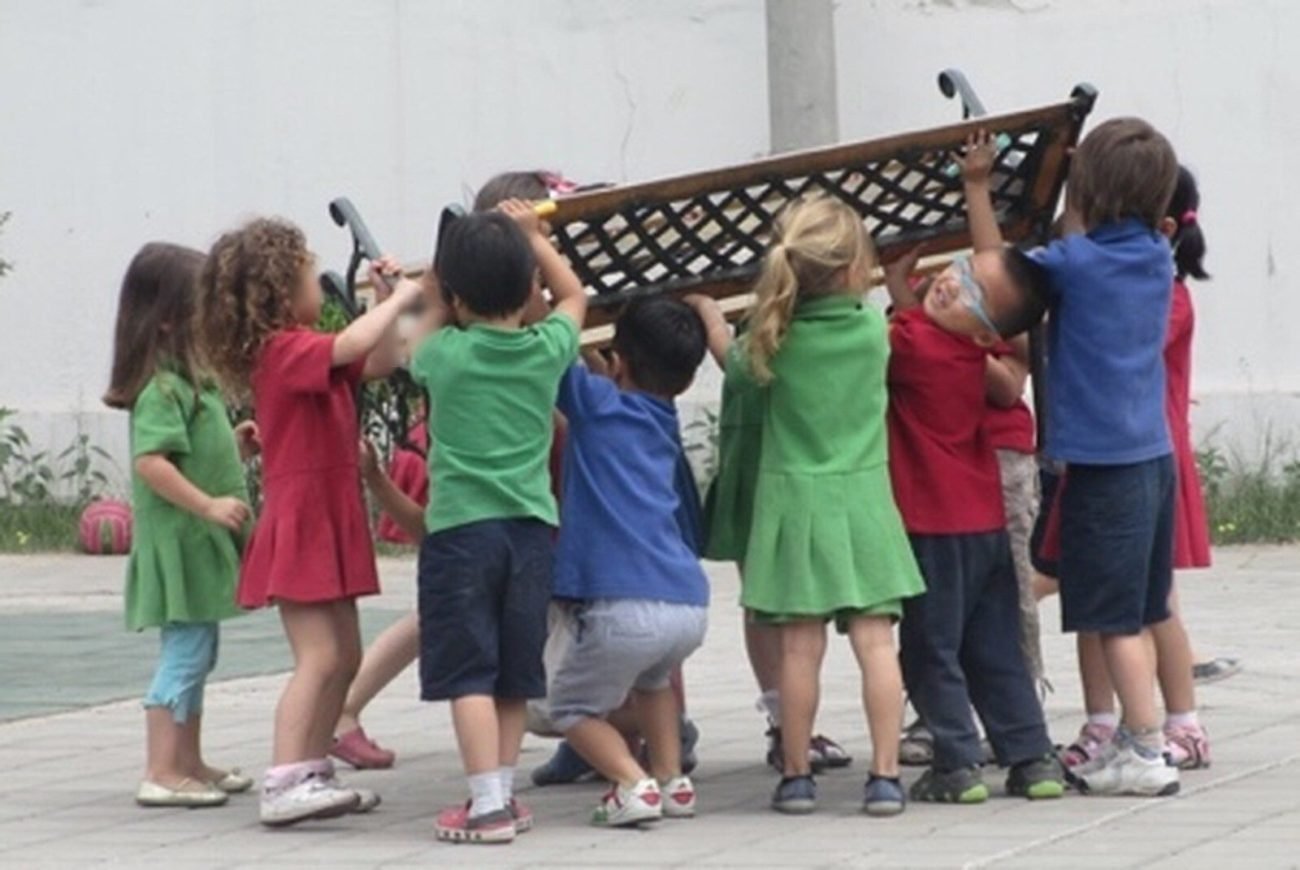
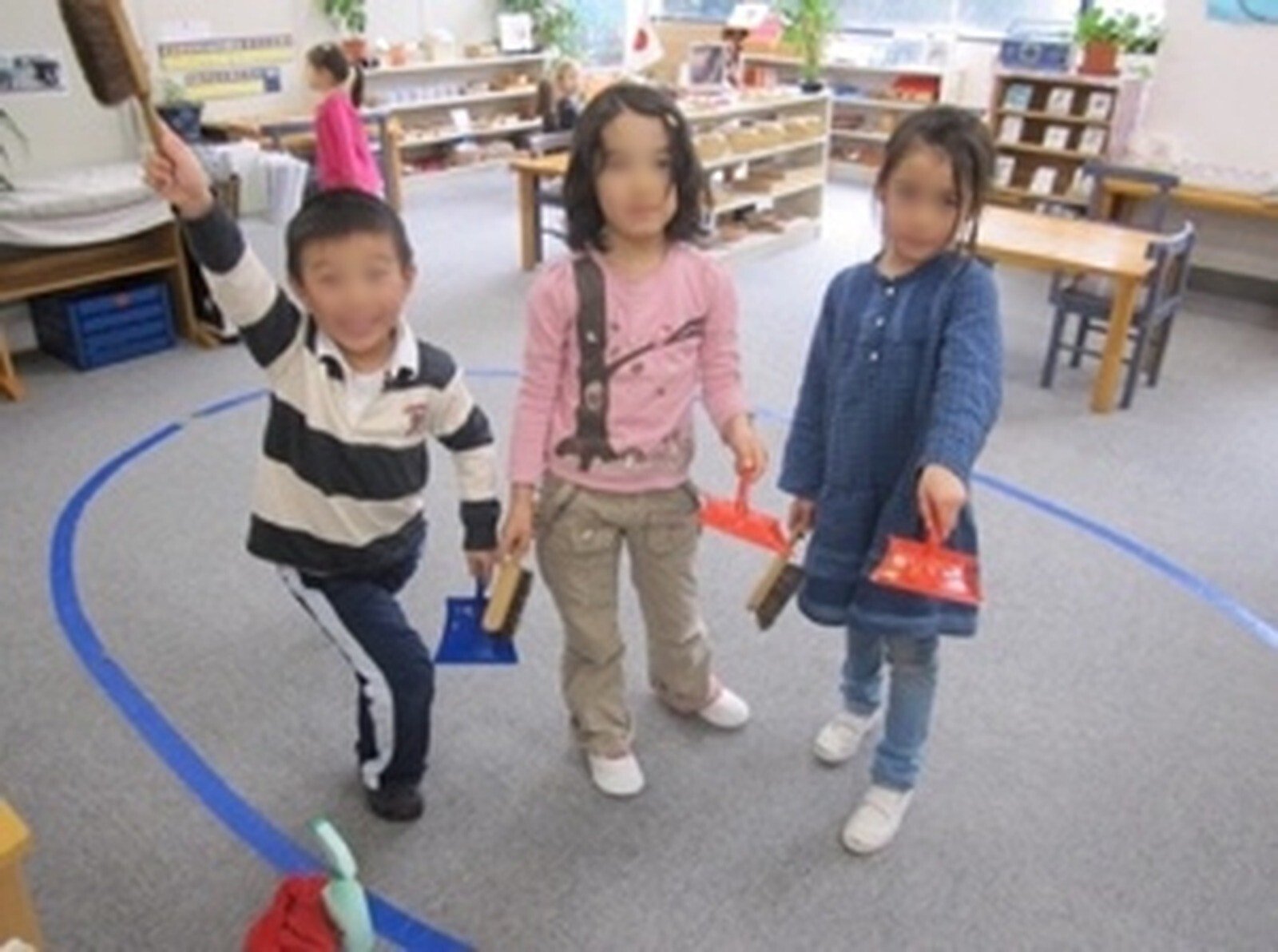
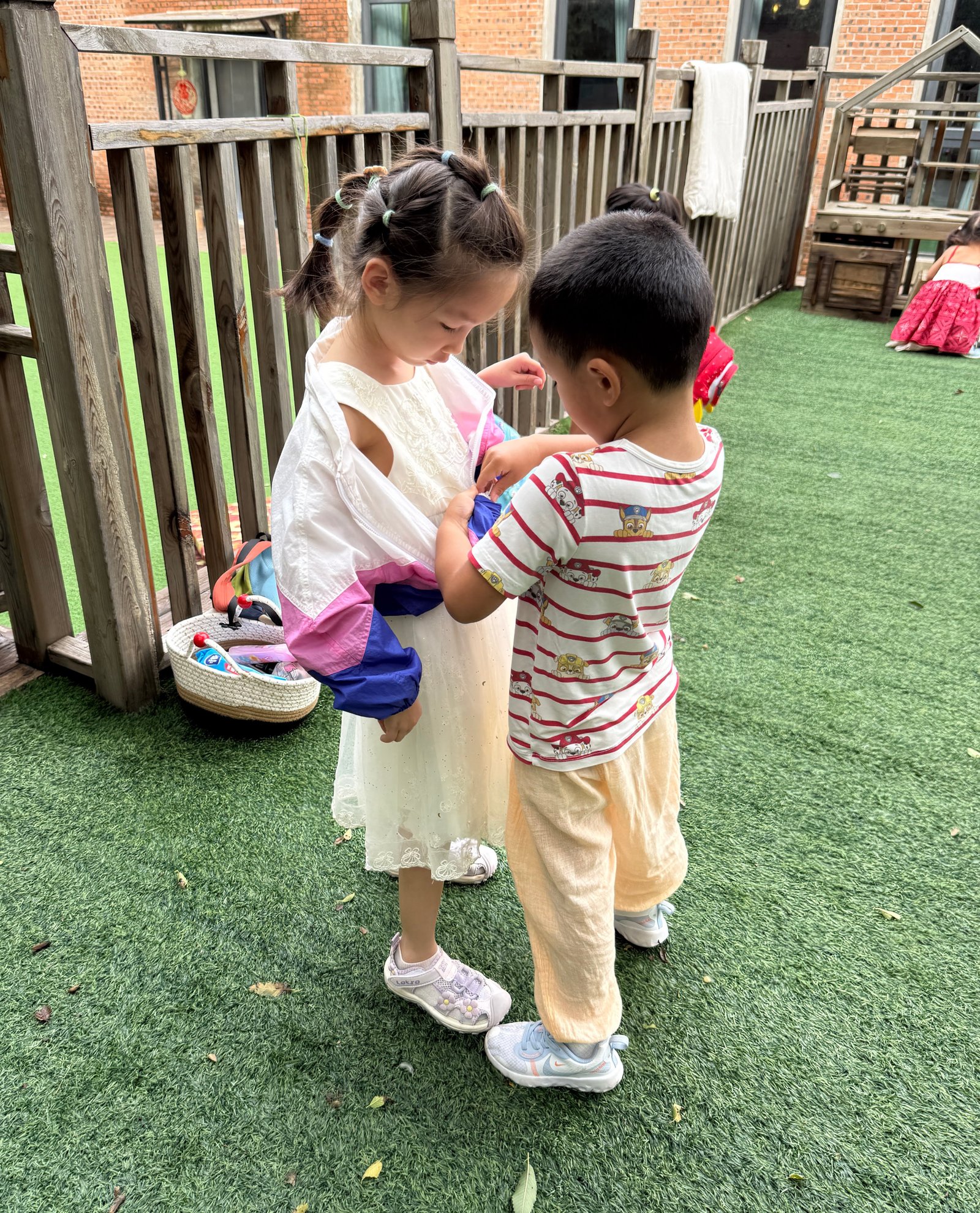
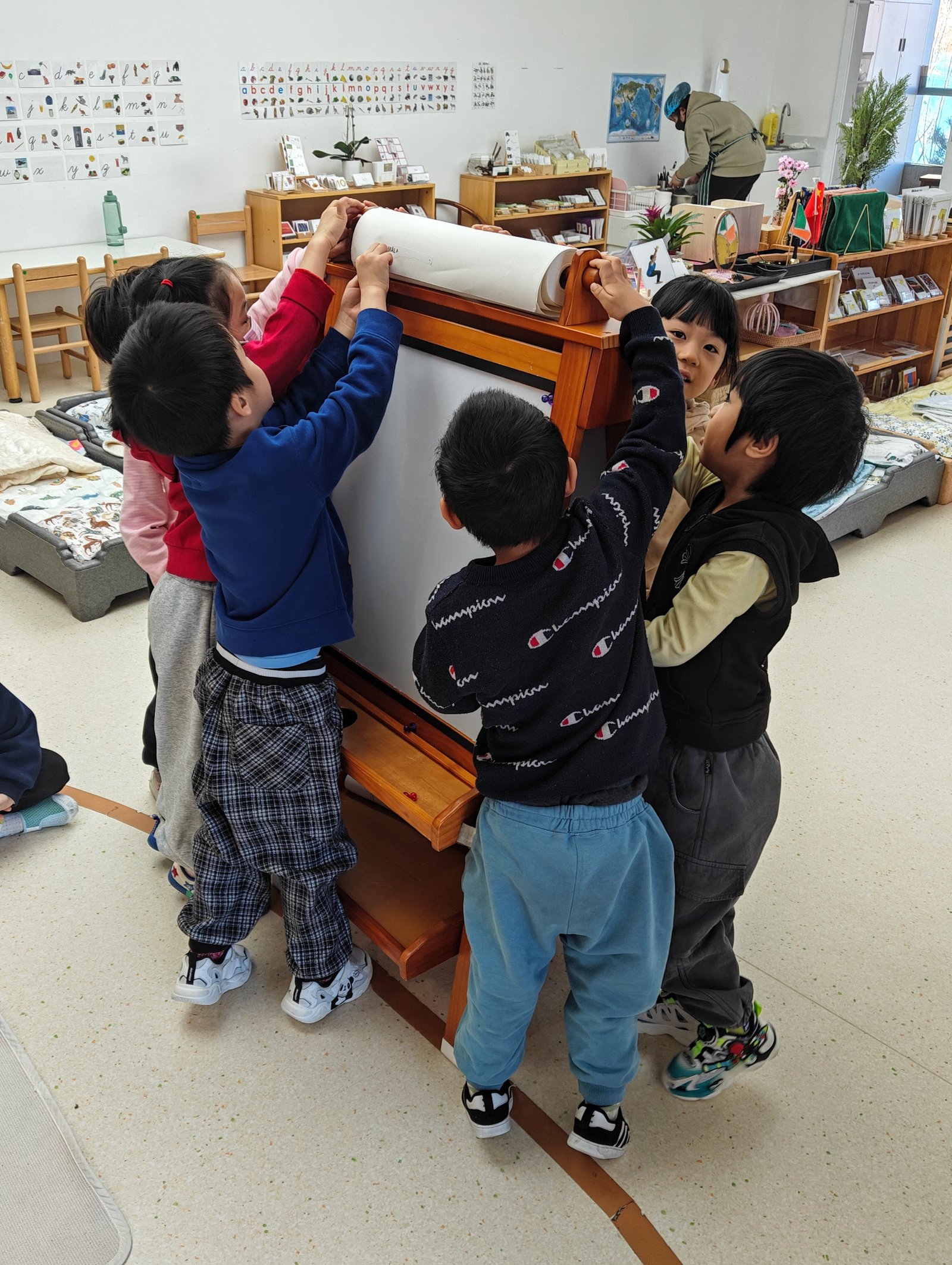
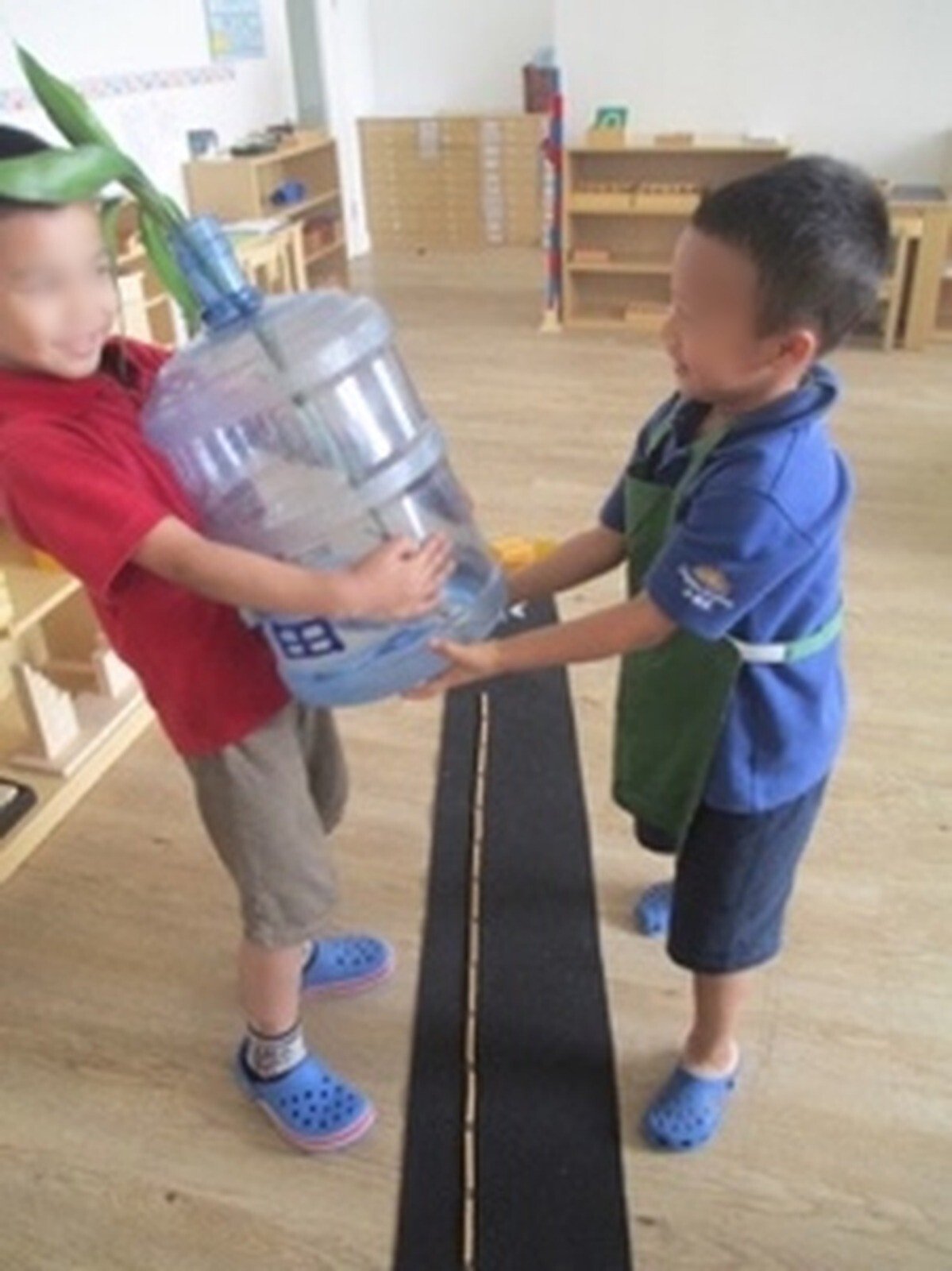
This area of the curriculum is called ‘Care of the Environment’, and synonyms of care include attention, watchfulness, guardianship and consideration, all of which are important qualities to develop, and these exercises are both practical and fun, as can be seen by the way the children take them to heart, seeing a problem and fixing it. A few examples …
Two boys in my class noticed that the water cooler was empty, so they brought the empty bottle to the maintenance worker to ask him to bring the replacement.
There were some benches spread around the playground but the one nearest to the play structure was broken; I saw a group children looking at the broken chair, and then they turned and marched off to the far side of the playground and arrived back with a bench for me to sit on. In the third picture, the roll of paper for the easel had finished and needed to be replaced; the easel was new, so the child didn’t know how to do it, but one of his friends came to help and then a second and then a third, until eventually there were a half dozen of them cooperating and working together as a team to spontaneously help their friend and fix the problem.


Two girls saw that the Moveable Alphabet was a little messy, so they fixed the problem, six girls noticed that the window has some stains, so they decided to clean it, and the final photo shows a table set for lunch: a 4-year-old child set this table on her own; she wasn't asked to do it and it took her more than an hour but she never asked for help and was singing to herself the whole time. Different schools, different countries, different continent, but the same impulse towards attention, watchfulness, guardianship and consideration. The children care for their environment.
Group 5 - Grace And Courtesy
Purpose
The exercises of Grace and Courtesy teach the social conventions, polite interactions, and respectful behaviours necessary for community life, and are designed to help children navigate social interactions with poise and consideration, fostering a harmonious classroom atmosphere. The adult guides the children in respectful communication, modelling appropriate behaviour using role-playing and real-life situations, creating scenarios which allow children to practice kindness, conflict resolution, and consideration for others.


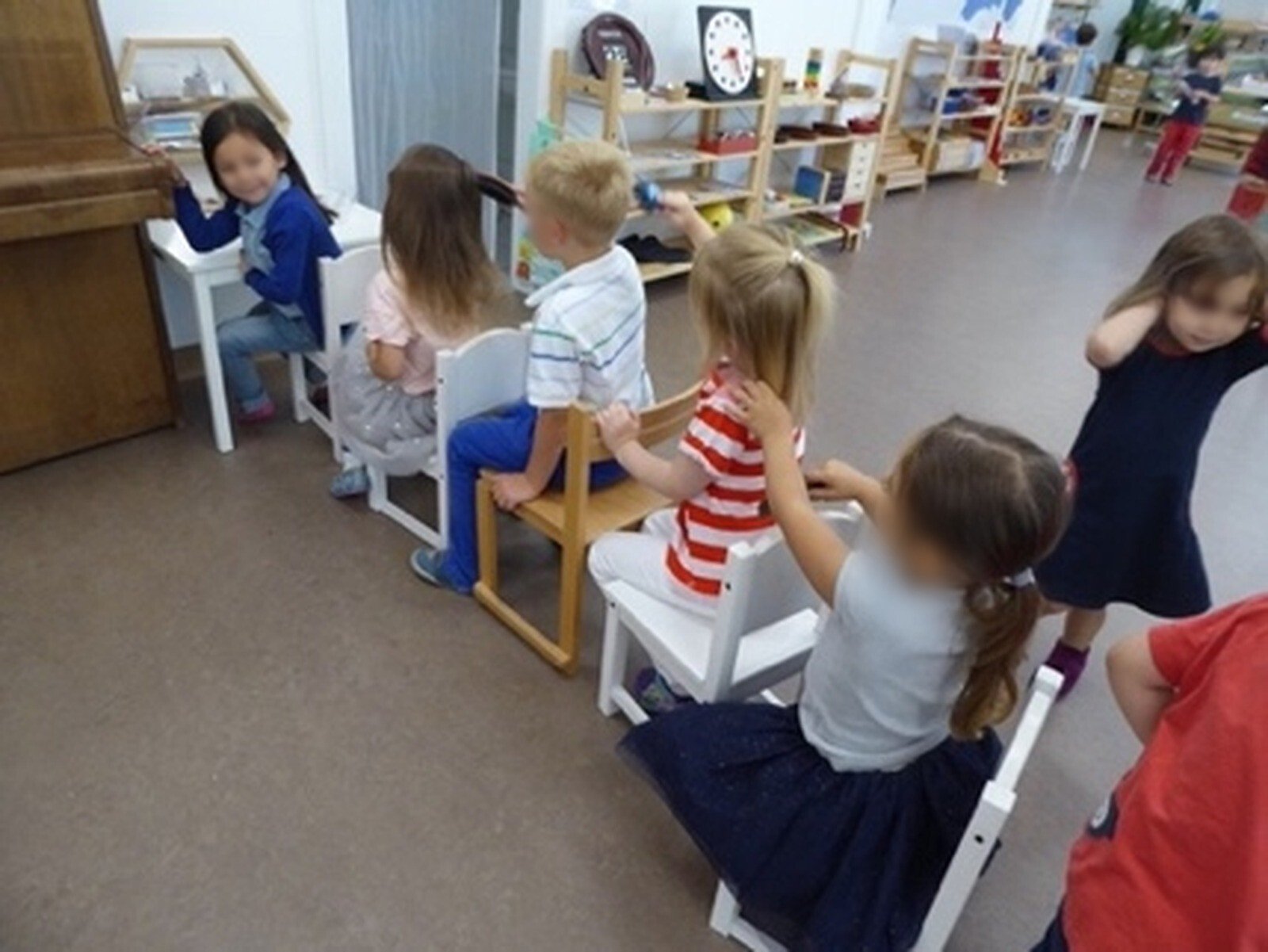


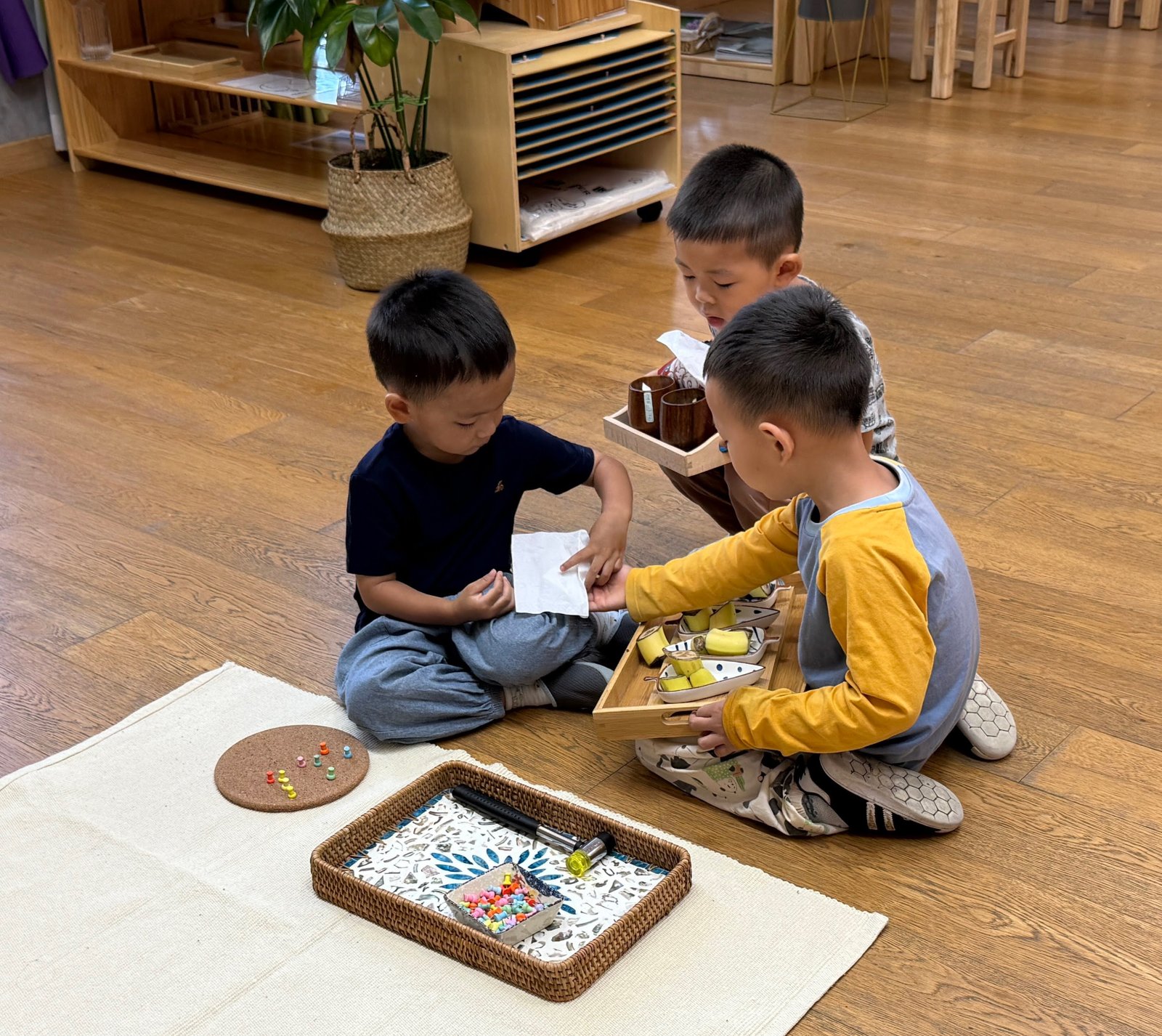
Children practice exercises such as how to carry a tray or give and receive an object as well as more elaborate ones such as how to offer refreshments, how to help others get dressed, and how to engage in respectful dialogue, each of which help to internalise social norms and reinforce values such as empathy and respect.
Sample Grace and Courtesy Exercises
- How to greet someone
- How to wait quietly / how to interrupt
- Observing others' work: watching quietly without disturbing
- Walking around work mats, respecting others' workspace
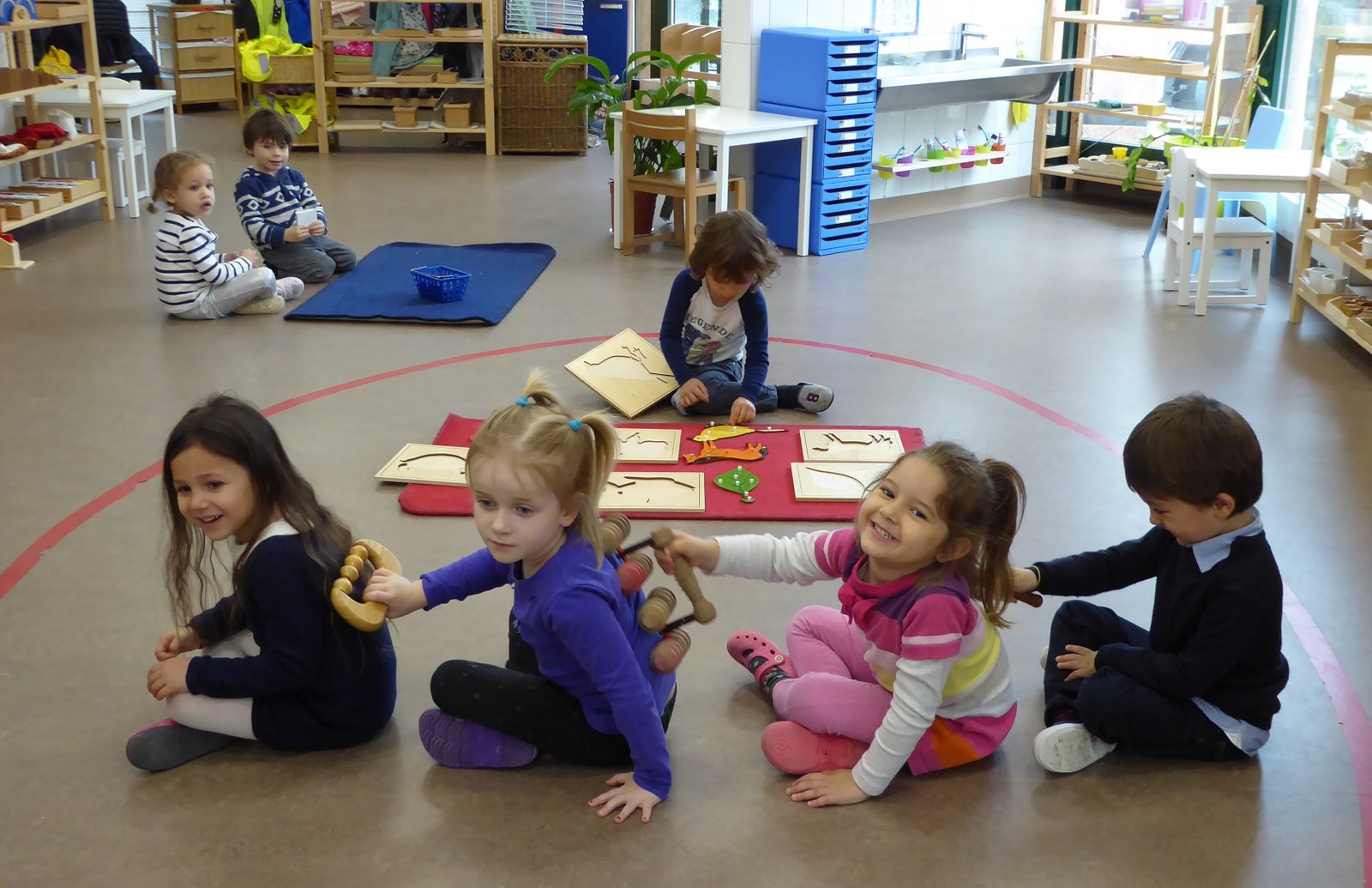
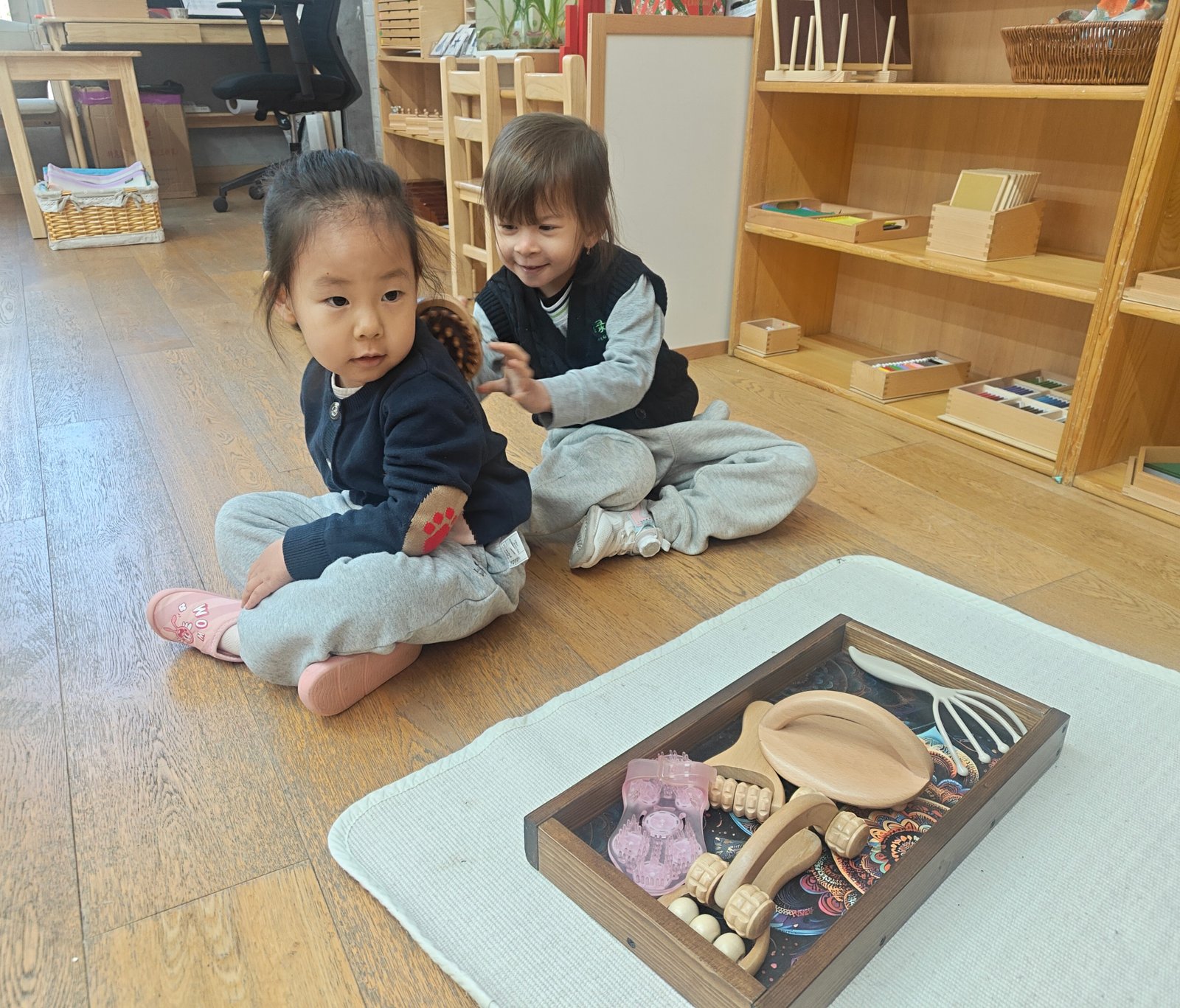
- Asking for or offering help e.g., brushing hair
- How to offer or receive something e.g., fruit or another snack
- How to enter a room or hold a door for others
- Use of the Peace Table
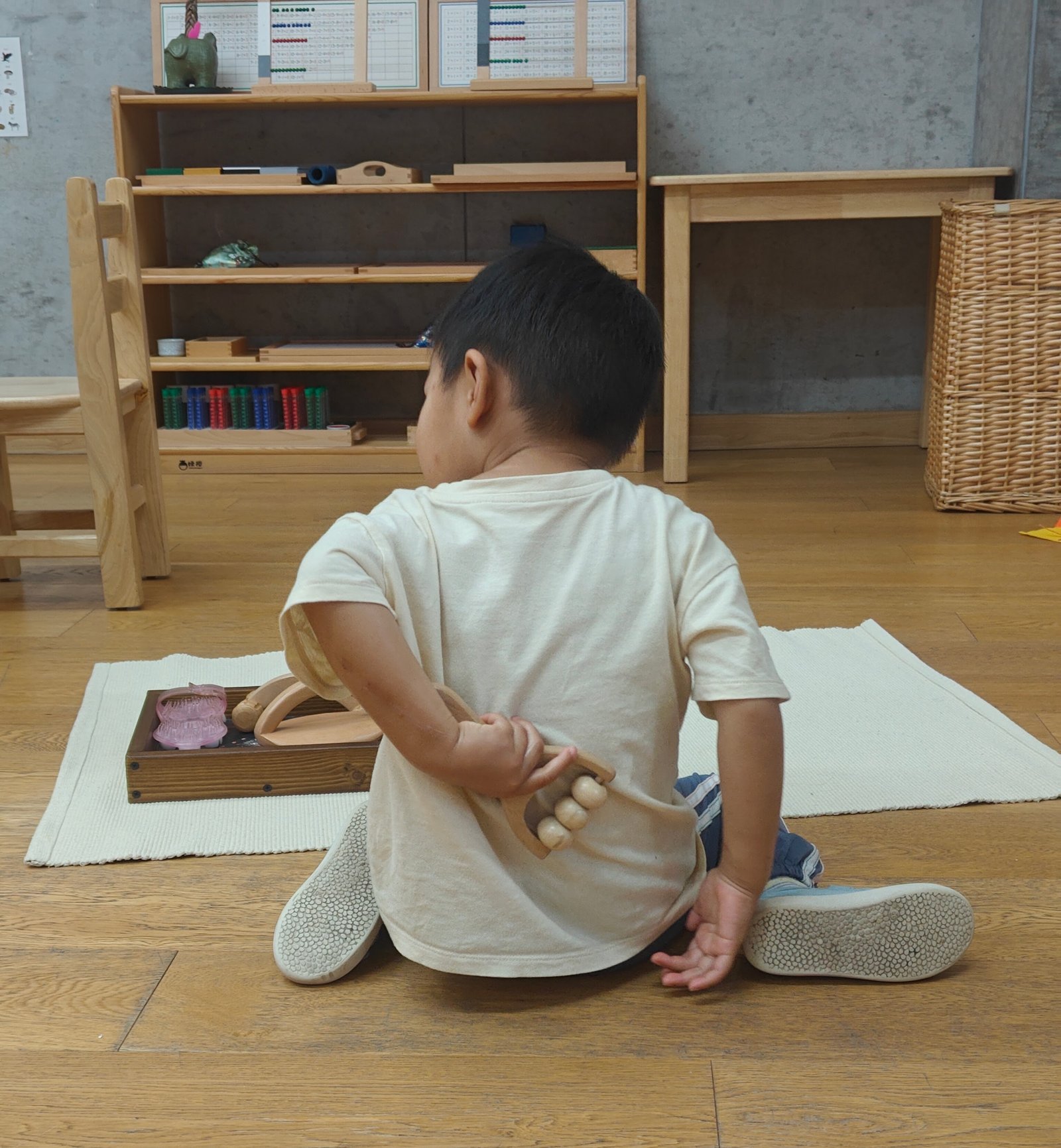
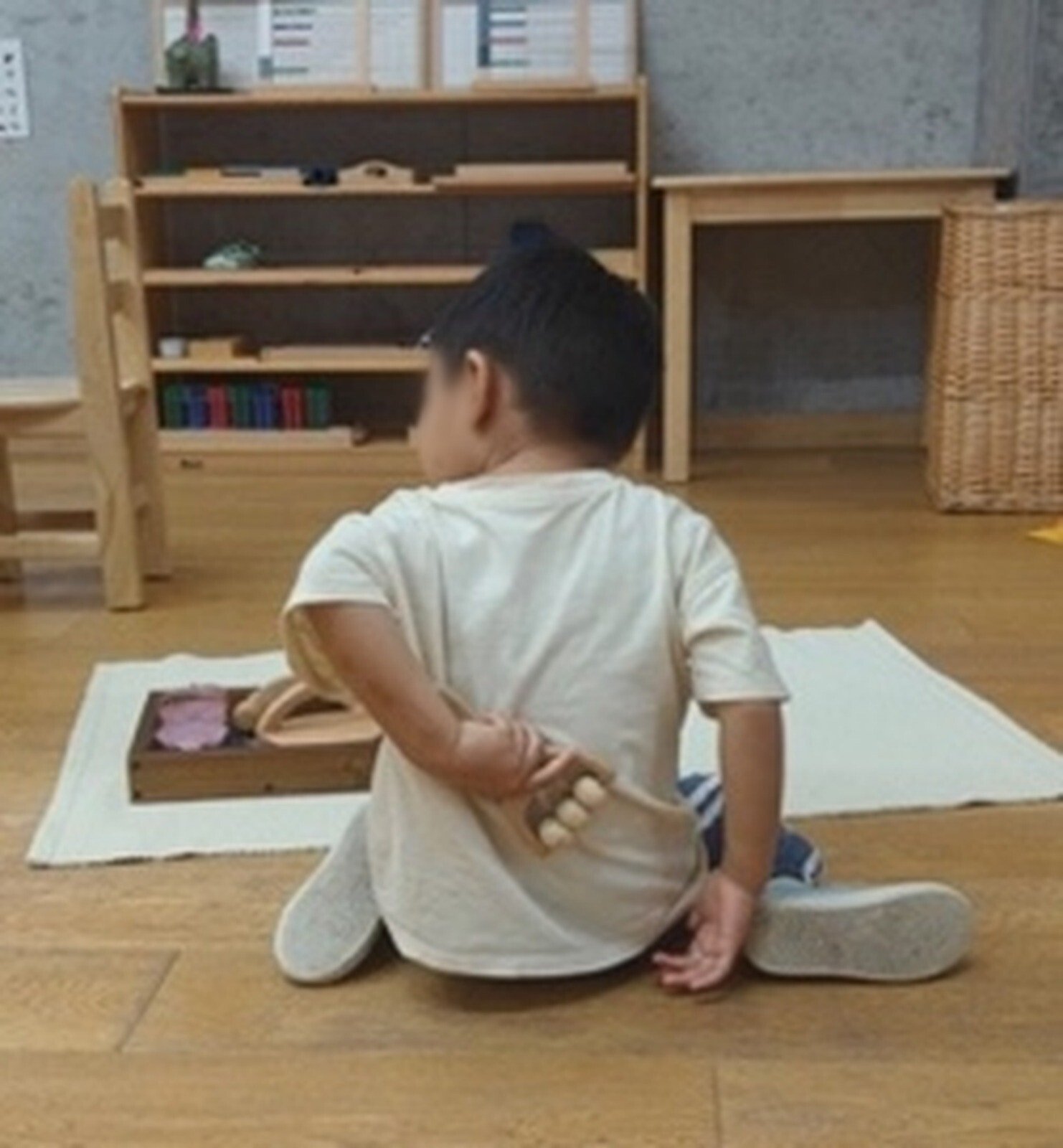
- How to use a massage stick, etc.
- Table manners: using utensils, napkins, chewing quietly, asking for items to be passed




Materials
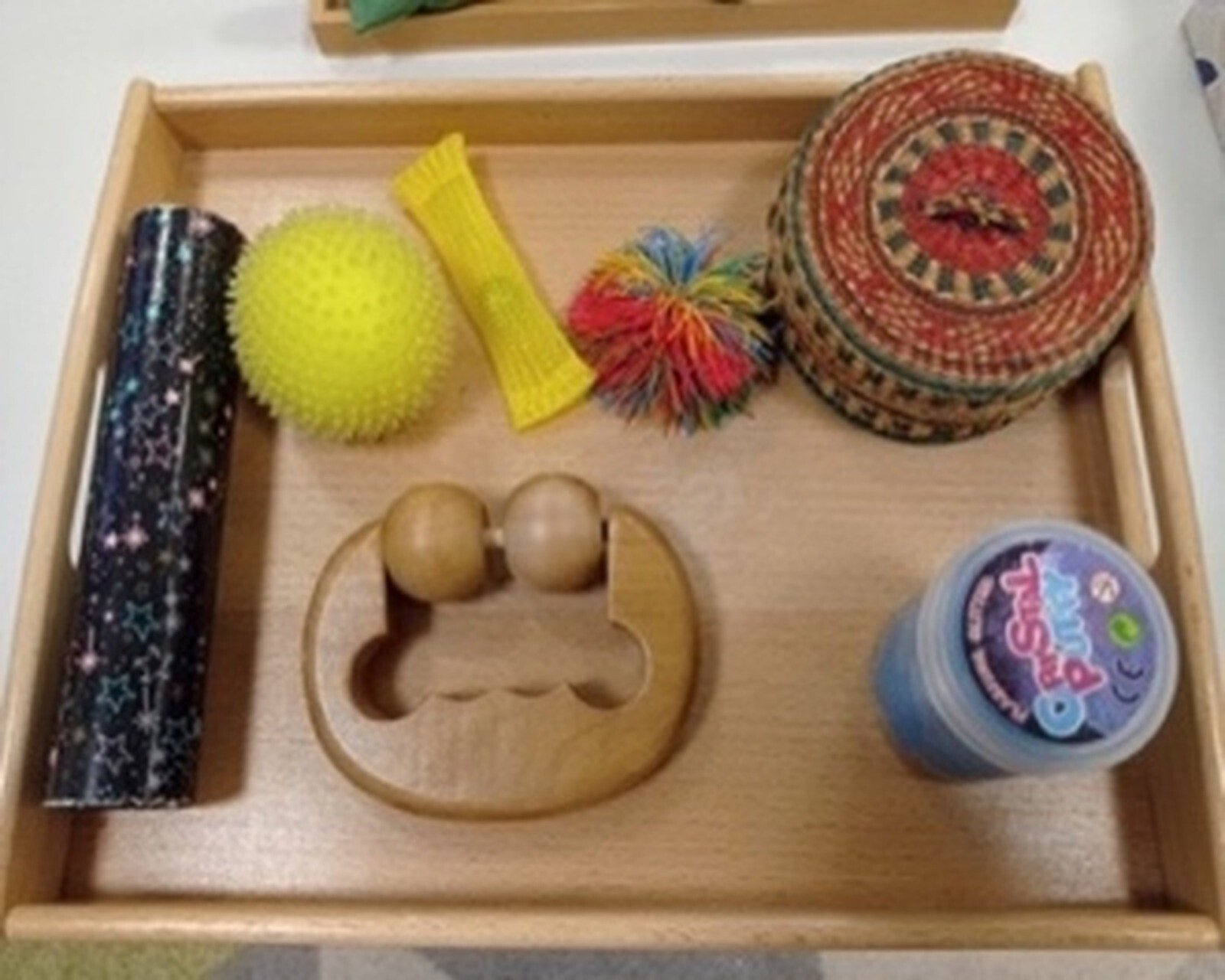
Because Grace and Courtesy is integrated into the daily life of the classroom, there is less of a focus of the materials on the shelf. Nevertheless, some materials are useful in supporting the development of social interaction and communication, including the following:
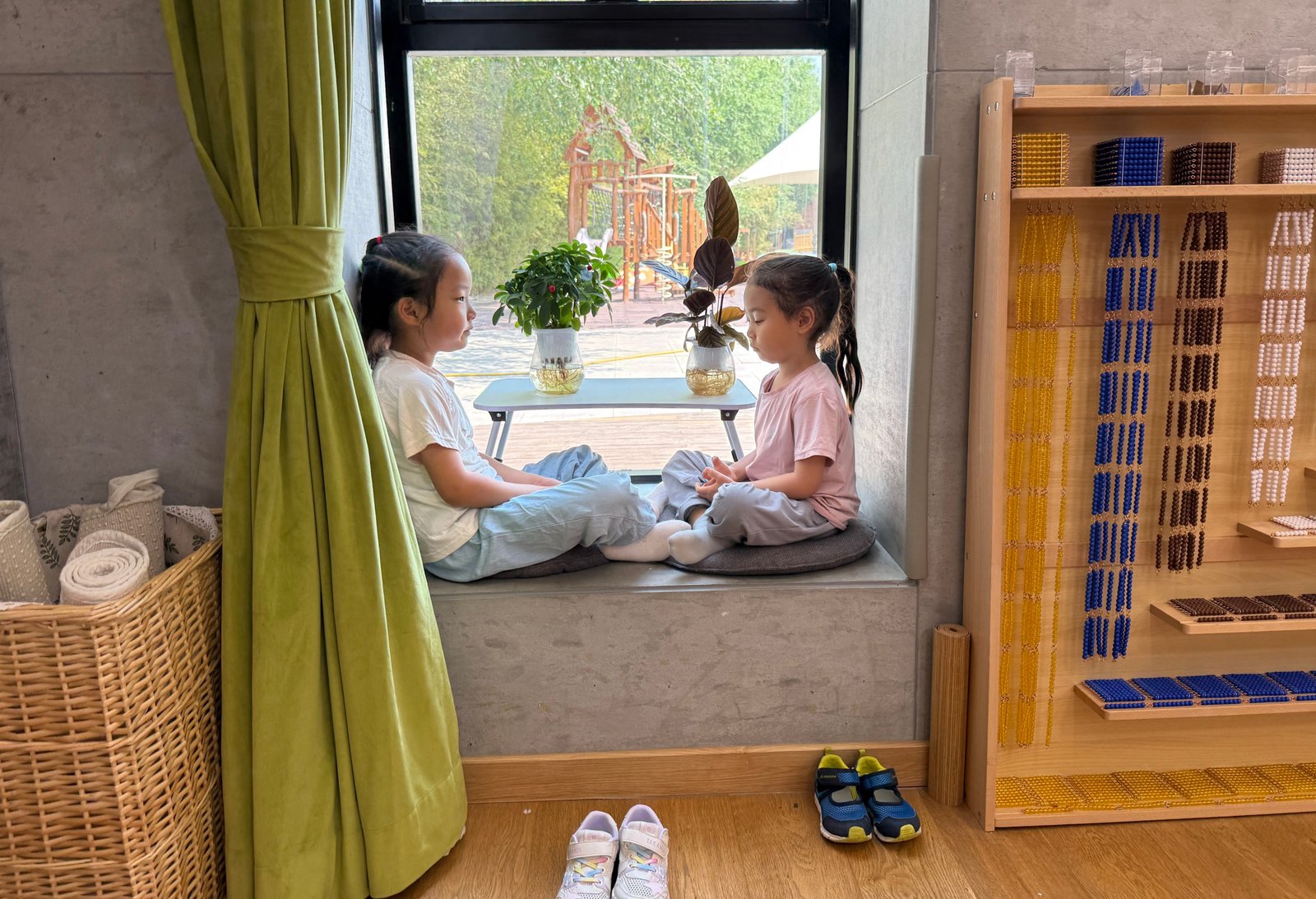
- A small table with two cushions
- Trays for serving snacks
- A box of tissues
- Place settings for table setting
- Massage sticks, etc.
- Picture cards depicting actions which help to reinforce courteous behavior

The Peace Table
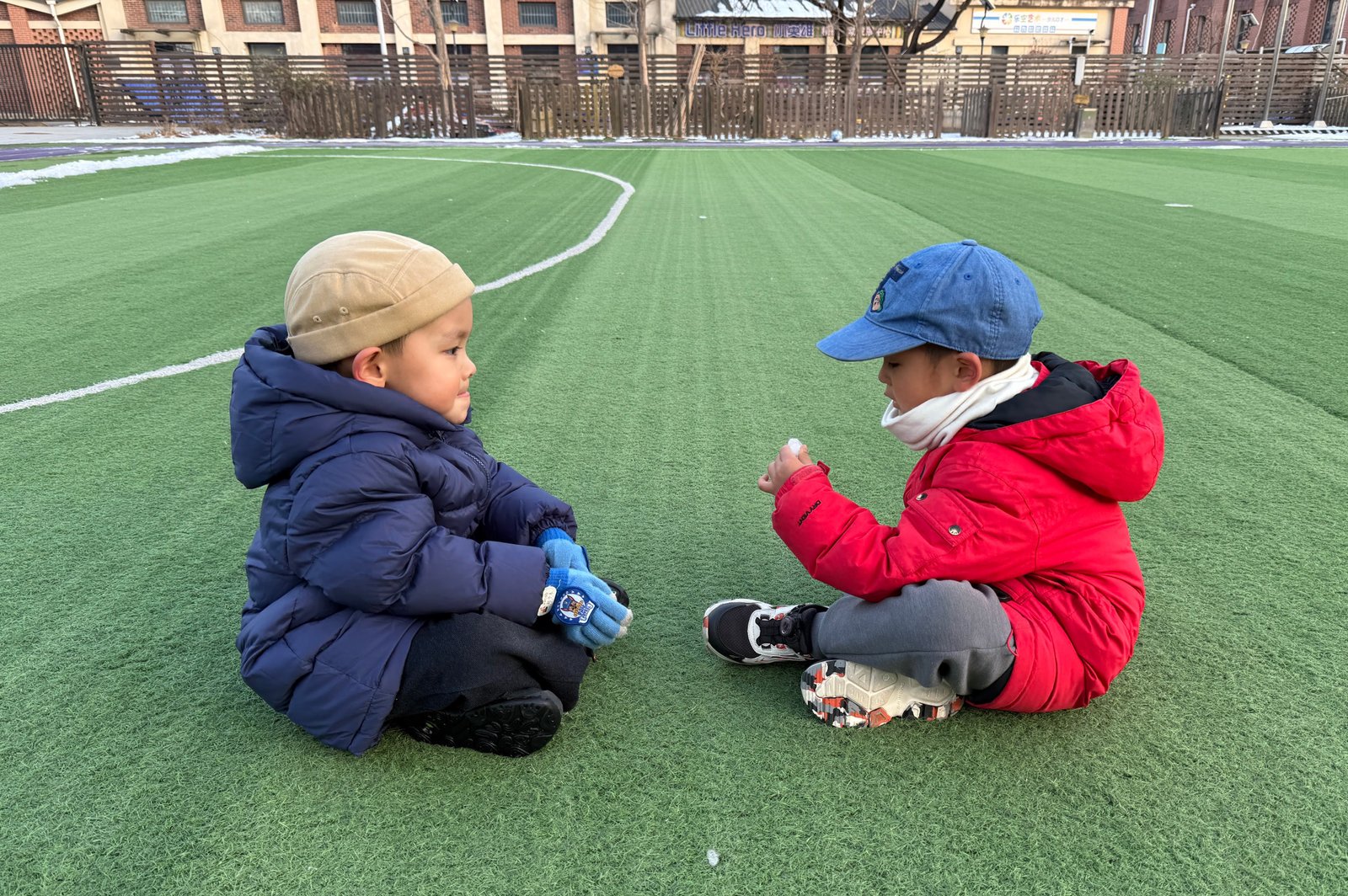
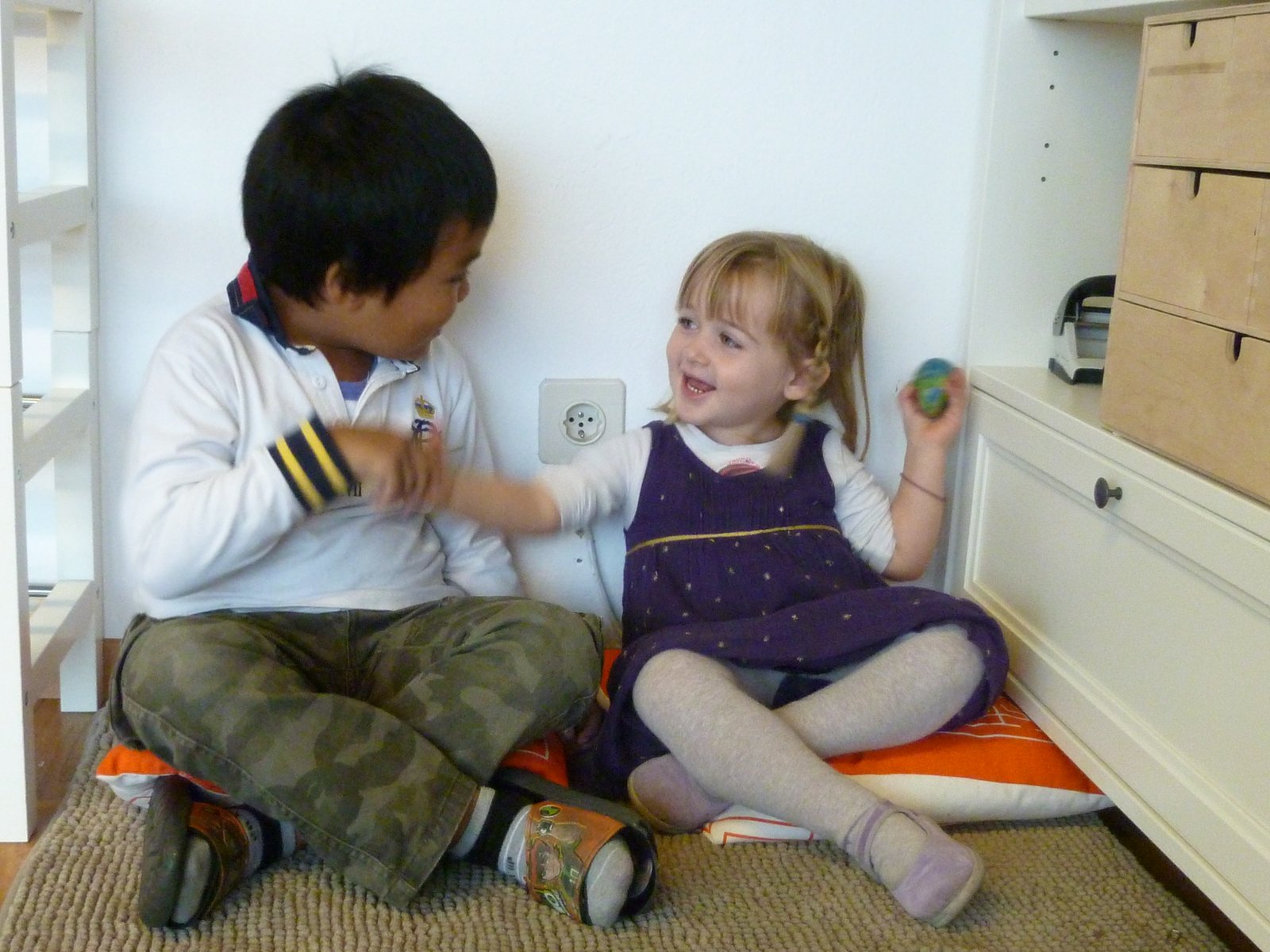
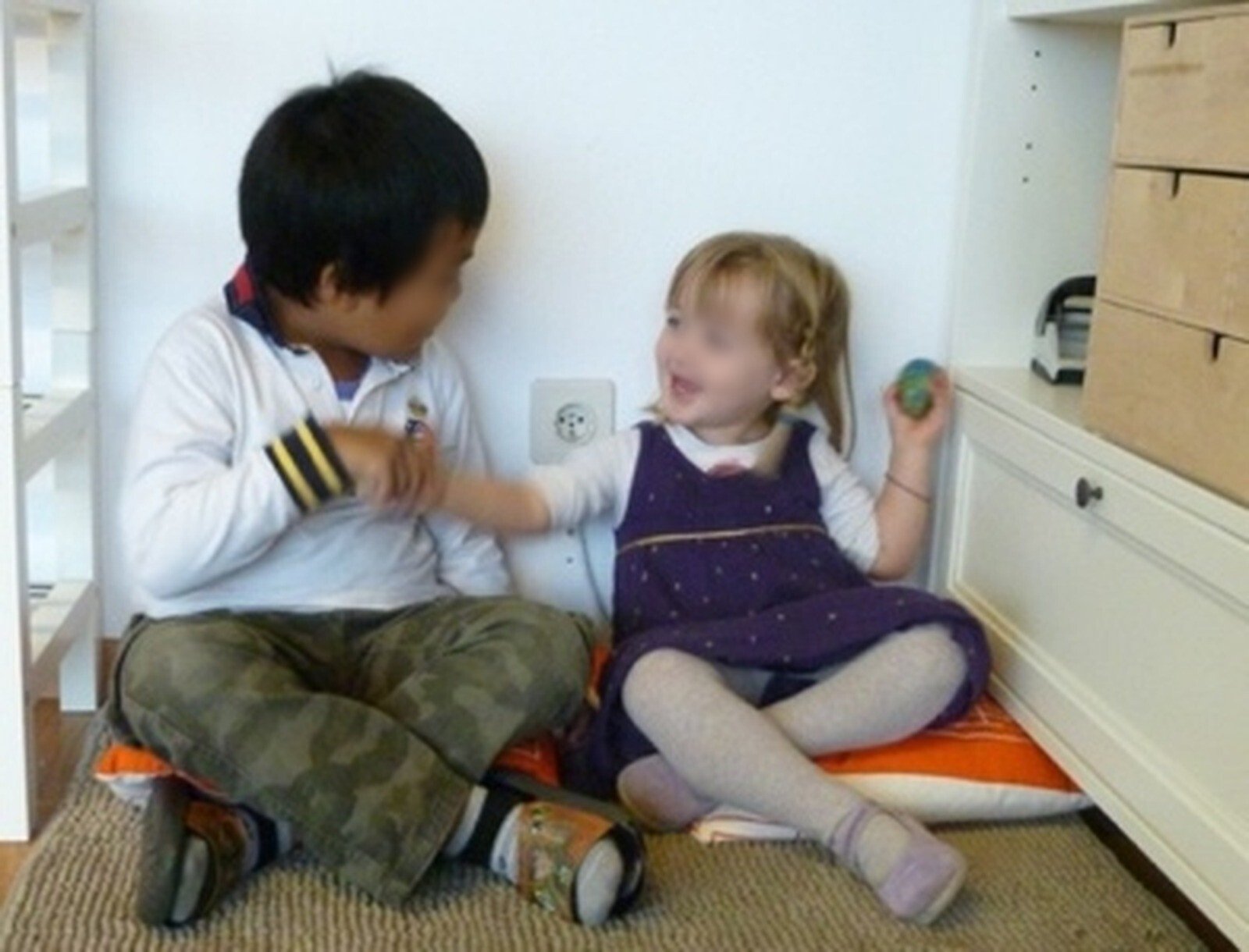
‘Casa dei Bambini’ means ‘Home of Children’ but in even the most harmonious of homes, there will be disagreements from time to time, and when children have disputes, they typically look to the adults to resolve them. Cultures and countries may be hugely different, but they are remarkably similar in the ways they deal with these disputes: Mom or Dad -or both- listen to the evidence from both parties, call some witnesses, decide who is innocent and who is guilty, then pass sentence, with no hope of appeal, or having McDonald’s for dinner, as you promised yesterday. For a teacher with a full classroom of children, this process isn’t feasible, and even if it were, our aim is to guide the children towards independence, so we remove ourselves from the process and create the conditions in which the children can work out their own form of justice.
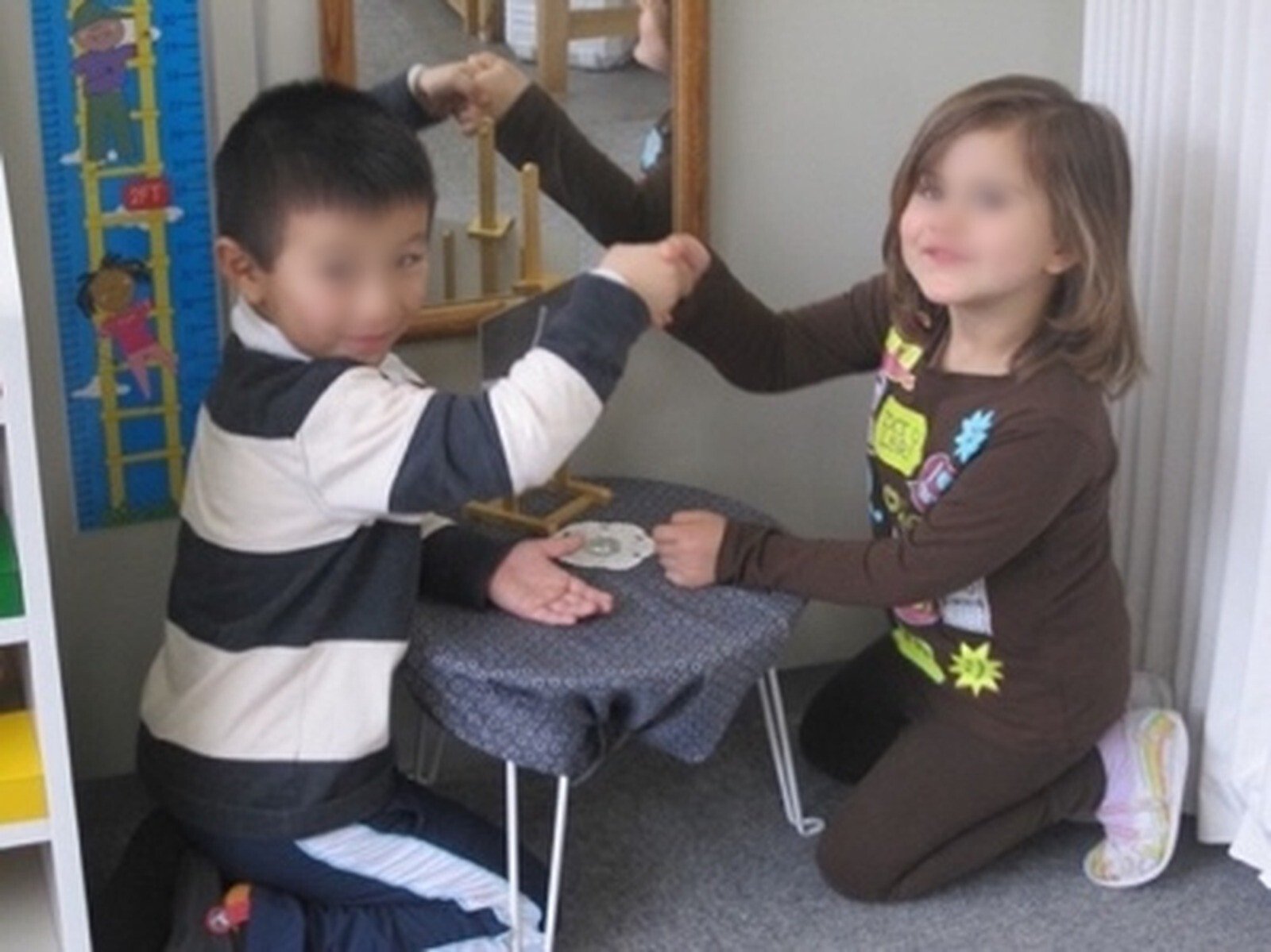
I use The Peace Table, which operates like this:
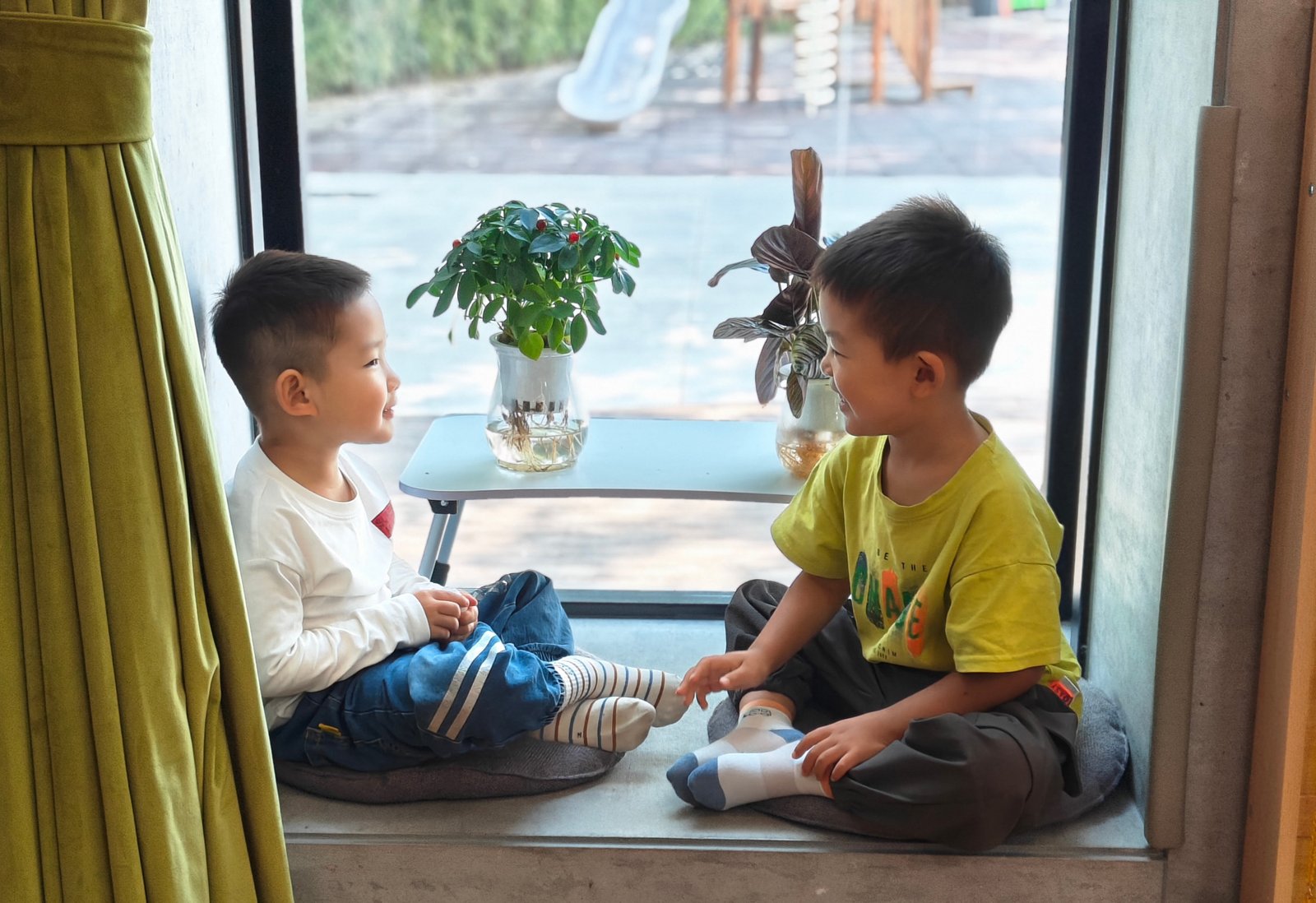
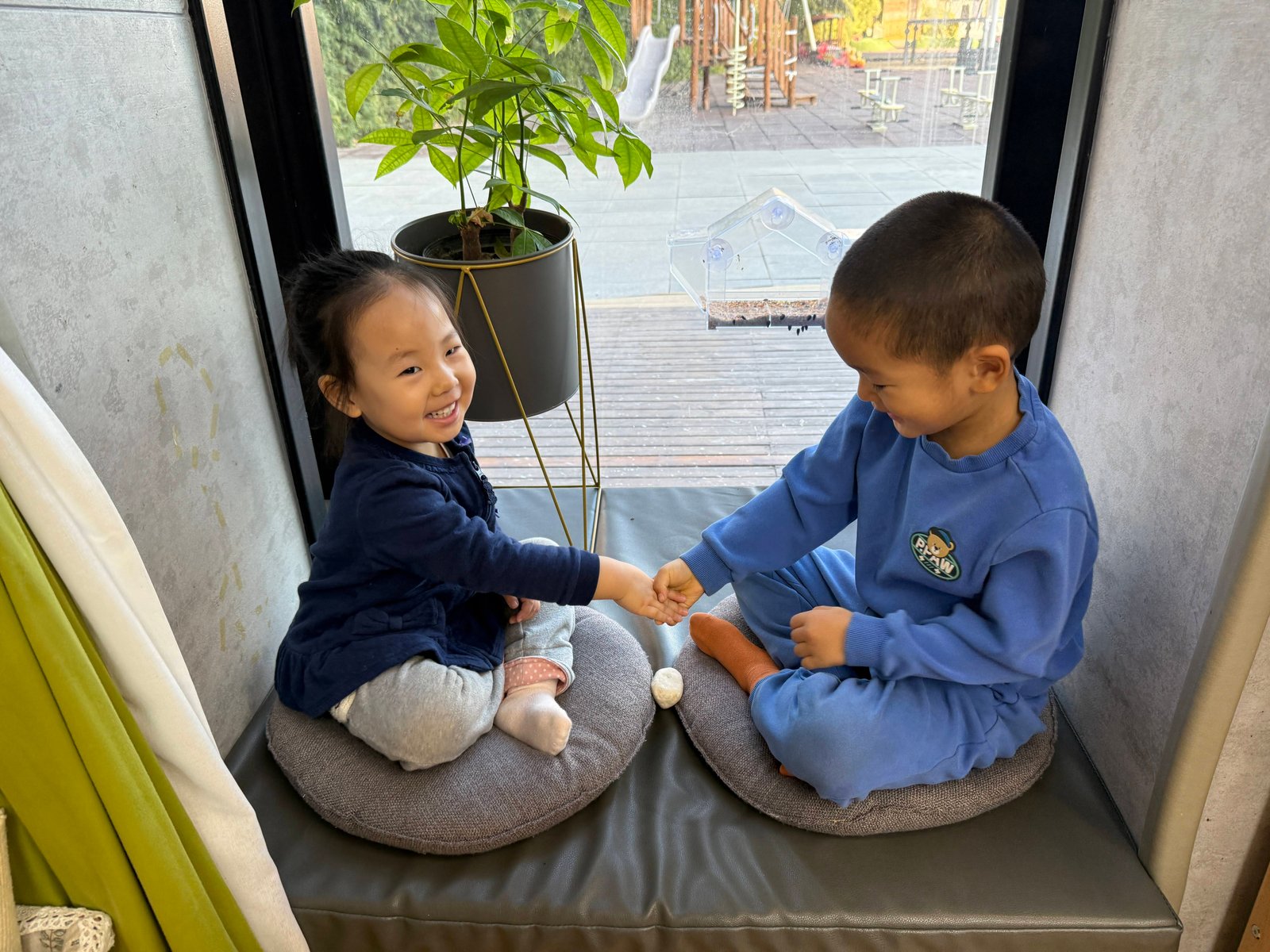
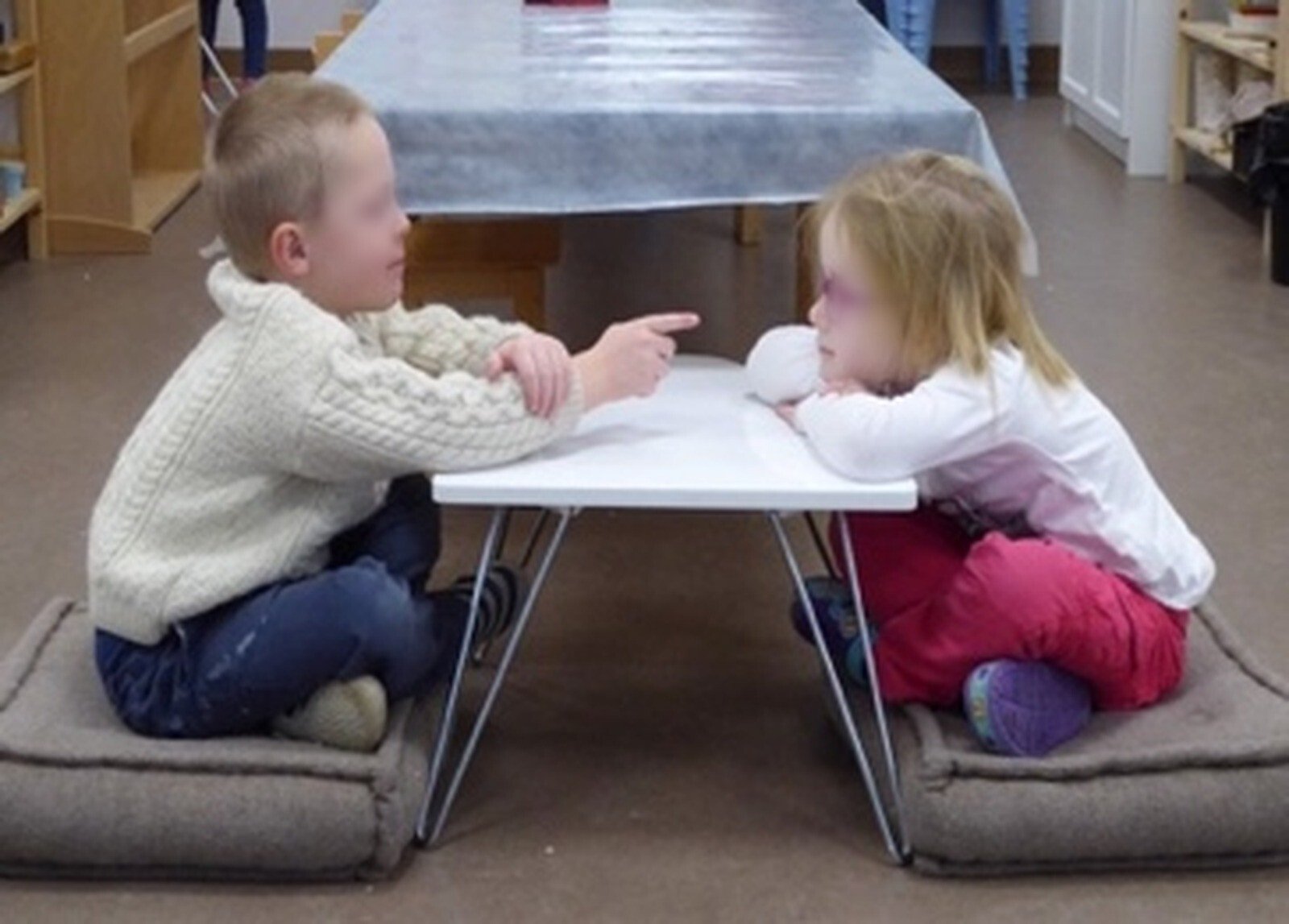
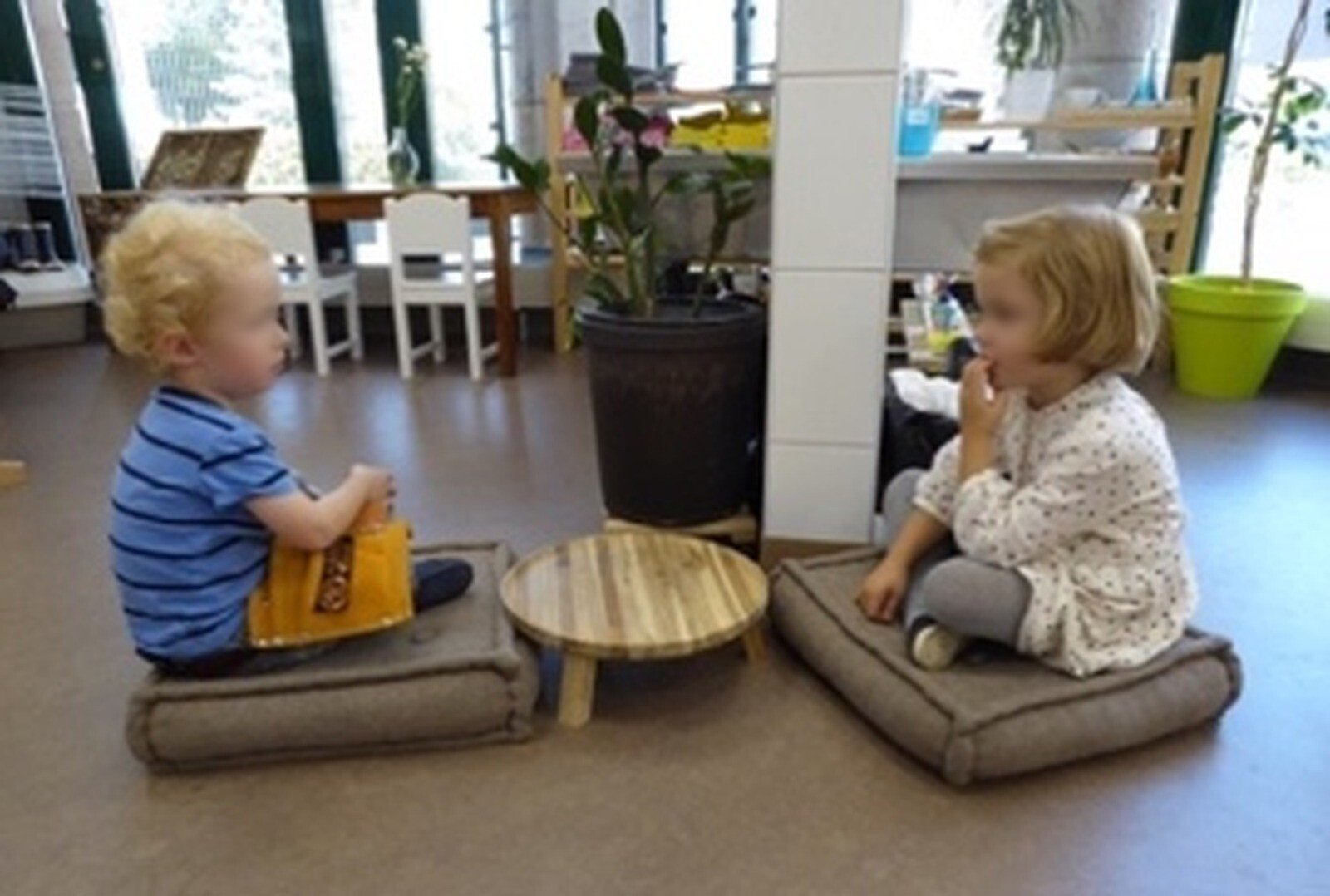
- Two children sit facing each other across a table with an object (e.g., a small stone) upon it.
- One child holds the object and talks about how they feel, e.g. “I feel sad because … you won’t play with me / choose the material I want / had snack when it was my turn...” etc.
- When they’ve had their say, the child hands the object to their comrade, who responds “I can’t play with you now because… / I wanted to play with that now because… / I was hungry so …” etc.
- The conversation continues back and forth until the children reach a consensus and is a wonderful way to encourage communication and problem-solving independent of the adult.



There are a few simple guidelines:
- Sit facing and looking at each other.
- Talk about how you feel.
- If you refuse to talk to your friends, you can’t play with your friends for the rest of that day.
- No shouting.
- Take turns.
- Keep talking until you each agree that your problem has been resolved.
- Shake hands and leave.
And of course, you don’t need a table to make peace: you can do it anywhere, at any time and in any season.



Group 6 - Control Of Movement
This area is focused on helping children to refine their movements and develop coordination and control over their bodies through purposeful movement, by moving about the environment, carrying trays or mats or chairs, practicing yoga and walking on the line, etc. It is also possible to integrate various simple exercises, calisthenics, Dalcroze eurhythmics and a range of other dances and movements, with and without music.
The Silence Game
The children are invited to be as still and quiet as possible, and then the teacher whispers their name to come and join her. This game helps children to develop self-control and auditory awareness of the sounds in the environment.
“There is also a secret key to the perfecting of the most varied types of movements. And this key is balance. We have therefore devised a means which can assist small children to secure their most fundamental movement, that it, walking… Exercises in keeping their balance and in analysing their various movements helps the children to perfect all their acts. They force a child to use his organs of balance and accustom him to pay attention to his every move.”Maria Montessori, ‘The Discovery of the Child’, p. 91 - 94. (1948)
Walking on the Line
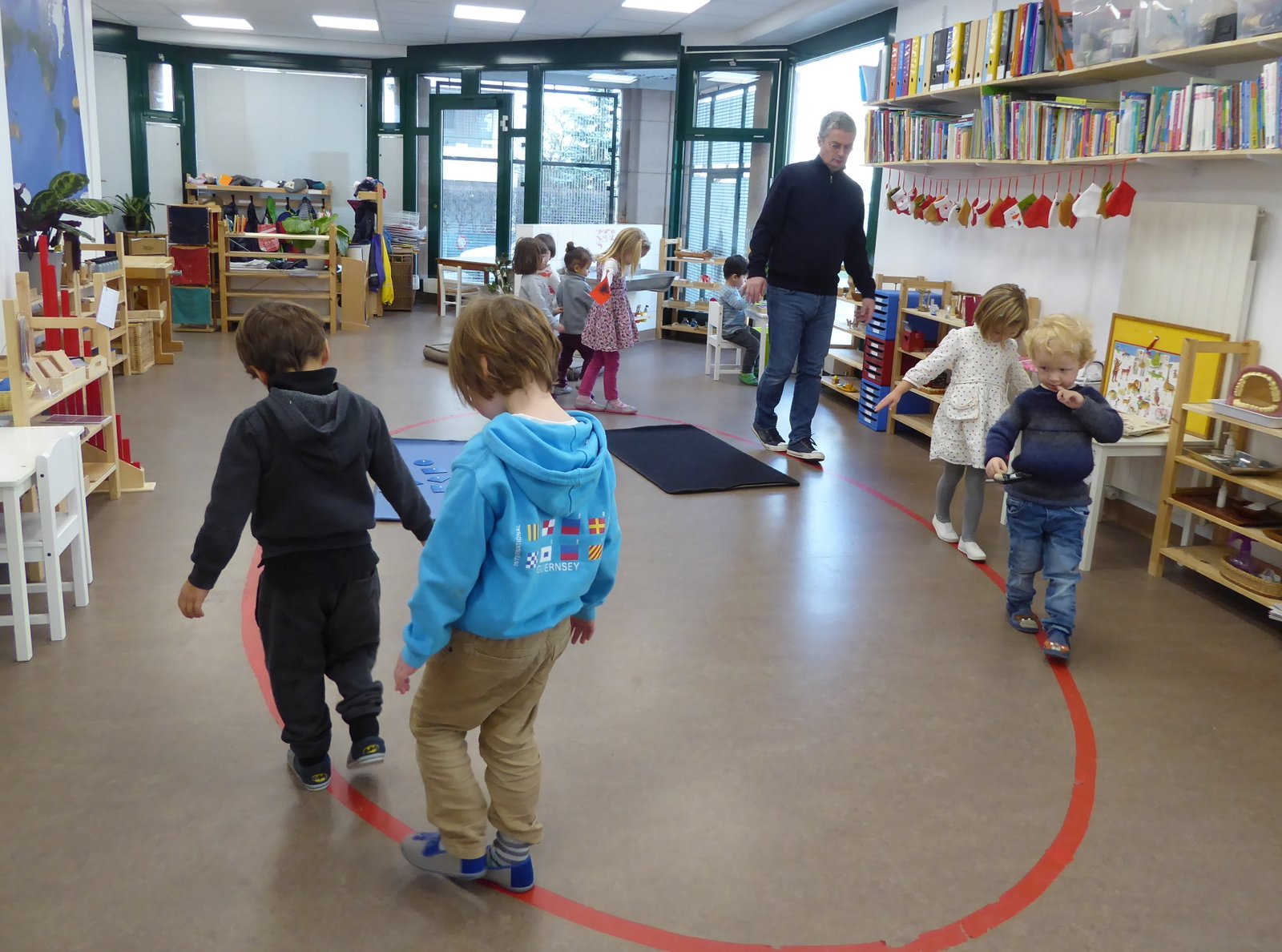
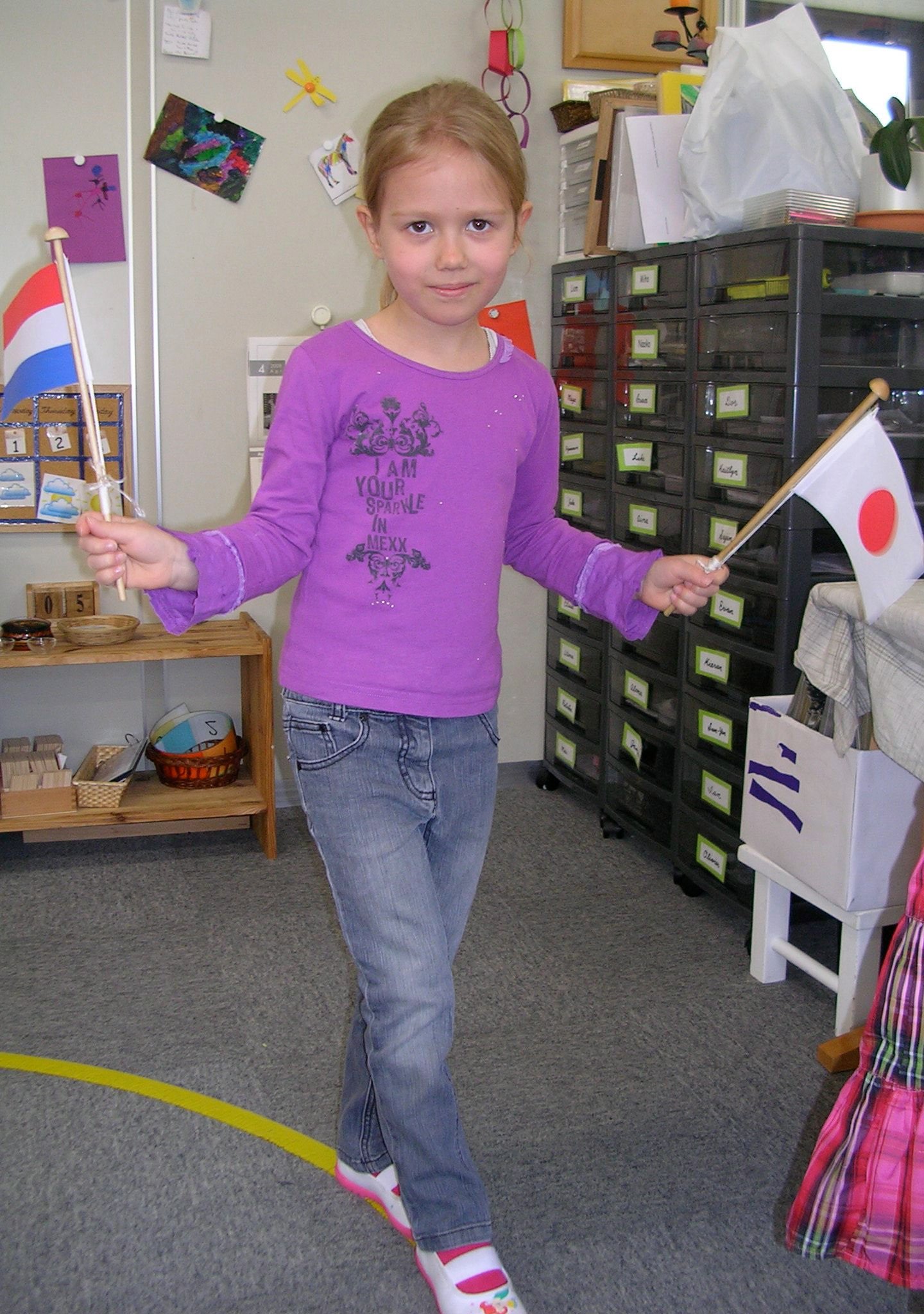
A line, often in the shape of an ellipse, is taped on the floor, and children practice walking on the line heel-to-toe, which helps to develop balance and concentration. They may also increase the challenge by carrying objects, developing spatial awareness while strengthening posture and body control.


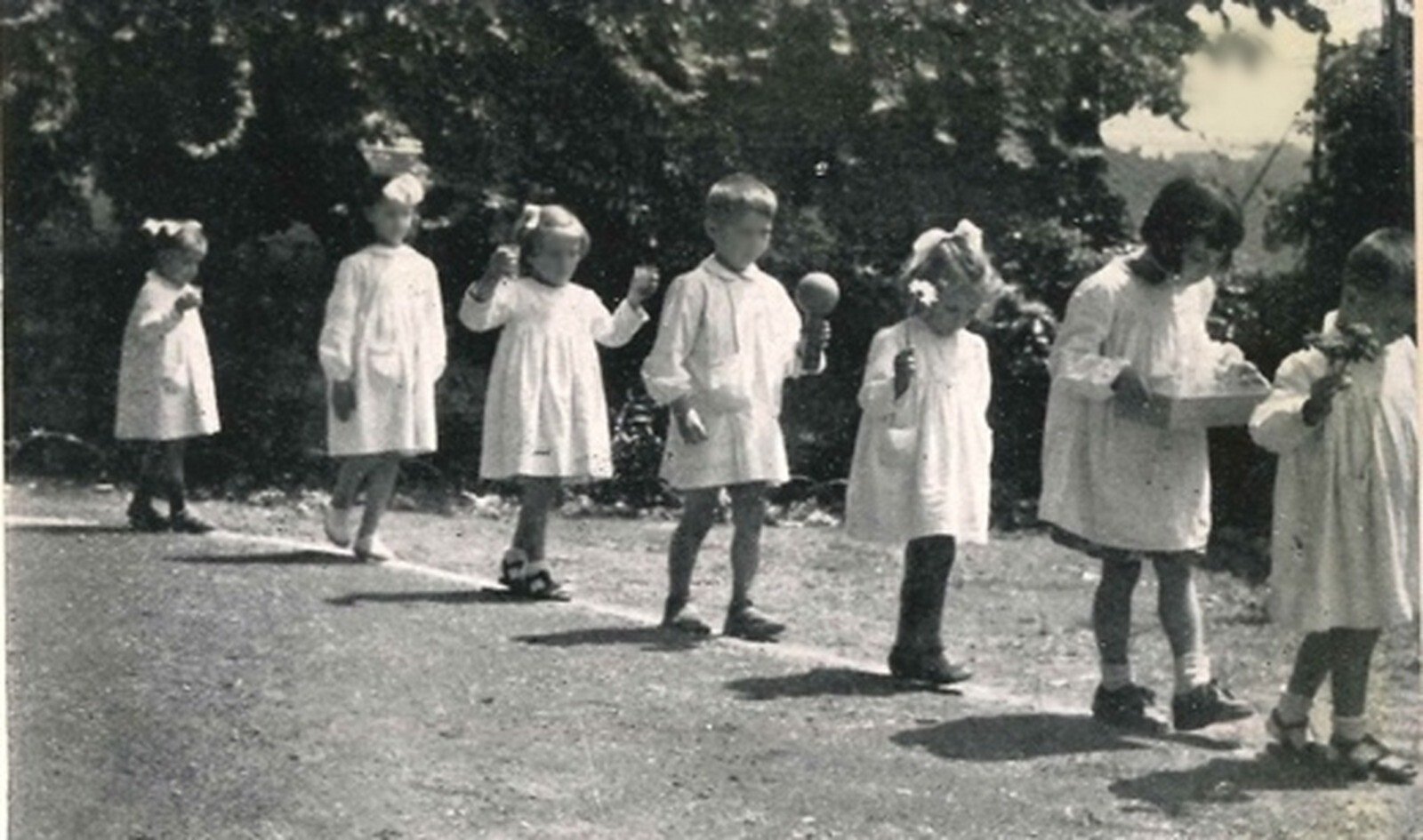


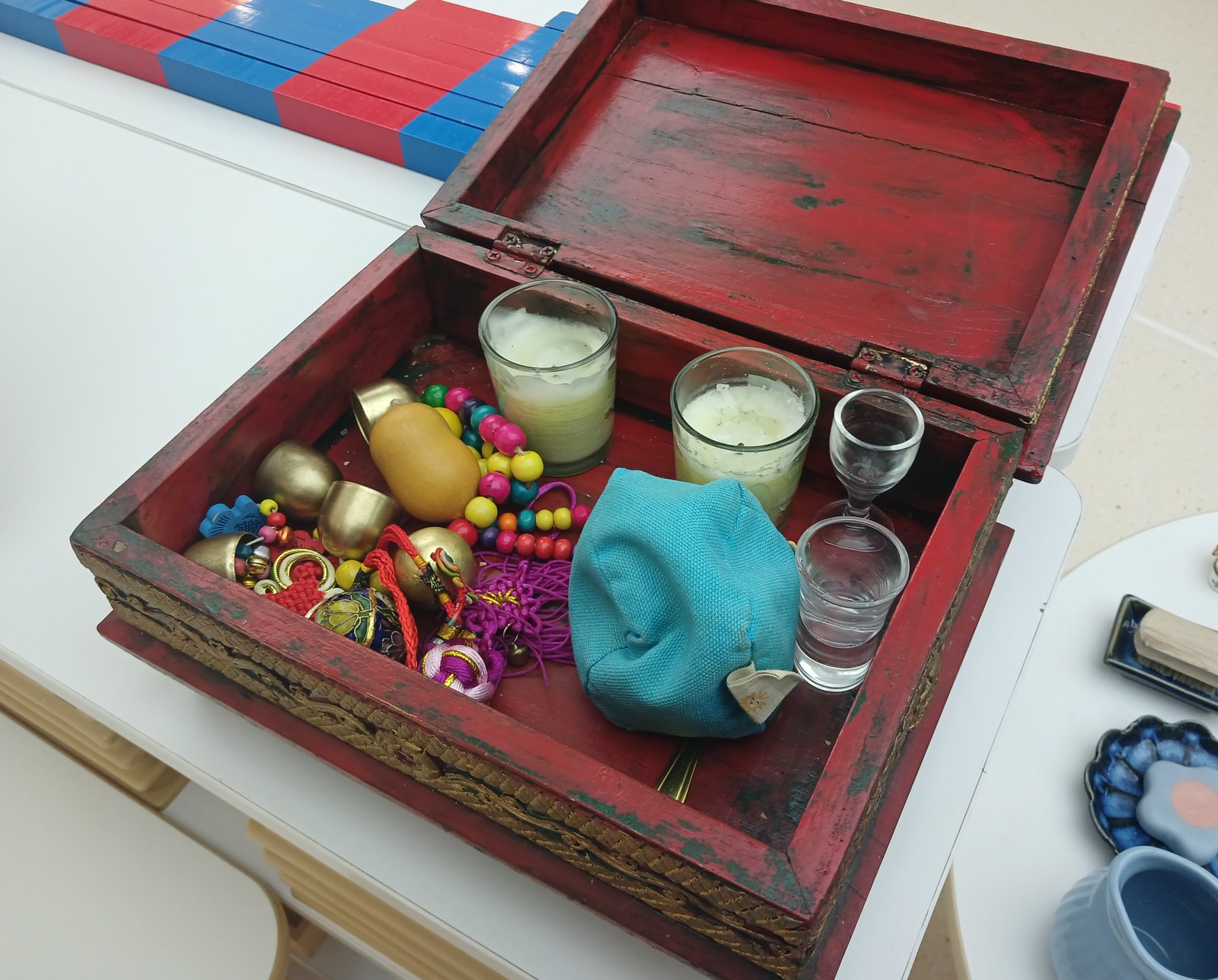
“This exercise may be done by children from three to five years of age. They must be done in developmental succession, one following the other in difficulty. The children first must be shown first to walk on the line, then walk holding a flag in one hand, then two flags. When they have acquired this perfection, not only to hold the arm straight, but to hold the body perfectly, a glass filled up to the brim can be given. First one glass is given, and then two glasses. The holding of the bell while walking on the line is still more difficult, because it easily makes noise. It requires a lot of control. In the case of a rope-bell, the longer the rope, the more difficult the activity. This is an exercise in the control of movement. It is a mental as well as physical test. The child has to hold his body carefully and devote this attention to every little part of his body. When the exercises are perfected, the gracefulness of human movement, and the elegance of walking can be seen.”Maria Montessori, Creative Development in the Child Vol 1, p.66-67. (1994)
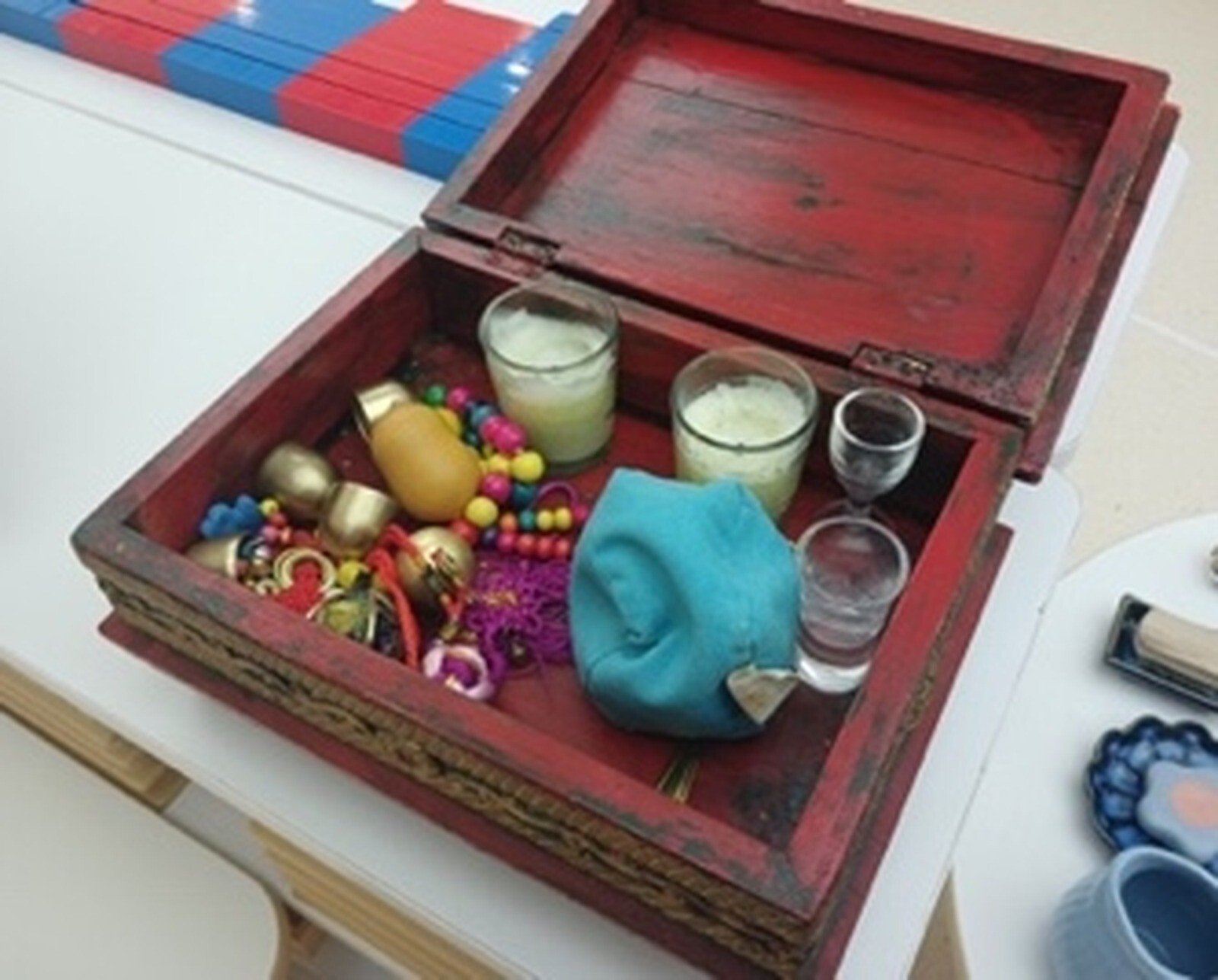
Materials required
- Duct-tape (to prepare an ellipse on the floor)
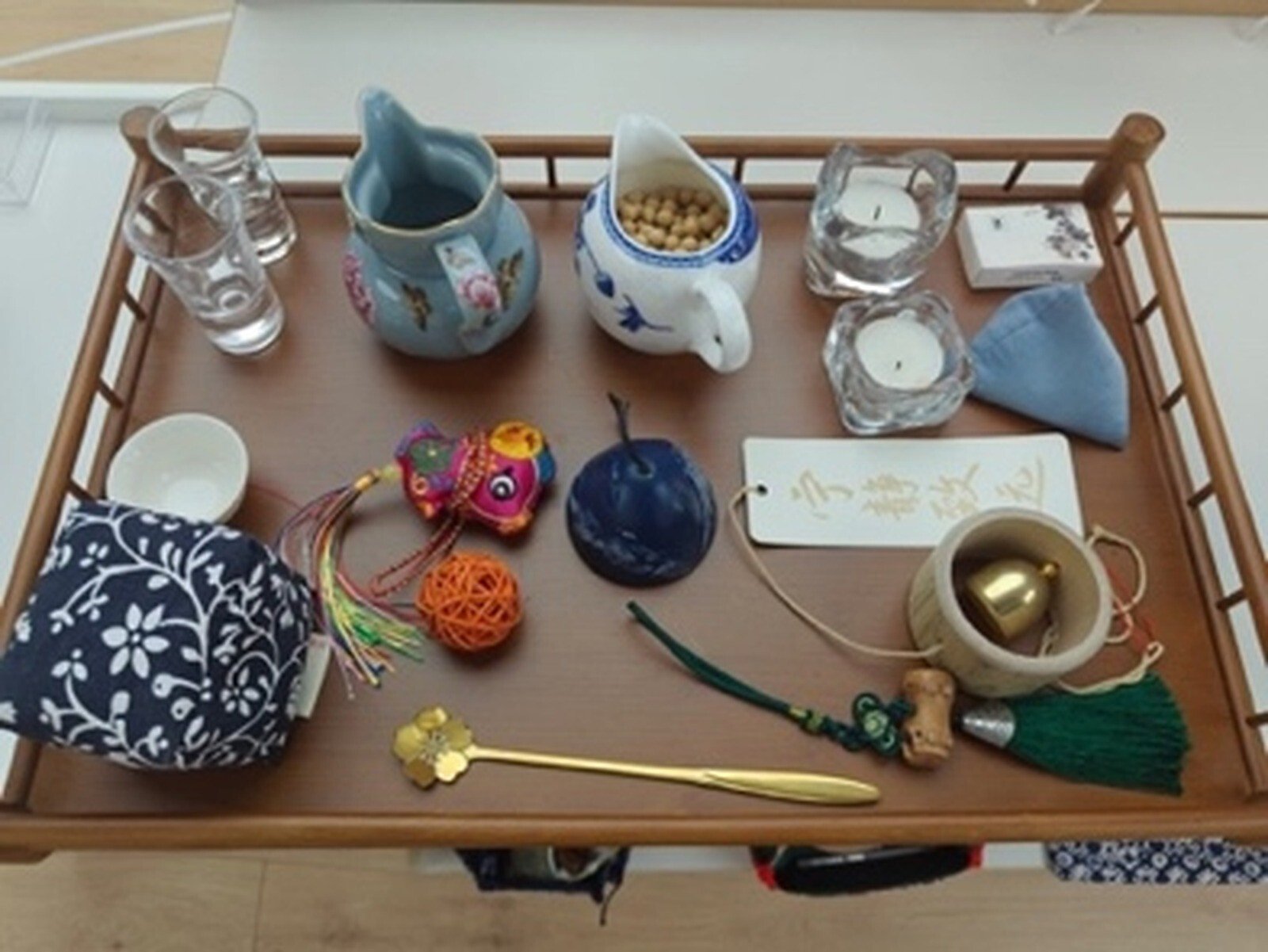
- Objects to carry: beanbags, spoons, bells, candles, glasses (containing coloured water), etc.
- Board with the word ‘silence’ written on one side.
- Music player and a variety of music

An overview of the Practical Life Curriculum
| Category of Exercise | Activity Example | Purpose | Skills Developed |
|---|---|---|---|
| Carrying Objects | Carrying chairs, tables, large materials | Safe, purposeful transport | Balance, coordination, spatial awareness |
| Transferring and Pouring | Pouring large quantities, using funnels | Practical application in daily life | Precision, hand-eye coordination |
| Measuring and Mixing | Cooking, science experiments | Applying measurement and sequence | Accuracy, sequencing, following procedures |
| Cleaning and Care of Space | Washing large surfaces, caring for plants | Maintaining a clean, welcoming environment | Responsibility, order, attention to detail |
| Gardening and Environmental Care | Digging, planting, watering | Stewardship of the natural world | Gross motor control, care, environmental awareness |
| Grace and Courtesy | Polite interruption, offering help, serving | Social harmony, respectful interaction | Self-control, empathy, communication |
| Group Projects | Class cooking, event setup, exhibitions | Cooperative work and leadership | Planning, teamwork, organization |
| Specialized Skills | Sewing, woodworking, advanced cleaning | Craftsmanship and detailed coordination | Fine motor skills, patience, concentration |
Integration Across The Curriculum
While Practical Life has its own dedicated area in a Montessori classroom, its influence extends throughout the entire curriculum. The discipline, order and independence fostered through these activities prepare children for academic work in math, language and culture, while the fine motor skills developed through tasks like pouring, spooning or opening and closing directly contribute to writing readiness.
Adaptation By Age Group
In Infant and Toddler programs, Practical Life forms the core of the curriculum, emphasizing self-care and gross motor skills.
In a Primary (ages 3–6) class, the activities grow more complex and refined, laying the foundation for abstract learning.
At the Elementary (6-12) level, children engage in more authentic life skills relevant to their age and development. Tasks become more intricate and multi-step and often involve group work or community contribution as their focus shifts to real-world responsibility; examples include:
Food preparation
Planning, budgeting, cooking, baking complex recipes.
Care of the environment
More elaborate cleaning tasks, gardening, caring for classroom pets, organizing communal spaces, and understanding environmental responsibility (recycling, composting).
Grace and Courtesy
Deeper understanding and practice of social etiquette, conflict resolution, and communication skills for navigating social interactions.
Community Contribution
Students might organize events, manage a classroom store, or engage in going-out trips where they plan and execute outings, requiring practical skills like budgeting and time management.
Creative Arts and Craftsmanship
Activities like sewing, weaving, woodworking, and other crafts are considered Practical Life as they involve purposeful movement, development of skills, and the creation of tangible objects.

The NAMC Montessori Teacher Training Centre make the following distinctions between 3-6 and 6-12 Exercises of Practical Life:
“In the 3-6 Montessori classroom, children freely choose Practical Life activities throughout the day. In the Montessori elementary classroom, time for Practical Life activities becomes more limited. Elementary children are also involved in the Practical Life activities as soon as possible, as they are eager to participate and practice their newly acquired skills. The focus of the activities is on doing and making real things. Some activities may be done individually, such as latch hooking a rug or creating designs with an elastic band board. Others such as making muffins or planting a garden are best done as a group. Unlike Practical Life activities in the 3-6 classroom, elementary activities can be somewhat lengthy and complex and should be broken into stages over time.”
The Role Of The Adult
1. Prepare the Environment
“In practical life everyone needs to be able to acquire exact knowledge from the stimuli furnished by his environment.”Maria Montessori, ‘The Discovery of the Child’, p. 147. (1967)
2. Role Model
The adult “teaches all the movements: how to sit, to rise from one’s seat, to take up and lay down objects, and to offer them gracefully to others. In the same way she teaches the children to set plates one upon the other and lay them on the table without making any noise”.Maria Montessori, ‘Montessori’s Own Handbook, p. 57. (1965)
The Significance Of Practical Life
The Practical Life curriculum is the heart of the Montessori method. By providing children with purposeful, real-world activities scaled to their size and abilities, it addresses their deep-seated drive for independence, mastery, and belonging. The logical sequence of the exercises respects the child's developmental stages, offering achievable challenges that build competence step-by-step, and the thoughtfully designed materials ensure that each exercise is both engaging and purposeful, helping the children to develop and refine a comprehensive set of practical, essential skills while cultivating emotional and physical independence, coordination of movement, social awareness, and self-discipline. By engaging in the real work of their community, children learn to be caretakers of themselves and their world, developing their confidence and capability and preparing a foundation for lifelong learning.