The Prepared Outdoor Environment
A few years ago, I visited the site of Maria Montessori’s first school in San Lorenzo, Rome.
The classroom isn’t huge by any means, and when you remember that there were upwards of 35 children in the room, it sheds some light on why she expanded the class into the outdoors: necessity is the mother of invention.
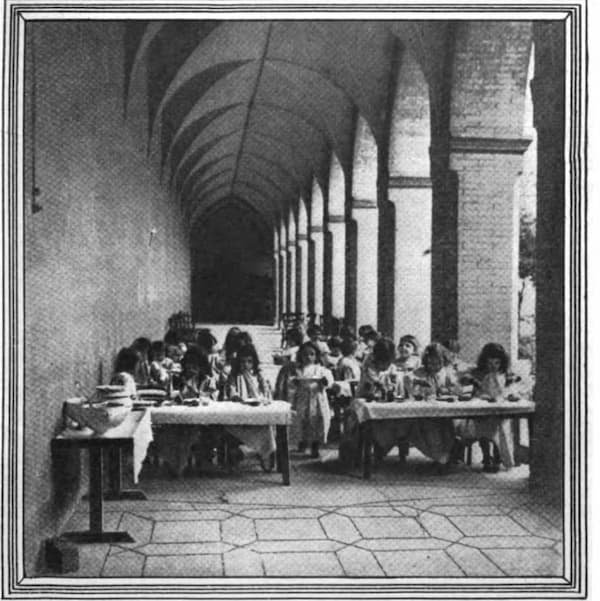
Space is at a premium for most schools, so it’s not always possible to take learning outdoors. However, when it is possible it’s great when there’s access to the outdoors so the children can do some exercises of Practical Life.
- Maria Montessori, Dr. Montessori’s Own Handbook, pg. 37-38.
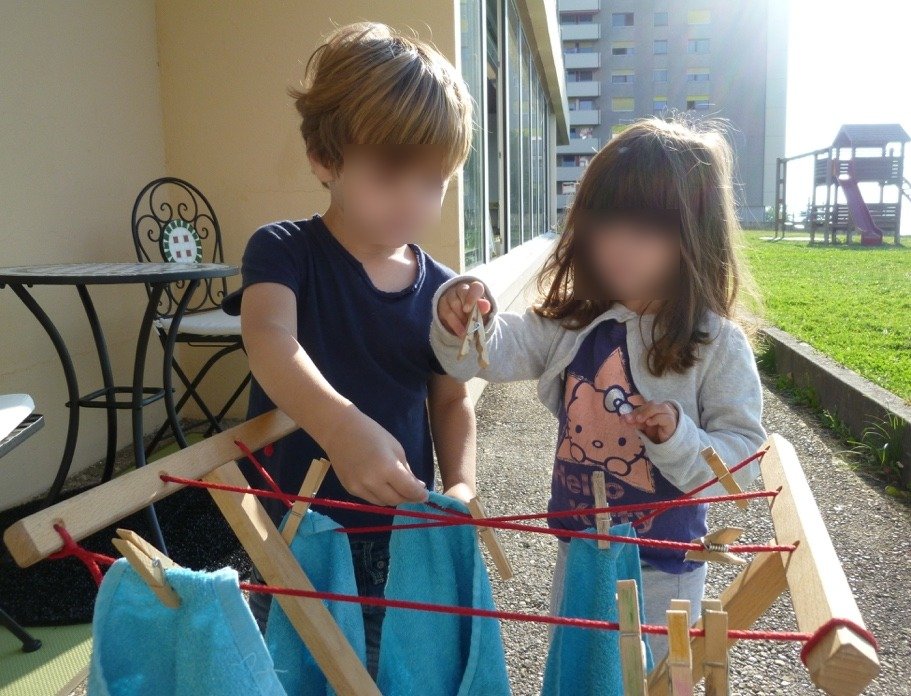
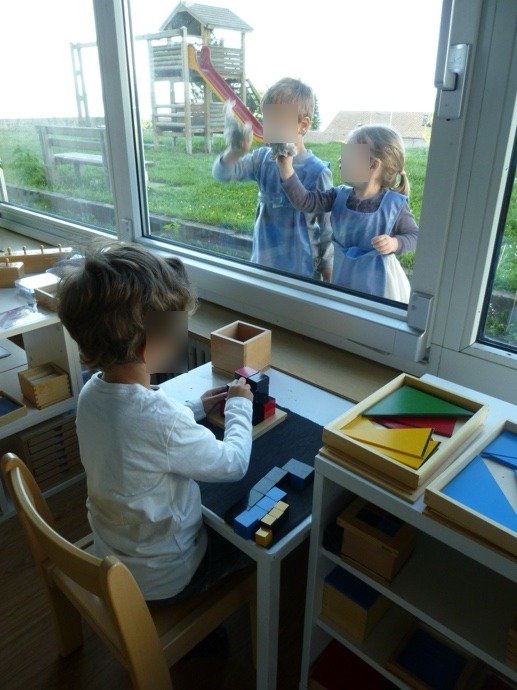
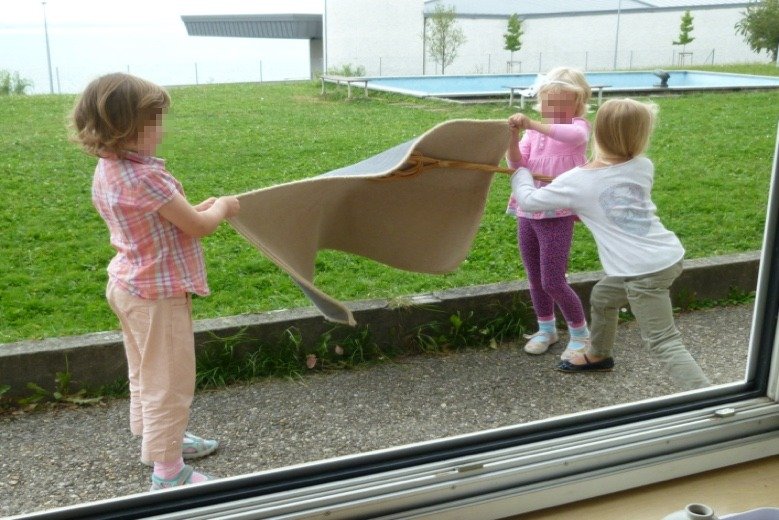
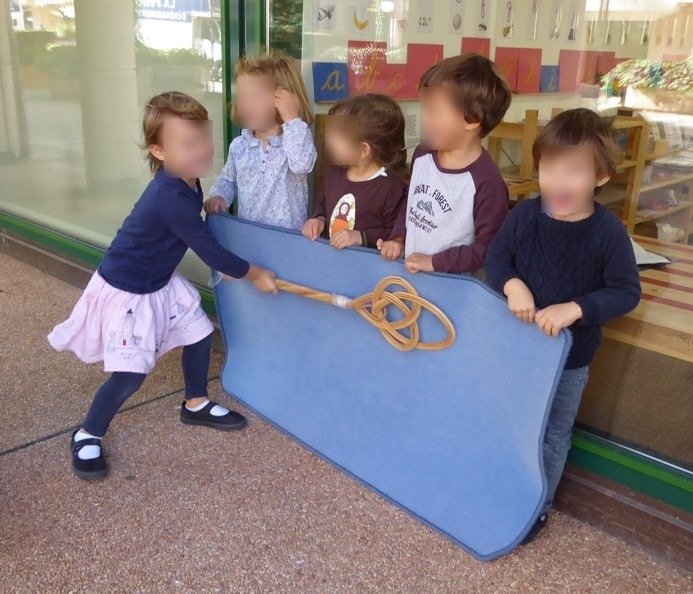
In Geneva we were able to move the class outside when the weather permitted:
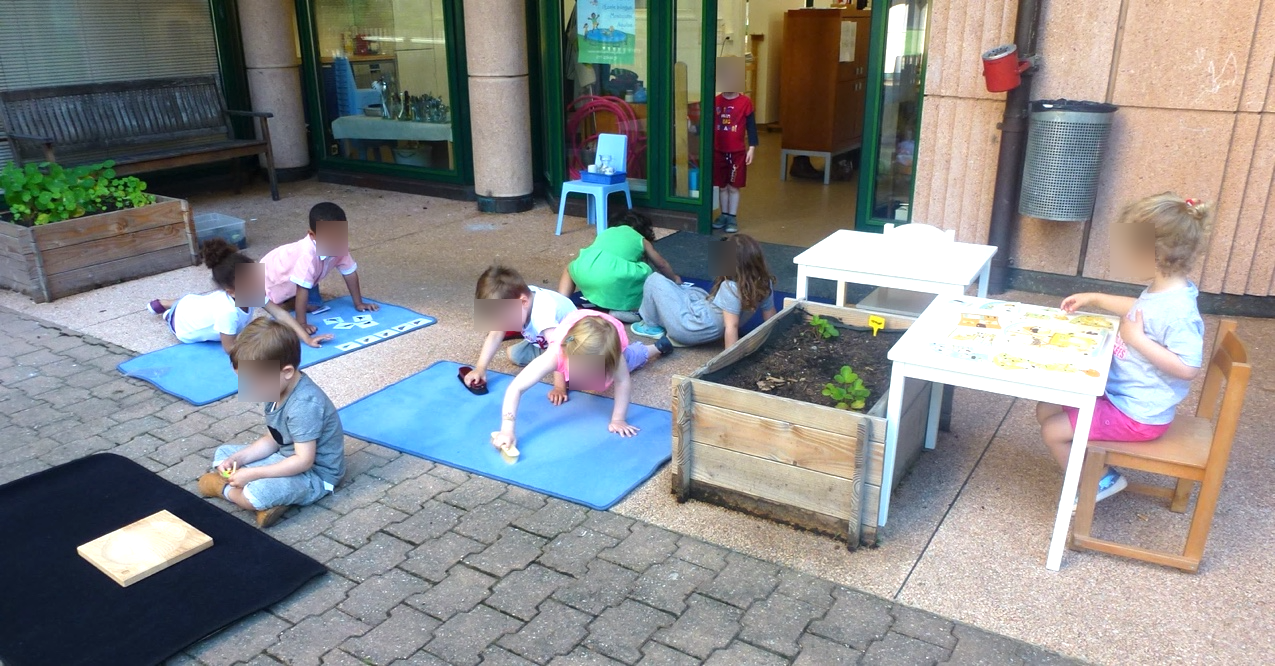
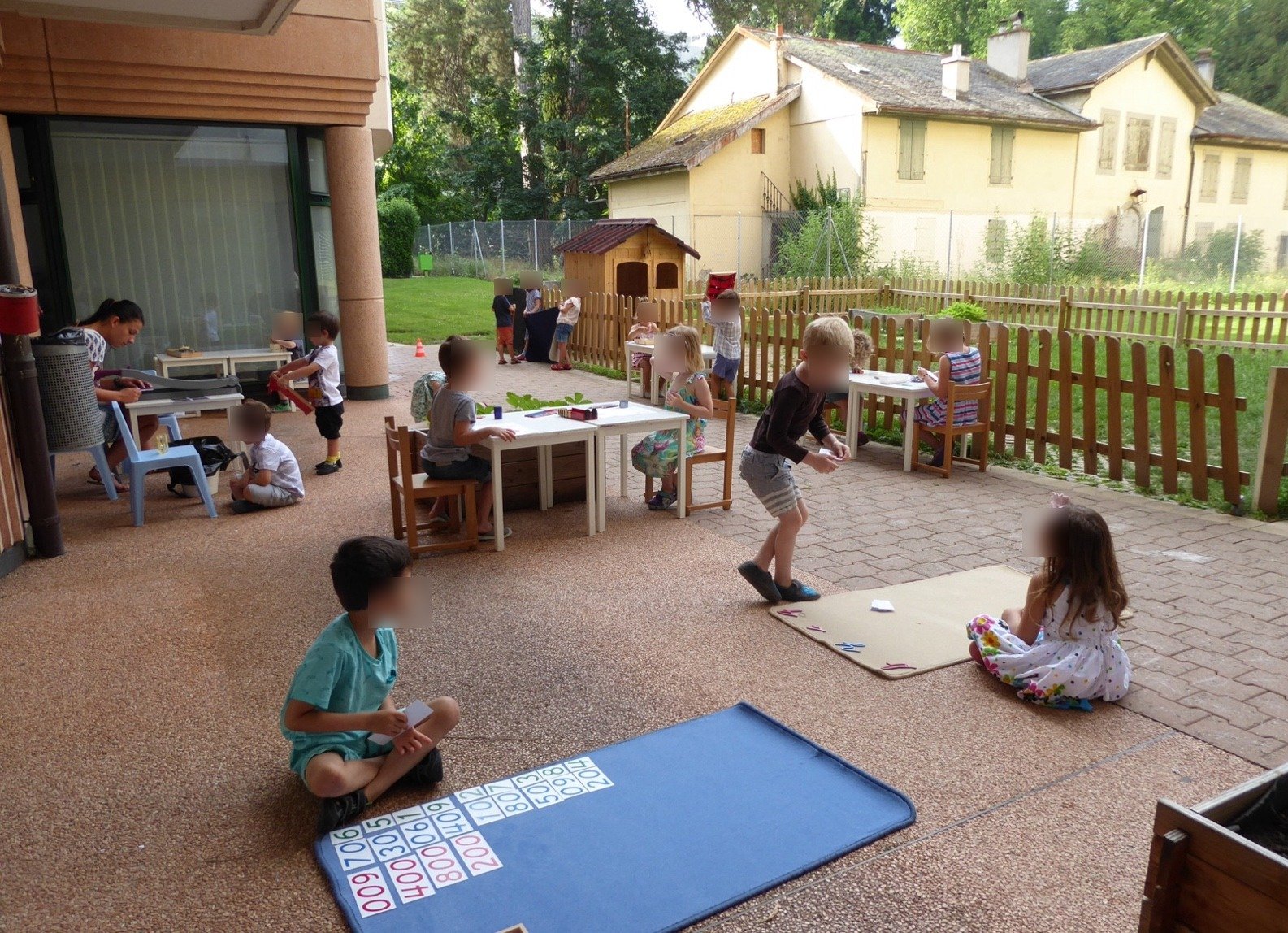
In Beijing the owner of the school loved gardening and gardens, so she had created a marvellous garden on the roof of the building (The AMI Training Centre). Unfortunately, she loved her garden more than the children, so we were only allowed to go up there twice a year, and under strict supervision.
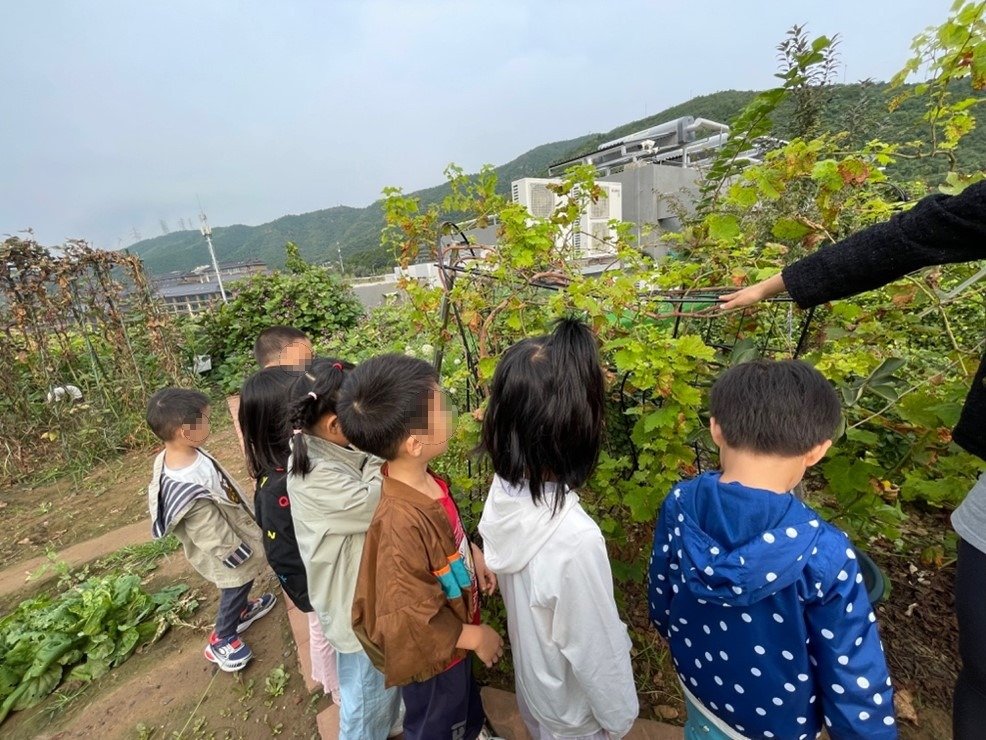
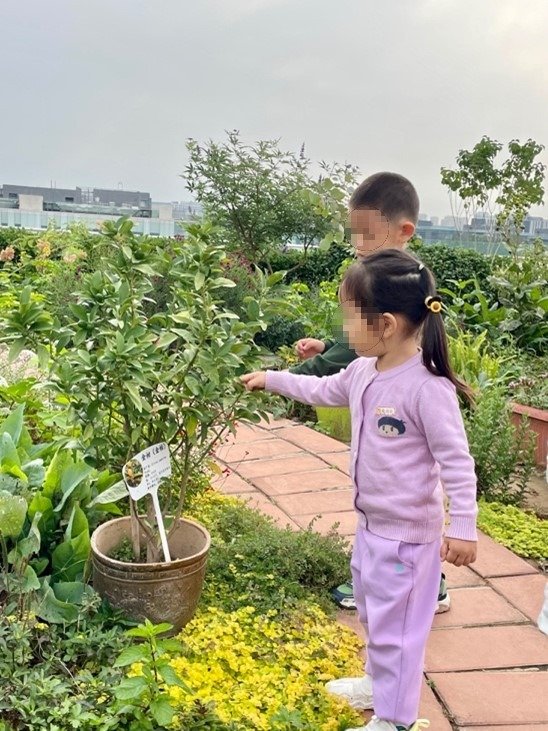
In Shanghai we had a set of French-doors that opened directly onto a small garden, which was quite pleasant.
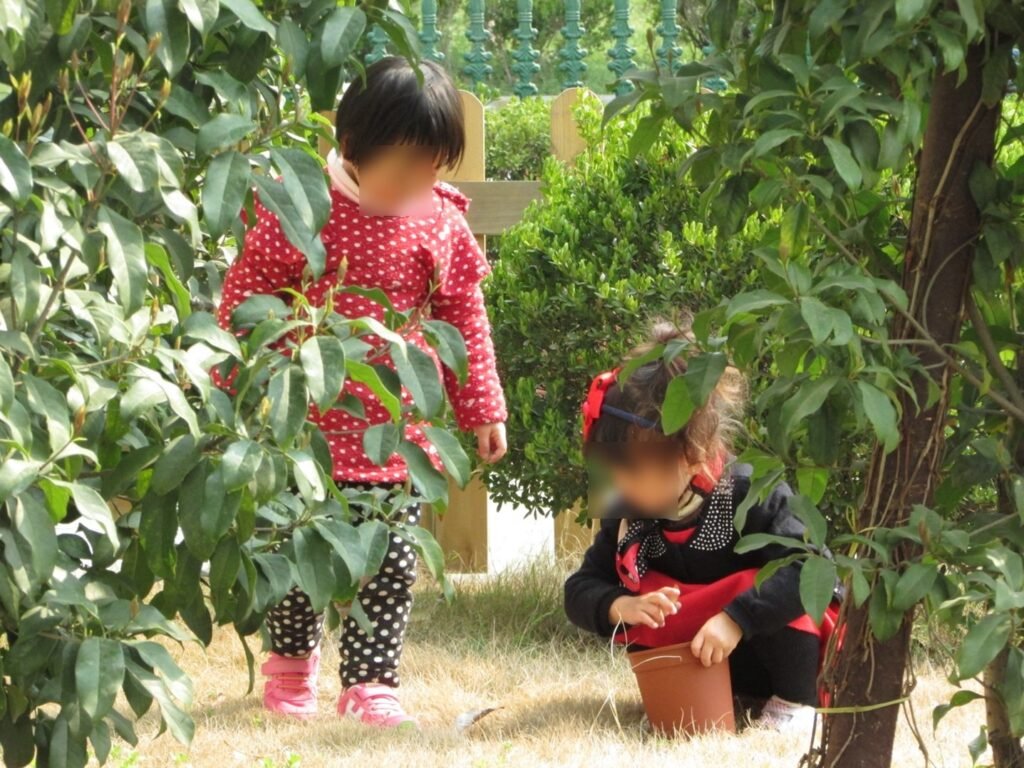
In Beijing the beds were placed in the class, so I had to figure out where the non-sleepers could play during the 80 minutes of nap time. The air isn’t as clean as it is in Switzerland, so when the IQ rating got above 100 (about 50% of the time) we played in the hallway, which wasn’t an ideal solution, but we had no other choice.
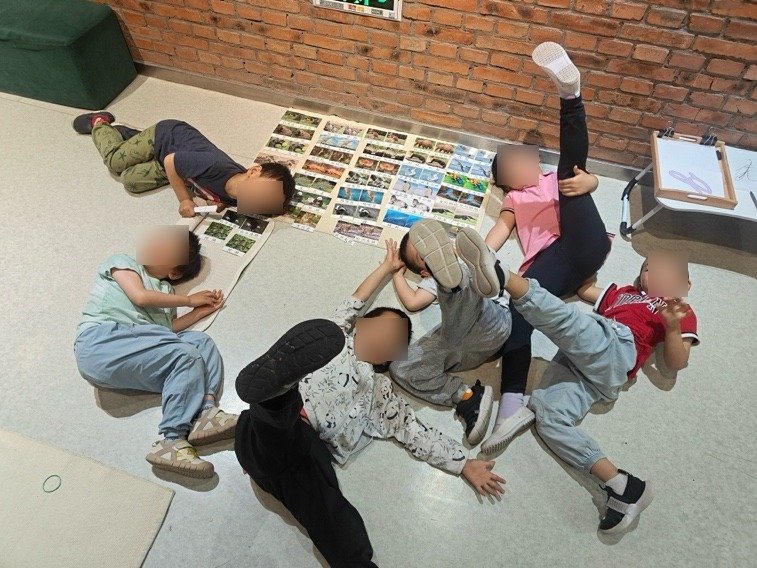
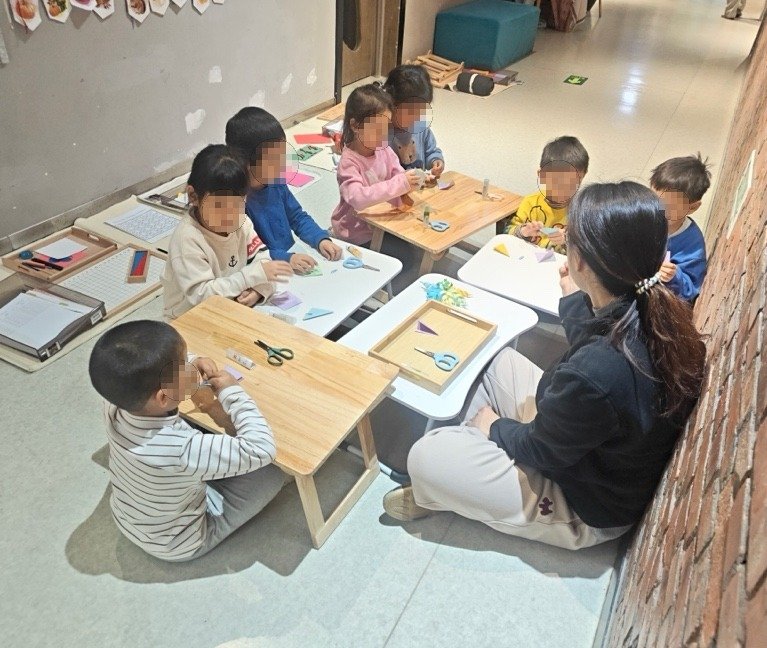
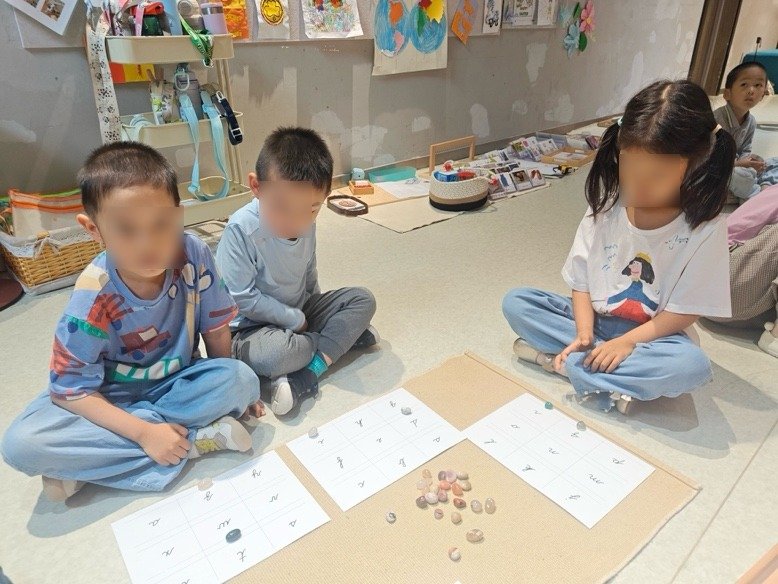
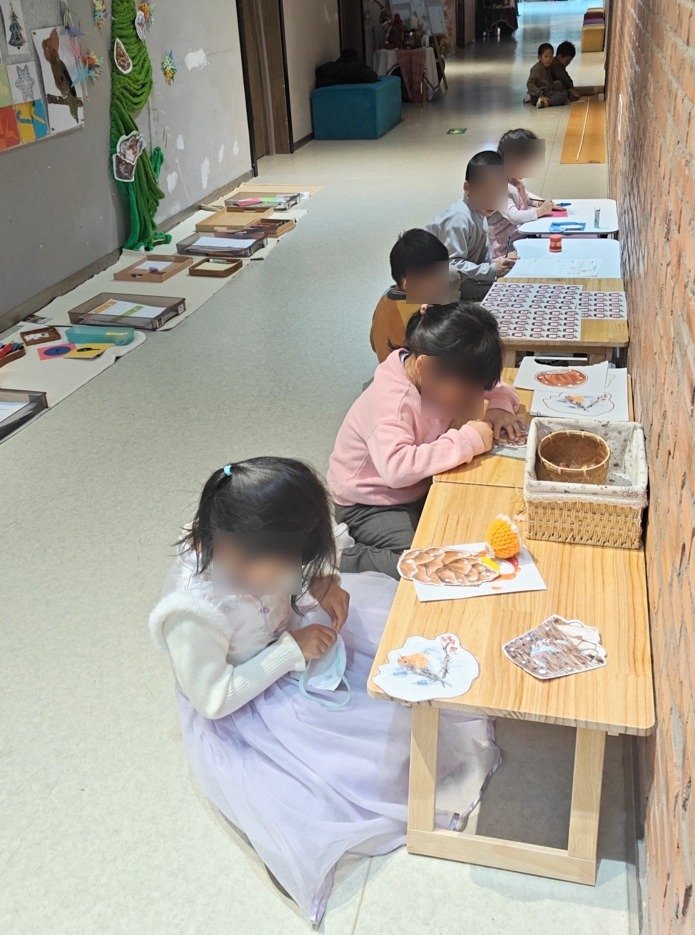
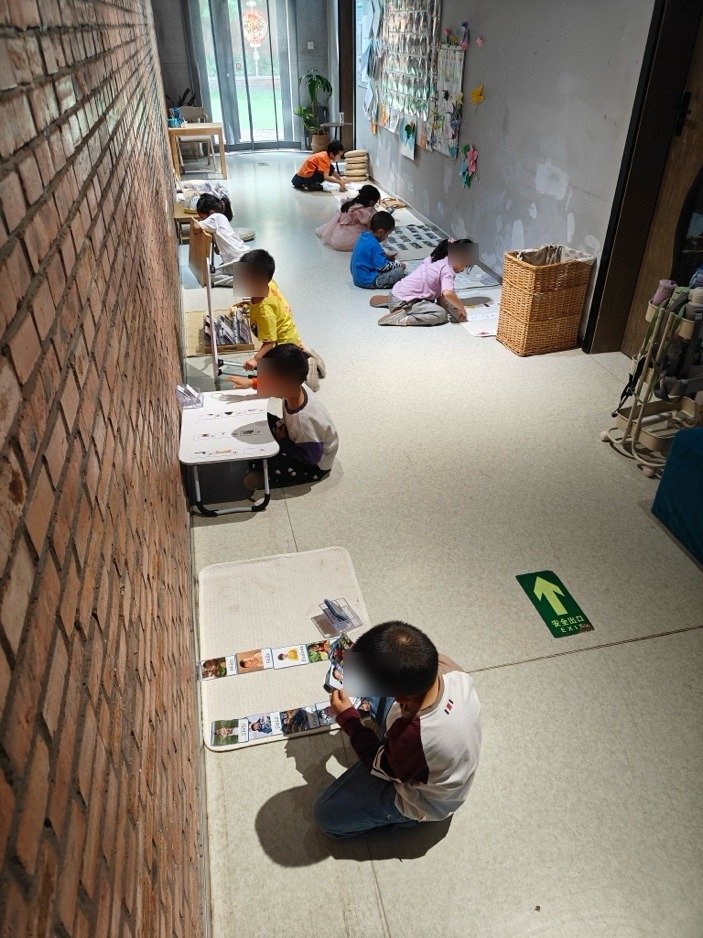
When the air was clean -and if it wasn’t wet or too hot- the children would carry their mats and portable tables and materials outdoors.
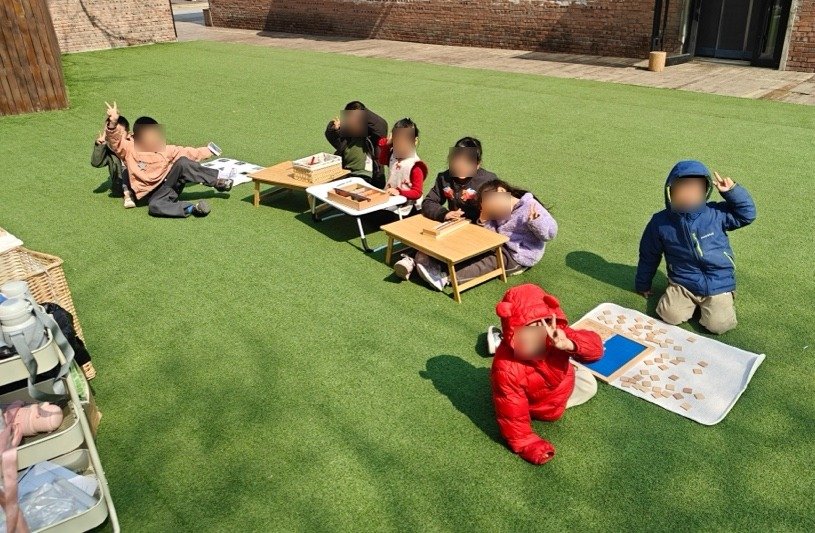
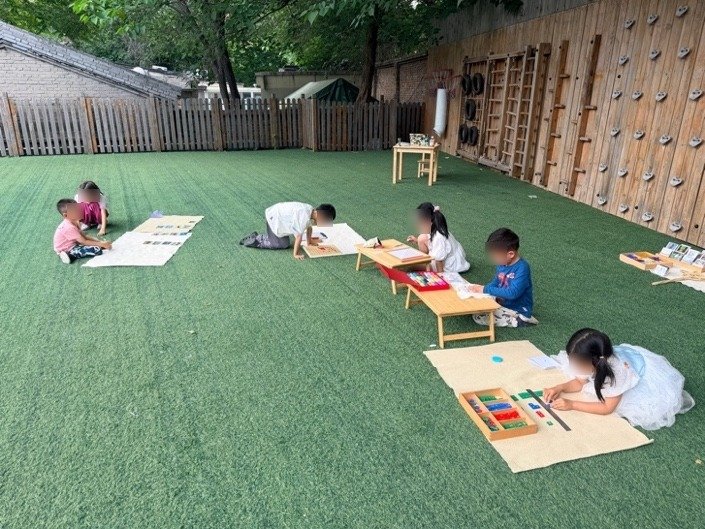
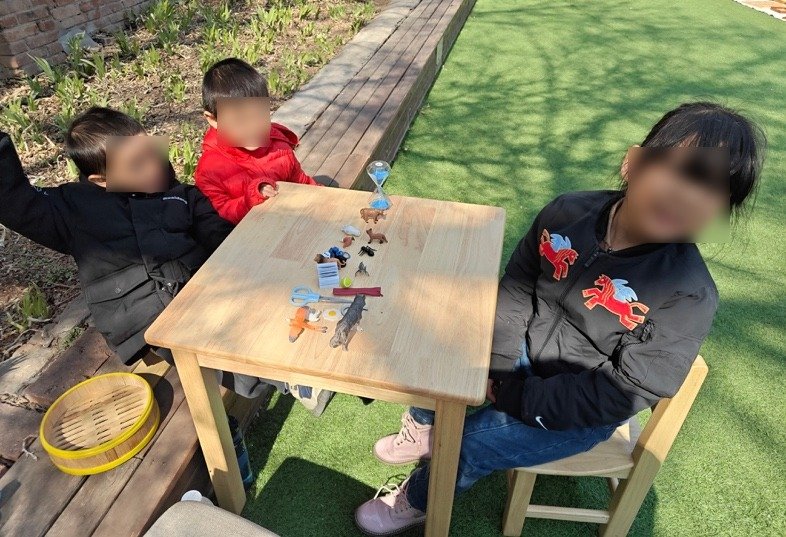
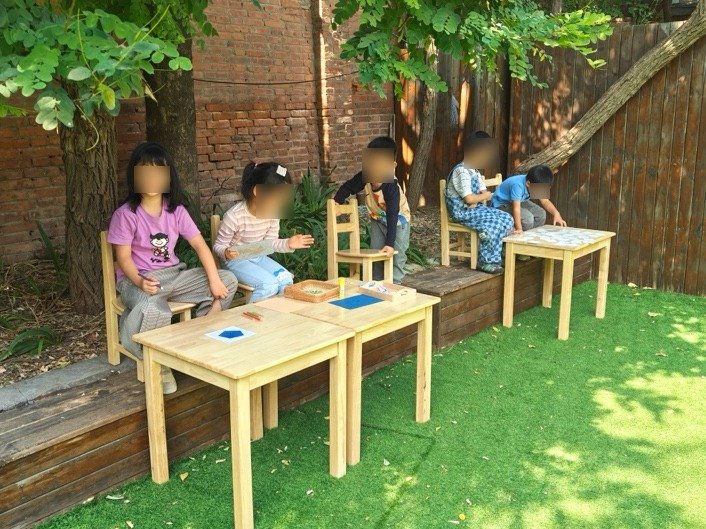
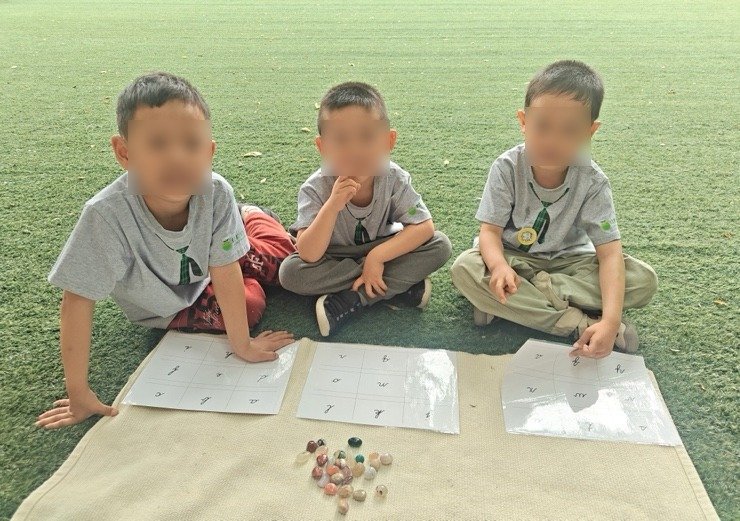
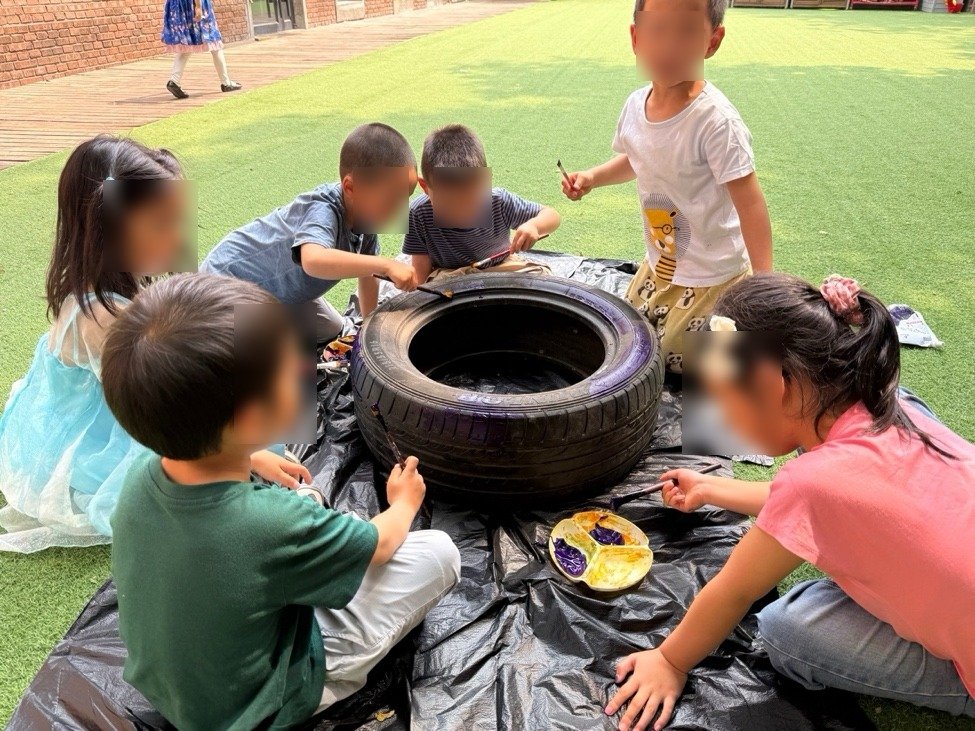
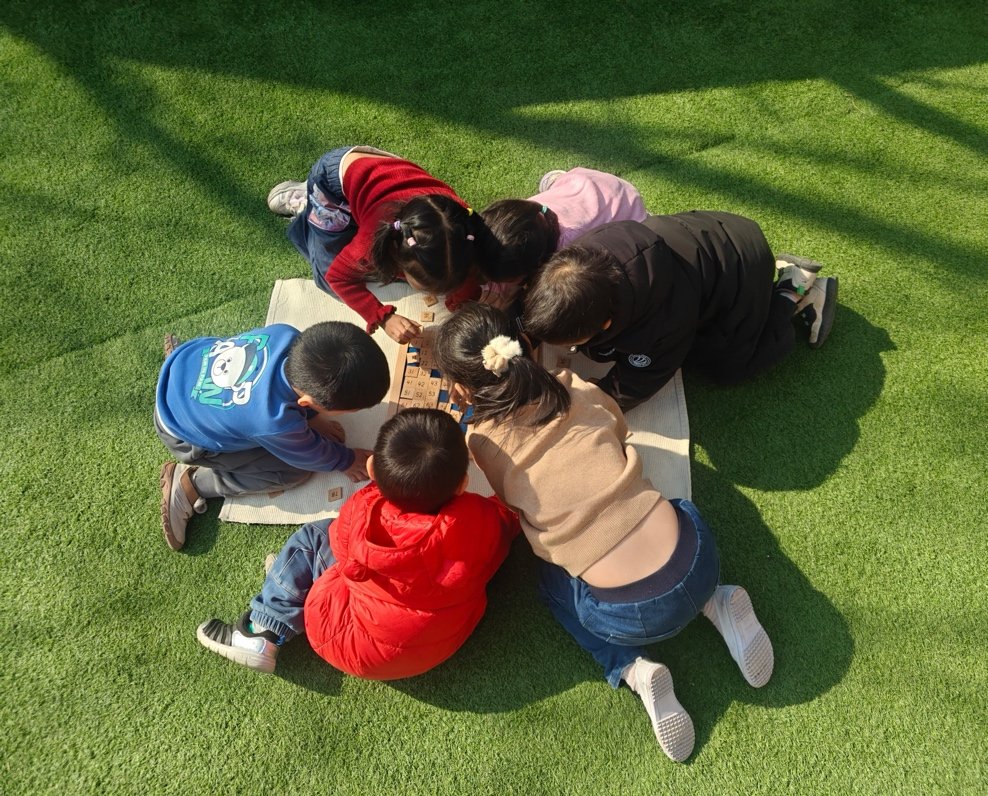
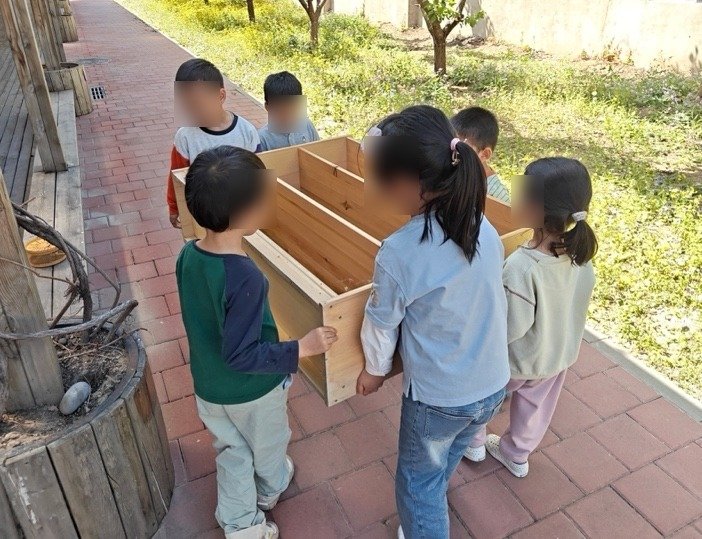
This was also the time I would repair gates and assemble new shelves, so it was useful having helpers available.
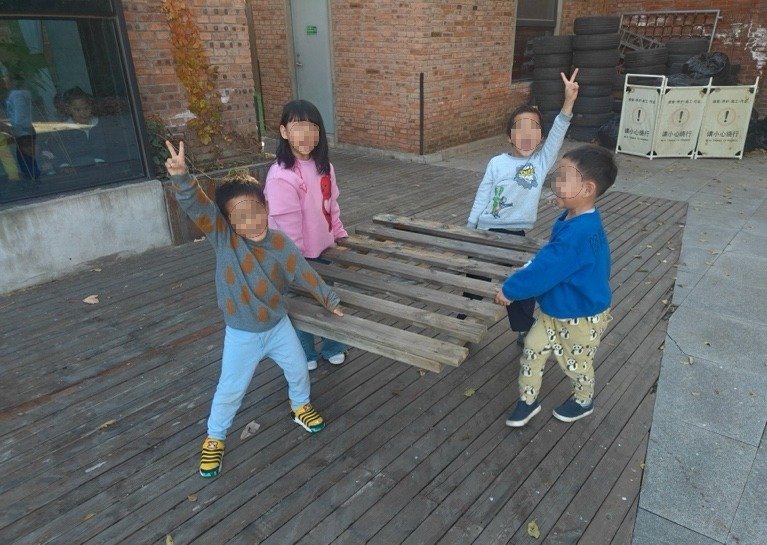
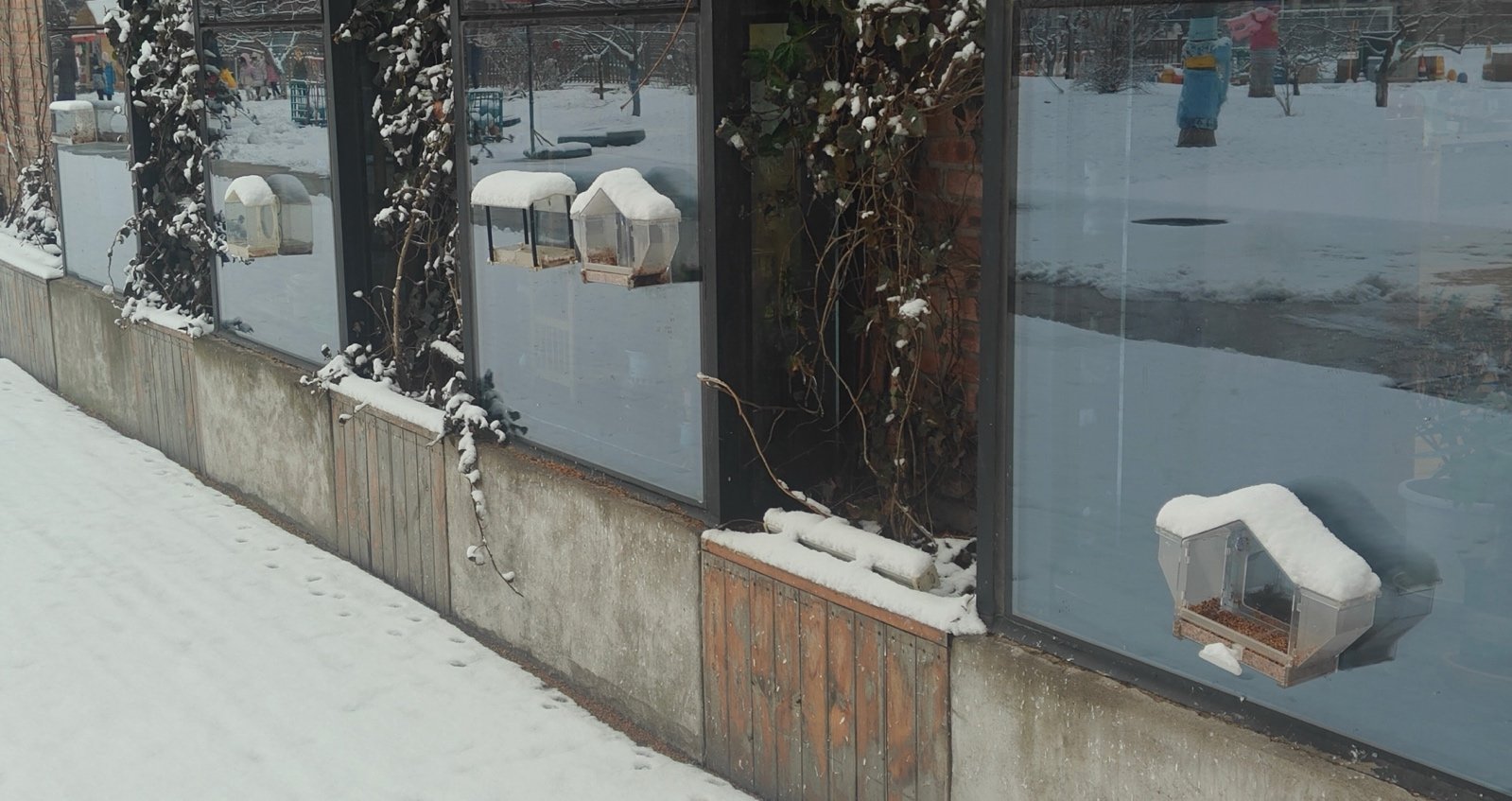
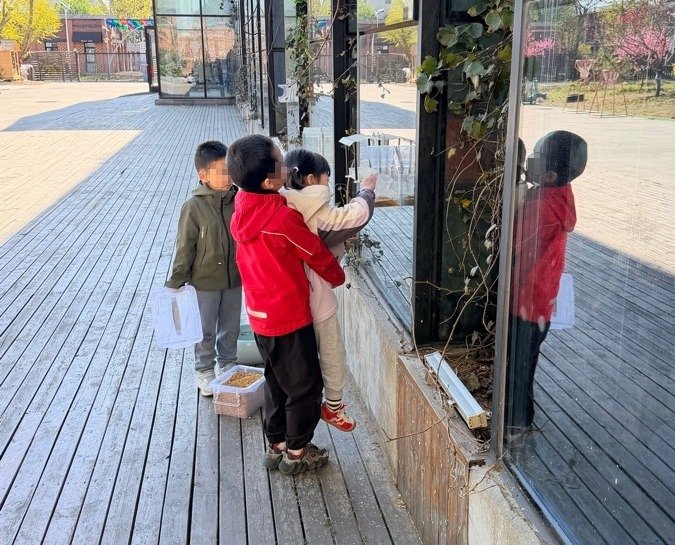
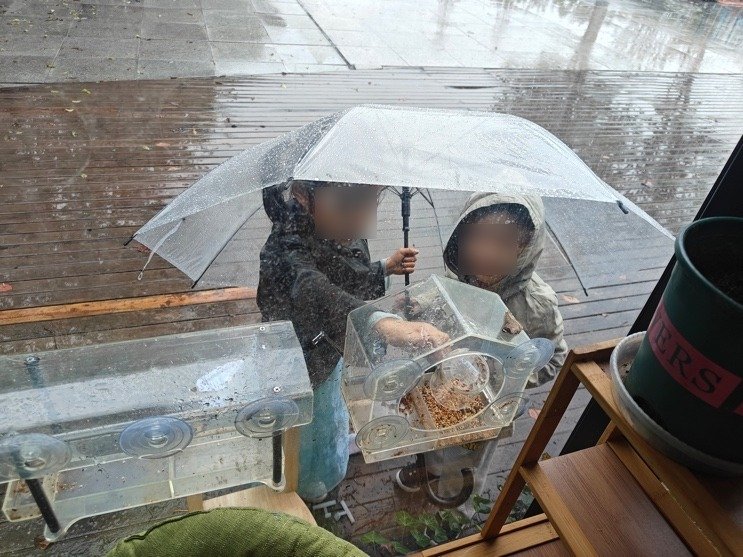
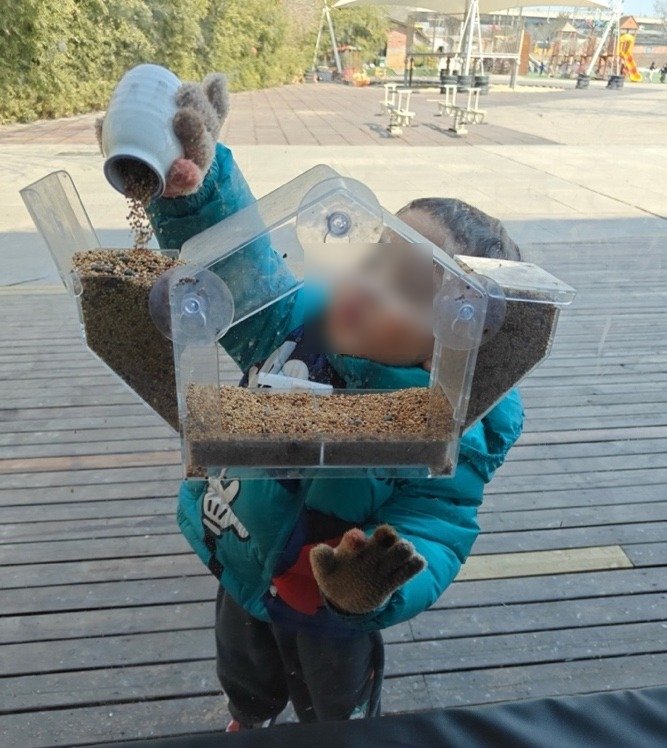
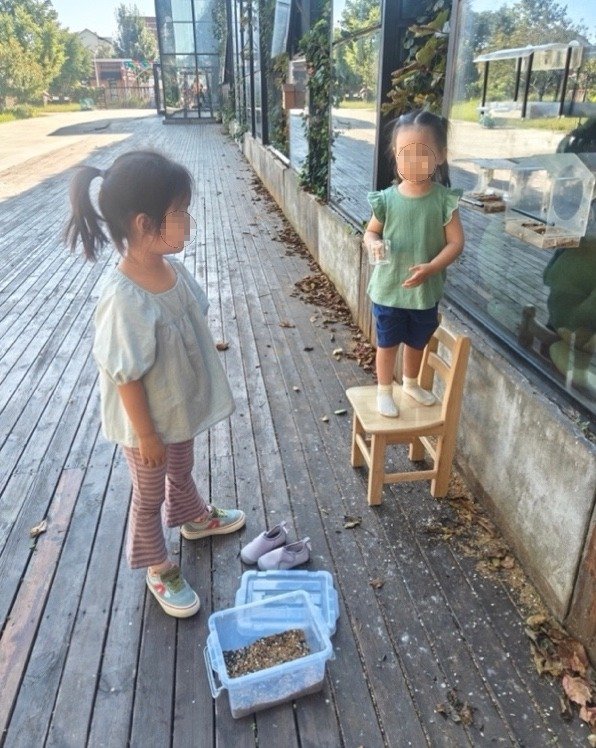
Regular outdoor activities included feeding the birds, in winter and summer, come rain or shine.
The Outdoor Environment Resources - Montessori
Maria Montessori believed that nature provides children with meaningful opportunities for observation, discovery, and emotional growth. In this lecture given from 27 March 1913, she highlights the importance of connecting children with the natural world as part of their development and education andargues that experiences with plants, animals, gardening, and outdoor exploration nurture curiosity, responsibility, independence, and a deeper understanding of life.
2013 International Montessori Congress
The ‘Guided by Nature’ theme for the Portland 2013 Congress reads, “The 2013 International Montessori Congress will allow us to look closer at how Montessori education is guided by children’s natural development and how that growth fosters a respectful relationship with the environment.” The chorus of voices that you will hear in this publication represents the Montessori legacy of the child and nature as an evolving vision of lifelong learning (early childhood, childhood, and adolescence) that was integral to an evolving pedagogy that is now 106 years old. What is the Montessori book of nature that scrutinizes these two natures: one nature belonging to the developing human and the other nature to the changing natural environment? Maria Montessori discovered the unfolding nature of childhood within the literal framework of a house and a garden. An ordered and prepared environment inside contrasted with a changing, evolving, prepared environment filled with living things on the outside. The children’s house fully integrates the two natures of childhood with two surrounding and complementary physical environments, one man-made and the other natural.
Special issue of The Namta Journal, Volume 38, Number 1, Winter 2013.
“Robin Moore is professor of landscape architecture and director of the Natural Learning Initiative, North Carolina State University College of Design. Professor Moore is an urban designer and design researcher, specializing in child and family urban environments. Originally from England, he holds degrees in architecture (London University) and city and regional planning (Massachusetts Institute of Technology). Professor Moore’s research focuses on the link between human and environmental health, and he is recognized as an international authority on the ecological design of children’s educational environments.
Nilda Cosco is an education specialist at the Natural Learning Initiative, North Carolina State University College of Design. She holds a PhD in landscape architecture and a degree in educational psychology. Her research interest is focused on the assessment of outdoor environments and the impact of the outdoors on child development.”
Maria Montessori emphasized the broad scope of natural learning, and Robin Moore and Nilda Cosco began working with Montessori schools more than 25 years ago and almost as long with the North American Montessori Teachers’ Association. Robin Moore spoke at a number of NAMTA conferences:
- “The Child and the Environment: Natural Connections,” in Orlando, Florida, March 14-16, 1996
- “All-Day Montessori: The Caring Community,” in Denver, Colorado, May 2-4, 1996
- “Montessori Awareness: Opening the Doors to Perception,” Louis, MO, October 12-15, 2006
Montessori school communities (parents, students, educators, supporters) are centrally positioned to lead a global revolution in school-based outdoor education – supporting the next generation of planetary lifeguards who understand the universe, educated to lead as adolescents and adults in caring for the Earth. From the beginning, Maria Montessori emphasized the broad scope of natural learning. Great urgency now summons the clarity of her thought to drive action.
Robin Moore and Nilda Cosco began working with Montessori schools more than 25 years ago and almost as long with NAMTA (North American Montessori Teachers’ Association). Children and teachers at more than 30 schools have benefited from NLI’s design thinking to make school grounds and indoor-outdoor transitional spaces (as Dr. Montessori herself demonstrated), into vital nature play and learning places.
NLI’s carefully curated resources are offered to inspire nature-based action to increase biodiversity, to make it playfully accessible -hands-on yet protected- along with other play and learning settings -fixed and loose, natural and manufactured- necessary to meet best practice standards across the Montessori planes of development.
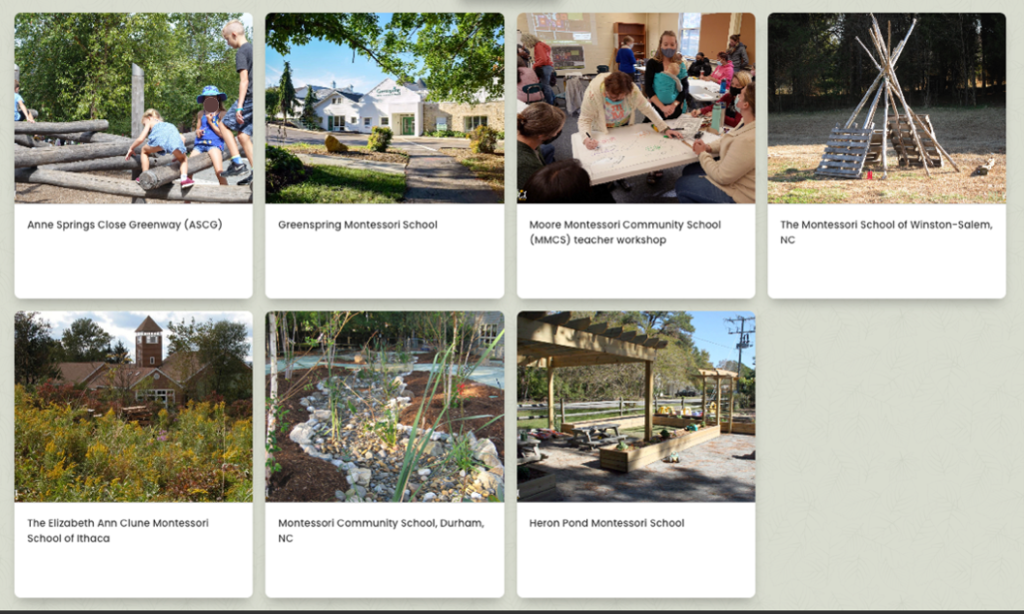
Children and teachers at more than 30 schools have benefited from NLI’s design thinking to make school grounds and indoor-outdoor transitional spaces (as Dr. Montessori herself demonstrated), into vital nature play and learning places. Click here to view examples of NLI best practice, community-based, design projects with selected Montessori schools.
Robin Moore writes as a champion of the comprehensive development of school landscapes for the sake of active learning and free play. ‘The more hours that children spend at school, the more choices the environment must offer them,” he writes. This article presents a selective list of imaginative design options for optimal outdoor learning as well as intimate contact with nature leading to the understanding of earth stewardship from a very young age.’
Reprinted from The NAMTA Journal Vol. 21, No. 3, 1996
‘Robin Moore and Nilda Cosco view the Montessori approach to the prepared environment as overlapping their understanding of the naturalization of school grounds. As they present the possibilities for a naturalized setting to overcome sedentary lifestyles and maximize learning in the outdoors, they establish necessary components for success: professional design, careful attention to surface drainage, thoughtful use of a hierarchy of pathways, variety in elevation, transitional shelters and terraces, moveable parts, restoration of wild places, inclusion of fruit-bearing species, and, above all, establishing a sense of place.’
Reprinted from The NAMTA Journal 32,1 (2007, Winter): 129-151.
‘Nilda Cosco and Robin Moore bring to the layperson the language of designing outdoor environments for a wide variety of special needs. Montessorians will notice correlations between the designers’ professional vocabulary and Montessori concepts. Territorial development, for example, is akin to the prepared environment’s providing layers of learning for “expanding the ‘known’ world by pressing against the ‘unknown.'” Drawing on a solid research base, Cosco and Moore suggest both guiding principles and specific applications (including illustrative photos) to create environments that promote physical and mental health, attention, cognitive functioning and motor development for an inclusive community of learners.’
The NAMTA Journal, Vol. 34, No. 2, Spring 2009
Sharon Caldwell
A thorough overview of the Montessori Outdoor Environment.
Barbara Isaacs
The learning potential of outdoor play has been at the heart of Montessori practice since its earliest days, explains Barbara Isaacs, academic director of Montessori Centre International, a training centre in London.
Montessori Australia
Punum Bhatia
Carrots are Orange
Carrots are Orange, a Montessori blog, sell a Montessori Outdoor Classroom Activities guide for $7 here.
Learn more about outdoor Montessori activities with this download for parents & educators connecting the indoor and outdoor classrooms. Includes all four books: Practical Life, Sensorial, Language, and Math, with forty activities covering the areas of the outdoor classroom. Book One: Practical Life is available as a free download: PDF
Munster Technological University
An Irish college of third-level education, as part of their Bachelor of Education (Honours) in Montessori Education, offer a module on ‘Montessori Principles Outdoors.’ PDF
‘This module applies Montessori principles encompassing freedom, responsibility, movement, beauty and intrinsic motivation to outdoor learning experiences for children between birth and 12 years of age. National and international frameworks encompassing the view of the child as a citizen with rights in the here and now, are drawn on to support children’s outdoor learning dispositions for culture, creativity, literacy, numeracy and scientific discovery learning. Knowledge on safety and risk assessment is balanced with promotion of positive risk taking outdoors. Special emphasis is placed on supporting independence and interdependence, and promoting care of the outdoor environment as well as nurturing community engagement that builds sustainable practice and fosters children’s holistic development.’
The focus of this paper is to evaluate how spatial learning environments in Montessori preschools support LTP as curricula that may emerge across preschools in Malaysian contexts.
Curriculum and Activities
Camp Curiosity – Primary School Outdoor Learning Curriculum Plan PDF
An incredibly thorough and in-depth 70-page document created and shared freely by Gemma Hill-Davis of Camp Curiosity, a month by month curriculum from nursery to Year 6, including learning and risk assessments.
“This Outdoor Learning Curriculum Plan has been devised taking into consideration celebrations, community, annual events along with maintenance jobs, routines and free play but it also leaves room for responsive/planning in the moment (PITM). There is enough flexibility within each month to introduce new activities, change and adapt and follow the children’s ideas (where possible, resource dependant). Each session will introduce an element of British Sign Language and the children will be introduced to a sign of the session each week.”
This book is for primary teachers and student teachers who want to teach outside. It is aimed at those working with six- to twelve-year-olds. The ideas are based upon my own experiences of working with classes where this is a new and different way of learning. The majority of activities and suggestions are simple and involve minimal planning and resources. They are doable by a teacher with their class in the school grounds or local area.
The Outdoor Environment Resources - Learning Outdoors
International School Grounds Alliance (ISGA)
A global network of organizations and professionals working to enrich children’s learning and play by improving the way school grounds are designed and used. Our three co-founders, Cam Collyer (Evergreen, Canada), Sharon Danks (Green Schoolyards, USA) and Mary Jackson (Learning through Landscapes, UK) had a history of collaboration and wanted to drive change and share good practice beyond their own national borders.
Evergreen
For over 30 years, Evergreen has transformed urban places into green, climate-ready public spaces – improving the health of people and our planet. At Evergreen Brickworks they turned a 19thcentury factory into one of Toronto’s most charming playgrounds for grown-ups and kids alike, and work with communities across Canada to create vibrant public places that help solve the most pressing issues cities face. They created this design guide for kindergarten play-learning environments: Landscape and Child Development PDF
Green Schoolyards America
Green Schoolyards America inspires and supports systems change to transform asphalt-covered school grounds into living schoolyards that improve children’s well-being, learning, and play, while strengthening their communities’ ecological health and climate resilience.
National Outdoor Learning Library – Practical Resources for Greening school grounds and taking learning outside.
‘Green Schoolyards America and the International School Grounds Alliance collaborate to produce a set of free, digital schoolyard Activity Guides, designed to provide a wide range of outdoor activity ideas for schools that work with children between the ages of 3 and 18 years old. All of the activities in these guides cover a wide range of ideas that support learning across the curriculum, promote healthy lifestyles, and encourage play and exploration during children’s free time, before, during and after school. Many of the activities also focus on ways to help children and youth understand the places they live, and connect to their neighborhood’s unique natural, geographic, and cultural context.’
Includes 131 ideas for year-round school ground activities, written by 122 organizations from across the United States.
Includes an additional 104 ideas for use outdoors in May, written by 73 organizations from 27 countries. In December 2019, we created a short companion publication called –
With 13 additional outdoor activities written by renowned educator, Susan Humphries.
Learning Through Landscapes
Learning Through Landscapes helps children in the UK connect with nature, become more active, learn outdoors, develop social skills and have fun. This guide highlights the possibilities and priorities when designing and improving school grounds for play and learning. Whatever your budget or scale of ambition, this guide will help you develop outdoor spaces which will help make your school the best place to grow up in.
Child and Nature Alliance of Canada
When you want to say, “Be Careful”
Some ideas about what we might say instead of (or in addition to) “Be Careful!”, organized according to Ellen Sandseter’s six categories of risky play.
How to dynamically assess risk -and how to include children in that process- in five easy steps. Read the blog post here.
Outdoor Classroom Day
Early Years Interboard Panel
The Government of Scotland
Guidance for creating outdoor play experiences in early learning and childcare
This resource provides practical, accessible and straightforward advice on how to engage children and young people with learning outdoors. It incorporates ideas for organising learning in the outdoors, for making connections across the curriculum and for planning within curriculum areas.
UK Government
Norfolk County Council
Consortium for Health, Intervention, Learning and Development (CHILD)
An informational guide to young children’s outdoor play spaces.
Green Hearts Institute for Nature in Childhood
David Suzuki Foundation
British Columbia Ministry of Education
Ontario Ministry of Education
Minnesota Early Childhood EEC
Association of Fish & Wildlife Agencies - Project WILD
U.S. Fish and Wildlife Service
For creating schoolyard habitat and outdoor classroom projects that will take you and your students through each step of the process: planning, installing and sustaining a project.
National Wildlife Federation
The Encyclopedia on Early Childhood Development (EECD)
Outdoor Classrooms – Getting out of the traditional classroom setting can have powerful effects on how children learn. Being outside gives teachers the opportunity to use real-life examples to support the delivery of curriculum. While “classroom” might evoke the model of a teacher standing in front of a room full of students, turning this model inside out can yield even more opportunities for learning.
Outdoor-Classrooms
The Outdoor Environment Resources - Design, Architecture and Construction
Boston Schoolyard Initiative
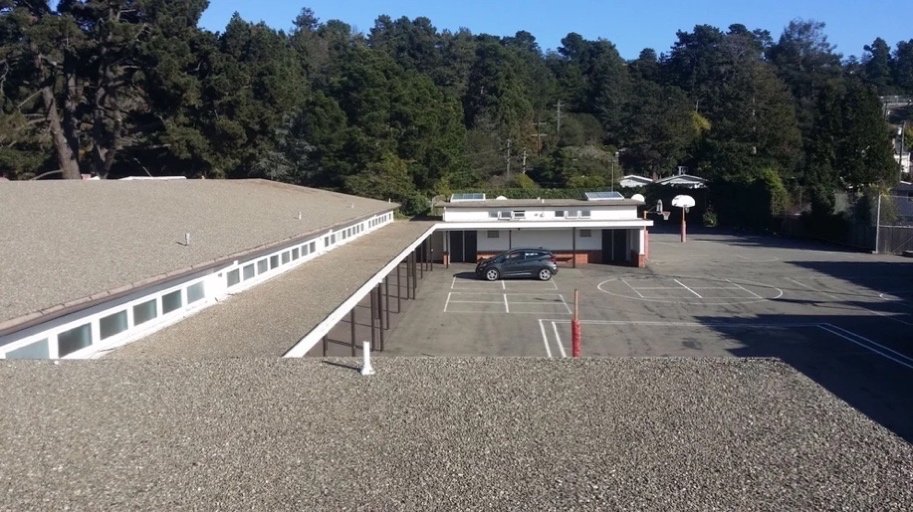
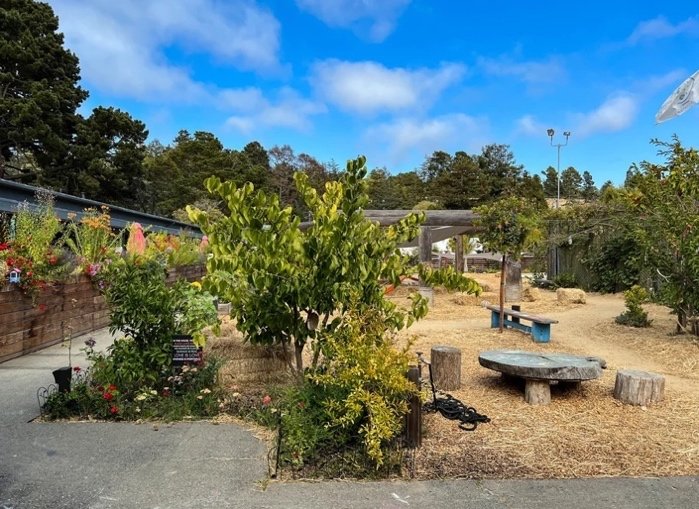
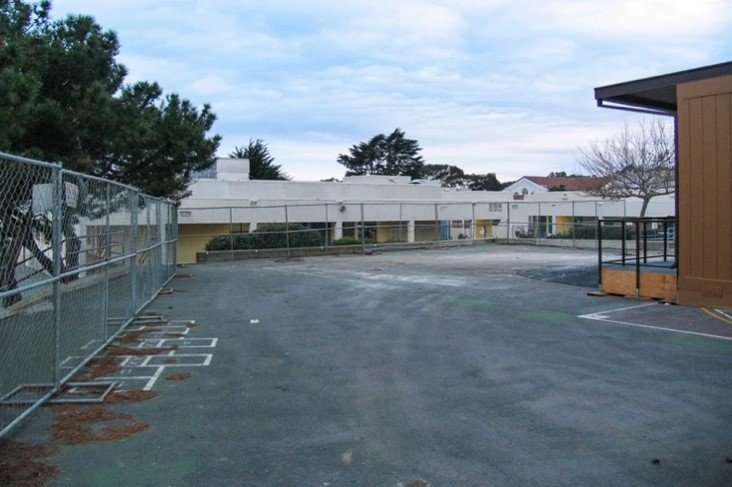
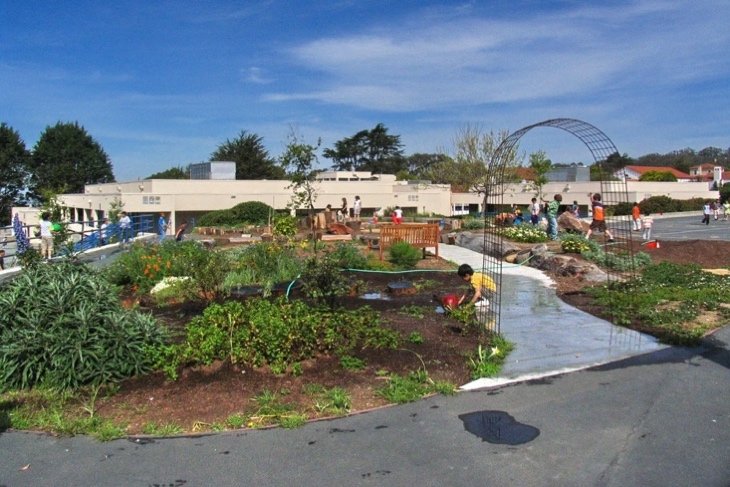
The BSI have renovated 88 schoolyards and installed over 30 outdoor classrooms at schools across the district. The outdoor environment of the schoolyard is intrinsically exciting to children. It offers them immediate access to the world beyond the classroom — a place to test and explore what they are learning about how the world works. The scale and multi-sensory dimensions extend far beyond what is possible to provide in the classroom. The schoolyard provides a lens onto the complexity of the everyday world.
This rich and continually changing environment invites students to explore on their own, and to interact socially. It invites physical movement, and the stillness that comes with close concentration and reflection. It stimulates curiosity and questioning, and reinforces knowledge already gained. It is where many students in the city most closely encounter the natural world. Over the years our outdoor classroom model has greatly evolved. This guide is designed to help you understand how to best use and steward your outdoor classroom. Photos.
Russ Lopez. Richard Campbell, James Jennings. Boston University
Playground Centre
Our handy guide to laying the foundations for a successful playground project.
Community Playthings
Guidelines to design an inviting outdoor classroom that inspires learning and exploration.
The Outdoor Playbook
Thinking outside the classroom: transforming Canadian schoolyards into dynamic environments for learning, growing and playing.
Inspirational Projects
The Inspirational Projects section is meant to do just that – get you inspired! Not all of the projects you see in this section are schools, but we believe that the parks and other projects that we have included each have something unique that could be applied to a school context. Keep in mind that many of the projects shown here fall outside of the budget of most school projects. Use them to help you develop creative design solutions to your own project.
Not sure what you want to include in your school’s outdoor space? Browse these play elements by different categories and keep a list of what you’d like to see in your own project. The richest learning and play environments will include elements from at least several categories to serve many diverse needs and purposes. You can also browse by your child’s grade or by activity.
Play Elements by Grade – Kindergarten to Grade 2
These elements are mainly for young children, focusing on early development and building confidence.
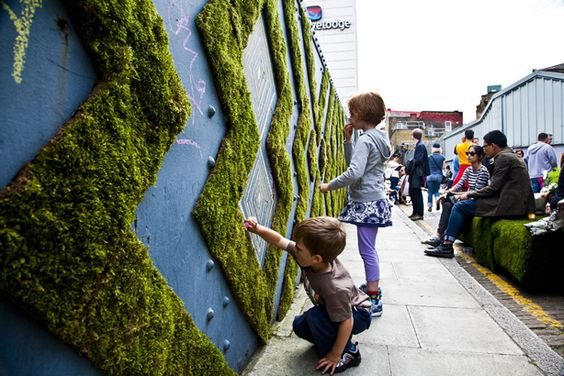
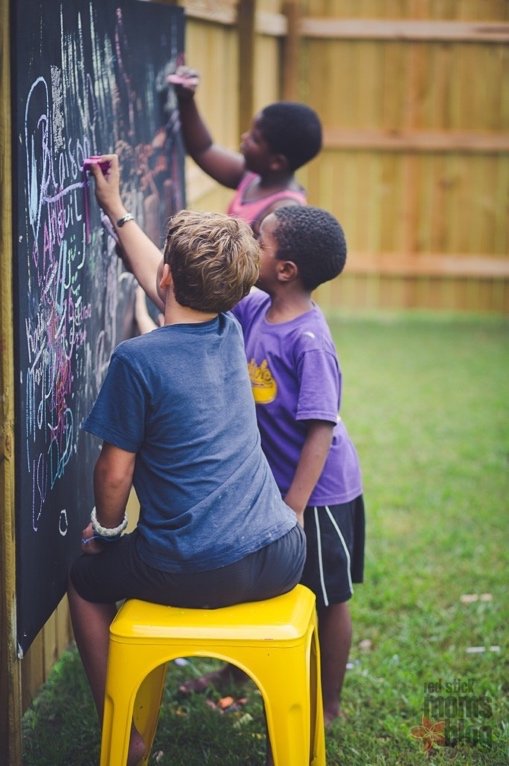
Evergreen Brickworks
A design guide for kindergarten play-learning environments by Evergreen Brickworks, who turned a 19thcentury factory into one of Toronto’s most charming playgrounds for grown-ups and kids alike.
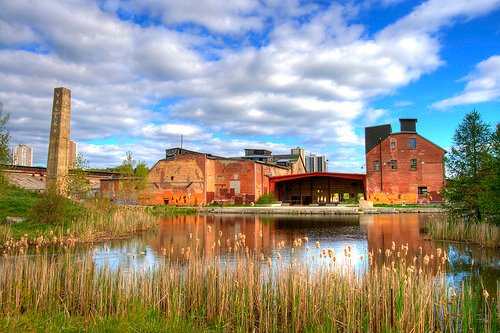
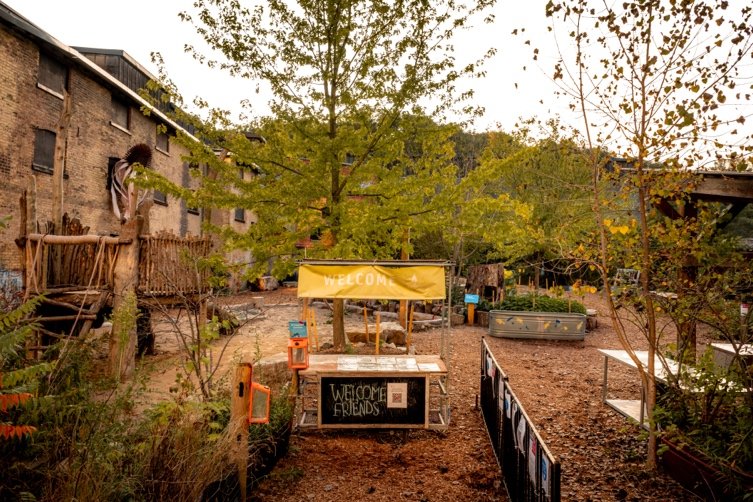
Project Play
Inspire Learning Through Play – Empower your teaching with play-based strategies that spark curiosity, creativity, and deep learning. We provide expert guidance, practical tools, and research-backed strategies to help educators create engaging, joyful classrooms where every child thrives.
Patriquin Architects
How to Design a Natural Playscape
As children, the first lessons we learn are about the natural world around us. And those lessons are important, because they become the framework for much of the learning that follows. That’s one of the reasons nature themes are so prevalent in childcare and early education settings. This includes outdoor play areas, where it seems only natural to children that a table looks like (and in some cases actually is) a tree trunk or a piece of playground equipment is modelled after a fallen tree limb. Creating this kind of environment was the focus of two of our recent projects: Slate School and Friends Center for Children. Slate School in North Haven, CT, is an elementary school that sits on a 25-acre lot that includes forest and open meadow lands. Friends Center for Children shares the property of the Quaker Meeting House in Fair Haven, CT.
Designing a nature-based school
Recently, we have been asking ourselves how to design to support the educational philosophy of curiosity and nature-based learning for a new independent elementary school called Slate School. When designing for a school, in particular, it’s essential to strongly adhere to its core principles in order to create the best environment for learning. To this end, we begin with the climate, natural landscape, and unique elements of a property and start to devise ways to bring the outside in.
Sustainable design for a new elementary school
One of our current projects, which we couldn’t be more excited about, is designing a nature-based independent school, called Slate School, on former farmlands in North Haven, Connecticut. The school’s educational philosophy is centered around discovery, curiosity, and nature. We’re no strangers to design for early childhood education with nature as a core principle, with various projects under our belt including our AIA award winner The Friends Center for Children. But, like all good projects, this design presented its own unique set of challenges. And, like all good designers, we tackled them head on.
Consortium for Health, Intervention, Learning and Development (CHILD)
Community Investment Collaborative for Kids.
From teachers experienced in using the schoolyard as a resource for teaching.
Research
Council of Outdoor Educators of Ontario
The Lawson Foundation
Stanford University
We undertook a systematic review of empirical studies of ECEE programs. Focusing on a 25-year span, we surfaced 66 studies that met our inclusion criteria. We found that participants in such programs spanned the early-childhood age range (birth through age eight) with the majority involving three- to six-year-olds in teacher-led, formal (school-like) programs. The primary outcomes documented in our sample studies included environmental literacy development, cognitive development, and social and emotional development.
Natural England
Two new (2022) reports confirm that high quality learning outside the classroom in natural environments can deliver a wide range of positive health and learning outcomes.
Emilia Fägerstam
Examines how outdoor learning environments influence students’ academic, social, and emotional development. Drawing on research in Swedish schools and Australian environmental education centers, Fägerstam argues that outdoor teaching encourages greater participation, collaboration, communication, and engagement while helping students build stronger connections to nature and place. The study also found that outdoor learning can improve or equal traditional classroom academic outcomes, particularly by making learning more meaningful, memorable, and experiential. (skolporten.se)
Lianne Fisman
This paper reviews existing literature on the importance of nature experiences in the development of the “whole child”, which includes psychological and social development, as well as the acquisition of knowledge. The concept of a “Natural Schoolyard” and its role in child development through the provision of opportunities for contact with the natural world is discussed. This is especially important for urban children who may lack access to these experiences due to characteristics typical of their living environments.
Foundation for Environmental Education (FEE)
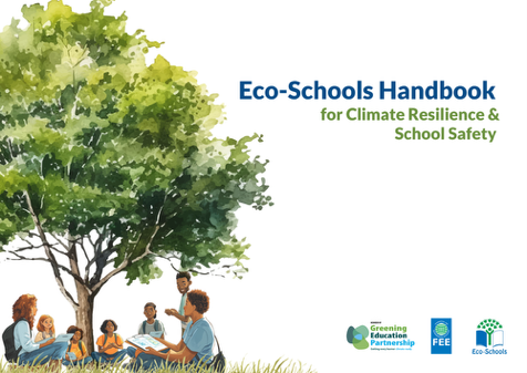
Created to help schools become safer and more resilient places for learning. Drawing on best practices, case studies, and real examples from the international Eco-Schools network, it shows how schoFols are already strengthening resilience, protecting wellbeing, and engaging students in meaningful climate action – while inspiring others to do the same. Through a whole-school approach, resilience is built into learning, facilities, and culture. Many initiatives also extend beyond the school grounds into communities, where schools help raise awareness, improve preparedness, and inspire collective action.
Books
This excellent edited collection of chapters, examples, case studies and debates illustrates the ways in which we can rethink learning spaces. A must for anyone about to embark on redesigning spaces. Also contains many examples of how new technologies can enhance and mediate learning spaces.