Anji Play
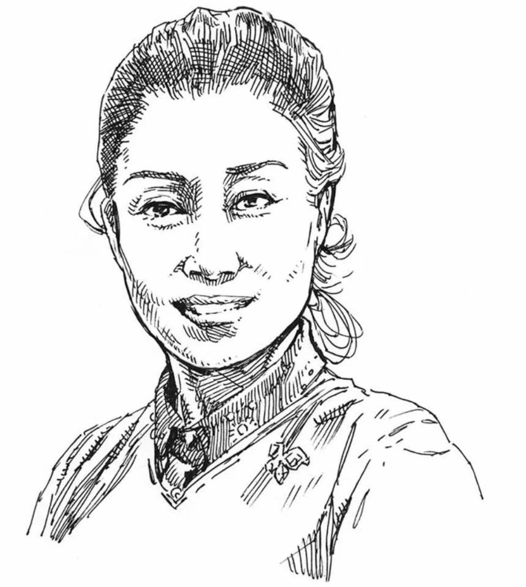
Anji Play is an early childhood education approach and public arts initiative that originated in China, founded by educator Cheng Xueqin. Developed over 15 years in Anji County’s 130 public kindergartens -and despite initial parental protests- the approach has won China’s highest early education award and is reshaping national guidelines, offering a model for fostering joy, creativity and engagement over test-taking and adult-imposed outcomes.
It is centered on the philosophy that unstructured, child-directed outdoor play is the most effective form of learning for young children. In Anji Play, children are given complete control over their play using simple, open-ended materials like wooden planks, ladders, ropes, barrels, and tires, with teachers acting as observers and documenters rather than directors. The program emphasizes risk-taking, problem-solving, and creativity, allowing children to explore their own boundaries in a safe but challenging environment. This approach has gained international recognition for fostering resilience, collaboration, and deep engagement, and it has influenced early childhood practices worldwide.
- Cheng Xueqin.
An interview with Cheng Xueqin.
‘Anji Play’, a video lecture by Cheng Xueqin.
Dr. Jie-Qi Chen, formerly Professor of Early Childhood Education at the Erikson Institute in Chicago, reflects on her visit to Anji, China, where she spent two days observing the philosophy in practice. Having followed Anji Play for nearly two decades, Chen traveled to China to deepen her understanding of how the approach works in real classrooms and to learn directly from teachers, school leaders, and founder Cheng Xueqin.
Article written by Tim Gill, former director of the Children’s Play Council (now Play England) and a global advocate for children’s play and mobility, and author of the Rethinking Childhood blog,
‘Risk and the Role of the Teacher’, a Facebook video (6 minutes) on Anji Play.
‘Risk and the Role of the Teacher’, a Facebook video (6 minutes) on Anji Play.
Crossing Borders in a Shanghai Kindergarten Through Anji Play: A Cultural Psychology Reflection PDF
An academic study of ‘the role of the Anjii Play in Kindergarten in the Chinese context of schooling. [ …] The article focuses on the relationship between spontaneous and guided activities using the Anji Play method and their repercussions on the process of boundary crossing for the young students.’
‘The Anji Play Ecology of Early Learning’, an overview of Anji Play as part of their series on Childhood Education Innovations by Childhood Education International.
‘Anji Play – Radical joy in early childhood education’, from the Australian website Care For Kids.
‘The Five Principles of Anji Play’, by Denisha Jones PhD, from the website Defending the Early Years.
The information below comes from the official Anji Play website, https://www.anjiplay.co/
About Anji Play
Overview
Anji Play 安吉游戏 is a philosophy and approach to early education developed over the last two decades by Ms. Cheng Xueqin 程学琴 for the public early childhood programs of Anji County, Zhejiang Province, China. Centered on a fundamental belief in the ability of the child, Anji Play is committed to the right of every child to experience extended periods of self-directed, uninterrupted, and unguided play.
Anji Play is the comprehensive, full-day curriculum of 130 public schools in Anji, serving 14,000 children ages 3-6. It has pilot and demonstration programs in every county in Zhejiang Province, and every province in China, and is the basis for a variety of partner programs around the world.
Ms. Cheng, the founder of the Anji Play approach, is a tireless advocate for the child’s right to True Play, and shares her insights and experience with educators, policy-makers, researchers, and families outside of China through her partnership with Anji Education, Inc.
-Dr. Sherry Cleary, Dean of Early Childhood Initiatives, City University of New York
History
For many years the approach to early childhood education in Anji County was that of the majority of Chinese schools: get kids to sit quietly at their desks until they were ready to return to the care and supervision of their parents at the end of the day. But Ms. Cheng, whose position put her in charge of those 130 preschools, would soon change the status quo. From the eras of no play to false play to true play, read more about the history and development of Anji Play here.
-Dr. Denisha Jones, Howard University
True Play
True play is deep and uninterrupted engagement in the activity of one’s choice. A foundational concept in the Anji Play approach to early childhood care and education, read the True Play Statement and about the rights and responsibilities of true play here.
- Dr. Bo Stjerne Tomsen, LEGO Foundation
Principles and Practices
In the process of prioritizing true play, Ms. Cheng and the early educators of Anji County identified love, risk, joy, engagement, and reflection as interconnected and mutually reinforcing values that form the basis for a clearly articulated philosophy and approach. Read about these five principles and the foundational practices of Anji Play here.
- California Early Head Start Educator
Environments and Materials
Anji Play is committed to practices of creating safe, love-filled environments, focusing on authentic relationships of trust and listening, maintaining a stance of uncertainty and discovery about every child’s ability, setting aside adult goals and needs, and recording and sharing and reflecting together. This principle-based approach informs the design of physical materials and environments that seek to provide the basis for the child and educator to be independent, capable, and deeply engaged together. Read about Anji Play environments and materials here.
- Cas Holman, designer.
People
Ms. Cheng Xueqin, founder of Anji Play, is a former (retired) leader of the Early Education Section of the Anji County Department of Education. In 2014, Jesse Robert Coffino joined Ms. Cheng to share her work and the work of the educators of Anji County outside of China. In 2019, Anji Education, Inc. was founded in California to provide resources about Anji Play, professional learning and growth opportunities, speaking engagements, and rights management. Read about the people involved here
Additional Resources
Summarizes the approach, the role of teachers and technology, and relationships with families and communities.
Practice Guides
These guides include tips for the present, mindful, intentional, responsive educator/caregiver committed to meeting all learners where they are.
Provides straightforward examples of “stepping in” to a child’s play, and some alternatives that allow us to gain a deeper understanding of the child’s needs and abilities.
Provides helpful hints for using readily available technology to record play and reflect on those recordings to deepen our understanding and create more responsive environments.
Provides advice on facilitating learner reflection on their own joyous experiences of exploration and discovery.
Provides a basic framework for understanding the stages of educator development in environments that seek to meet and then support every learner where they are.
No longitudinal studies have yet been conducted on outcomes for children who have taken part in full-time Anji Play programs. A large body of individual case studies and anecdotal evidence, along with the support of current research, has allowed the educators and administrators of Anji to focus their time on developing the practice and approach rather than on measuring program outcomes.
While Anji educators are not focused on designing or implementing peer-reviewed systems of quantitative research, we welcome researchers to learn more about the work of Anji Play, and encourage all researchers to share research proposals and ideas with us.
In Anji Play programs, teachers and children are both engaged in a constant process of discovery, hypothesis-generation, and reflection. Therefore, both children and teachers in Anji Play programs are engaged in a constant process of research.
We often describe traditional academic research as non-practitioners describing practice. Below are links to presentations by well-known educators and researchers at the 1st International True Play Conference: TruePlay2019 and a bibliography of important research that describes the role of risk in play and learning, theories of cognitive development, and the relationship between block-play and literacy.
Research Presentations on the Philosophy and Practice of Anji Play (video)
Deep Learning in Anji Play
Professor Feng Xiaoxia, Beijing Normal University
Anji Play: Inspiration for Deepening Chinese Educational Reform
Professor Li Jimei, East China Normal University
Anji Play: Making the Invisible Visible in Framing and Play-based Curriculum
Dr. Doris Cheng, Tung Wah College, Hong Kong
Humans Need Play: the Contributions of Anji Play (and some concerns)
Dr. David Whitebread, University of Cambridge, UK
Anji Play in Context
Dr. Frances Rust, New York University
Anji Play and the Cultural-historical Theory of Lev Vigotsky
Dr. Nikolay Veraksa, Moscow State University
Rethinking Risk: Are Children Too Safe for Their Own Good?
Dr. Mariana Brussoni, University of British Columbia
Observation and Documentation of Children’s True Play: Some Research Questions to Consider
Dr. Peter Mangione, WestEd
What can research(ers) learn from (Anji) play?
Dr. Andreas Roepstorff, Aarhus University, Denmark
And presentations by:
Professor Hua Aihua, East China Normal University
Dr. Lawrence Cohen, Playful Parenting
Dr. Tovah Klein, Barnard College, New York
Dr. Mitchel Resnick, MIT
Dr. Rona Jualla van Oudenhoven, Durham Children’s Aide Society, Canada
Dr. Nico van Oudenhoven, International Child Development Initiatives
Dr. Yan Chaoyun, Sichuan Normal University