The Montessori Materials - Resources
Julia Volkman
The founder of Maitri Learning has many practical suggestions on her Pedagogy Blog, including the following pair of articles:
“We hear a lot of talk about the Montessori Materials, but what exactly are those materials? How do we determine if something ‘qualifies’ as being ‘Montessori’ or not?”
“I’ve been working with Libertas Public Montessori School in Memphis. One of our many projects is to open a new Primary class. So, I’ve been investing a great deal of time in looking at material suppliers, thinking about plants, and measuring heights for tables and chairs. Since I know I’m not the only one doing this work, I decided to post my thoughts and discoveries here so we can all benefit…and maybe get a few of you to post some replies!”
Angeline Lillard - Supplemental Materials
Dr. Lillard is Professor of Psychology at the University of Virginia, author of the book ‘Montessori: The Science Behind the Genius’ and her website https://www.montessori-science.org/ is an invaluable resource on many aspects of the Montessori approach. She has published a number of research papers and articles that address the issue of supplemental materials and “the preponderance of non-Montessori materials that she sees in many Montessori environments and considers the effect that these materials may be having on the effective application of the Montessori approach,” including:
Preschool Children’s Development in Classic Montessori, Supplemented Montessori, and Conventional Programs. PDF
‘Removing Supplementary Materials from Montessori Classrooms Changed Child Outcomes. PDF
‘What Belongs in a Montessori Primary Classroom? Results from a Survey of AMI and AMS Teacher Trainers. PDF
Caitlin O’Connor
Practicing Reality: Play in the Montessori Environment PDF
“This action research aims to introduce materials and activities that could be termed “play” or contain play-like qualities into the classroom with the same amount of preparation, analysis, and sequencing as all of the other Montessori materials, with an informed perspective based on knowledge and observation.”
Margaret Homfray
There are many YouTube videos of Ms. Homfray lecturing on Montessori theory or practice, including this one.
Margaret Homfray
Photos of Montessori Materials
From the website of Matt Bronsil: I was born into Montessori, with two parents who worked as both Montessori teachers and teacher educators. I live in Taiwan and teach English as a Foreign Language using the Montessori Method. My blog focuses on historical aspects of Montessori, as well as a focus on what I do every day: teach foreign languages in the Montessori classroom. You can find me here or find my books on amazon.com.
Matt’s website is a wonderful source of photos and articles on Montessori during the years from 1911 to 12:
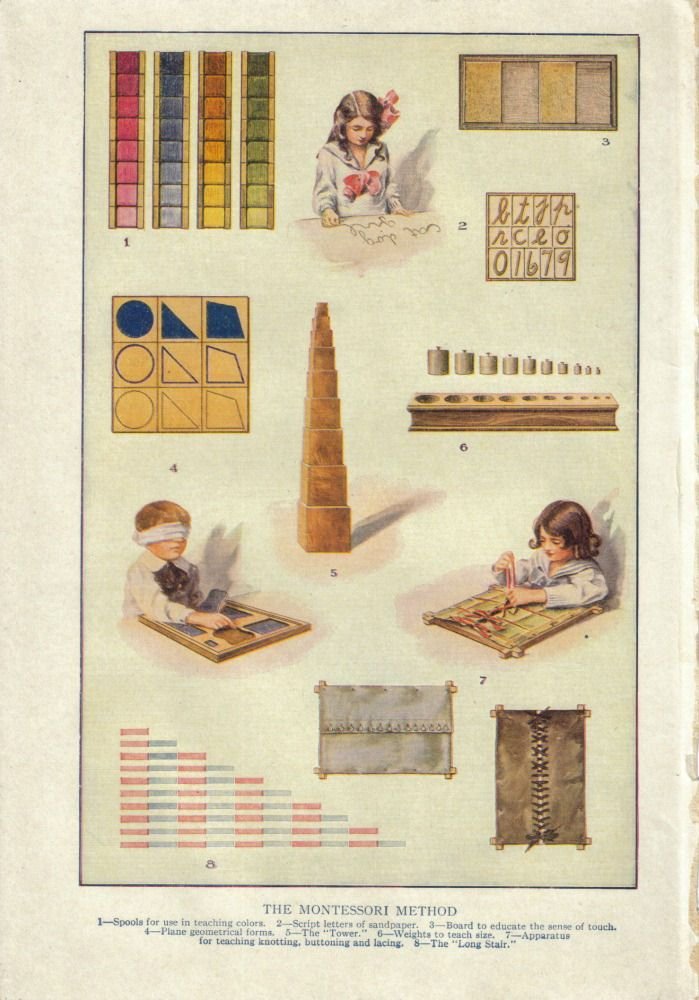
Montessori Photos in McClure’s Magazine – McClure’s Magazine featured many photographs of Maria Montessori’s early work. Find photographs of early Montessori schools, Maria Montessori, and historical photos about Montessori here. You may also wish to read the articles the photographs appeared in. Due to the amount of Montessori photographs, this page may take some time to load.
Edouard Séguin
More on this topic here
It’s difficult to locate much online information on Séguin -in English at least- and this is illustrated by fact that the two articles I was able to source were both written more than 100 years ago:
By Katrina Myers, The Journal of Education, Vol. 77, No. 20 (1930) (May 15, 1913), pp. 538-541, 550-551.
By Mattie Crumpton Hardy (1917).
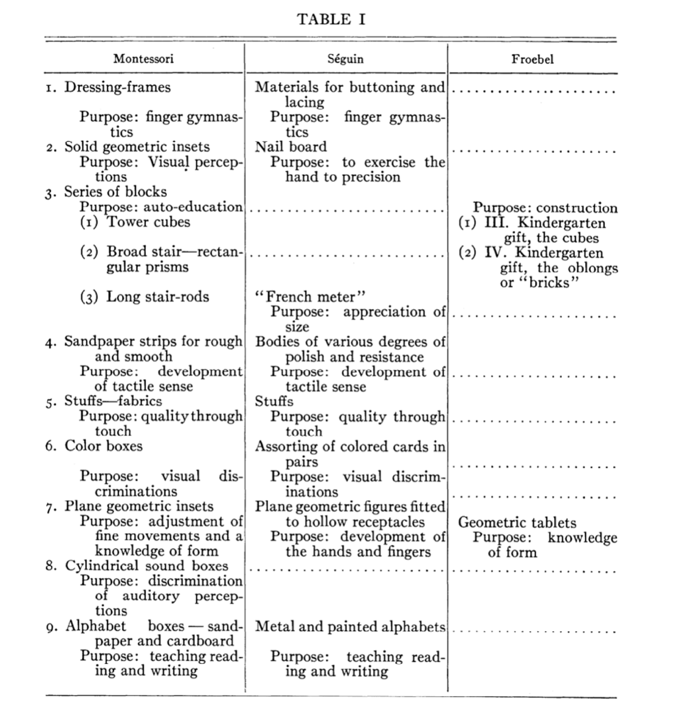
The following table comes from this article, and details the overlap in the apparatus used by Froebel, Séguin and Montessori, as does this:
“Among the first educational gymnastics used in the Montessori method are the finger exercises with the dressing-frames. In Séguin’s Idiocy: Treatment by Physiological Methods the hand is trained to precision by the finger gymnastics of buttoning, unbuttoning, and lacing and unlacing.”
Historic Materials
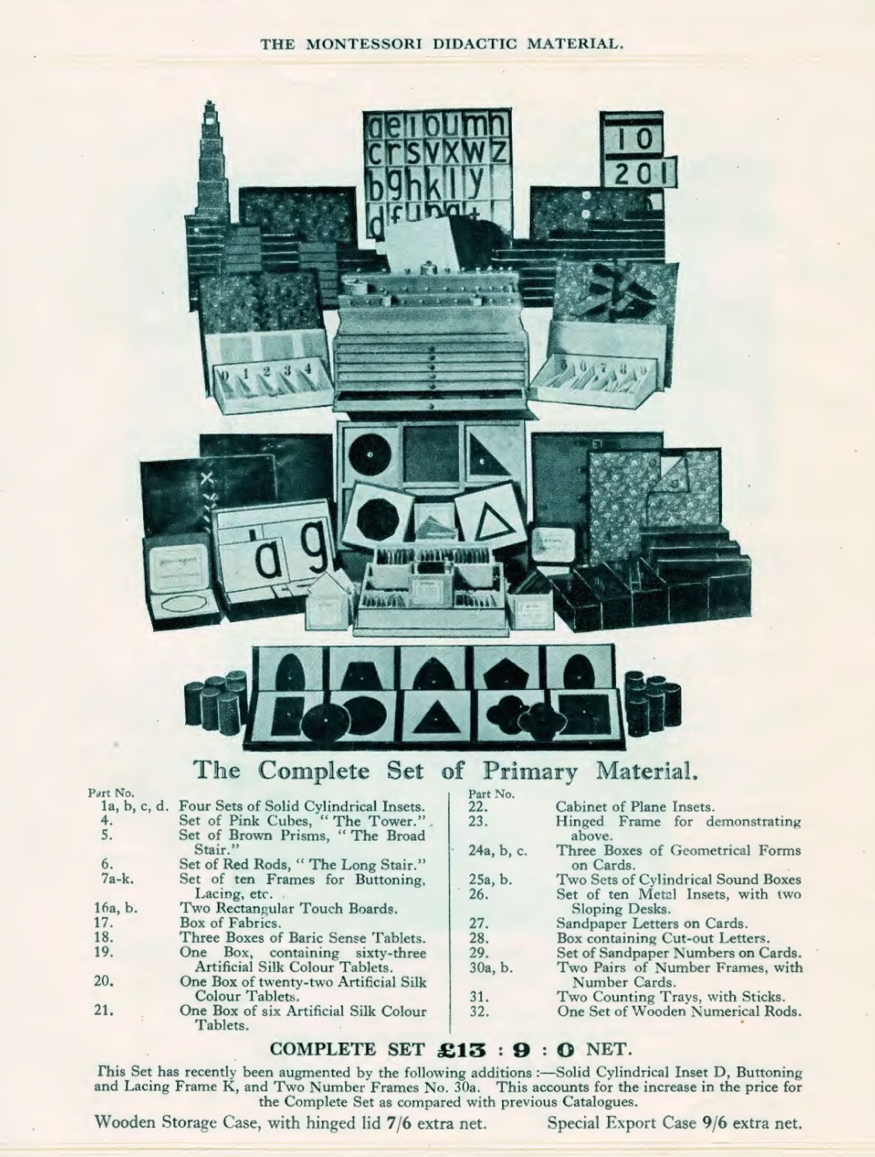
The AMI Montessori Archives are gradually adding more material to their website, including some photos of historic materials, which is where I found this Montessori Materials catalogue from the 1930’s, featuring ‘The Complete Set of Montessori Didactic Materials’ [my emphasis] which comes to a grand total of 32 materials. How times have changed: the current Nienhuis catalogue runs to 408 pages.
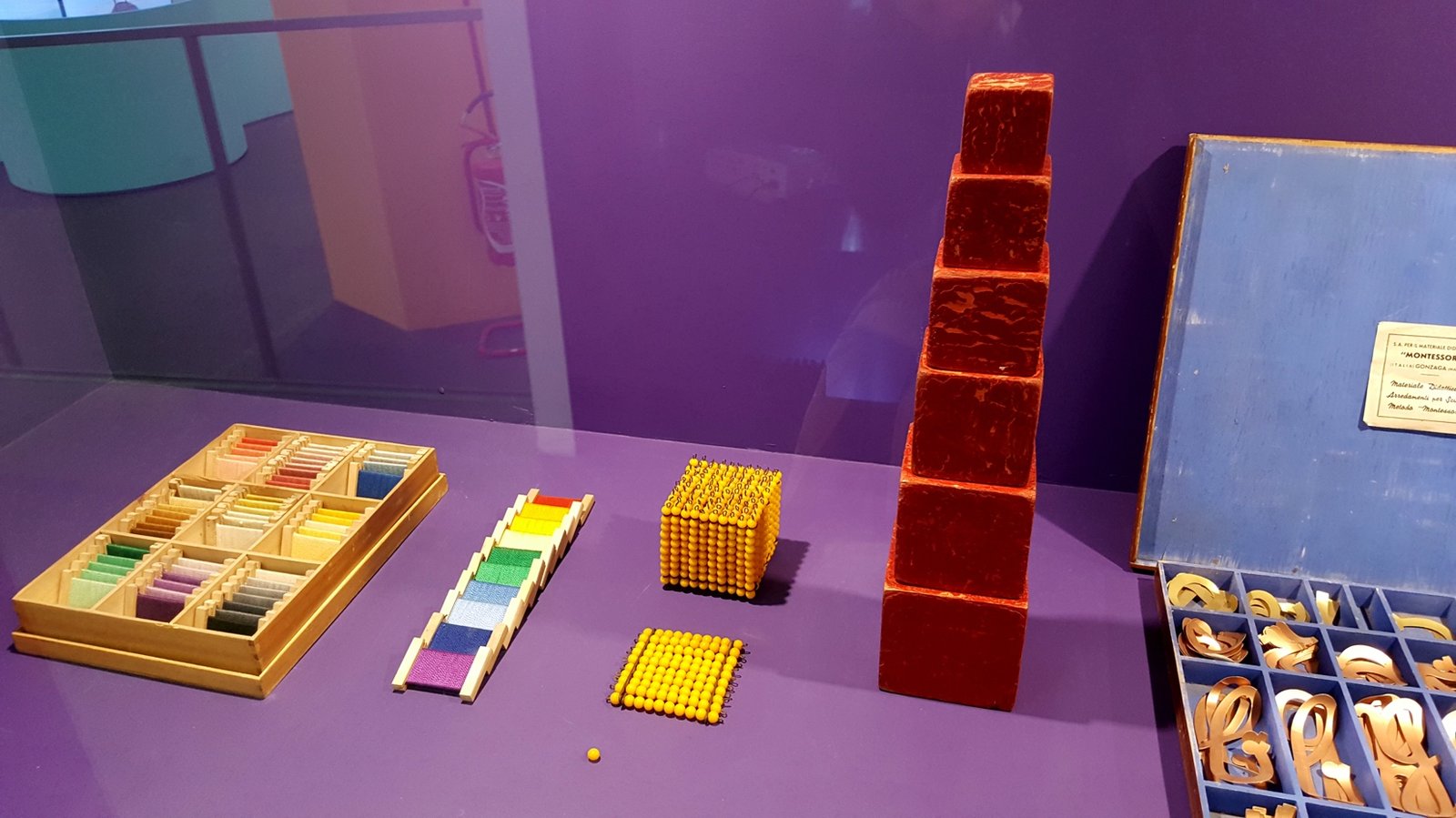
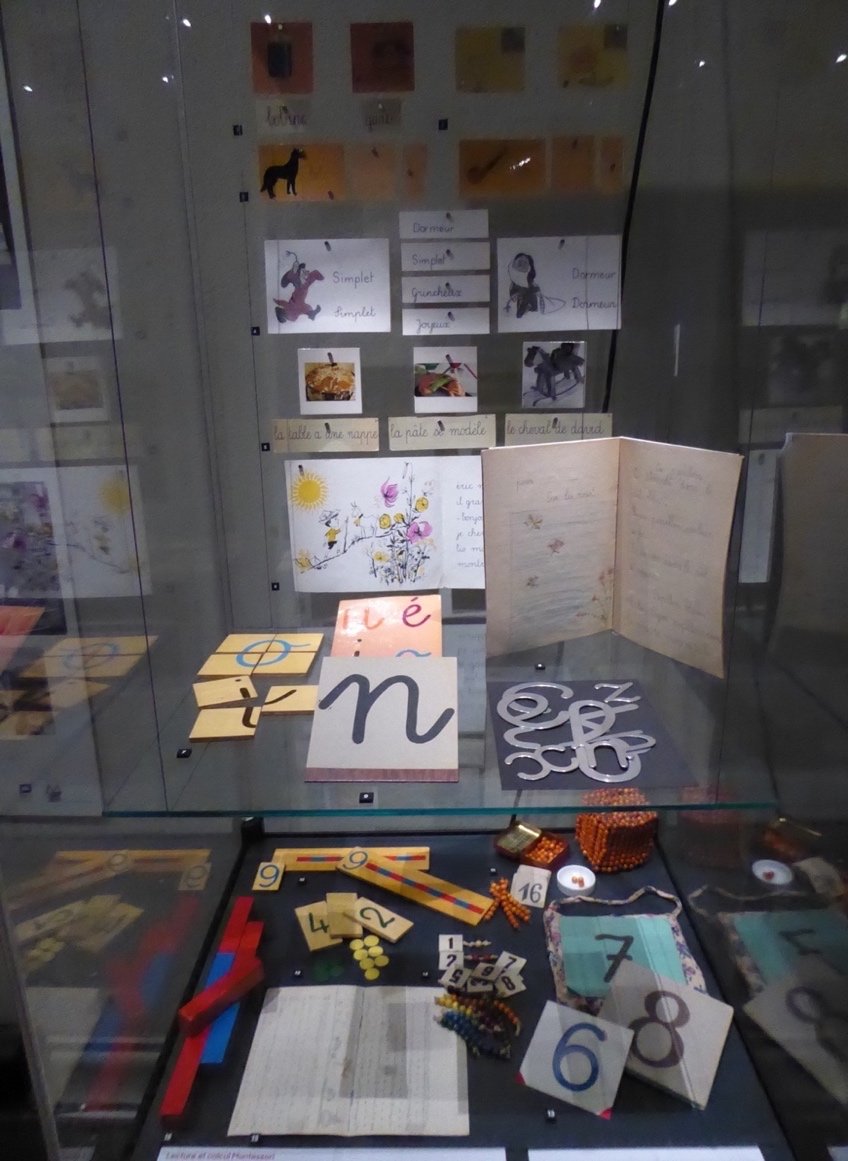
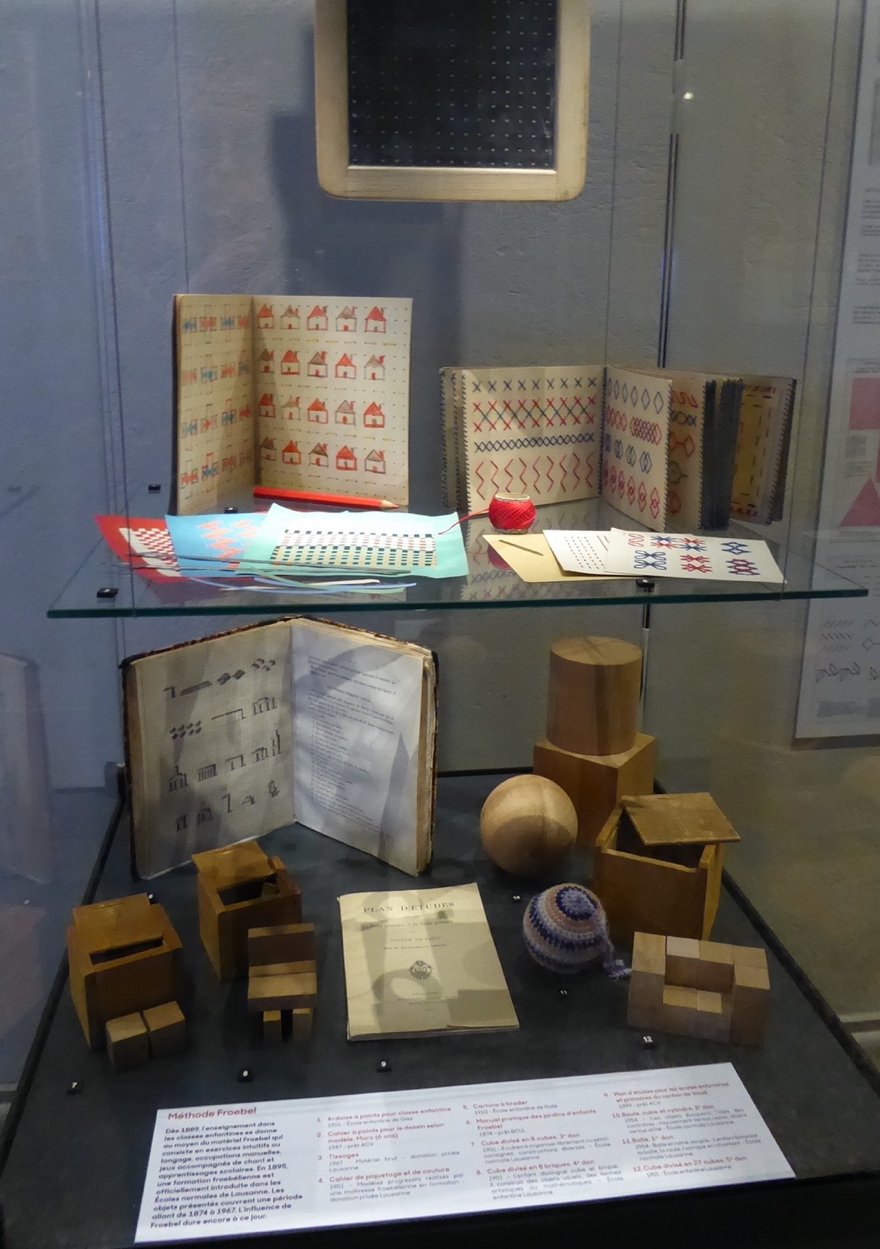
A few years ago, I was in Lausanne, Switzerland and visited the Museum of the Schools of Vaud, where I took some photos of their collection of historic Montessori Materials. There are more photos on the museum webpage devoted to Montessori.
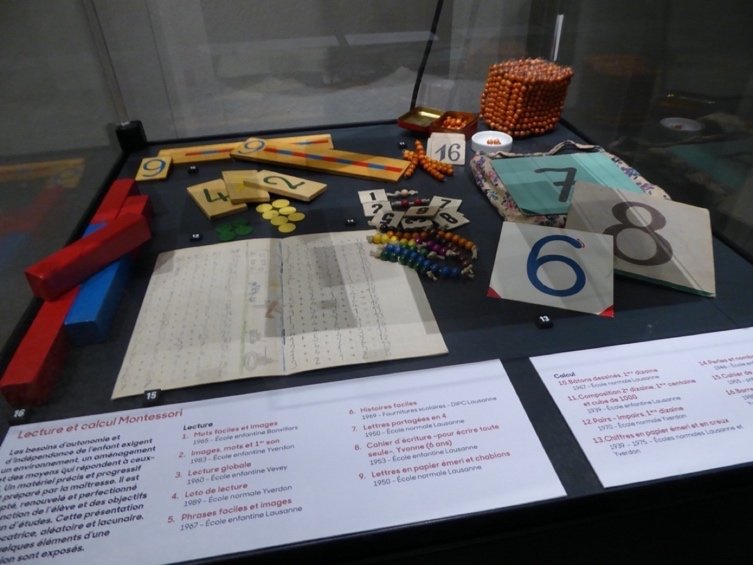
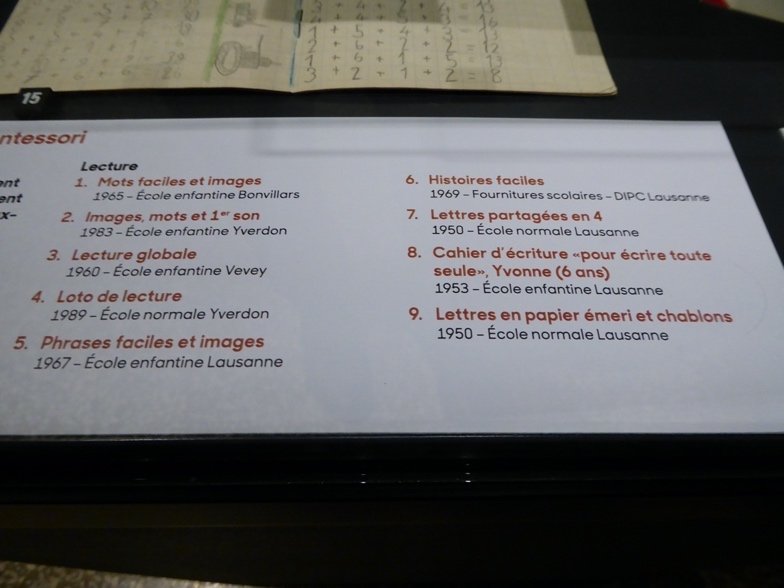
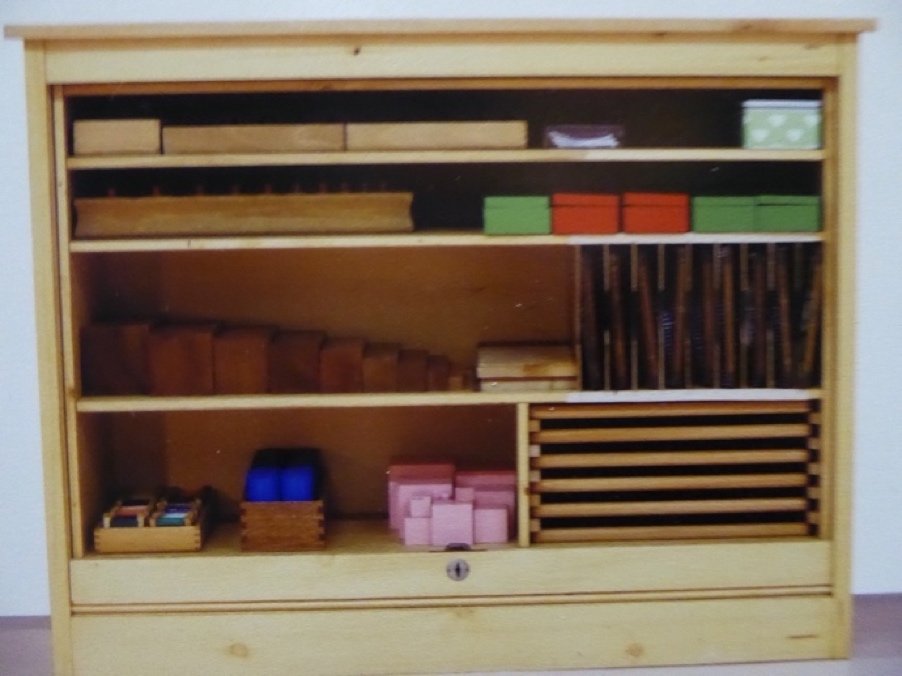
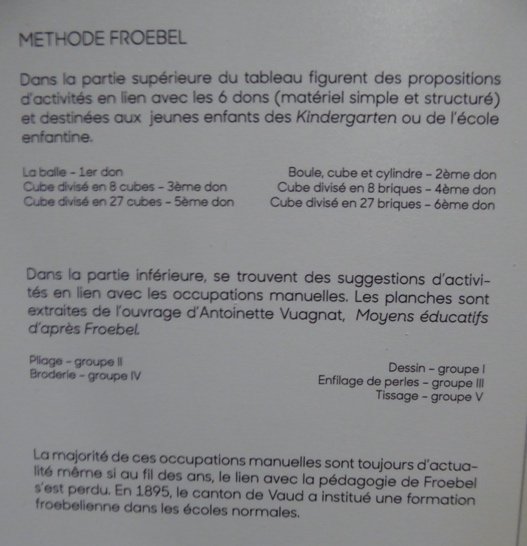
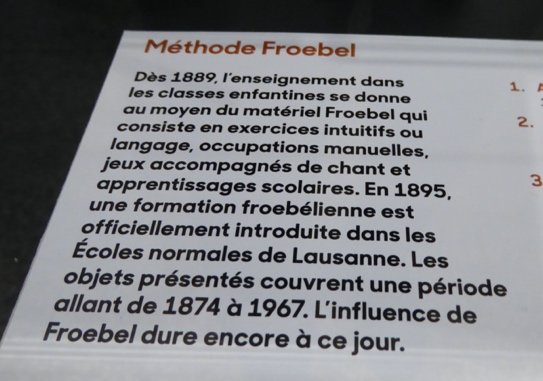
The museum also has a collection of Froebel’s gifts, as well as some templates for creative activities such as drawing, threading beads, embroidery, etc. à la Froebel. Further information on Froebel’s gifts can be found here.
I took this photo at AMI headquarters in Amsterdam, the Netherlands in 2020.