If you only have time to read one book by Maria Montessori, I recommend Dr. Montessori's Own Handbook. (1914)
This short, practical guide is an introduction for parents and teachers to the core principles and methods of her educational system and is a more accessible entry point than her dense scholarly works, focusing on the how-to for children aged 3‑6.
Key Principles Summarised
The Child's Inner Guide
Children have a natural, innate drive to learn and perfect themselves. The adult's role is not to mould them, but to prepare an environment that allows this internal development to unfold.
The Prepared Environment
The classroom is meticulously arranged to be child-sized, orderly, and beautiful. Everything has a specific place. It contains purposeful didactic materials designed to invite independent use and auto-education.
Freedom within Limits
Children are given the freedom to choose their activities, work at their own pace, and repeat exercises as long as they wish. This freedom is grounded in respect for the environment, others, and the materials.
The Role of the Adult
The teacher is an observer and guide, not a lecturer, demonstrating materials precisely, then stepping back to allow the child to discover and learn through their own effort, connecting the child to the environment.
Auto-Education
The didactic materials are self-correcting, so the child can see their own mistake (e.g., a cylinder that doesn't fit) without needing an adult to point it out, developing independence, concentration, and problem-solving skills.
Key Areas and Examples of Materials
Practical Life
Exercises like pouring, dressing frames, cleaning. Develop coordination, concentration, independence, and care for the environment.
Sensorial Education
Materials like the Pink Tower, Sound Cylinders, Colour Tablets isolate and refine the senses (size, weight, colour, sound, texture), forming the foundation for all future intellectual development.
Academic Foundations
Writing Introduced before reading, using tactile Sandpaper Letters and movable alphabets.
Reading Grows naturally from writing.
Arithmetic Uses concrete materials like Number Rods and beads to understand quantities and symbols.
Ultimate Aims
The method aims to develop not just academic skills, but the whole child, including independence, and self-discipline, deep concentration ("polarisation of attention"), love of order, respect for self, others, and the environment, producing a joyful, confident learner who sees education as an empowering, lifelong process.
If you’re looking to delve a little deeper, the following books are the ones that have (mostly) stuck in my memory, more than 25 years after I first read them.
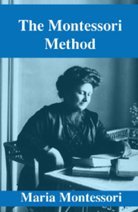
Her first and foundational work in which she provides concrete descriptions of the original Children's House environment, the specific didactic materials and detailed examples of how lessons are presented and daily activities are structured, along with the role of the teacher and the preparation of the classroom environment. Montessori revised and updated the book over the course of her life, and it was published just a few years before her death as The Discovery of the Child (1948) PDF PDF
Describes observable behaviours of children at different stages, explains the importance of a prepared home and school environment, and offers guidance on addressing common challenges by understanding the child’s developmental needs. Useful summary here.
So many books, so little time
One of the first things I do when I look at a school website is to check their Recommended Reading: if it’s a list of books by Maria Montessori, it tells you a lot about that school, but if at least half of the books are by other authors, then it also says something. Humans have been educating their children for thousands of years, and the only person who has ever said anything valuable is an Italian lady during the first half of the 20th Century? In retrospect, my trainers’ advice to “read Montessori’s books again” spoke volumes about their approach to education, the approach sanctioned by AMI: Maria Montessori has all the answers, so read her, then read her again. As an example of this, this is the reading list from the AMI training centre in Sydney, Australia:
Required Readings
Each student is required to read selected materials and participate in discussions on assigned topics throughout the course. The assigned readings are from the required course reading. If the assigned reading comes from another source, the text will be provided for students.
By Dr Maria Montessori
The Secret of Childhood
The Discovery of the Child
The Absorbent Mind
The Formation of Man
Education and Peace
The Advanced Montessori Method, Vol. 1
1946 London Lectures
Citizen of the World
By Mario M. Montessori, Sr
The Human Tendencies and Montessori Education (AMI Pamphlet).
Recommended Readings
By Dr Maria Montessori
From Childhood to Adolescence
To Educate the Human Potential
Education for a New World
The Child in the Family
The Child, Society and the World
By Silvana Quattrocchi Montanaro
Understanding the Human Being.
By Mario M. Montessori, Jnr
Education for Human Development
By E.M. Standing
Maria Montessori: Her Life and Work.
Other Books of Interest
Maria Montessori, An Anthology
Montessori, A Modern Approach - Paula Polk Lillard
Montessori Today - Paula Polk Lillard
The 1913 Rome Lectures - Dr Maria Montessori.
‘Other Books of Interest’ - in case you haven’t had your fill of the boundless wisdom of Maria Montessori, here’s some more books about her…
The following is a chronological list of books by Maria Montessori, with download links when available.
1909
Details the observations, scientific experiments, and pedagogical principles Montessori developed while working with young children at her first school, the Casa dei Bambini, in 1907.
Gerald Lee Gutek’s book provides a historical and analytical overview of Maria Montessori’s educational philosophy. Beginning with a detailed biography of Montessori, Gutek contextualises her pedagogy within its early 20th-century origins, framing Montessori's work against both historical and contemporary educational movements, then analysing the method’s key principles, followed by an abridged and annotated edition of The Montessori Method. This edition includes notes and supplementary documents such as critical perspectives from William H. Kilpatrick.
1914
Gives a more detailed description on how to use Montessori's didactic materials.
1915
1922
1928
1932
1937
1939
"Erdkinder" (meaning "children of the earth") is an educational framework designed for adolescents (ages 12‑18). It proposes a reform of secondary education where teens live and work on a rural farm, combining rigorous academics with practical, real-world work to foster independence, responsibility, and social contribution.
1943
1946
Illustrates how the teacher's best teacher is the child, how observing and nurturing the child’s natural psychic development can transform education. It emphasises unlocking human potential and shifting the teacher's role from a repressor to an enthusiastic collaborator with nature.
1946
Lectures Montessori gave as part of the 1946 teacher training course in London - having just returned from seven years in India - which became the foundation of AMI’s 3‑6 courses.
1948
Serving as a direct sequel to The Secret of Childhood, this work expands her educational philosophy into middle childhood (ages 7‑12), adolescence (ages 12‑18), and university-level education, outlining how a child undergoes complex "metamorphoses" rather than simple linear growth as they transition across age brackets.
A revised, restructured, and significantly expanded English edition of The Montessori Method, this edition represents a mature reflection of her educational philosophy, incorporating decades of additional observation, practice, and refinement. While the original 1912 book heavily focused on the "scientific pedagogy" and the physical materials used in the classroom, the 1948 revision shifts its core focus towards the psychological and spiritual nature of the child.
Montessori's foundational book introducing Cosmic Education, her educational philosophy for children aged 6 to 12. It emphasises imagination, interconnectedness, and presenting the universe as a grand, interconnected story to naturally awaken a child's desire to learn.
Compiled from her lectures, this book explores the psychology and natural development of children, emphasising that true childhood work is not play, but rather an absorbing process of self-creation that requires adults to step back and act as respectful guides.
Twelve Talks Broadcast from the Madras Station of All India Radio June 1‑12, 1948.
1949
Based on the lectures given at Ahmedabad, during the first training course to be held after her internment in India, this book is not an easy read for someone unfamiliar with the Montessori philosophy in that it is quite dense with theories on the development of the young child from 0 to 3 years, when they possess an "absorbent mind," a unique mental power to effortlessly and unconsciously sponge up language, culture, and habits from their environment without conscious study. Montessori explains that this development happens in two phases: unconscious absorption (ages 0‑3) and conscious refinement through hands-on work (ages 3‑6) and is guided by temporary "sensitive periods" of intense focus on specific skills.
Montessori talks about the psychology of the child during the first four years of life, about the formation of the intelligence of a human personality, how is it formed, by means of what processes and in obedience to what laws.
Montessori Nuggets
Have a very detailed list here.
‘This list is as many of the Montessori books I could locate at the time of the list's creation that are associated with a Montessori training center in North America. Each training centre has its own list of required reading of Montessori books. Here I have noted the most prevalent indications with an AI, a P or an E.
AI = Assistance to Infancy
P = Primary Montessori required reading
E = Elementary Montessori required reading.’
Bibliography
The Montessori Bibliography Online
A Resource for the Global Montessori Community PDF
‘The Montessori Bibliography Online (MBO) makes information about Montessori education and the Montessori movement more accessible through an online interface that includes links to digitized source materials. Historically, Montessori bibliographies and indexes have been published in physical form and include references to other sources, but a direct link is absent. This database builds on previously compiled indexes to consolidate citations into a comprehensive repository with an intuitive user interface and a robust search capability. Additionally, the MBO provides hyperlinks to digitized source material. Although this type of tool is not unprecedented in the larger research and educational landscape, it is novel within the domain of Montessori education. This methodological essay discusses the steps I took to compile and develop the MBO. Beginning with a review of the literature and legal matters, the discussion describes the methods and processes employed. It concludes by outlining future directions for the MBO.’
The MBO is accessible at https://montessoribib.ku.edu
The Montessori Foundation
Have an authoritative/