There are two very detailed overviews of the Montessori curriculum available online, neither from AMI, inevitably.
Montessori Australia
The Montessori Australia Foundation make their overview available as a free download.PDF
“Mathematics in the Children’s House builds on and extends the exercises of practical life and the exercises of the senses, as well as the many mathematical experiences children encounter incidentally in their daily lives, including experiences with:
- Visual representation of mathematical concepts
- Pattern and order
- Problem-solving
- Cardinal and ordinal numbers
- Place value
- Operations (addition, subtraction, multiplication, division)
- Fractions
- Spatial relations e.g. placement of objects, spatial patterns, one-to-one correspondence of objects and two-dimensional shapes
- Measurement e.g. length, mass, time, temperature, volume, perimeter, area
- Word problems (addition, subtraction, multiplication, division).
As they work with the exercises of the senses, children are making judgements in relation to distance, dimension, graduation, identity, similarity and sequence.”
The Montessori Foundation PDF
The second overview is from the Montessori Foundation, based in Florida. The mathematics strand within their ‘Curriculum Scope and Sequence (0 to 12)’ provides a standardized structural framework that bridges the classic AMI and AMS albums, framing mathematics as a continuous, unified trajectory of exploration from birth until the onset of adolescence. It breaks down concepts into multi-year developmental cycles, tracking the pivot where the child transitions from the visual and spatial discrimination of the Sensorial materials into the abstraction of Numeration, detailing the gradual reduction of sensory feedback, and mapping out exact lessons, strands, and measurable learning outcomes, thus serving as a master blueprint for the guide, protecting the sequence of presentations across successive planes of development.
Montessori Teachers Collective
Maitri Learning
The Montessori-Minded Mom
Mathematics Albums

There are quite a few albums available online. I particularly like the ones produced by Margaret Homfray and Phoebe Child, who first met Maria Montessori in 1929, collaborated with her for more than two decades, and later established Montessori teacher-training centres in London, Australia and the United States. The albums they created are available for sale here.
Other options include Montessori Album, Wikisory and Montessori Commons.
Books by Maria Montessori
Maria Montessori was an inspirational educator, but a less than inspirational writer. Of the 15 books that she wrote, if you really feel like you have to read something, the following are the ones I would recommend:
The Montessori Method Introduces core principles, including early math concepts.
The Discovery of the Child Discusses the role of sensory and concrete materials in learning math.
The Absorbent Mind Explores cognitive development, including mathematical thinking.
For those who prefer to digest the writings of Maria Montessori in bite-sized chunks, maybe have a look at the brief lecture at the Cambridge Education Society, Trinity College, 1935 on the topic of The Psychology of MathematicsPDF
Non-Montessori Resources
Each of the three organisations below explore the key ideas in Mathematics for the 3-6 age group, ideas which correspond at many points with the Montessori Mathematics curriculum.
NRICH - Early Years Mathematics
Attached to the Faculty of Mathematics at Cambridge University, NRICH have a wealth of advice for parents on how to introduce Mathematics to young children: “Our Early Years resources will support you as you develop the initial building blocks for young children’s mathematical thinking, reasoning and problem solving. Browse this section to find the latest articles for Early Years practitioners, examples of children's thinking, and activities for children arranged by topic.’

Resources for Parents
Activities to help you start conversations with your child about number.
Everyday contexts that offer ways to develop your child’s spatial thinking.
Everyday activities to help you introduce your child to measuring.
The picture books in this collection will help you start mathematical conversations with your child.
‘In recent years there has been an increasing amount of research demonstrating that children's early spatial thinking predicts their mathematical achievement and understanding, and research has shown that young children's spatial rather than numerical abilities predict their overall mathematics achievement: the key skills are visualising what shapes will look like when they are combined or rotated. A number of studies have also shown that these abilities are not innate, but teaching young children spatial skills actually improves their maths, including their number understanding and general thinking skills.’ By Dr Sue Gifford.
The Erikson Institute - Early Math Collaborative
Based in Chicago, the Erikson Institute have many great resources on the theory and practice of Early Years Mathematics. A good place to start is Big Ideas of Early Math - ‘Our set of Big Ideas map the key math concepts young children need to explore between the ages of 3 and 6. Big Ideas are foundational to lifelong mathematical thinking and can guide teaching and learning in the early childhood years.’
They also have some helpful activity guides:
‘An activities guide designed to teach kindergarteners size comparison, seriation, and spatial properties. It provides direct instruction for ordering household objects from smallest to largest and measuring using unconventional units.’
‘A downloadable activity lesson blueprint that guides children to sort collections of items based on physical attributes (colour, size) and immediately re-sort them using entirely new rules (logical categorization).’
‘An interactive activity plan based on the book "Who is Napping?" that teaches children to track, replicate, and predict linear growth patterns.’
Their Idea Library is filled with useful advice and free downloads, including …
‘Who Is Napping? Big Idea Focus: Patterns are sequences (repeating or growing) governed by a rule. Identifying a pattern brings predictability and allows one to make generalizations.’
They’ve done a lot of interesting research on the topic of Early-Years Mathematics, including…
And if that wasn’t enough help for teachers, they also offer a range of Resources for Professional Development
The Early Childhood Mathematics Group
‘ECMG is a UK based group of early years mathematics enthusiasts and experts , who work together to promote early childhood mathematics. We aim to support all adults working with younger learners, by producing guidance and identifying resources and research. We seek to provide an expert consensus on issues about curriculum, assessment and pedagogy, responding to official consultations and bodies requiring advice.’
ECMG have a lot of useful information on mathematical topics such as Pattern, Shape and Space and Number.
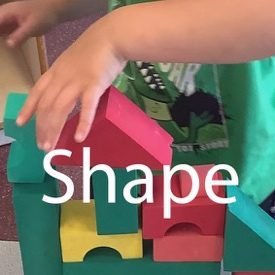
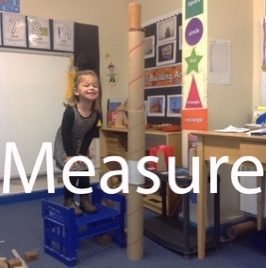
‘The ECMG mathematical moments are a growing collection of cameos which provide situated examples of mathematics pedagogy: Number, Pattern and Measure. They demonstrate the importance of exploring the mathematics in children’s everyday experiences at home and in educational settings.’ 3, 4 and 5-year-olds
Spatial Reasoning Keyrings

Spatial Reasoning Articles
Mathematical Association Articles
Sue Gifford on part of the spatial reasoning trajectory for 6 and 7 year olds.
Catherine Gripton considers ways to develop spatial reasoning in the primary school, outside of mathematics lessons.
Helen Williams explores spatial reasoning and seeing things in different ways.
Catherine Gripton on developing perspective-taking in the primary classroom.
Katie Gilligan-Lee explores the importance of spatial language for developing spatial and mathematics skills.
By Emily Farran, Alison Borthwick and Catherine Gripton.
Articles and Research
Douglas Clements and Julie Saramause
‘Myths about early education abound. Many beliefs people hold about early math have a grain of truth in them, but they are largely myths. But the myths persist, and many harm children. In this article, we address ubiquitous math myths that may be negatively affecting many young students. We conclude that avoiding the myths and listening to the findings of research and the wisdom of expert practice will serve both teachers and children well.’
Helen Williams and Cath Gripton
‘How might picture and story books enhance the mathematical experience we offer our young children, birth to seven?’ Contains many book recommendations.
Katrina Schwartz
‘Students can better understand math and physics problems by acting them out. This type of embodied learning can help open up the mind to abstract concepts.’
The Institute of Education Sciences

‘The goal of this practice guide is to offer educators specific, evidence-based recommendations that address the challenge of teaching early math to children ages 3 to 6. The guide provides practical, clear information on critical topics related to teaching early math and is based on the best available evidence as judged by the authors.’
Education Endowment Foundation
‘Research-based recommendations for supporting early maths learning and teaching.’
Jessica Cantlon
‘Thirty thousand years ago, humans kept track of numerical quantities by carving slashes on fragments of bone. It took approximately 25,000 years for the first iconic written numerals to emerge among human cultures (e.g., Sumerian cuneiform). Now, children acquire the meanings of verbal counting words, Arabic numerals, written number words, and the procedures of basic arithmetic operations, such as addition and subtraction, in just 6 years (between ages 2 and 8).
What cognitive abilities enabled our ancestors to record tallies in the first place? Additionally, what cognitive abilities allow children to rapidly acquire the formal mathematics knowledge that took our ancestors many millennia to invent? Current research aims to discover the origins and organization of numerical information in humans using clues from child development, the organization of the human brain, and animal cognition.’
Dr. Jessica Cantlon is a cognitive neuroscientist and Professor of Psychology and the Chair of Developmental Neuroscience at Carnegie Mellon University.
Encyclopaedia on Early Childhood Development
A collection of research and articles: ‘Basic number concepts and skills (numeracy) generally emerge before school entry. It is important to promote the development of these competencies in young children and to know the best learning methods, as these skills are often predictive of children’s future school achievement.’
Laski1, Jordan, Daoust, and Murray
‘Manipulatives are ubiquitous in early childhood classrooms; yet, findings regarding their efficacy for learning mathematics concepts are inconsistent. In this article, we present four general principles that have emerged from cognitive science about ways to ensure that manipulatives promote learning when used with young children. We also describe how Montessori instruction offers a concrete example of the application of these principles in practice, which may, in turn, explain the high levels of mathematics achievement among children who attend Montessori programs during early childhood. The general principles and concrete examples presented in this article should help early childhood programs maximize the benefits of using manipulatives for developmentally appropriate mathematics instruction.’
The Consortium
Contains 20 clickable links that open up Math Games for children aged 3 to 16.
Mathematics Picture Books
Early Childhood Mathematics Group
Clicking on each picture opens a PDF containing detailed book recommendations.
NRICH
Alborough, Washing Line (2007)
Beaton and Blackstone, How Big Is a Pig? (2002)
Boucher, Turpin, Merriman, The Six Blind Men and the Elephant (1999)

Browne, Changes (2008)
Carle, The Very Hungry Caterpillar (1994)
Carle, Opposites (2007)
Crowther, Opposites (2005)
Freedman and Cort, Aliens Love Underpants! (2007)
Hughes, All Shapes and Sizes (2001)
Hutchins, Titch (1997)
Inkpen, Kipper's Book of Opposites (1994)
Inkpen, The Blue Balloon (2006)
Sharratt, My Mum and Dad Make Me Laugh (2003)