The History, Philosophy, and Legacy of Montessori Education
Born in 1870, Dr. Maria Montessori came of age during the industrial era, when schooling was designed to mimic the factory floor, when the prevailing image of a classroom was one of rigid order: rows of desks, silent students viewed as passive recipients of knowledge, processed in batches according to age rather than ability, and an authoritarian teacher at the helm. Into this standardized landscape stepped Dr. Maria Montessori, an Italian physician who approached education through the lens of a scientist when she opened the first Casa dei Bambini (Children’s House) in the San Lorenzo district of Rome on January 6th, 1907.
- Socrates
Here, she observed that when provided with appropriate materials and freedom, children displayed a level of concentration and self-discipline that contradicted the prevailing belief that they were inherently unruly, uncontrolled and uninterested, and proposed a radical alternative rooted in the belief that children are active participants in their own learning. This historical moment marked a paradigm shift; education was no longer about forcing the child to fit the system, but designing the system to fit the child’s natural developmental trajectory.
“Tell me and I forget, teach me and I remember, involve me and I learn.”
- Benjamin Franklin
The Montessori Method, based on her scientific observations of how children learn best, is a child-centered approach to education that focuses on independence, hands-on learning, and respect for a child’s natural psychological development. One of the key principles of the approach is the belief that children are naturally curious and capable of directing their own learning, so the philosophy, encapsulated by the directive to follow the child, encourages children to explore, discover, and learn at their own pace.
“Education is not about memorizing facts, but about understanding how to think.”
- Albert Einstein
At the heart of Montessori approach is the concept of the prepared environment. Unlike traditional schools, the Montessori classroom is designed for movement and exploration: furniture is child-sized and materials are accessible on low shelves so children can select and return them independently, with the environment aiding in the development of concentration, responsibility, and a sense of ownership over learning.
“If you think education is expensive, try estimating the cost of ignorance.”
- Howard Gardner
Children have freedom to choose activities from different areas of development, including practical life skills, sensory learning, mathematics, language, and cultural studies, with the layout encouraging movement and collaboration. Children choose their own activities from amongst a range of specially designed learning materials that teach abstract concepts through concrete experiences. These materials are often self-correcting, allowing children to recognize and fix their own mistakes, which helps to develop problem-solving skills and independence. By respecting each child’s individual pace and encouraging active exploration, the Montessori method aims to develop not only academic knowledge but also independence, self-discipline, and a genuine love of learning.
“Never let formal education get in the way of your learning.”
- Mark Twain
Central to the philosophy is the concept of freedom within limits: children are free to choose activities and to move about the room, but this freedom is bounded by respect for the environment and for others. Consequently, the adult’s role is reimagined from teacher to a director or a guide: rather than delivering lectures, they observe the children’s actions, listen to their words, follow their interests, and ascertain their needs, introducing new concepts when the child is developmentally ready. This structure fosters intrinsic motivation, as learning becomes a pursuit of personal mastery rather than a quest for external grades or praise, where children gain confidence in their abilities and learn to take responsibility for themselves and their environment.
“Students don’t care how much you know until they know how much you care.”
- Anonymous
Montessori classrooms include mixed-age groups, covering three-year age spans, reflecting real-world social structures and allowing younger children to learn from older peers and older children to reinforce their knowledge by teaching and helping younger ones, thus encouraging collaboration, empathy, and social development rather than competition. As modern education grapples with a crisis of student engagement and mental health, the Montessori focus on holistic well-being and autonomy offers a compelling alternative, addressing the modern need for learners who are not only academically proficient but also socially responsible and emotionally resilient.
“The direction in which education starts a man will determine his future in life.”
- Plato
From its historical origins as a rebellion against the industrial model of schooling to its philosophical emphasis on the prepared environment and the absorbent mind, the Montessori approach fundamentally respects the dignity of the child; it is far more than a specific set of classroom materials or a niche educational trend, it is a comprehensive approach grounded in scientific observation, philosophical depth, and timeless relevance. It has had a significant influence on education worldwide, offering an alternative to traditional education by placing the child at the center of the learning process, with many schools and early childhood programs adopting elements of the method because of its focus on creativity, critical thinking, and lifelong learning.
“Men are born ignorant, not stupid; they are made stupid by education.”
- Bertrand Russell
While these ideas were revolutionary in 1907, their relevance has only amplified in the modern context; the 21st-century economy and society demand adaptability, creativity, and emotional intelligence, skills that rote memorization and standardized testing often fail to cultivate. Modern research in neuroscience and psychology increasingly supports Montessori’s observations regarding executive function and self-regulation, so in a world where information is ubiquitous, the ability to focus, manage time, and solve problems independently is far more valuable than the mere retention of facts.
“The roots of education are bitter, but the fruit is sweet.”
- Aristotle
Today, as society seeks to nurture innovators rather than conformists, the Montessori method’s focus on independence and intrinsic motivation provides a vital framework for the future. Through guided independence, hands-on materials, and a supportive learning environment, Montessori education continues to nurture capable, confident, and curious learners who are able to engage thoughtfully with the world around them. By following the child, as Montessori urged, education becomes not a preparation for life, but life itself, empowering individuals to reach their full potential in an ever-changing world.
“If you are planning for a year, sow rice; if you are planning for a decade, plant trees; if you are planning for a lifetime, educate people.”
- Chinese Proverb
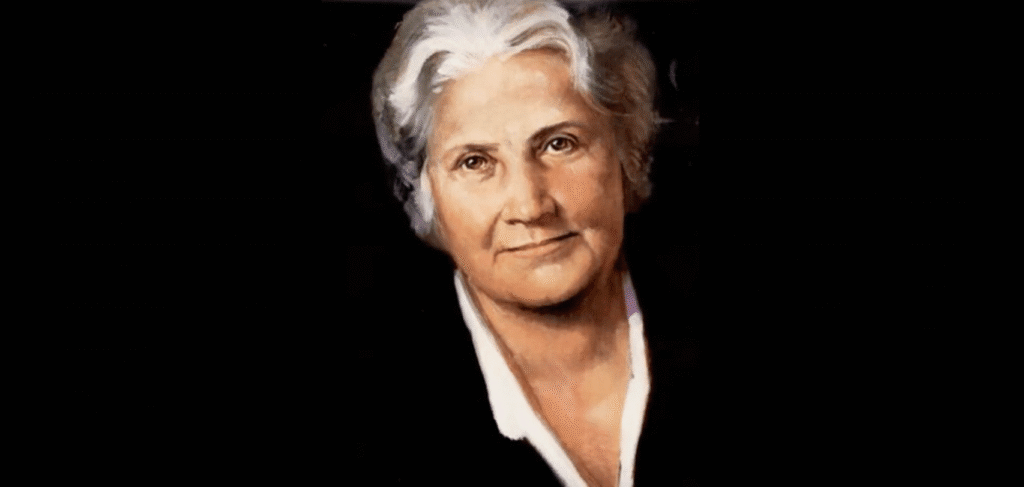
Maria Montessori spoke to her students on 6 January 1942, celebrating the anniversary of the inauguration day of the first Casa dei Bambini. Here is a summary of her speech.