The Uninterrupted Three-Hour Cycle
- Maria Montessori, The 1946 London Lectures, p. 218.
One of the fundamental principles of the Montessori Method is the ‘Three-Hour Cycle’, an extended and uninterrupted block of time during which the children have freedom to engage with any of the materials and with any of the children. If they weren’t interrupted during this period a consistent pattern of activity become apparent, and the following ‘Whole class at work’ diagram represents this pattern:
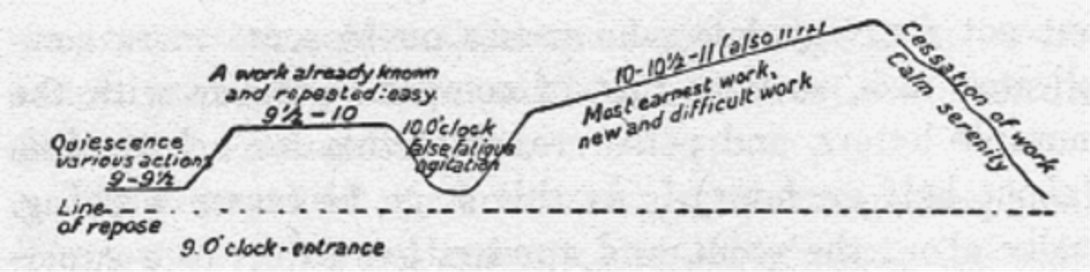
In this graph of three hours in a Montessori class, the broken line at the bottom represents a state of repose and the sloped line the child at play, the rise and fall of the line recording the degree of engagement with the materials and the levels of concentration that ensue from this.
“In the first period of the morning, up to about 10 a.m., the occupation chosen is generally an easy and familiar task. Children will choose three or four familiar activities, lasting 15 to 20 minutes each.
At 10 o’clock there is a great commotion; the children. are restless, they neither work nor go in quest of materials. The onlooker gets an impression of a tired class, about to become disorderly. After a few minutes the most perfect order reigns once more; the children are promptly absorbed in work again; they have chosen new and more difficult occupations. When this work ceases, the children are gentle, calm, and happy.
If in the period of “false fatigue” at 10 a.m. an inexperienced teacher, interpreting the phenomenon of suspension or preparation for the culminating work as disorder, intervenes, calling the children to her, and making them rest, etc, their restlessness persists, and the subsequent work is not undertaken. The children do not become calm; they remain in an abnormal state. In other words, if they are interrupted in their cycle, they lose all the characteristics connected with an internal process regularly and completely carried out.”
- Maria Montessori, Spontaneous Activity in Education, Pg. 99. (1916)
Sharon Caldwell suggests that The extended “work cycle” would better be called the “uninterrupted period of spontaneous activity” and she quotes Montessori thus:
- B.K. Grazzini, “Work A Vital Instinct”, AMI Conference, Sydney, July 2005.
The following details how this rhythm might play out over the course of a morning.
Arrival – 20 to 30 minutes – ‘quiescence’
This is a liminal period, coming immediately after the children have arrived at school but before they start to use the materials, a time of transition between the world outside the school and the Montessori environment. Some children will be saying goodbye to their parents /caregiver, others will be chatting with their friends and/or changing their shoes, putting away their schoolbag and taking out their water-bottle, etc.
Once they’re ready, the children enter the class individually, in pairs or in small groups. At this point, some of their classmates will already be at the shelves, trying to decide what activity to choose, others will be socialising with their friends, perhaps while they eat snack together, and there might be a few children who need the help of the adult to guide them towards an activity.
First Period – 20 to 40 minutes
“In the first period of the morning, up to about 10 a.m., the occupation chosen is generally an easy and familiar task. Children will choose three or four familiar activities, lasting 15 to 20 minutes each.”
When they enter, the children have some choices to make. Play on their own or with a friend? The youngest children often prefer to play by themselves, perhaps in parallel with a classmate, without necessarily interacting with them.
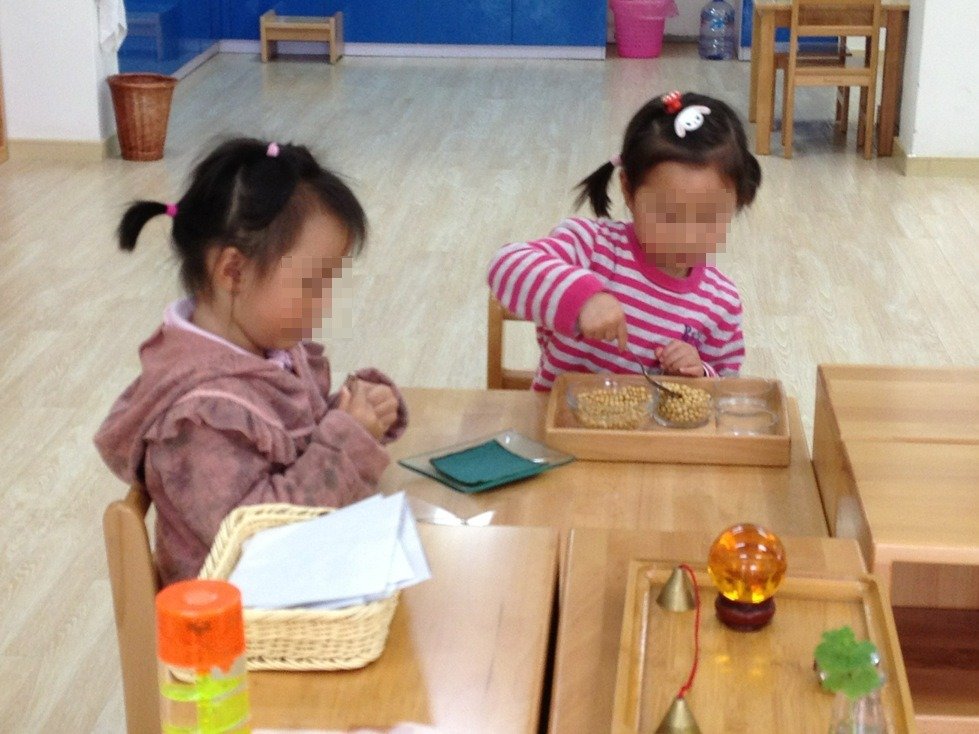
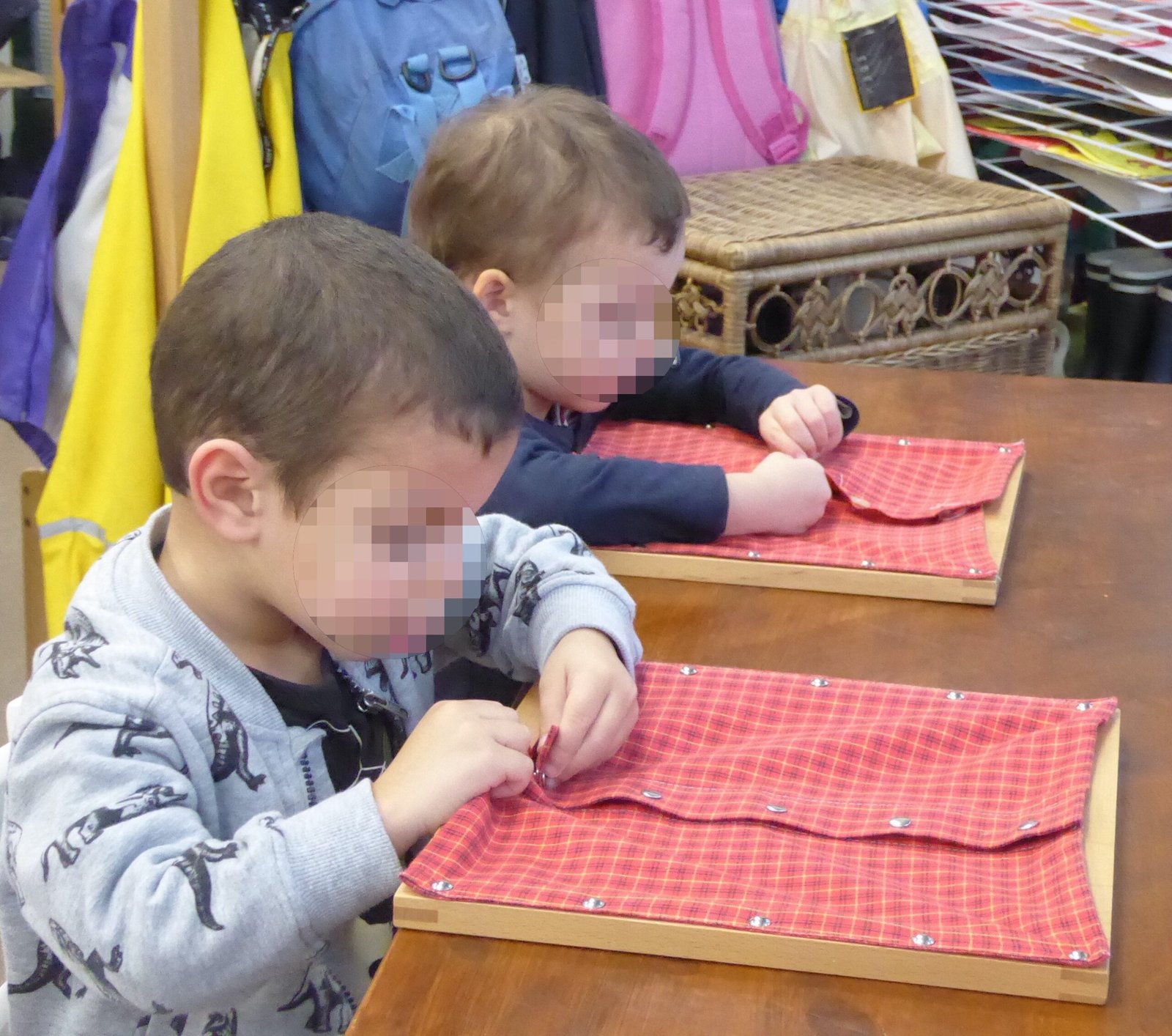
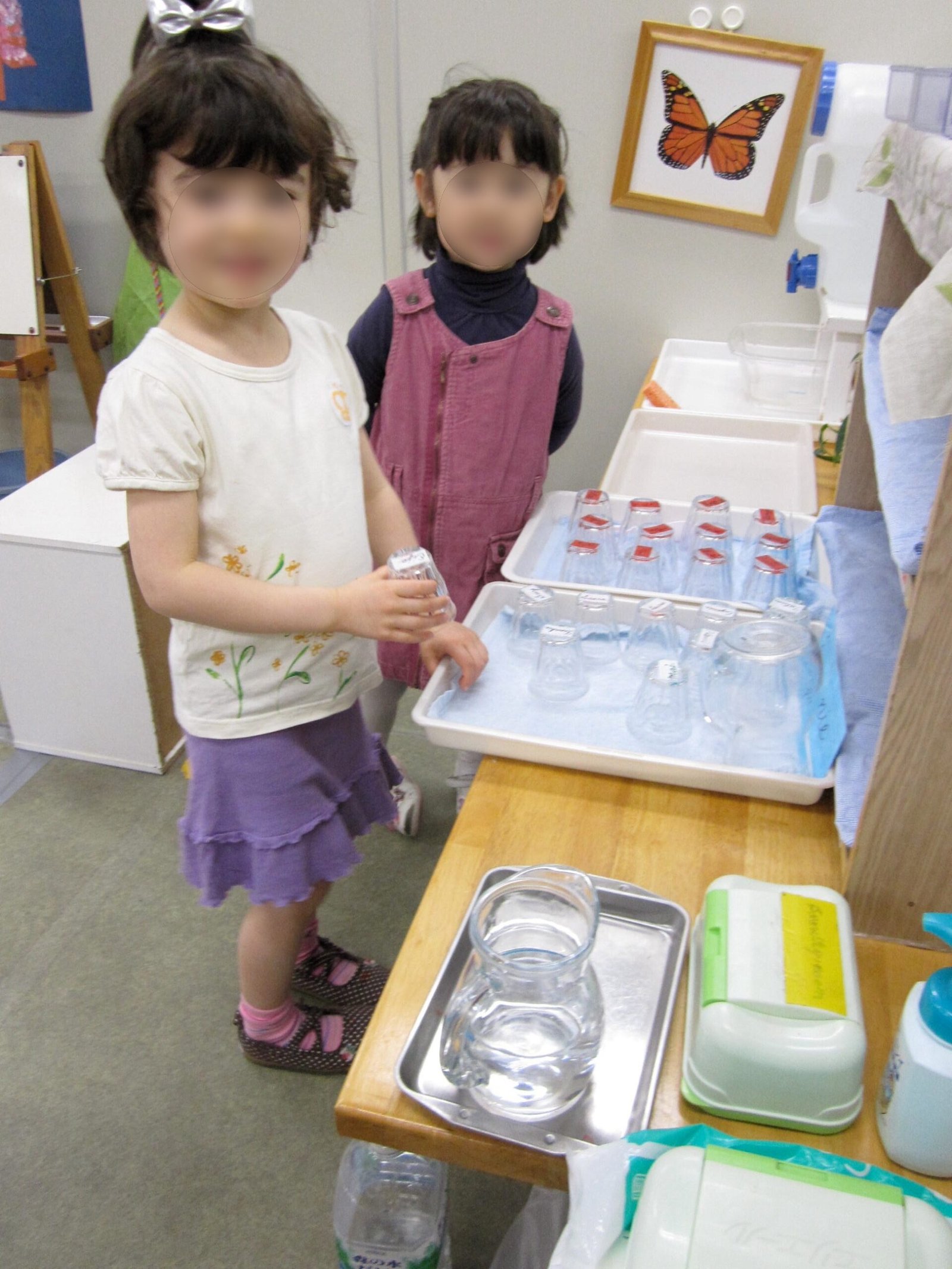
These activities are simple tasks which the child can complete pretty much on autopilot, often from the Practical Life, Sensorial or Cultural areas of the environment, and serve as a gentle introduction to the day. In the same way that an hors d’oeuvre (French for ‘outside of work’) is intended to whet the appetite before the main course, these simple, undemanding tasks serve to stimulate the interests of the child.
It’s not uncommon for the children to start their day by choosing a relatively simple activity, a gentle introduction that settles them into the environment, like a stretch before exercising or an hors d’oeuvre before a meal.
Gradually, as the children make their choice, an atmosphere of peace and quiet descends upon the environment.
Second Period – False Fatigue – 15 minutes
“At 10 o’clock there is a great commotion; the children are restless, they neither work nor go in quest of materials. The onlooker gets an impression of a tired class, about to become disorderly.”
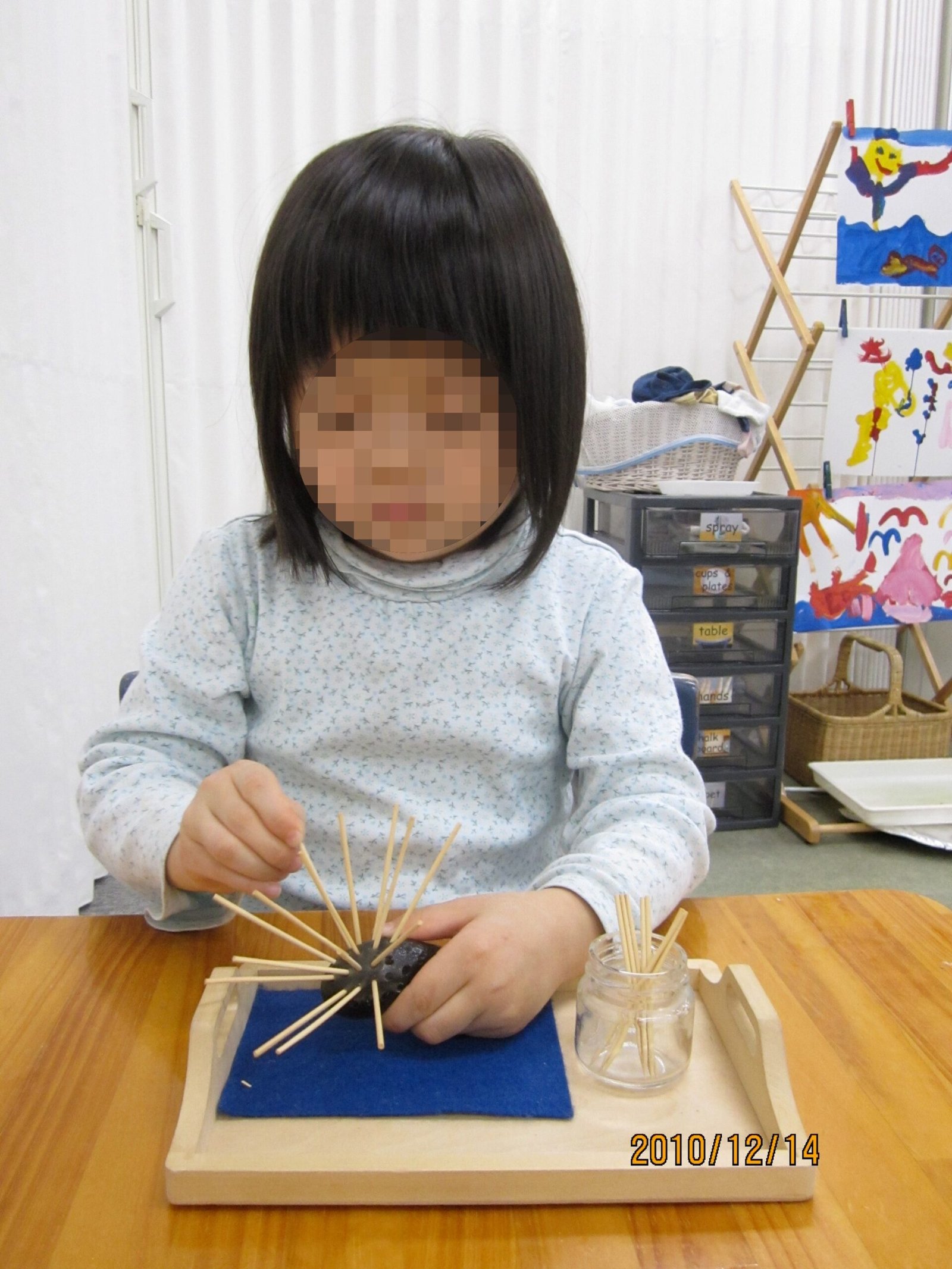
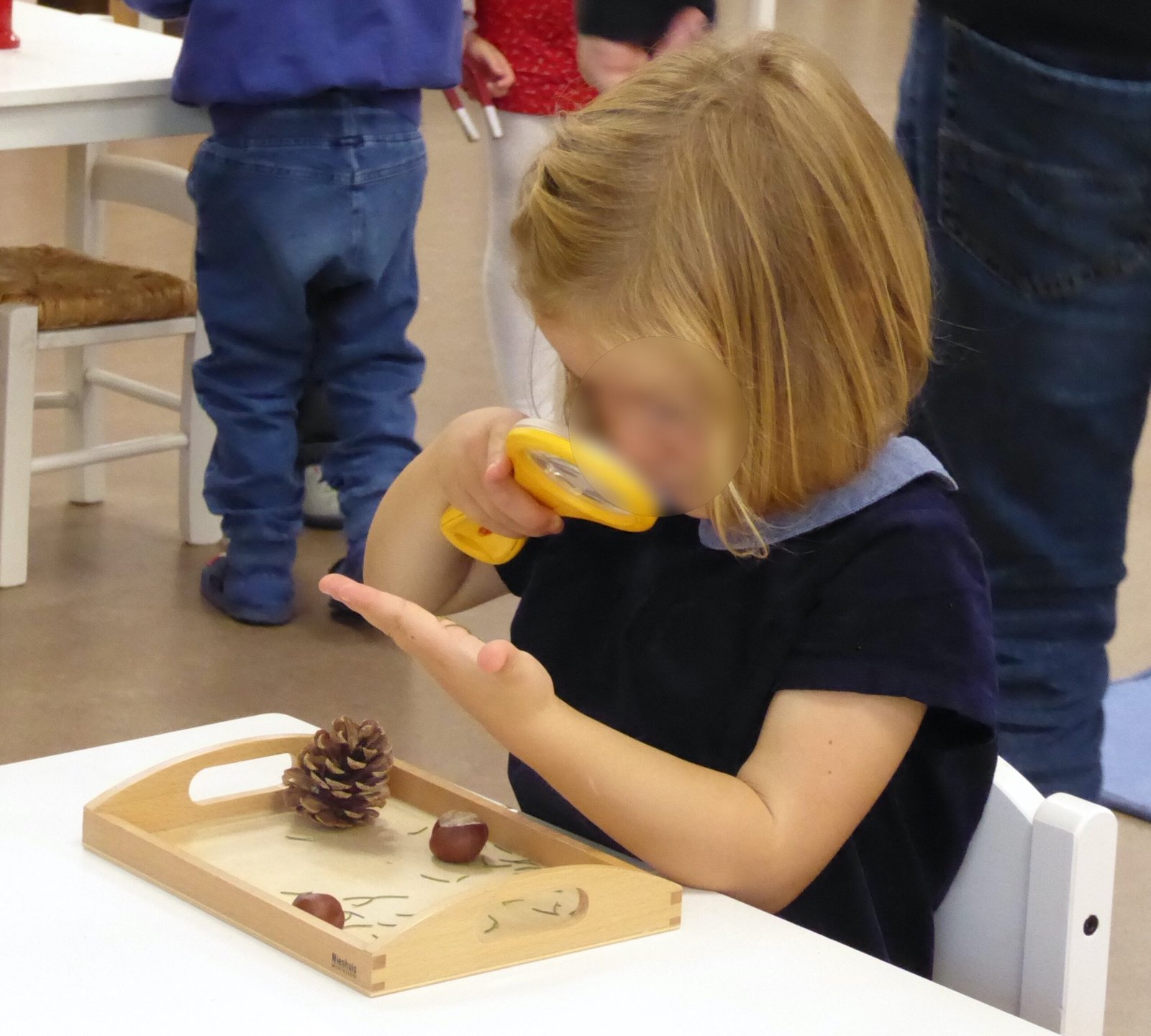
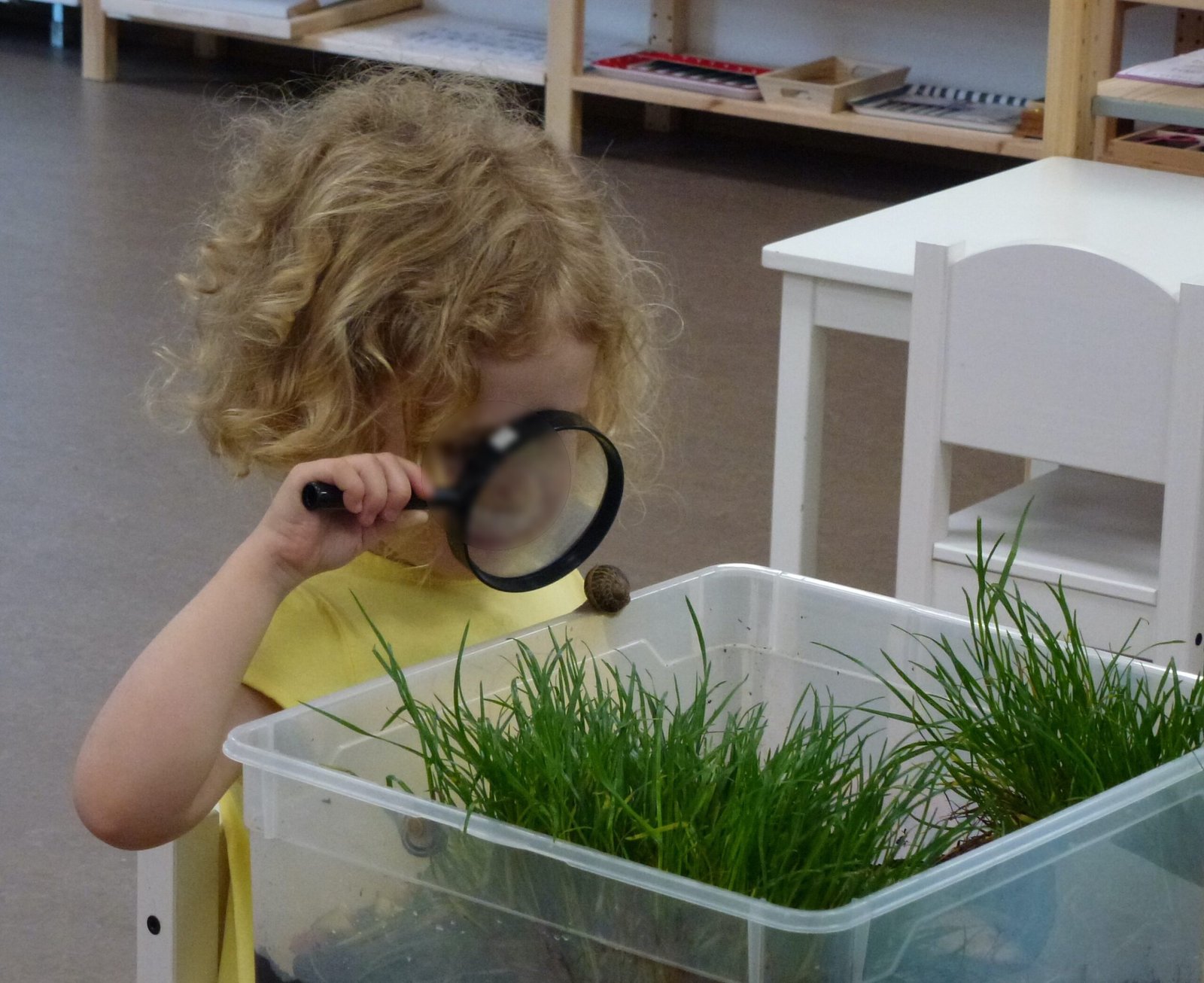
At this point in the cycle, many children are on their feet, restless, moving from table to table or wandering, apparently aimlessly. As a consequence, the noise level increases and there is a sense of impending disorder. However, if the guide allows the children the time and opportunity to experience the restlessness of false fatigue, then the children will soon settle into their most difficult work choice of the cycle and stay with it for the longest period of time.
“If in the period of “false fatigue” at 10 a.m. an inexperienced teacher, interpreting the phenomenon of suspension or preparation for the culminating work as disorder, intervenes, calling the children to her, and making them rest, etc, their restlessness persists, and the subsequent work is not undertaken. The children do not become calm; they remain in an abnormal state. In other words, if they are interrupted in their cycle, they lose all the characteristics connected with an internal process regularly and completely carried out”.
Third Period – Challenging Activities – 45 to 90 minutes
If the guide has resisted the urge to step in, it soon becomes clear that this minor ruckus was the storm before the calm:
“After a few minutes the most perfect order reigns once more; the children are promptly absorbed in work again; they have chosen new and more difficult occupations. When this work ceases, the children are gentle, calm, and happy.”
During this part of the cycle, the Sensorial materials are popular with the younger children, and it is when we are likely to observe a child deeply focused on solving one or two or six or seven puzzles simultaneously, another using all of the colour tablets to create a sun, and still another using the Square of Pythagoras to construct squares using an array of rectangles.
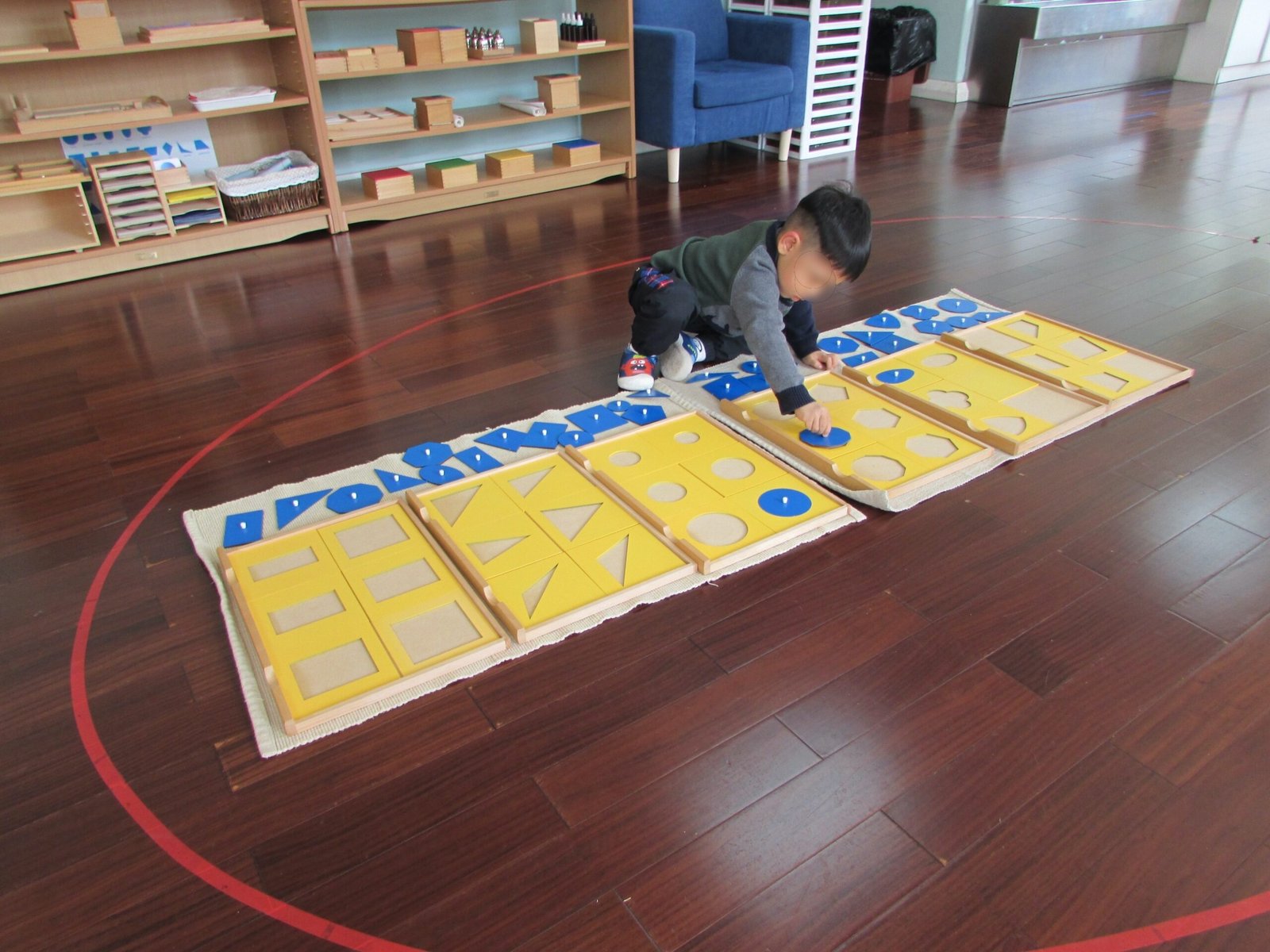
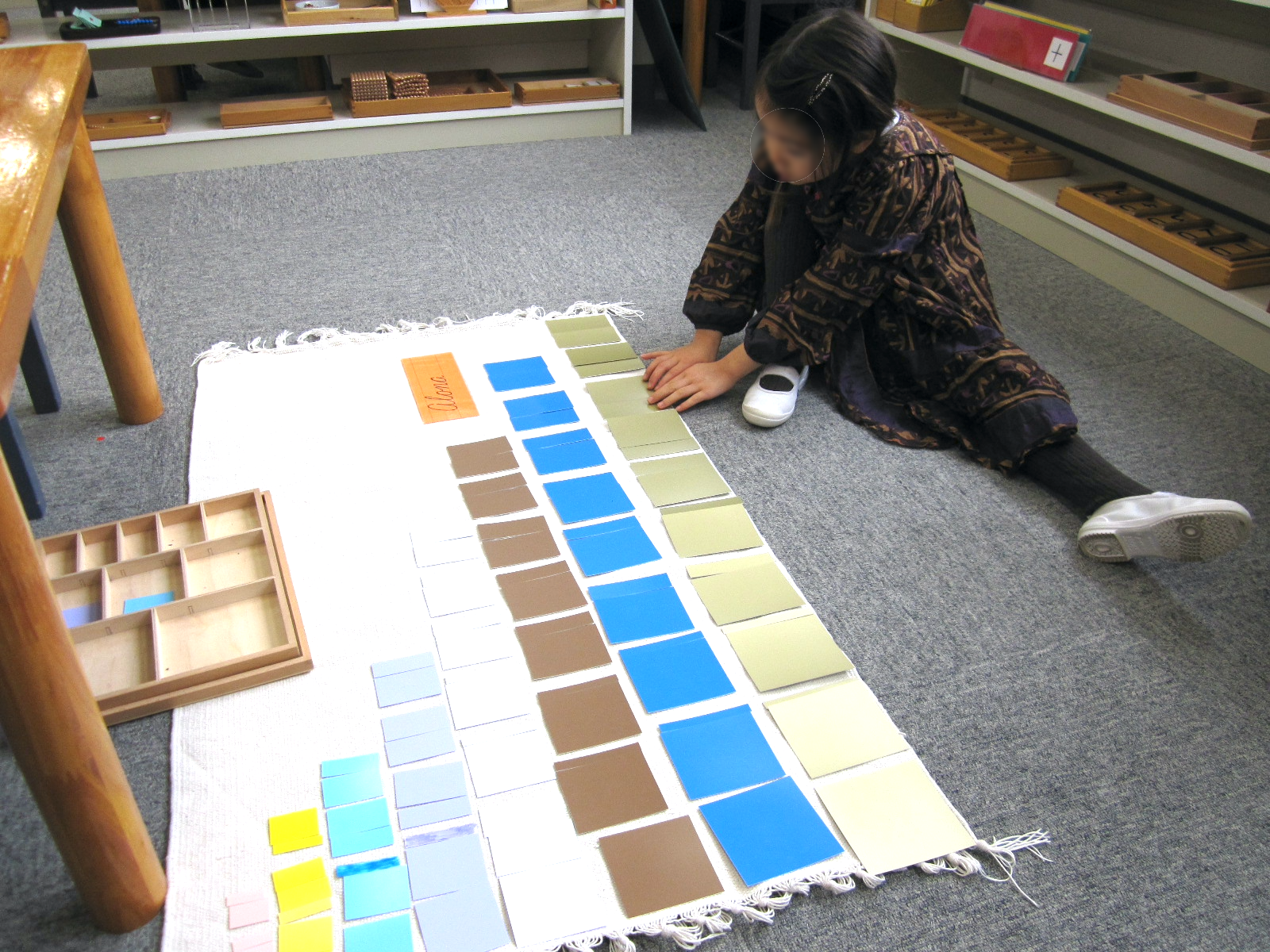
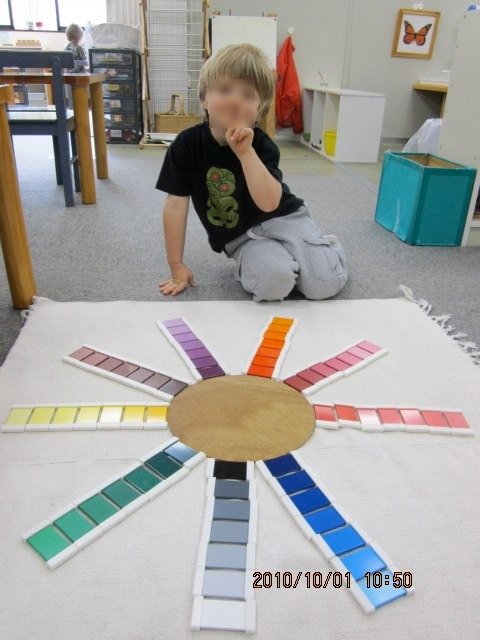
When we observe a child during this period, they exhibit the deepest levels of concentration, because they are engaged upon the most challenging, rigorous activity, which call for the deepest focus and engagement; as a consequence, the children make the greatest strides in the development of skills and in the acquisition of knowledge.
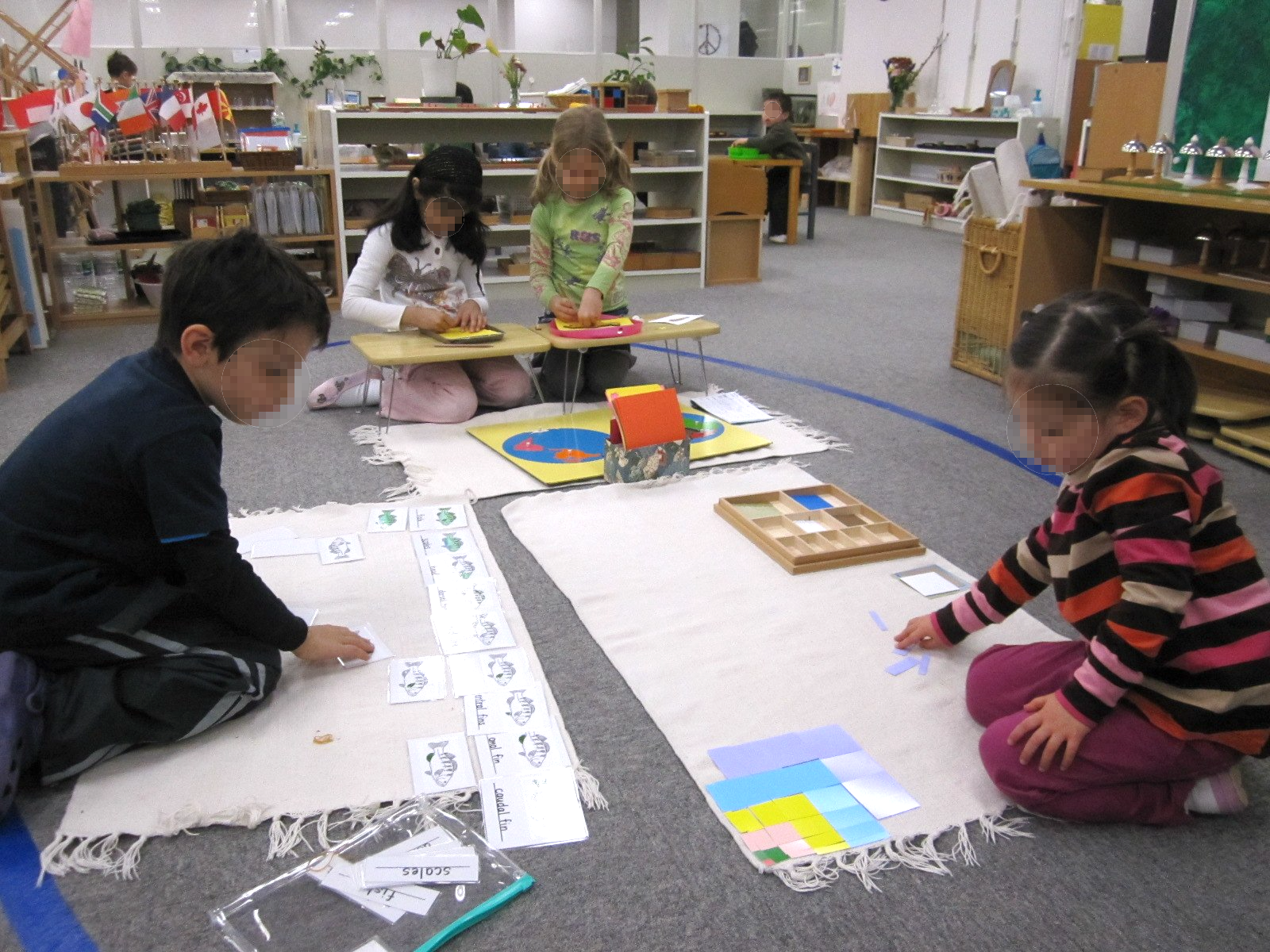
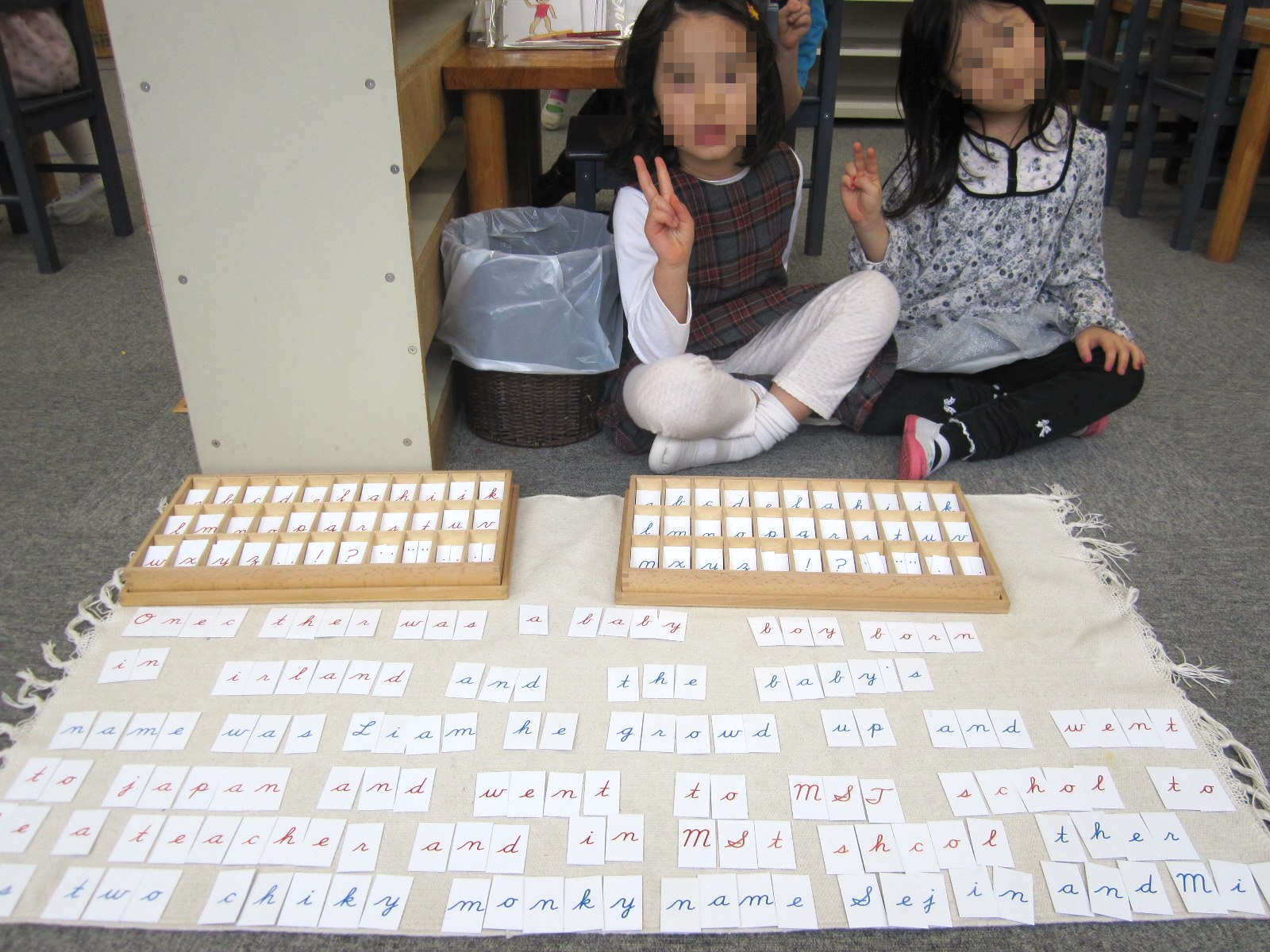
It is also the period when the more challenging Language materials are chosen, activities such as the Moveable Alphabet for the 4-year-olds, the Small Moveable Alphabet for the 5-year-olds, and Grammar activities such as The Article by a 6-year-old.
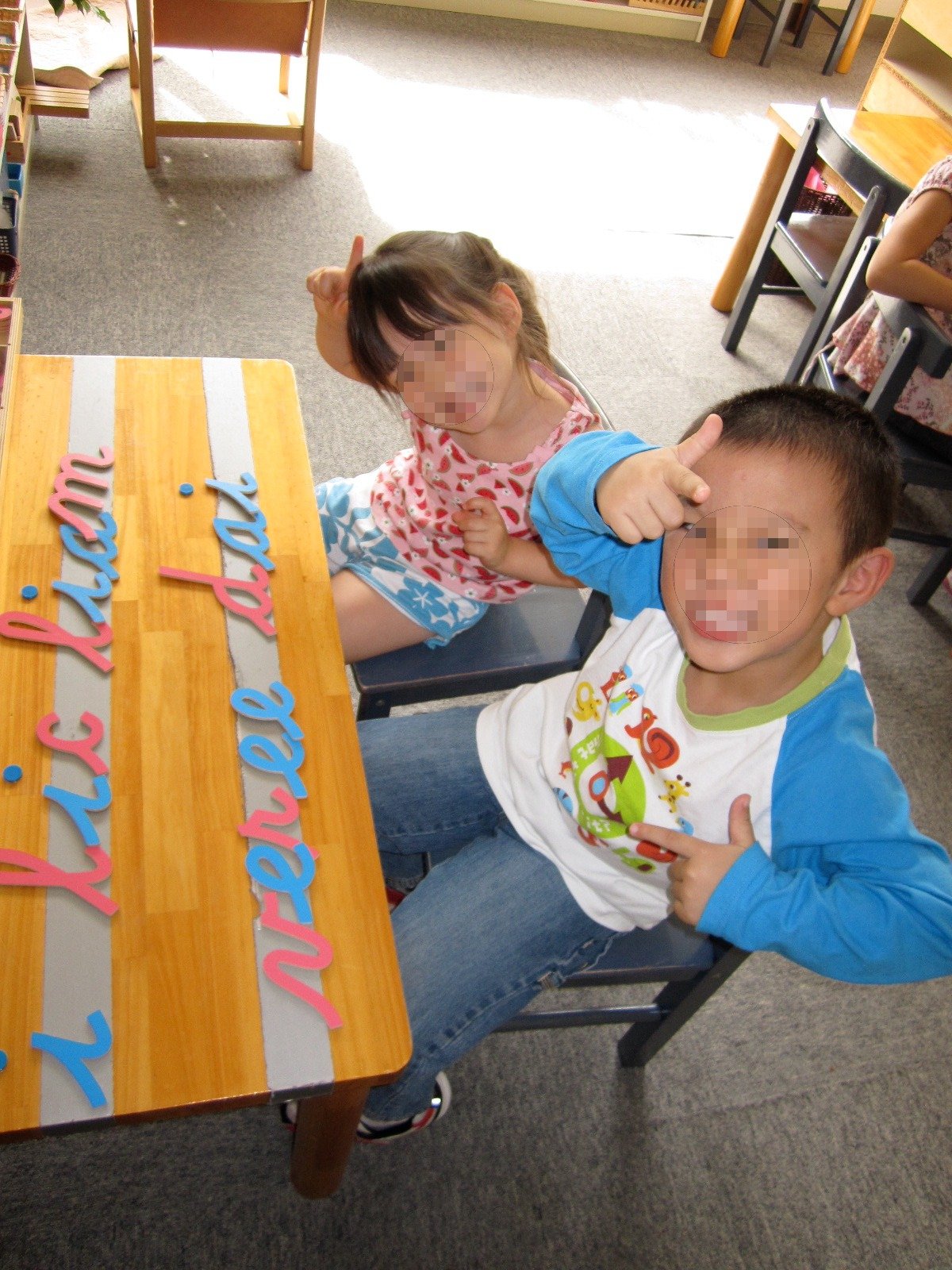
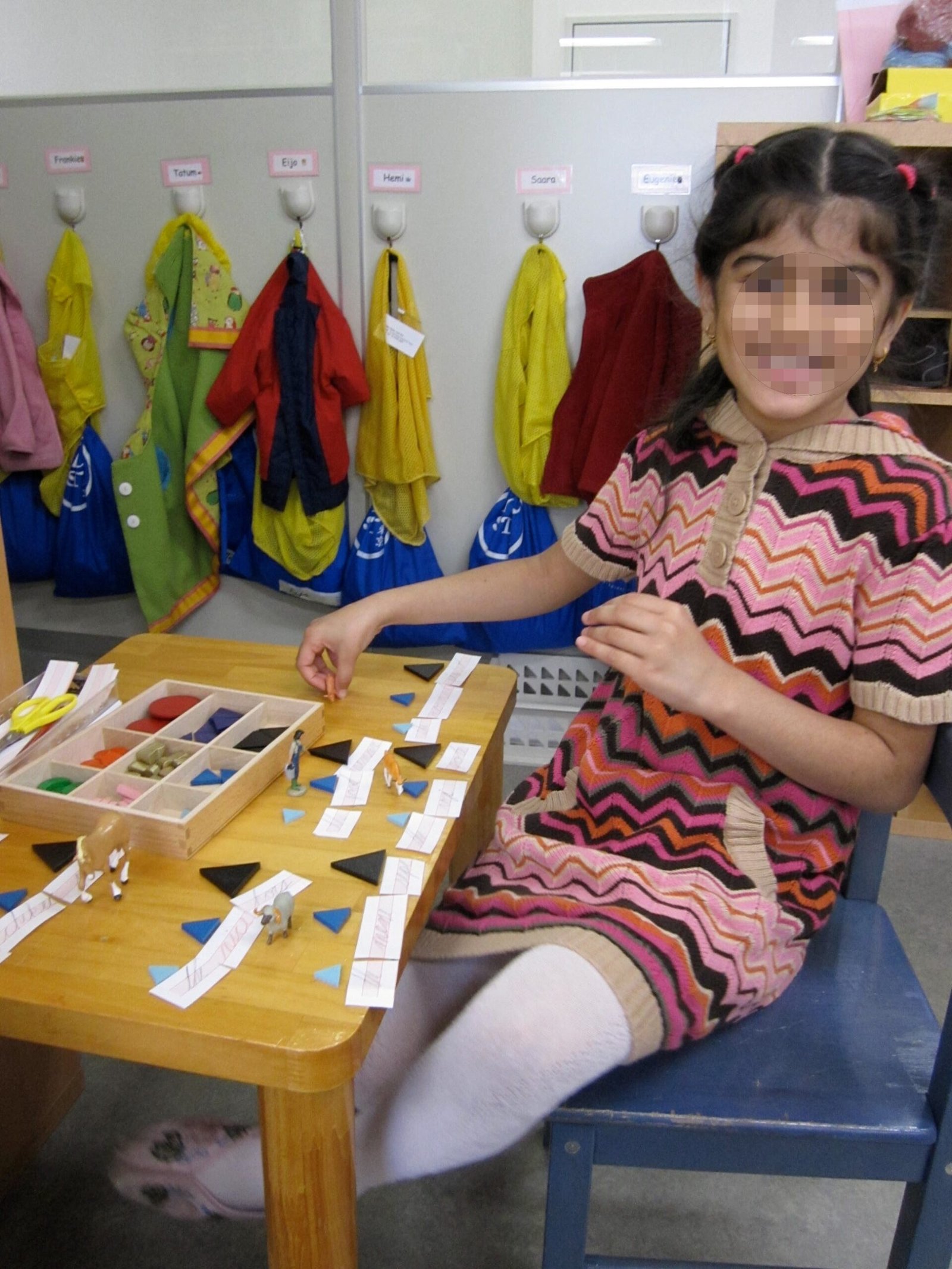
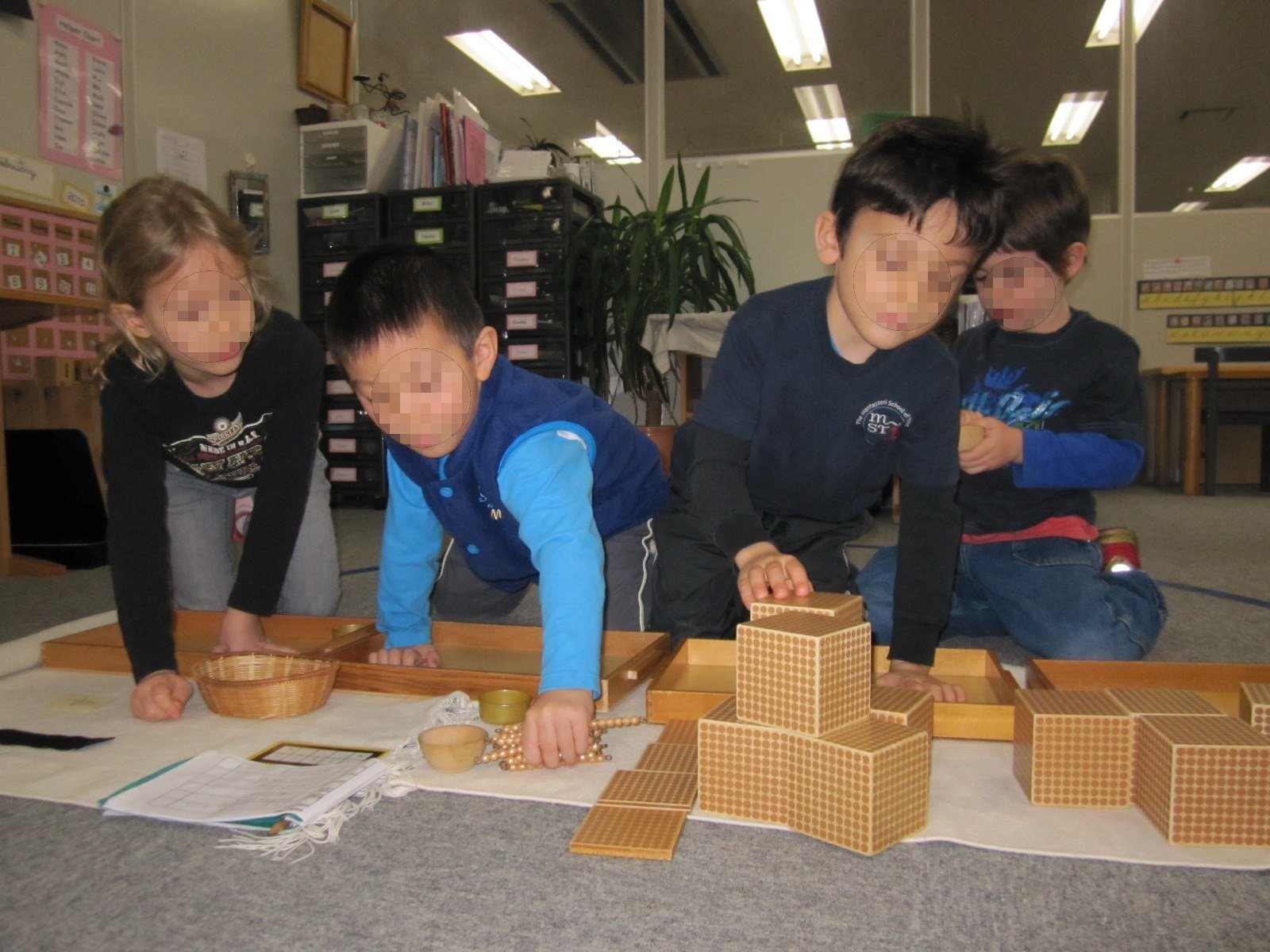
In the Mathematics area it is common to note pairs or small groups of children engaged in cooperative activities such as counting the squared / cubed chains or doing a decimal operation such as addition.
Fourth Period – 15 to 30 minutes – ‘Cessation of work, calm serenity.’
‘When this work ceases, the children are gentle, calm, and happy’.
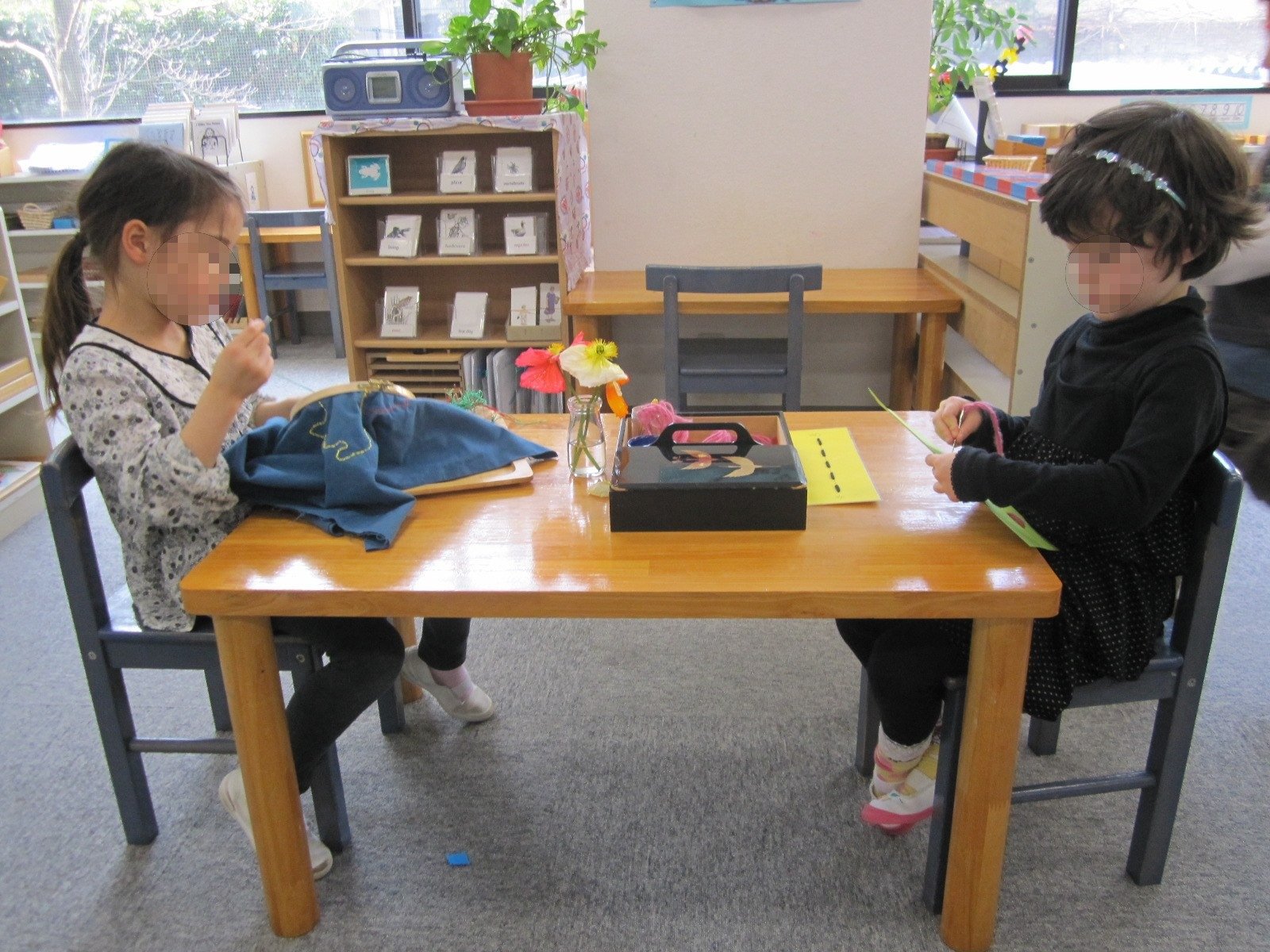
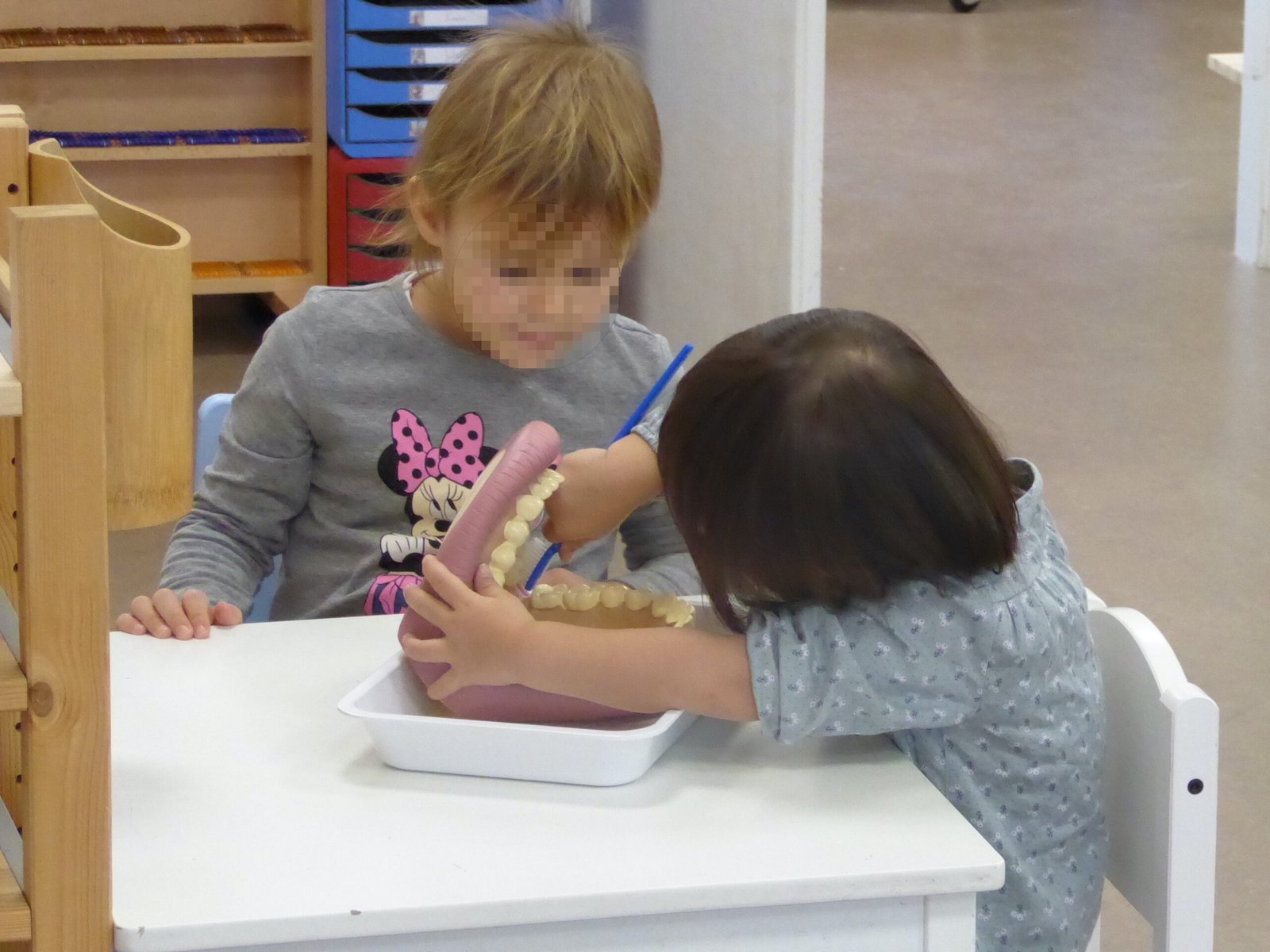
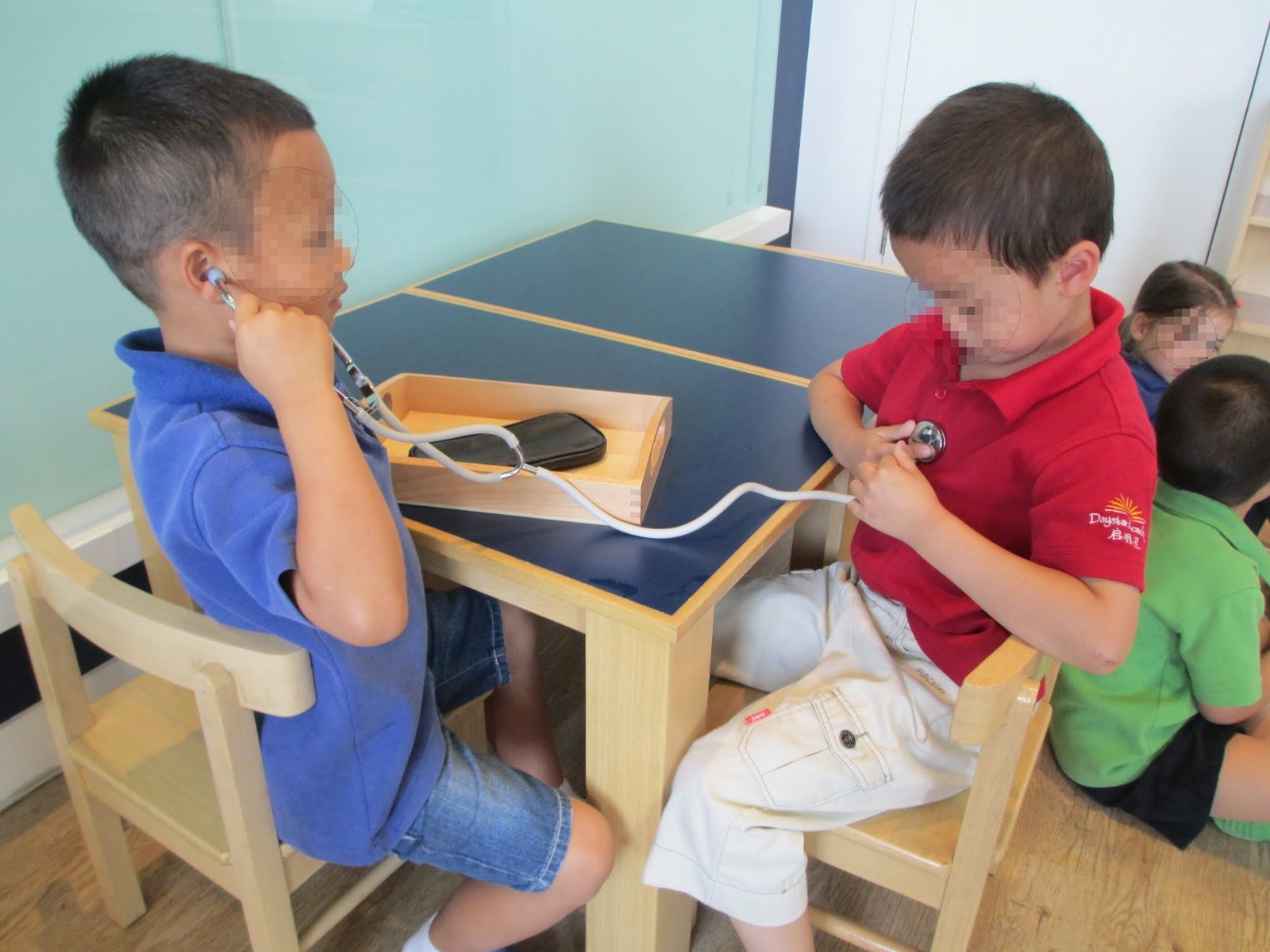
This is the period towards the end of the morning when the children have completed the most challenging activity and begin to congregate and engage in calming and social activities, following their urge to be more social. This might manifest itself in giving a simple cultural lesson to one of their younger classmates, on brushing teeth, for example, or using the stethoscope.
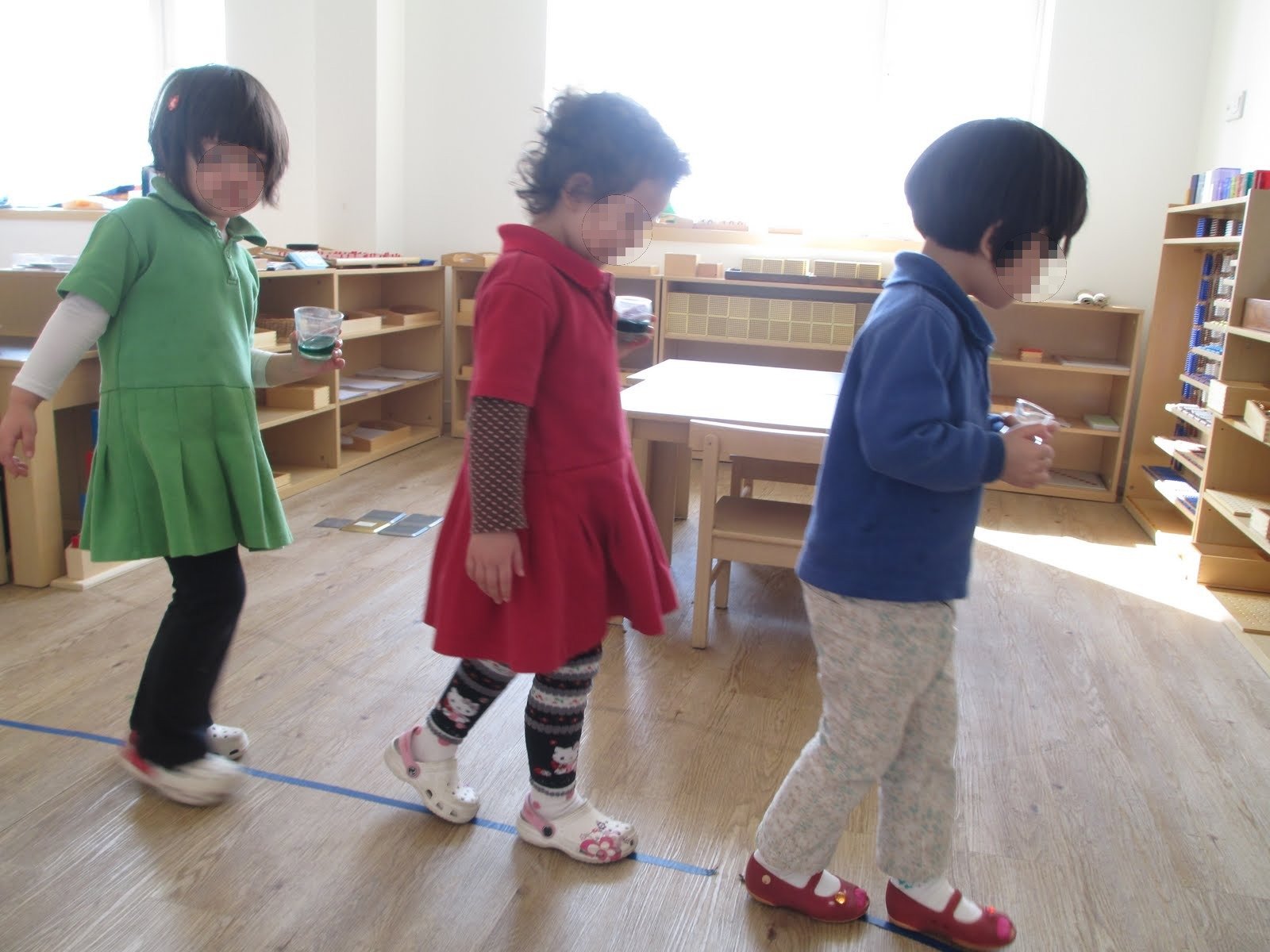
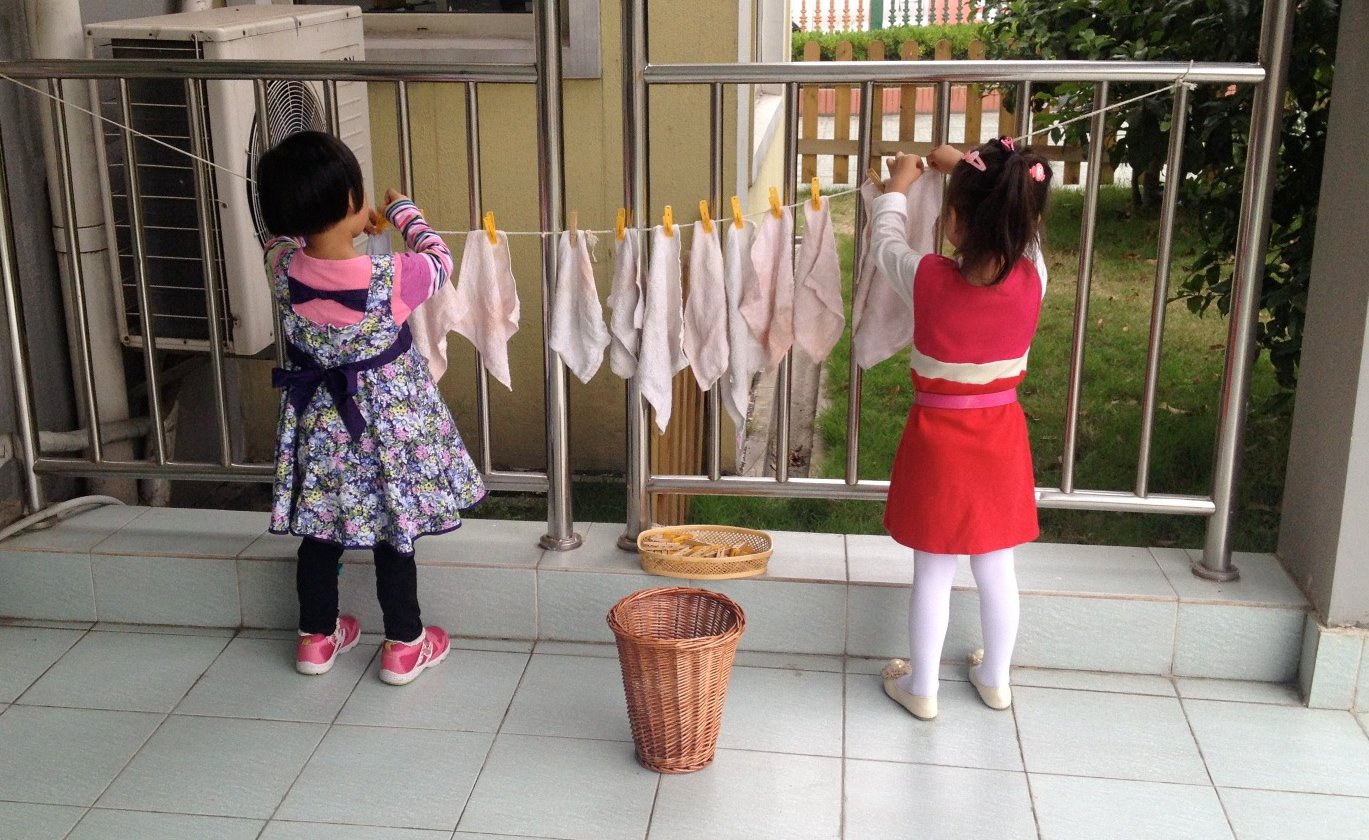
This is also one of those periods when Walking on the Line is popular, and the calming, methodical Care of the Environment exercises seem to perfectly fit the mellow mood of the moment.
There are broad similarities between the work cycle of a child and that of an adult. The following table is adapted from Protecting the Three-Hour Work Cycle, by Maren Schmidt. PDF
| Example of a child’s work cycleA 4 ½ year-old’s three-hour work cycle might look like this. | Example of an adult’s work cycleHere is an example of an adult’s three-hour work cycle on a Saturday morning. | ||
|---|---|---|---|
| Work puzzle | 10 minutes | Check schedule. See that the morning is free until 1 pm | 10 minutes |
| Build with blocks | 15 minutes | Clean kitchen | 15 minutes |
| Visit with classmate | 10 minutes | Start laundry | 15 minutes |
| Water plants | 20 minutes | Make phone calls for appointments | 20 minutes |
| Sweep floor | 10 minutes | Vacuum | 20 minutes |
| Walk around the class - false fatigue | 5 minutes | Feeling of restlessness - What to do next? - false fatigue | 5 minutes |
| Prepare and eat snack | 15 minutes | Cup of coffee | 10 minutes |
| Do 100-piece puzzle | 45 minutes | Balance bank statements, pay bills | 90 minutes |
| Practice tying shoes | 45 minutes | ||
| Visit with classmate | 10 minutes | Fix lunch | 15 minutes |
| Help younger students put shoes on - Period of sociability | 15 minutes | Eat with family and visit - Period of sociability | 30 minutes |
Scroll sideways to see the full table →